La cárcel vieja habla: presos de la memoria
2016-10-23 · 38 min · Not rated
Documentary about the "cárcel vieja" of Murcia
Trailers are previews, not full movies.
No authorized playback source configured. Use the legal watch options below.
Production details
- Directors
- Blanca Pérez de Tudela, Jeanette Conesa
- Production companies
- Unavailable
- Countries
- Unavailable
- Status
- Released
Top Cast
Cast unavailable.
Title information and images are supplied by TMDb. Explore our discovery guide for advice on comparing metadata and legal viewing options.
Where to watch
Availability provided by JustWatch via TMDb. Offers can change. Provider links are listed on TMDb; full playback requires a separately authorized source.
Availability not listed for this country.
Seasons & episodes
Recommendations
Serial killer Dennis Nilsen narrates his life and horrific crimes via a series of chilling audiotapes recorded from his jail cell.
The story of the tortuous struggle against the silence of the victims of the dictatorship imposed by General Franco after the victory of the rebel side in the Spanish Civil War (1936-1975). In a democratic country, but still ideologically divided, the survivors seek justice as they organize the so-called “Argentinian lawsuit” and denounce the legally sanctioned pact of oblivion that intends to hide the crimes they were subjects of.
Fox Rich, indomitable matriarch and modern-day abolitionist, strives to keep her family together while fighting for the release of her incarcerated husband. An intimate, epic, and unconventional love story, filmed over two decades.

A compilation of over 30 years of private home movie footage shot by Lithuanian-American avant-garde director Jonas Mekas, assembled by Mekas "purely by chance", without concern for chronological order.
After the death of her daughter at the hand of her boyfriend, Marisela Escobedo began to fight for justice not only against the murderer but also against the corrupt Mexican judicial system.

For two weeks, Theroux visits the San Quentin State Prison.
In the past 40 years, the War on Drugs has accounted for 45 million arrests, made America the world's largest jailer, and destroyed impoverished communities at home and abroad. Yet drugs are cheaper, purer, and more available today than ever. Where did we go wrong?
An in-depth look at the prison system in the United States and how it reveals the nation's history of racial inequality.
A documentary on the life of Uruguayan politician and former guerrilla fighter José Mujica.

A documentary on the expletive's origin, why it offends some people so deeply, and what can be gained from its use.
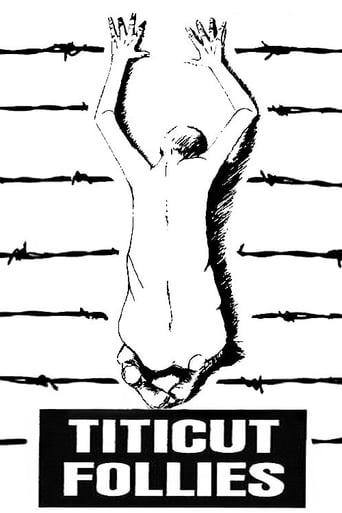
Employing methods of direct cinema–observation, limited stylization, and non-intervention–this stark look into the State Prison for the Criminally Insane in Bridgewater, Massachusetts shows its denizens, who were often kept in barren cells and infrequently bathed, forced to strip naked publicly, force feeding, and the indifference and bullying by many of the hospital's staff.

Over 35 years after Bob Lazar's revelations, this documentary exposes secrets of a facility the government still denies. Featuring Lazar's testimony, recreations, and new evidence, it reopens a case that continues to spark global curiosity
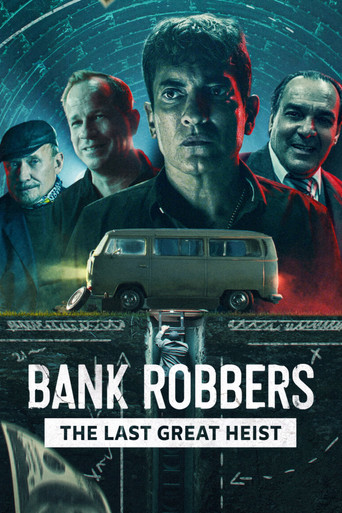
Through candid interviews, the perpetrators of Argentina's most notorious bank heist detail how — and why — they carried out the radical 2006 operation.
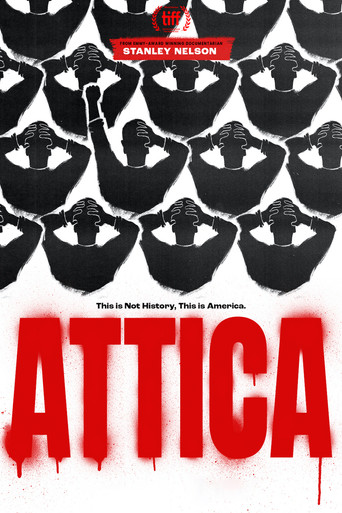
Follows the largest prison uprising in US history, conducting dozens of new interviews with inmates, journalists, and other witnesses.

A detailing of the rise to prominence and global sporting superstardom of six supremely talented young Manchester United football players (David Beckham, Nicky Butt, Ryan Giggs, Paul Scholes, Phil and Gary Neville). The film covers the period 1992-1999, culminating in Manchester United's European Cup triumph.

A string of threatening emails escalates into a revenge plot involving a newly married US marshal and his ex-girlfriend.
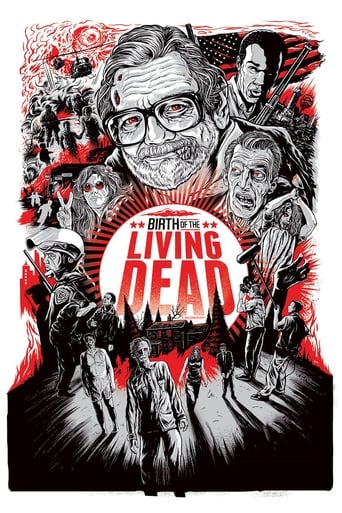
A behind the scenes look into George Romero's groundbreaking horror classic Night of the Living Dead.

From the heights of her modeling fame to her tragic death, this documentary reveals Anna Nicole Smith through the eyes of the people closest to her.

Alexander McQueen's rags-to-riches story is a modern-day fairy tale, laced with the gothic. Mirroring the savage beauty, boldness and vivacity of his design, this documentary is an intimate revelation of McQueen's own world, both tortured and inspired, which celebrates a radical and mesmerizing genius of profound influence.
Martin Scorsese’s portrait of writer and social commentator Fran Lebowitz, celebrated for her sharp wit and observations on modern life. Filmed at New York’s Waverly Inn and intercut with archival footage and interviews, the documentary captures Lebowitz’s distinctive worldview through her spontaneous monologues and public appearances.
Similar titles
Born in Campo de Criptana, a small village in the Spanish region of La Mancha, Sara Montiel (1928-2013) conquered Mexico, Hollywood, and the hearts of people. The recognition of an unparalleled professional career, an intimate dialogue with a tireless worker who took the stage at the age of twelve and never got off. A movie star who seduced millions of viewers around the world, a singer who reinvented a musical genre, a woman who broke the mold…
Documentary produced by Falange and edited in Berlin, in response to the international success of the Republican production "Spain 1936" (Le Chanois, 1937).
"El campo para el hombre" was a politically militant documentary about the small holdings of land in the north of Spain and the large estates in the south of the country. This film portrays the exploitation and misery of the Spanish peasants, but also their class-consciousness and their will to fight for their rights and freedom. The film was shot in the late years of Franco's dictatorship, so it was made in secrecy (the directors were connected to the Spanish Communist Party).
A haunting story of the FBI's dark hand in American life. In 2015, Khalil Abu-Rayyan was just a young Muslim man in Detroit, Michigan: to get by, he delivered food for his family's pizzeria. Depressed and lonely, Khalil found solace in smoking weed and looking at extremist material online. Then two young women started messaging him, and he fell in love. But one of them suggested he start doing increasingly violent things. Nothing was as it seemed. And Khalil's life would never be the same. A documentary by Garret Harkawik for the Gravel Institute.
Spain, 1968. An analysis of the political and social situation of the country, suffocated by the boot of General Franco's tyrannical regime. (Filmed clandestinely in Madrid and Barcelona during the spring of 1968.)
A documentary about juveniles who are serving life in prison without parole and their victims' families.
Spanish jurist and republican thinker Antonio García-Trevijano (1927-2018) expounds his political thought and reflects on the recent political history of Spain.
In November 1936, a few months since the beginning of the Spanish Civil War, the government of the Second Republic moves to Valencia. In this situation, several Valencian artists and intellectuals decide to build four fallas — satirical plasterboard sculptures created to be burnt — to mock fascism.
Rosa is a Mexican woman who, at the age of 17, migrated illegally to Austin, Texas. Some years later, she was jailed under suspicion of murder and then taken to trial. This film demonstrates how the judicial process, the verdict, the separation from her family, and the helplessness of being imprisoned in a foreign country make Rosa’s story an example of the hard life of Mexican migrants in the United States.
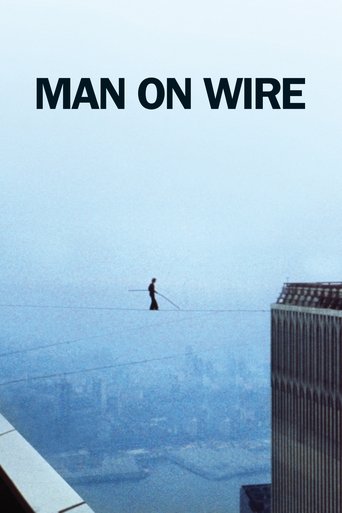
On August 7th 1974, French tightrope walker Philippe Petit stepped out on a high wire, illegally rigged between New York's World Trade Center twin towers, then the world's tallest buildings. After nearly an hour of performing on the wire, 1,350 feet above the sidewalks of Manhattan, he was arrested. This fun and spellbinding documentary chronicles Philippe Petit's "highest" achievement.
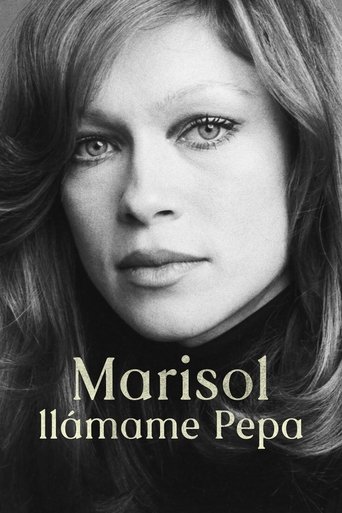
A portrait of the actress and singer Pepa Flores, an incarnation of the recent history of Spain, who, in just twenty-five years of intense career, went from being Marisol, child prodigy of the Franco dictatorship, to being one of the first communist militants, icon of the Transition; an idol of the masses who became a discreet person after having claimed her right to remain silent.

Norbert Witte, once the king of the only amusement park of the former GDR, today he is behind bars in Germany. When fleeing bankruptcy in Berlin, Norbert Witte and his family secretly shipped their rollercoasters to Peru. Things went wrong here too. In a desperate attempt, Norbert tried to smuggle cocaine to Germany. Three years later his 23 years old son Marcel was sentenced to 20 years in a Peruvian prison. Now the father is doing everything he can in order to free his son.

Brindisi, Italy: a focal point in cigarette smuggling. The director returns to her hometown to see what's left of the past and what lies in store for the future.

One of the first (and perhaps therefore ambiguous) approaches to homosexuality in Spain at the time. The film narrates in cinematographic form the problem of the third sex, its justification and its existence within a real environment that is society itself. Two parallel worlds are shown to us; one, the hard and professional life of some artists who try to put on a 'music-hall' show. The other world is independent but it shows us what the life of an old glory was like, of an old man who was an artist in his time. Comparing one era with another is the intention of the film and ultimately its plot.
The story of the tortuous struggle against the silence of the victims of the dictatorship imposed by General Franco after the victory of the rebel side in the Spanish Civil War (1936-1975). In a democratic country, but still ideologically divided, the survivors seek justice as they organize the so-called “Argentinian lawsuit” and denounce the legally sanctioned pact of oblivion that intends to hide the crimes they were subjects of.
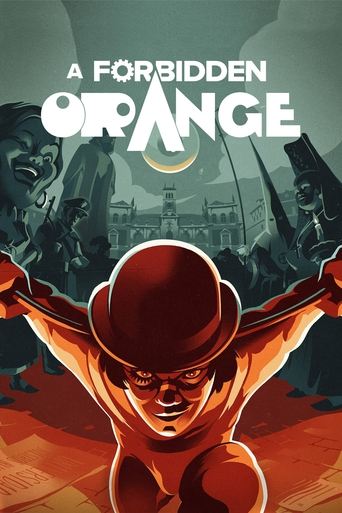
Spain, 1970s. A Clockwork Orange, a film considered by critics and audiences as one of the best works in the history of cinema, directed by Stanley Kubrick and released in 1971, was banned by the strict Franco government. However, the film was finally premiered, without going through censorship, during the 20th edition of the Seminci, the Valladolid Film Festival, on April 24, 1975. How was this possible?
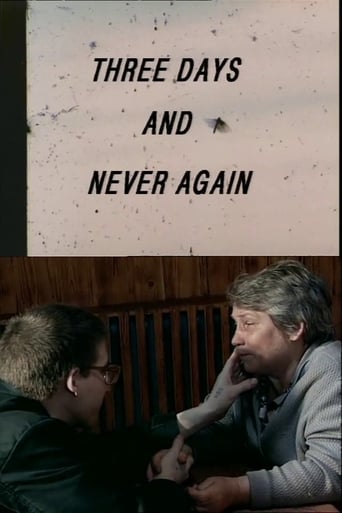
Alexander Birgukov shot and killed his two commanding officers. He was sentenced to death but when it was alleged that one of his victims had sexually harassed him, his sentence was commuted to life in prison. Tenderly revealing two lives lived in limbo, this film bears witness to the first and final visit of his mother, Lubyov.
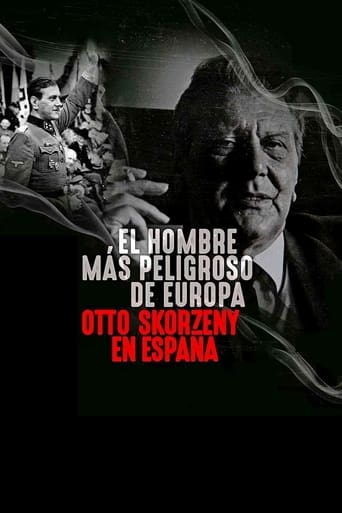
Waffen-SS officer Otto Skorzeny (1908-75) became famous for his participation in daring military actions during World War II. In 1947 he was judged and imprisoned, but he escaped less than a year later and found a safe haven in Spain, ruled with an iron hand by General Francisco Franco. What did he do during the many years he spent there?
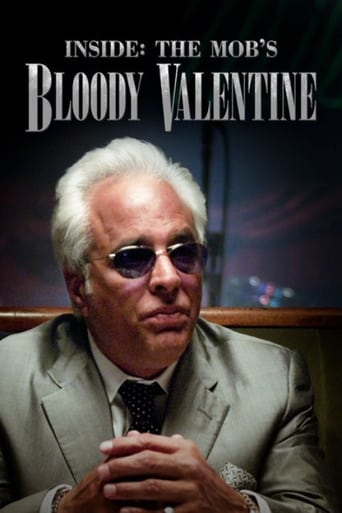
The St. Valentine's Day massacre is the stuff of American legend, and the tale is familiar to nearly everyone. But the story of that bloody day in Chicago has never been told, or seen, like this before. Cutting-edge graphics and frenetic recreations accompany Johnny Fratto, son of onetime Al Capone-associate Louis "Lew" Fratto, back to Chicago, where he uncovers massacre myths and learns more about the life his father and uncles led when they roamed those lawless streets in the 1920s. Johnny gets guidance and opinions from a team of renowned Chicago gangster experts, and bridges the gap between the stories he heard as a little boy and the reality he lived growing up in a mob family. Johnny's take about what happened on Feb. 14, 1929 will surprise you.