
Women's Memoirs
2005-07-06 · 31 min · Not rated
The Punta de Rieles prison was where most female political prisoners were incarcerated during the dictatorship in Uruguay. The way up to the building led through “the meadow” where there were animals grazing, and the prison itself was surrounded with flowers. The place seemed eminently liveable, almost comfortable, and at first sight there was no sign of the silent struggle going on behind those walls. This documentary is an attempt to reconstruct life at the prison through the testimony of some of the hundreds of women who were there and who resisted the military regime's attempts to grind them down and destroy them.
Trailers are previews, not full movies.
No authorized playback source configured. Use the legal watch options below.
Production details
- Directors
- Virginia Martínez
- Production companies
- Unavailable
- Countries
- Uruguay
- Status
- Released
Top Cast
Cast unavailable.
Title information and images are supplied by TMDb. Explore our discovery guide for advice on comparing metadata and legal viewing options.
Where to watch
Availability provided by JustWatch via TMDb. Offers can change. Provider links are listed on TMDb; full playback requires a separately authorized source.
Availability not listed for this country.
Seasons & episodes
Recommendations
A documentary on the life of Uruguayan politician and former guerrilla fighter José Mujica.
The chronicle of the political tension in Chile in 1973 and of the violent counter revolution against the democratically elected government of Salvador Allende.
Unravel the case of Utah therapist Jodi Hildebrandt, whose child abuse arrest with parenting YouTuber Ruby Franke exposed a twisted tale of manipulation.
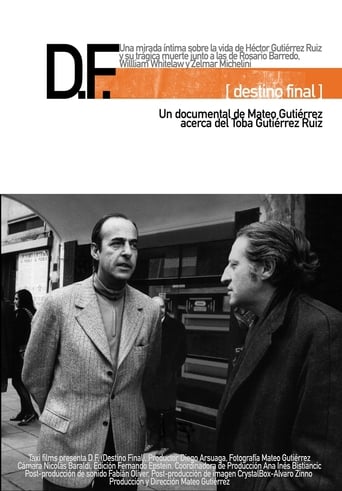
Documentary by Mateo Gutiérrez about the life of his father, Héctor "Toba" Gutiérrez Ruiz (1934-1976), which includes interviews with people who witnessed moments in the life of the former president of the House of Representatives, assassinated by the Uruguayan dictatorship

Over 35 years after Bob Lazar's revelations, this documentary exposes secrets of a facility the government still denies. Featuring Lazar's testimony, recreations, and new evidence, it reopens a case that continues to spark global curiosity
This revealing portrait of Cuba follows the lives of Fidel Castro and three Cuban families affected by his policies over the last four decades.

A detailing of the rise to prominence and global sporting superstardom of six supremely talented young Manchester United football players (David Beckham, Nicky Butt, Ryan Giggs, Paul Scholes, Phil and Gary Neville). The film covers the period 1992-1999, culminating in Manchester United's European Cup triumph.

A compilation of over 30 years of private home movie footage shot by Lithuanian-American avant-garde director Jonas Mekas, assembled by Mekas "purely by chance", without concern for chronological order.
Hugo Chavez was a colourful, unpredictable folk hero who was beloved by his nation’s working class. He was elected president of Venezuela in 1998, and proved to be a tough, quixotic opponent to the power structure that wanted to depose him. When he was forcibly removed from office on 11 April 2002, two independent filmmakers were inside the presidential palace.

In the Realms of the Unreal is a documentary about the reclusive Chicago-based artist Henry Darger. Henry Darger was so reclusive that when he died his neighbors were surprised to find a 15,145-page manuscript along with hundreds of paintings depicting The Story of the Vivian Girls, in What is Known as the Realms of the Unreal, of the Glodeco-Angelinnian War Storm, Cased by the Child Slave Rebellion.
A road trip across five countries to explore the social and political movements as well as the mainstream media's misperception of South America while interviewing seven of its elected presidents.

Documentary filmmaker Amy Berg investigates the life of 30-year pedophile Father Oliver O'Grady and exposes the corruption inside the Catholic Church that allowed him to abuse countless children. Victims' stories and a disturbing interview with O'Grady offer a view into the troubled mind of the spiritual leader who moved from parish to parish gaining trust ... all the while betraying so many.
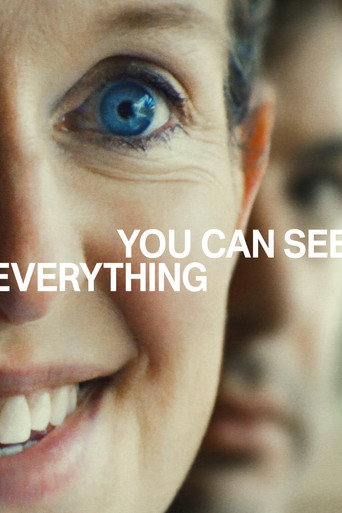
Thirty-four days before she's sent to prison, notorious Silicon Valley founder Elizabeth Holmes invites a skeptical film crew to document her every move. What begins as an intimate portrait of an enigmatic felon becomes a mind-bending three-year journey into the abyss.

A documentary on the expletive's origin, why it offends some people so deeply, and what can be gained from its use.
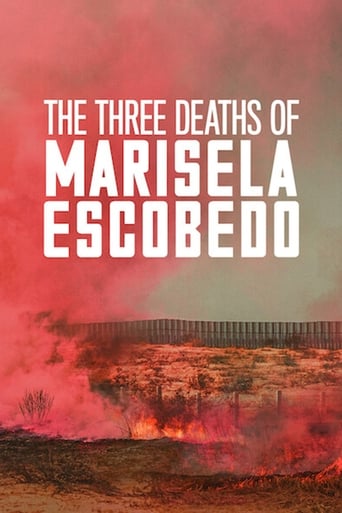
After the death of her daughter at the hand of her boyfriend, Marisela Escobedo began to fight for justice not only against the murderer but also against the corrupt Mexican judicial system.

When Allied forces liberated the Nazi concentration camps in 1944-45, their terrible discoveries were recorded by army and newsreel cameramen, revealing for the first time the full horror of what had happened. Making use of British, Soviet and American footage, the Ministry of Information’s Sidney Bernstein (later founder of Granada Television) aimed to create a documentary that would provide lasting, undeniable evidence of the Nazis’ unspeakable crimes. He commissioned a wealth of British talent, including editor Stewart McAllister, writer and future cabinet minister Richard Crossman – and, as treatment advisor, his friend Alfred Hitchcock. Yet, despite initial support from the British and US Governments, the film was shelved, and only now, 70 years on, has it been restored and completed by Imperial War Museums under its original title "German Concentration Camps Factual Survey".
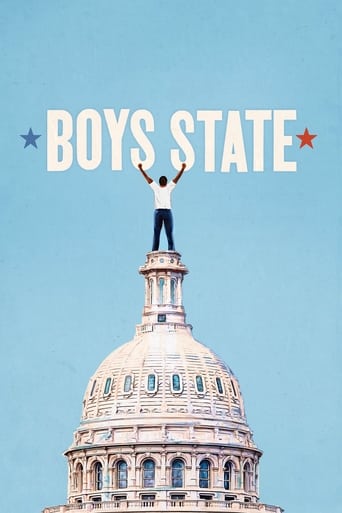
This raucous journey into the heart of democracy captures an unusual rite of passage: 1,100 teenage boys from across Texas coming together to build a representative government from the ground up.
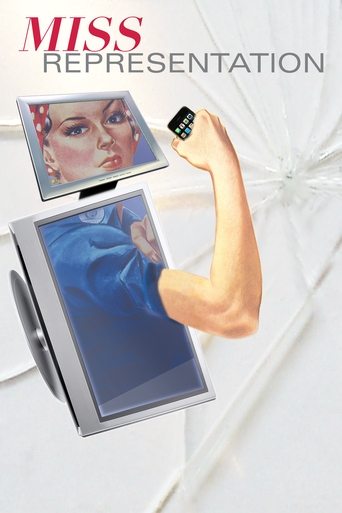
The film MISS REPRESENTATION exposes how American youth are being sold the concept that women and girls’ value lies in their youth, beauty and sexuality. Explores the under-representation of women in positions of power and influence in America, and challenges the media's limited portrayal of what it means to be a powerful woman. It’s time to break that cycle of mistruths.

A string of threatening emails escalates into a revenge plot involving a newly married US marshal and his ex-girlfriend.
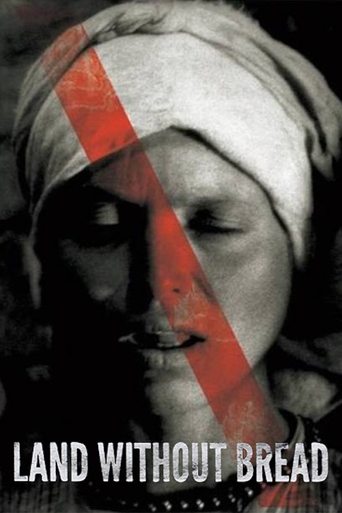
An exploration —manipulated and staged— of life in Las Hurdes, in the province of Cáceres, in Extremadura, Spain, as it was in 1932. Insalubrity, misery and lack of opportunities provoke the emigration of young people and the solitude of those who remain in the desolation of one of the poorest and least developed Spanish regions at that time.
Similar titles

Amid the civil-military dictatorship implanted with the 1964 coup, Sergio Muniz had the idea of making a documentary about the action of the Death Squad. At the time, the press still had some freedom to disseminate the work of these death squads formed by police officers of various ranks, and that he acted on the outskirts of cities like Sao Paulo and Rio de Janeiro. The victims of police repression (as today) were men, poor and black, and this condition is supposed criminals.
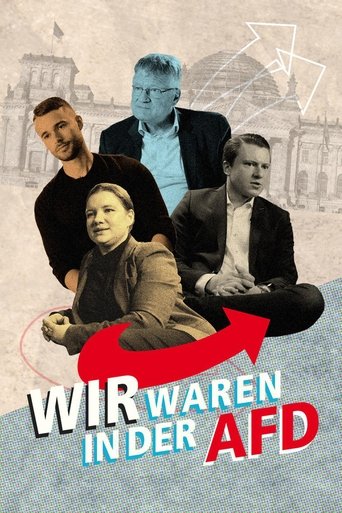
The AfD, founded in 2013, is a right-wing party that has become increasingly radicalized in recent years. To illustrate this, only those who enthusiastically joined the party in its early years are heard. They describe what they looked for and found in the party, but also how and why they left, disillusioned and frightened by the AfD's developments. How did they experience the party's radicalization process? How did friends and family react? When and why did they decide to turn their back on the party? How difficult was the exit process? The documentary provides an illuminating inside view of this party, which has been driving the established parties and the political establishment ahead of it for over ten years, gives viewers a unique look into the AfD's chronicle and world of thought and is at the same time a film about the mechanisms of political radicalization.
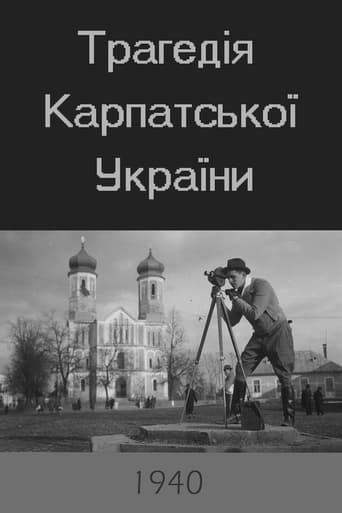
Documentary-filmed events in the Carpatho-Ukraine (aka Ruthenia) during 1939 drive this history of the Ukraine's struggle for independence as a nation.
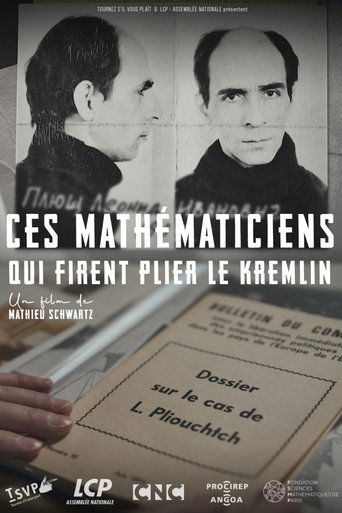
On January 15, 1972, Leonid Pliouchtch, a Ukrainian mathematician who was unknown at the time, was locked up in a Soviet psychiatric institution and accused of dissidence. His wife, Tatiana, fought for his defense and contacted a committee of French mathematicians to help him. Led by Laurent Schwartz, they launched a three-year campaign to secure his release and succeeded in getting the USSR to back down on the issue.
A documentary about the current political state of Brazil.
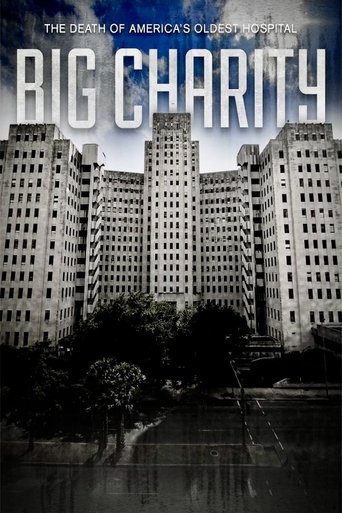
This documentary film includes never-before-seen footage and exclusive interviews to tell the story of Charity Hospital, from its roots to its controversial closing in the wake of Hurricane Katrina. From the firsthand accounts of healthcare providers and hospital employees who withstood the storm inside the hospital, to interviews with key players involved in the closing of Charity and the opening of New Orleans’ newest hospital, “Big Charity” shares the untold, true story around its closure and sheds new light on the sacrifices made for the sake of progress.
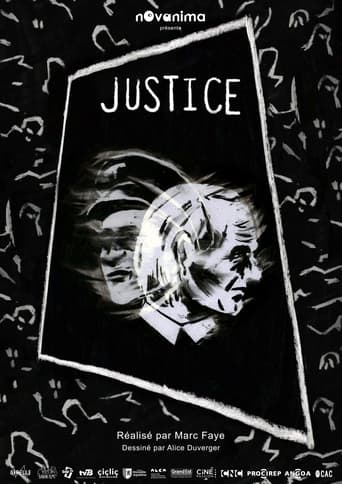
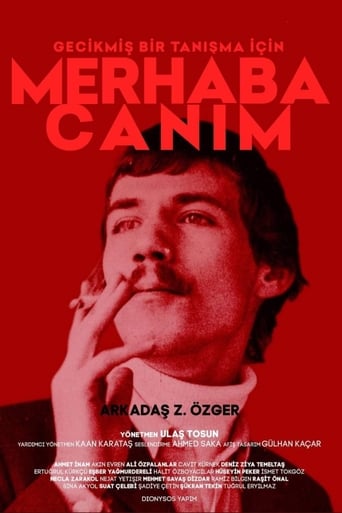
The documentary is titled after Arkadaş Z. Özger’s poem “Hello My Dear” which had caused much controversy in the period it was first published. Considered to be in defiance of heteronormativity, the said poem includes references to the poet’s personality, his family, his relationship to the society, and his “unexpected” death, which came three years after its publication. Today, 50 years after it was written, the documentary follows these same lines in the poem utilising cinematic elements. The documentary also rediscovers the poetics; reaches out to the family, the comrades, the friendships, departing from the official historical accounts, cognizant of his experience of otherness, in pursuit of the “lost” portrait of Arkadaş Z. Özger.

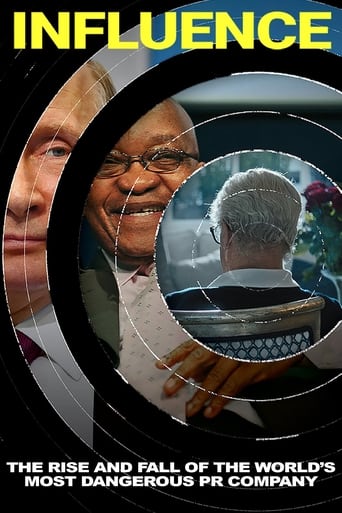
Charting the recent advancements in weaponized communication by investigating the rise and fall of the world’s most notorious public relations and reputation management firm: the British multinational Bell Pottinger.
The documentary Felipe González approaches some of the most important facets and stages of the Andalusian politician's life, before becoming President of the Government of Spain: his early years, his high school studies at the school of the Claretian Fathers in Seville, his years in the Catholic Action University Youth and the Catholic Workers' Youth, his entry into the Spanish Socialist Workers' Party (PSOE).
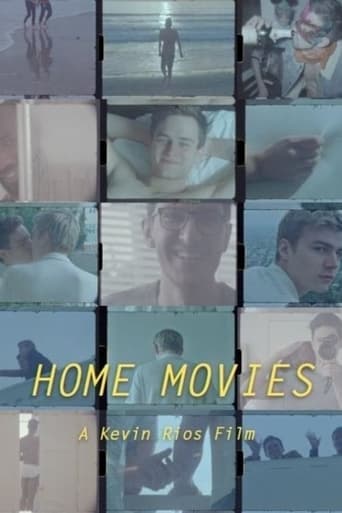
In this home movie collection of gay men, memory serves as an act of hope, power, and above all, resilience.
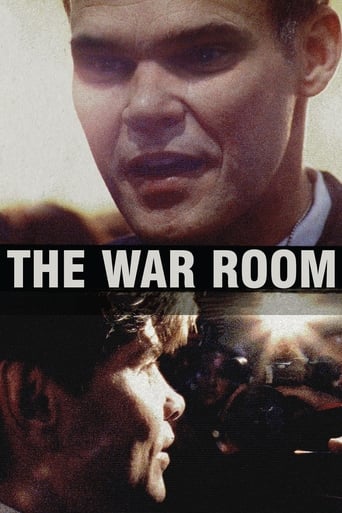
A behind-the-scenes documentary about the Clinton for President campaign, focusing on the adventures of spin doctors James Carville and George Stephanopoulos.

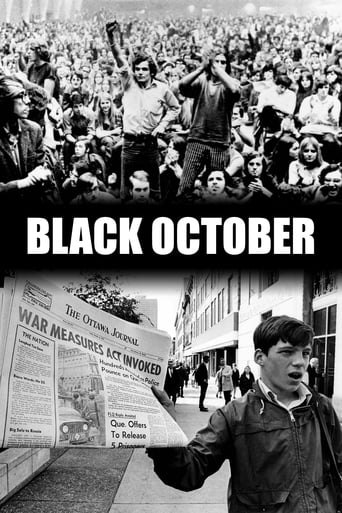
A documentary recounting the kidnappings of British Trade Commissioner James Cross and Quebec Vice-Premier & Minister of Labour Pierre Laporte by the FLQ on October 5, 1970 in Quebec.

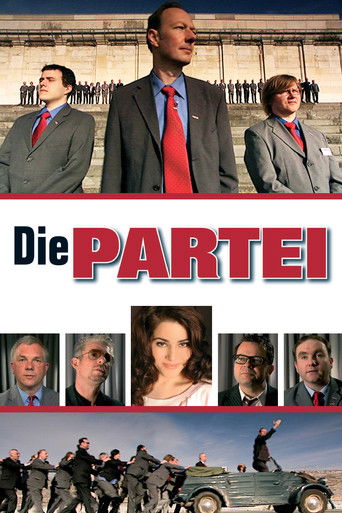
20 years after the fall of the Wall, the economic crisis prevails. In the ruined peripheral areas of West Germany, resentment towards the new federal states is growing. The consequences of decades of uncontrolled transfers from West to East are now clearly visible: while the zone has the highest density of water parks in Europe and the East German cities are being pimped out with designer street lighting, entire city archives are collapsing in the run-down West and weeds are sprouting up on the pothole-strewn streets. The times when Merkel was still locked away behind the Wall and the Federal Republic was in full bloom are long gone. The former people's parties SPD and CDU are just as incapable of acting as the fun party FDP, only Die PARTEI continues to gain popularity and now has over 8,200 members. Is it Germany's last resort?

Alex Jones interviews Walter Burien, commodity trading adviser (CTA) of 15 years about the biggest game in town. There are over 85,000 federal and regional governmental institutions: school districts, water and power authorities, county and city governments – and they own over 70 percent of the stock market.