

Fire in the Heartland: Kent State, May 4, and Student Protest in America
2017-05-05 · 86 min · Not rated
This is the story of Kent State University students who stood up to question racism, violence against protesters, and the long American involvement in the Vietnam War. On May 4, 1970, the National Guard shot thirteen of them, killed four, and all were forever changed.
Trailers are previews, not full movies.
No authorized playback source configured. Use the legal watch options below.
Production details
- Directors
- Daniel Miller
- Production companies
- Fire River Pictures
- Countries
- United States of America
- Status
- Released
Top Cast
Cast unavailable.
Title information and images are supplied by TMDb. Explore our discovery guide for advice on comparing metadata and legal viewing options.
Where to watch
Availability provided by JustWatch via TMDb. Offers can change. Provider links are listed on TMDb; full playback requires a separately authorized source.
Availability not listed for this country.
Seasons & episodes
Recommendations

Set both in Latin America and the United States, the film explores the historic and current relationship of Washington with countries such as Venezuela, Bolivia and Chile. Pilger says that the film "...tells a universal story... analysing and revealing, through vivid testimony, the story of great power behind its venerable myths. It allows us to understand the true nature of the so-called "war on terror". According to Pilger, the film’s message is that the greed and power of empire is not invincible and that people power is always the "seed beneath the snow".

“The Soviet Story” is a story of an Allied power, which helped the Nazis to fight Jews and which slaughtered its own people on an industrial scale. Assisted by the West, this power triumphed on May 9th, 1945. Its crimes were made taboo, and the complete story of Europe’s most murderous regime has never been told. Until now...

Prelude to War was the first film of Frank Capra's Why We Fight propaganda film series, commissioned by the Pentagon and George C. Marshall. It was made to convince American troops of the necessity of combating the Axis Powers during World War II. This film examines the differences between democratic and fascist states.

Pete Postlethwaite stars as a man living alone in the devastated future world of 2055, looking at old footage from 2008 and asking: why didn’t we stop climate change when we had the chance?

The history of cinematic sound, told by legendary sound designers and visionary filmmakers.

Cameramen and women discuss the craft and art of cinematography and of the "DP" (the director of photography), illustrating their points with clips from 100 films, from Birth of a Nation to Do the Right Thing. Themes: the DP tells people where to look; changes in movies (the arrival of sound, color, and wide screens) required creative responses from DPs; and, these artisans constantly invent new equipment and try new things, with wonderful results. The narration takes us through the identifiable studio styles of the 30s, the emergence of noir, the New York look, and the impact of Europeans. Citizen Kane, The Conformist, and Gordon Willis get special attention.
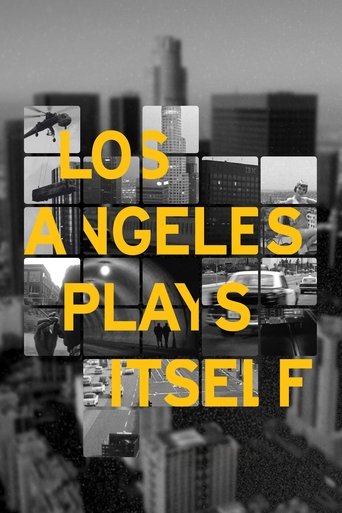
From its distinctive neighborhoods to its architectural homes, Los Angeles has been the backdrop to countless movies. In this dazzling work, Andersen takes viewers on a whirlwind tour through the metropolis' real and cinematic history, investigating the myriad stories and legends that have come to define it, and meticulously, judiciously revealing the real city that lives beneath.
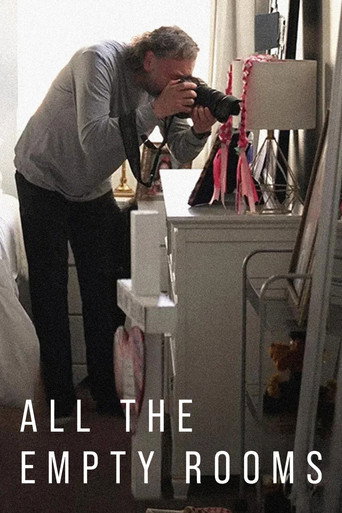
A journalist and a photographer set out to memorialize the bedrooms left behind by children killed in school shootings.

Oliver Stone charts the history of the United States from the Second World War to the present.

When Sgt. First Class Brian Eisch is critically wounded in Afghanistan, it sets him and his sons on a journey of love, loss, redemption and legacy.

A documentary about World War I with never-before-seen footage to commemorate the centennial of Armistice Day, and the end of the war.
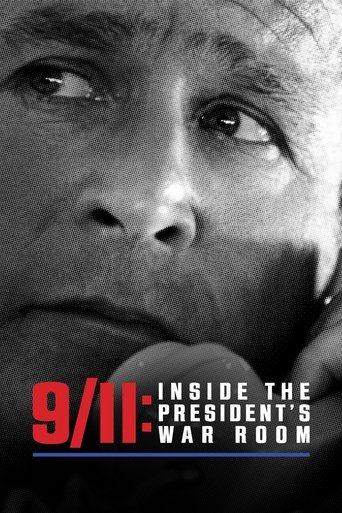
Experience the events of September 11, 2001 through the eyes of President Bush and his closest advisors as they personally detail the crucial hours and key decisions from that historic day.

When Allied forces liberated the Nazi concentration camps in 1944-45, their terrible discoveries were recorded by army and newsreel cameramen, revealing for the first time the full horror of what had happened. Making use of British, Soviet and American footage, the Ministry of Information’s Sidney Bernstein (later founder of Granada Television) aimed to create a documentary that would provide lasting, undeniable evidence of the Nazis’ unspeakable crimes. He commissioned a wealth of British talent, including editor Stewart McAllister, writer and future cabinet minister Richard Crossman – and, as treatment advisor, his friend Alfred Hitchcock. Yet, despite initial support from the British and US Governments, the film was shelved, and only now, 70 years on, has it been restored and completed by Imperial War Museums under its original title "German Concentration Camps Factual Survey".

A visual montage portrait of our contemporary world dominated by globalized technology and violence.
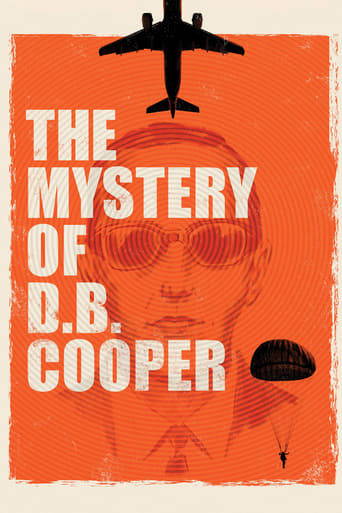
This documentary brings to life the stories of four people believed by their family and friends to be “DB Cooper,” a man who hijacked a 727 flying out of Seattle and jumped from the plane over the wilds of Washington State with a parachute and $200,000, never to be heard from again.
A startling expose of rape crimes on US campuses, their institutional cover-ups, and the devastating toll they take on students and their families. The film follows the lives of several undergraduate assault survivors as they attempt to pursue—despite incredible push back, harassment and traumatic aftermath—both their education and justice.
Michael Moore comes home to the issue he's been examining throughout his career: the disastrous impact of corporate dominance on the everyday lives of Americans (and by default, the rest of the world).
Documentary about the art of film editing. Clips are shown from many groundbreaking films with innovative editing styles.

Amid the failing counteroffensive, a journalist follows a Ukrainian platoon on their mission to traverse one mile of heavily fortified forest and liberate a strategic village from Russian occupation. But the farther they advance through their destroyed homeland, the more they realize that this war may never end.
Former United States Secretary of Defense Donald Rumsfeld discusses his career in Washington D.C. from his days as a congressman in the early 1960s to planning the invasion of Iraq in 2003.
Similar titles
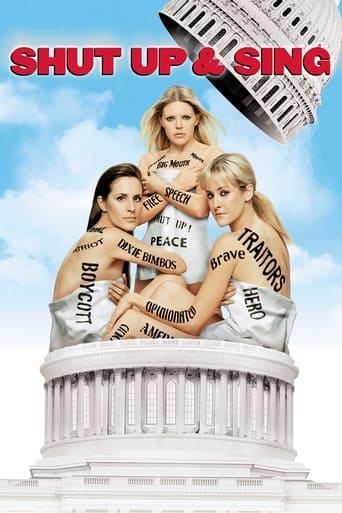
Shut Up and Sing is a documentary about the country band from Texas called the Dixie Chicks and how one tiny comment against President Bush dropped their number one hit off the charts and caused fans to hate them, destroy their CD’s, and protest at their concerts. A film about freedom of speech gone out of control and the three girls lives that were forever changed by a small anti-Bush comment
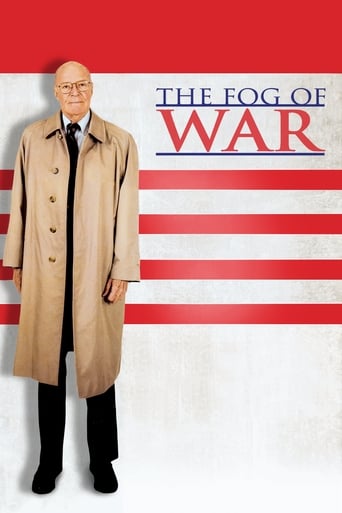
Former corporate whiz kid Robert McNamara was the controversial Secretary of Defense in the Kennedy and Johnson administrations, during the height of the Vietnam War. Augmented by archival footage and cabinet conversation recordings, Errol Morris gives the conflicted McNamara a platform on which he attempts to confront his and the U.S. government's actions in Southeast Asia in light of the horrors of modern warfare, the end of ideology and the punitive judgment of history.
A student is held up in the library while a riot rages outside. As SDS protesters head to burn the library down, he has to fend them off with his baseball bat. This film opens with actual footage of civil disturbances in the 1960s, and moves on to images of historical American figures.
Contrasting radical mobs, anarchy, and 1960s counterculture with footage of American manufacturing and innovation, this film celebrates the concept of American exceptionalism and argues that anti-Vietnam War protesters were influenced by communism, atheism, and immorality. Set mostly in a university library, this political debate between a medical student, his 1770s ancestor, and a history professor is a sequel to the 1972 National Education Program film, Brink of Disaster! Two additional characters appear in this drama: a 19th-century steamboat captain, and the student’s grandfather - an early 20th-century automobile worker. The National Education Program at Harding College in Searcy, Arkansas created a variety of widely-distributed anti-communism films from the mid-1940s to the early 1970s.
Students from nine nations unite on August 7, 1950 at the Franco-German border near Germanshof, tear down the barriers and remove the border posts and barriers, which they burn in a ceremony. This act is a commitment to Europe and a protest against the arbitrariness of borders between nations.

In protest of the Iraq war, student activists storm their admin building and sit in.

L, a student in India witness to the government's violent response to university protests, writes letters to her estranged lover while he is away.
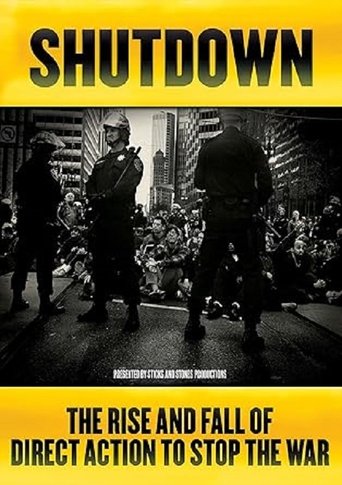
In the winter of 2002-'03, as the US was building its case to attack Iraq, people around the world responded with a series fo the largest peace protests in history. Shutdown: The Rise and Fall of Direct Action to Stop the War, is an action-packed documentary chronicling how DASW successfully organized to shut down a major US city and how they failed to effectively maintain the organization to fight the war machine and end the occupation of Iraq. Created by organizers involved with DASW, Shutdown combines detailed information on organizing for a mass action, critical interviews on organizing pitfalls, and the wisdom of hindsight. It is a must-see film for those engaged in the continuous struggle toward social justice.
The film speaks of student demonstrations in Belgrade, 1969 and of the critical quality, enthusiasm and discipline of this form of protest. It was the most powerful public criticism of "red bourgeoisie" - members of communist apparatus, who suppressed creativity and affirmation of new generations throughout Eastern block.
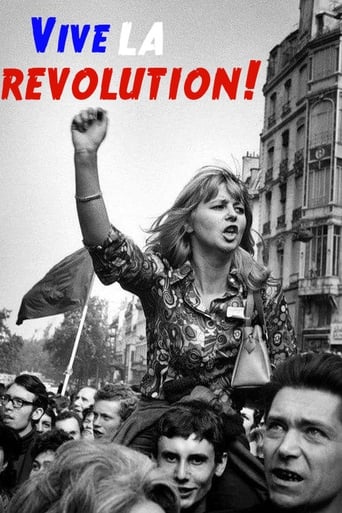
In 1968 Joan Bakewell was one of the few female TV presenters, fronting the BBC's Late Night Line-Up and addressing daily the most pressing issues of the time. In this film she looks back at the events that led to what for many became the defining event of that extraordinarily turbulent year - the protests in France in May. While the rest of the world was in turmoil, with the Vietnam War causing increasing dissent, the Civil Rights movement growing in intensity and young people finding new ways of expressing themselves, as 1968 began it seemed to France's president, General de Gaulle, that his country was immune to the kind of protest sweeping the rest of the world.

The Vietnam War protest movement from the student point of view is the basis for this documentary shot in the San Francisco Bay area and dealing mainly with a protest march from the University of California to the Oakland Army Terminal in 1966.
An analysis of the social upheaval of May 1968, made in the immediate wake of the workers’ and students’ protests. The picture consists of two parts, each with with identical image tracks, and differing narration.

On October 2, 1968, a student uprising descends into violence after the Mexican government begins to use lethal force against the protesters.
Through archival footage and testimonies from professors, students, staff, and graduates, the documentary traces the history of the National University of Arts, focusing on the Audiovisual Department, while critically addressing the impact of the current government's underfunding of education and cultural institutions in Argentina.
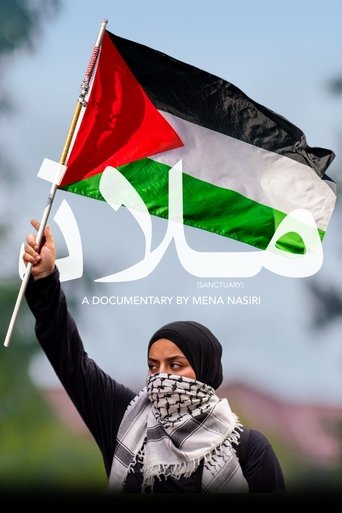
Exploring police brutality and institutional hostility towards Arab and Muslim students, this documentary reveals how the University of Michigan's broad trends of surveillance transform a sanctuary into a symbol of systemic oppression.

This is a documentary produced by Richard Freeman. This part contains the now famous 1992 protest in which the Henry Administration Building was taken over by students. University Police, Champaign Police and Urbana Police are called in to remove students. Led by Latino/a students due to growing issues facing their community on the Illinois campus.
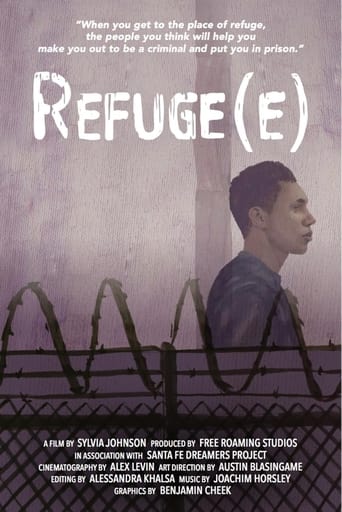
Refuge(e) traces the incredible journey of two refugees, Alpha and Zeferino. Each fled violent threats to their lives in their home countries and presented themselves at the US border asking for political asylum, only to be incarcerated in a for-profit prison for months on end without having committed any crime. Thousands more like them can't tell their stories.

Students seeking greater control over the hiring of faculty occupy the offices of the Political Science Department at McGill University. The film crew lives with the students and follows their action through confusion, argument, dissent, and negotiations with faculty. The result is an intimate view of a student political action.
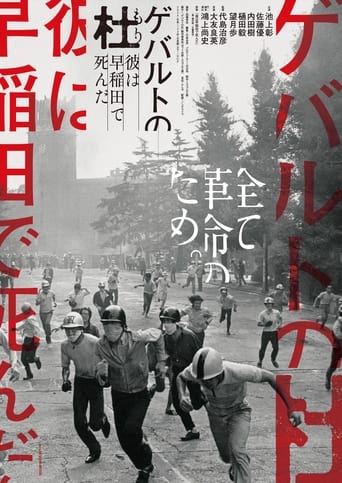
A documentary about the end of the student movement in 1972 and the lynching of Daizaburo Kawaguchi, a student at Waseda University. The documentary interweaves testimonies from japanese intellectuals and a short play, written and directed by Shôji Kôkami, about the murder.