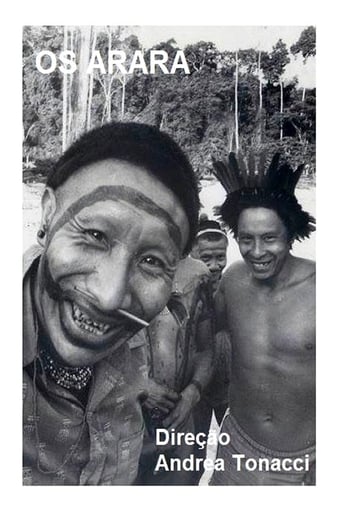
Os Arara
1983-01-01 · 107 min · ★ 5.0
Documentation of the preparations and expeditions of the Frente de Atração Arara da Funai, in the state of Pará, Brazil. With the construction of the Transamazônica, the Arara territory (without contact with the white man) is cut in half, and the Indians react by attacking the workers. Aware that all contact is a creation of dependency, the sertanista Sydney Possuelo, who also reflexively narrates the documentary, leads the expeditions that aim to identify the groups, how many individuals there are, establishing territorial limits to protect the area against invaders and loggers in the region.
Trailers are previews, not full movies.
No authorized playback source configured. Use the legal watch options below.
Production details
- Directors
- Andrea Tonacci
- Production companies
- Unavailable
- Countries
- Brazil
- Status
- Released
Top Cast
Title information and images are supplied by TMDb. Explore our discovery guide for advice on comparing metadata and legal viewing options.
Where to watch
Availability provided by JustWatch via TMDb. Offers can change. Provider links are listed on TMDb; full playback requires a separately authorized source.
Availability not listed for this country.
Seasons & episodes
Recommendations

A string of threatening emails escalates into a revenge plot involving a newly married US marshal and his ex-girlfriend.

In an intimate and joyful story of love in the face of loss, celebrated poets Andrea Gibson and Megan Falley find strength—and unexpected hilarity—in what might be their final year together.

Over 35 years after Bob Lazar's revelations, this documentary exposes secrets of a facility the government still denies. Featuring Lazar's testimony, recreations, and new evidence, it reopens a case that continues to spark global curiosity

An inside look at one of the most anticipated movie sequels ever with James Cameron and cast.
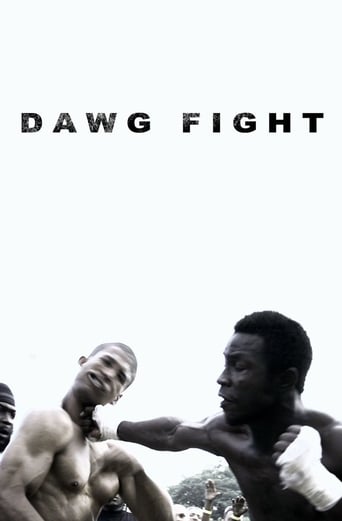
In a crime-plagued neighborhood near Miami, brutal, bare-knuckled backyard fights give young men a chance to earn money -- and self-respect.

In the Realms of the Unreal is a documentary about the reclusive Chicago-based artist Henry Darger. Henry Darger was so reclusive that when he died his neighbors were surprised to find a 15,145-page manuscript along with hundreds of paintings depicting The Story of the Vivian Girls, in What is Known as the Realms of the Unreal, of the Glodeco-Angelinnian War Storm, Cased by the Child Slave Rebellion.
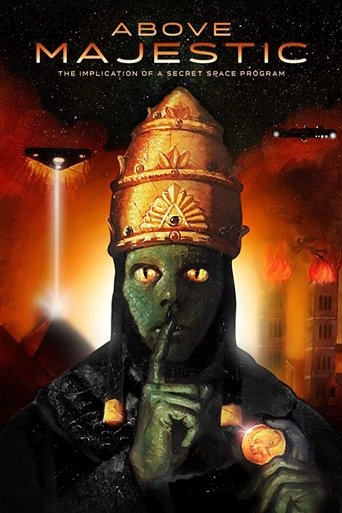
A look at the origins, history and conspiracies behind the "Majestic 12", a clandestine group of military and corporate figureheads charged with reverse-engineering extraterrestrial technology.
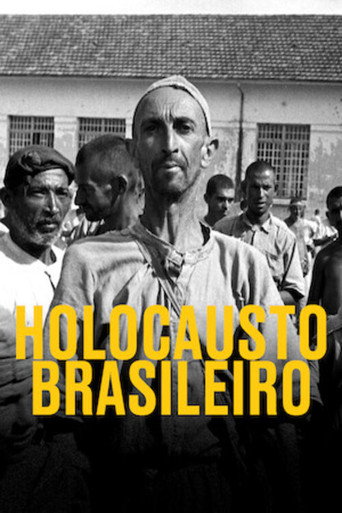
Award-winning journalist Daniela Arbex examines the horrors of the Colônia psychiatric hospital, where more than 60,000 people were killed over decades.

The film follows adventurer Jeff Johnson as he retraces the epic 1968 journey of his heroes Yvon Chouinard and Doug Tompkins to Patagonia.

Through deeply personal interviews with her siblings and an examination of the photographs, letters, and belongings left behind, Mariska assembles a new portrait of her mother Jayne Mansfield, an extraordinary and complex woman.
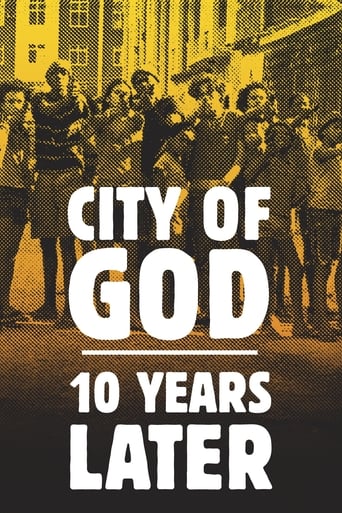
City of God – 10 Years Later investigates what happened to the actors who took part in the award-winning film directed by Fernando Meirelles and Katia Lund. This documentary shows what City of God’s worldwide success meant to their lives. Were the actors prepared for the film’s success? Did the social background of some of them prove stronger than the opportunity that came their way?

Alexander McQueen's rags-to-riches story is a modern-day fairy tale, laced with the gothic. Mirroring the savage beauty, boldness and vivacity of his design, this documentary is an intimate revelation of McQueen's own world, both tortured and inspired, which celebrates a radical and mesmerizing genius of profound influence.

Unravel the case of Utah therapist Jodi Hildebrandt, whose child abuse arrest with parenting YouTuber Ruby Franke exposed a twisted tale of manipulation.

Ranjit, a farmer in India, takes on the fight of his life when he demands justice for his 13-year-old daughter, the victim of a brutal gang rape. His decision to support his daughter is virtually unheard of, and his journey unprecedented.
Legendary journalist Gay Talese unmasks a motel owner who spied on his guests for decades. But his bombshell story soon becomes a scandal of its own.

A documentary about the life and films of director John Ford.
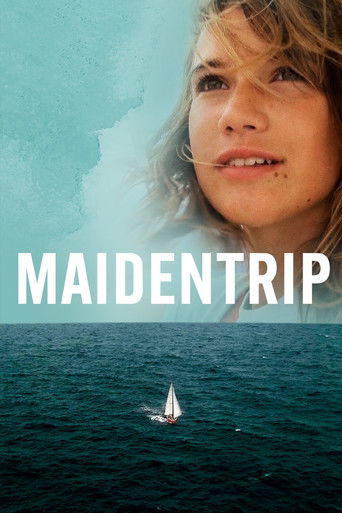
14-year-old Laura Dekker sets out on a two-year voyage in pursuit of her dream to become the youngest person ever to sail around the world alone.

A documentary about how a dominant cultural and demographic institution both sustains their traditional activities and adapts to the digital revolution.
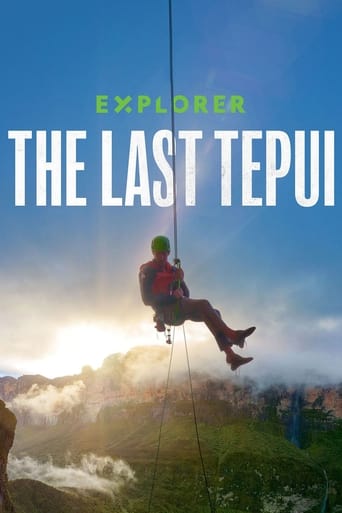
This documentary starring climber Alex Honnold and famous biologist Bruce Means document their expedition to the South American sky islands in search of new species and discoveries. Follows elite climber Alex Honnold and a world-class climbing team led by National Geographic Explorer and climber Mark Synnott on a grueling mission deep in the Amazon jungle as they attempt a first-ascent climb up a 1000 foot sheer cliff.
Go behind the scenes with stars, puppeteers and creators as they bring Jim Henson's magical world of Thra back to life in a sweeping fantasy series.
Similar titles
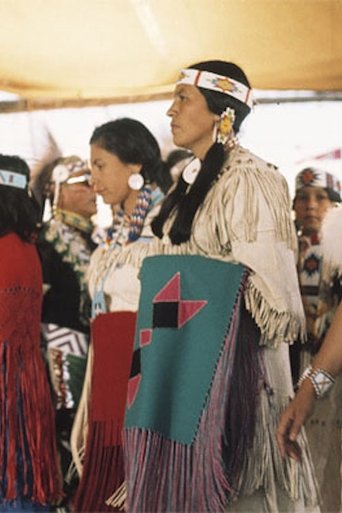
This short documentary examines an innovative educational program developed by John and Gerti Murdoch to teach Cree children their language via Cree folklore, photographs, artifacts, and books that were written and printed in the community. Made as part of the NFB’s groundbreaking Challenge for Change series, Cree Way shows that local control of the education curriculum has a place in Indigenous communities.

The sound of metal creaking as if something is about to break. An old pickup truck adapted to carry passengers crosses the La Guajira desert in Colombia. With the wind come voices that merge among the passengers who travel there. A Wayuu woman returns to her territory, accompanied by her family, after years of exile due to a paramilitary massacre. A cyclical journey where the time layers of the territory touch and the border between the living and the dead is diluted.
The ocean contains the history of all humanity. The sea holds all the voices of the earth and those that come from outer space. Water receives impetus from the stars and transmits it to living creatures. Water, the longest border in Chile, also holds the secret of two mysterious buttons which were found on its ocean floor. Chile, with its 2,670 miles of coastline and the largest archipelago in the world, presents a supernatural landscape. In it are volcanoes, mountains and glaciers. In it are the voices of the Patagonian Indigenous people, the first English sailors and also those of its political prisoners. Some say that water has memory. This film shows that it also has a voice.
Rember Yahuarcani is an indigenous artist from the Uitoto Nation who lives in Lima, Peru. From his clan, the White Heron, only two families remain in Peru. Rember's paintings are inspired by the stories his grandmother Martha told him before she died. However, he has never dived into the darkest part of his nation’s history: the indigenous massacre during the rubber boom. Martha is a survivor of the horror and she speaks to Rember in dreams guiding him in a spiritual journey back to the jungle. He first visits his parents, who are also artists, in the Peruvian jungle. And finally, he sails to La Chorrera, in Colombia, where he confronts the past and meets other members of his clan.
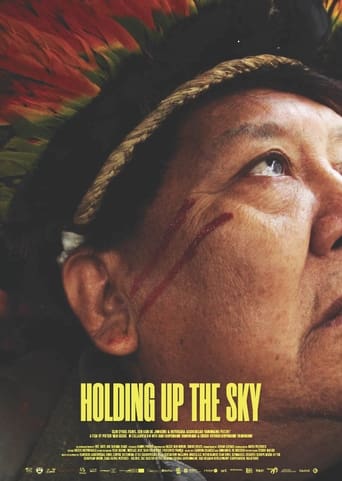
"When the shamans stop dancing and life in the rainforest loses its balance, the sky will collapse and come to crush everything." This wisdom is passed down from generation to generation by the Yanomami of Brazil. But gold miners are polluting the rivers, shamans are dying, the rainforest is disappearing and the earth is getting hotter. Davi Kopenawa, a tribal leader and spokesman for the Yanomami, has been fighting relentlessly against the colonization of his land for 40 years. He warns Westerners that when the sky collapses, they too will be crushed. Why don't they listen? Translated with www.DeepL.com/Translator (free version)
They are an Indian people who have suffered for many years. They were forced to live in unimaginable squalor. Houses not much better than cardboard boxes. No running water, no sewage disposal. Human waste tossed into the streets where children played in it and dogs ate it. As their sense of worth disintegrated, they engaged in a process of self-destruction. 90% of the community became alcoholic. Many of their children sniffed gas. Many more suffered from chronic disease. Stripped of culture, meaning, and hope, they killed themselves at a rate among the world's highest. But their tragedies did not occur in a third world country. They happened in a country with a reputation as one of the world's best places to live-Canada. They are the Innu. For thousands of years they roamed strong and free.
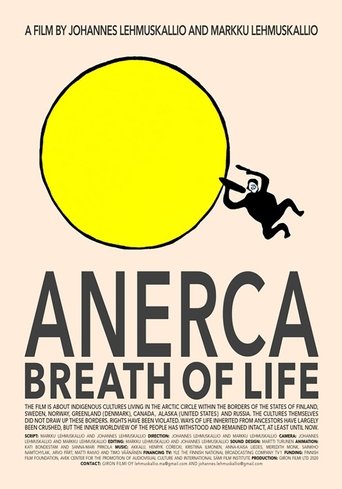
Markku Lehmuskallio has devoted a large part of his documentary work to the indigenous people of the Arctic Circle. In this latest film, co-directed with his son Johannes Lehmuskallio, he composes a fascinating poetic ethnography inspired by the singing, dancing, forms of contemporary existence and, above all, the vital breath of these nomad communities mistreated by History.
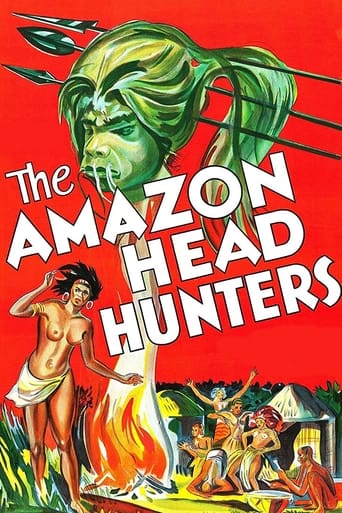
It is thanks to this film that the Marquis gained notoriety with a wider audience. The film is the result of film footage shot between May 1926 and June 1930 in several South American countries. Departing from Guayaquil, he first went to the Galapagos Islands in the Pacific. Upon returning to the capital of Ecuador, chance brought him to the Ocaina Indians, the Boro, the Napo, the Jivaro and the Piro. He explored the Incan mines of Machu Picchu, discovered only a few years prior, and ended his journey on the famed Guano islands. The musical score, inspired by traditional Indian music, was created by Maurice Jaubert.

This documentary follows four female First Nations artists—Doreen Jensen, Rena Point Bolton, Jane Ash Poitras and Joane Cardinal-Schubert are First Nations artists who seek to find a continuum from traditional to contemporary forms of expression. These exceptional artists reveal their philosophies as artists, their techniques and creative styles, and the exaltation they feel when they create. A moving testimony to the role that Indigenous women artists have played in maintaining the voice of their culture.

Go up-river and deep into the jungle far from Brazil's cities and stadiums, where families of giant otters, tufted capuchin monkeys and mischievous coati (South American raccoon cousins) rally their wits to survive in a breathtakingly beautiful yet dangerous land.
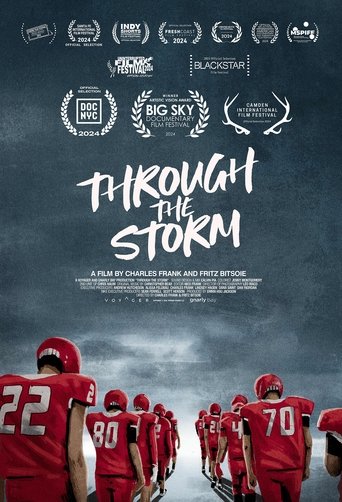
Despite dwindling interest and a two-decade-long losing record, a determined coach and group of young athletes fight to keep their football program alive.

A documentary about Áillohaš (Nils-Aslak Valkeapää), a musician, painter, and poet of the Sámi people in Finland.
Anthropologist and filmmaker João Meirinhos travels in Peruvian Amazonia to speak with healers who work with the plant medicine ayahuasca. The journey begins on the outskirts of Puerto Maldonado in southeastern Peru, and winds northward to Pucallpa and Iquitos.

At twenty-six, Noel Starblanket was one of the youngest Indigenous chiefs in North America--twice elected chief of the Starblanket Reserve, and also elected vice-president of all-Saskatchewan Indigenous organization. His great-grandfather's advice was to "learn the wit and cunning of the White man." That he did. Here he is seen in action, a chief with a briefcase, working with government officials for grants, running for public office, talking down his opposition, and solving the domestic problems of his reserve.

Peru is a country of many contrasts. From the cold waters of the Coast over the 6000 m high Andes to the unique biodiversity of the Amazon Jungle. Peru isn't only Machu Picchu. It's much more.
RESIST; The Unist'oten's Call to the Land is a short documentary that was filmed in the summer of 2013 on unceded Wet'suwet'en territory, 1000 km north of Vancouver in northern BC (western Canada) over the duration of the fourth annual Environmental Action Camp, hosted by the Unist’ot’en (C'ihlts'ehkhyu/Big Frog) Clan. The focus of the film is on the Camp as a year-round resistance to exploitative industry, and what it represents in relation to indigenous sovereignty and the environmental, legal, and social issues surrounding pipeline projects in British Columbia. The film documents one of the most important resistance camps in North America at the time.

The climate is changing, and the Indigenous peoples of the Xingu Indigenous Park, in Mato Grosso, Brazil, are reading the signs everywhere. Trees no longer bloom when they should, fires spread through the forest, the cicadas that once announced the rains have fallen silent, and crops spoil before they ripen. The swallows that used to herald the rainy season no longer appear in the sky. Surrounded by decades of deforestation for soy, corn and cattle, the Xingu peoples look at these devastating changes and wonder what kind of future awaits their grandchildren.
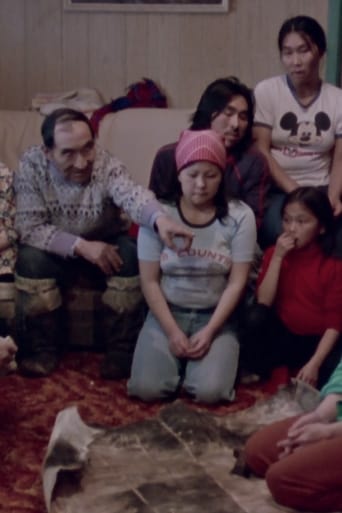
Made in collaboration with the Inuit Tungavingat Nunamini, this film focuses on those dissident members of the Inuit community who rejected the agreement signed on November 11, 1975, between the Northern Quebec Inuit Association, the Québec and federal governments, the James Bay Energy Corporation, the James Bay Development Corporation, Hydro-Québec and the Grand Council of the Crees, which took away Native rights to a territory of almost one million square kilometres. By their words and actions, the dissident Inuit of Povungnituk, Ivujivik and Sugluk express their strong desire to retain their land and their traditions. The filmmakers go into their homes, on the ice and the sea to record first-hand the lives of these northern people.
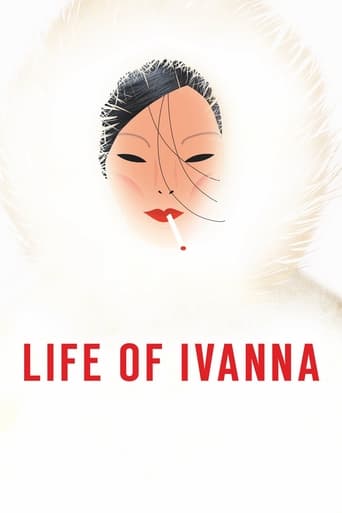
A sensitive and intimate portrait of Ivanna, a nomadic reindeer herder in the Russian Arctic and mother of five small kids. Ivanna is forced to leave the traditional way of life and emigrate to the city, following her own dreams, due to the quickly deteriorating conditions of life in the tundra. We follow her life for several years.