
Red Taxi
2021-03-16 · 14 min · Not rated
An anonymous, authentic video secretly filmed from taxi windows captures fragments of violence right in the middle of clashes between police and protesting Hong Kong residents. In addition to the contact sound of fights, screams, singing, chants of the slogan “Liberate Hong Kong! Revolution of our times!”, and the howls of those who've been beaten, we also hear the conflicting comments of taxi drivers from both sides of the border - Hong Kong and the neighboring mainland Shenzhen.
Trailers are previews, not full movies.
No authorized playback source configured. Use the legal watch options below.
Production details
- Directors
- Unavailable
- Production companies
- Field of Vision, First Look Media
- Countries
- United States of America
- Status
- Released
Top Cast
Cast unavailable.
Title information and images are supplied by TMDb. Explore our discovery guide for advice on comparing metadata and legal viewing options.
Where to watch
Availability provided by JustWatch via TMDb. Offers can change. Provider links are listed on TMDb; full playback requires a separately authorized source.
Availability not listed for this country.
Seasons & episodes
Recommendations
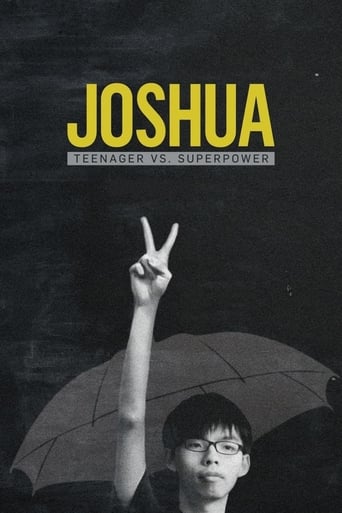
When the Chinese Communist Party backtracks on its promise of autonomy to Hong Kong, teenager Joshua Wong decides to save his city. Rallying thousands of kids to skip school and occupy the streets, Joshua becomes an unlikely leader in Hong Kong and one of China’s most notorious dissidents.

In an intimate and joyful story of love in the face of loss, celebrated poets Andrea Gibson and Megan Falley find strength—and unexpected hilarity—in what might be their final year together.
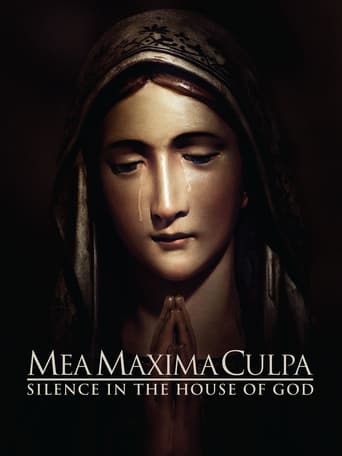
Alex Gibney explores the charged issue of pedophilia in the Catholic Church, following a trail from the first known protest against clerical sexual abuse in the United States and all way to the Vatican.

A string of threatening emails escalates into a revenge plot involving a newly married US marshal and his ex-girlfriend.
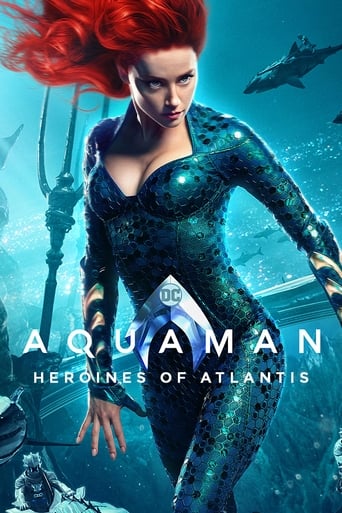
Amber Heard and Nicole Kidman discuss their characters Mera and Atlanna.

Ranjit, a farmer in India, takes on the fight of his life when he demands justice for his 13-year-old daughter, the victim of a brutal gang rape. His decision to support his daughter is virtually unheard of, and his journey unprecedented.

Penetrating the insular world of New York's Hasidic community, focusing on three individuals driven to break away despite threats of retaliation.
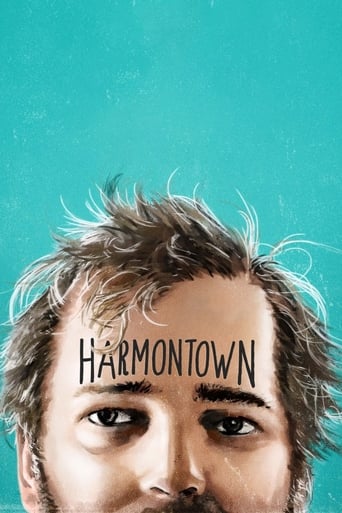
A comedic, brutally honest documentary following self-destructive TV writer Dan Harmon as he takes his live podcast on a national tour.

A documentary on the expletive's origin, why it offends some people so deeply, and what can be gained from its use.
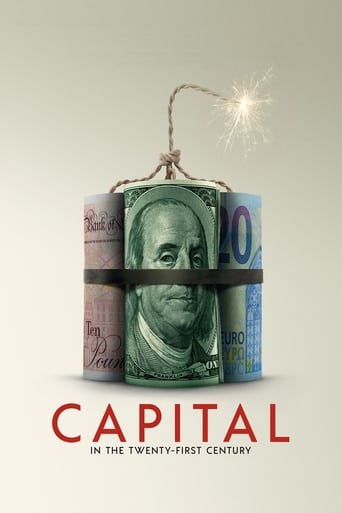
Film adaptation of French economist Thomas Piketty's ground-breaking global bestseller of the same name: an eye-opening journey through wealth and power.
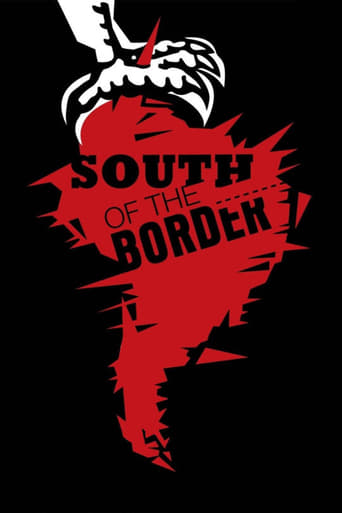
A road trip across five countries to explore the social and political movements as well as the mainstream media's misperception of South America while interviewing seven of its elected presidents.

An inside look at one of the most anticipated movie sequels ever with James Cameron and cast.
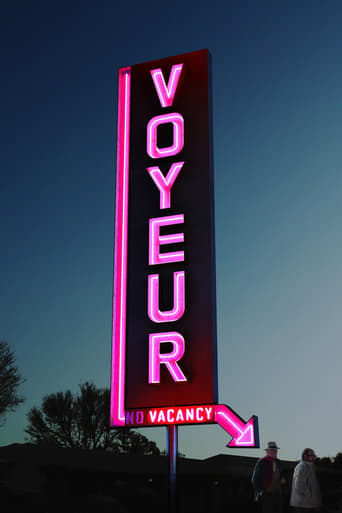
Legendary journalist Gay Talese unmasks a motel owner who spied on his guests for decades. But his bombshell story soon becomes a scandal of its own.

A compilation of over 30 years of private home movie footage shot by Lithuanian-American avant-garde director Jonas Mekas, assembled by Mekas "purely by chance", without concern for chronological order.

In the Realms of the Unreal is a documentary about the reclusive Chicago-based artist Henry Darger. Henry Darger was so reclusive that when he died his neighbors were surprised to find a 15,145-page manuscript along with hundreds of paintings depicting The Story of the Vivian Girls, in What is Known as the Realms of the Unreal, of the Glodeco-Angelinnian War Storm, Cased by the Child Slave Rebellion.
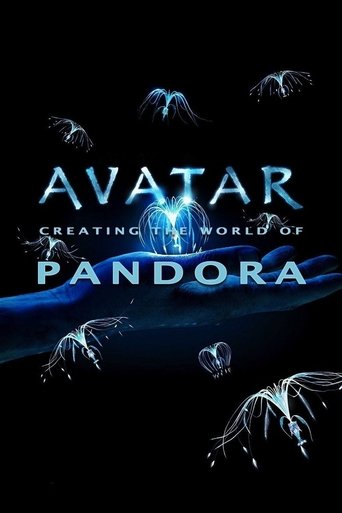
The Making-of James Cameron's Avatar. It shows interesting parts of the work on the set.

This documentary focuses on the actors and their journey over two summers to create the remake to the original IT, by Stephen King. The documentary originally released as bonus material, bundled with IT: Chapter Two.

Director Michael Apted revisits the same group of British-born adults after a 7 year wait. The subjects are interviewed as to the changes that have occurred in their lives during the last seven years.
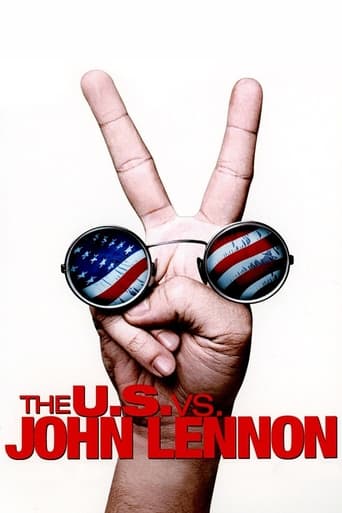
A documentary on the life of John Lennon, with a focus on the time in his life when he transformed from a musician into an antiwar activist.

A documentary about how a dominant cultural and demographic institution both sustains their traditional activities and adapts to the digital revolution.
Similar titles

The work documented the story of Yuli, a Hong Kong domestic worker from Indonesia. She is a novelist who won a literature award and also a journalist dedicated to writing. Between the social event that happened in June in Hong Kong, her thoughts and caring about the city are far more from what people used to imagine a narrative of a domestic worker. They are not only domestic workers but they also have other social roles, e.g. a citizen who lived in Hong Kong.

At the forefront of most of Hong Kong's demonstrations, 'frontliners' (aka 'the valiant', yung mo in Cantonese) are the black-clad, masked, often armed youth willing to use violence against the HK government and its heavily-armed police force. Willis Ho's remarkably revealing doc approaches from the inside, giving them voices and offering understanding, not judgment.

Political engagement spawned the wildest of wonderlands for Hong Kong’s creativity – but as a new law annihilates freedom of expression overnight, underground artists and creatives find themselves targets, and their works disappeared. Together we race to preserve the creative uprising amid China’s crackdown.
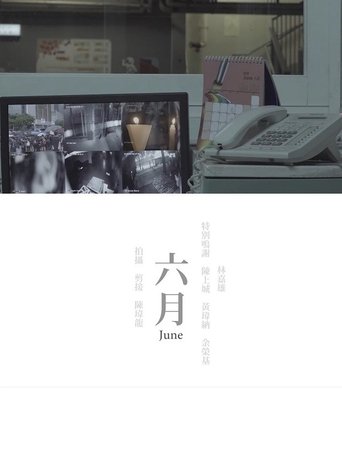
I made June when I didn’t have any inspiration to create a feature film. The documentary is about the rarely known stories in the social movement in June. At first the clips of videos were kept for sorting out my feelings, but after being edited, they were made into a documentary and became a record of history. Six scenes and voices were used to tell what happened during that month.
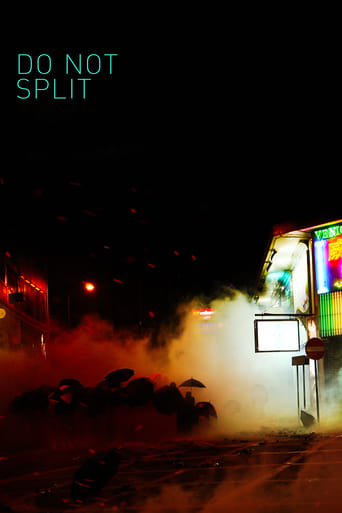
The story of the 2019 Hong Kong protests, told through a series of demonstrations by local protestors that escalate into conflict when highly armed police appear on the scene.
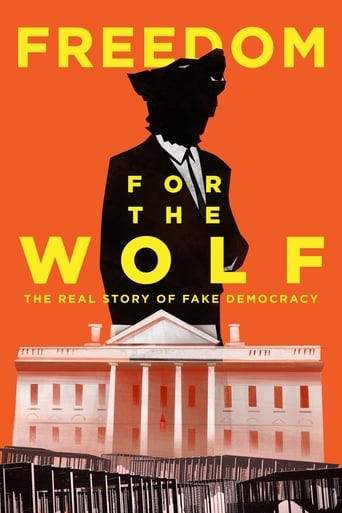
The Real Story of Fake Democracy. Filmed over three years in five countries, FREEDOM FOR THE WOLF is an epic investigation into the new regime of illiberal democracy. From the young students of Hong Kong, to a rapper in post-Arab Spring Tunisia and the viral comedians of Bollywood, we discover how people from every corner of the globe are fighting the same struggle. They are fighting against elected leaders who trample on human rights, minorities, and their political opponents.
The Umbrella Movement of 2014, also known as the Occupy Movement, paved the way for Hong Kong’s current upheavals, but unfolded in significantly different ways. This creative documentary focuses on the intellectual, political, and discursive underpinnings of the social and political actions of 2014, before fast-forwarding to 2019. A range of thoughtful and engaged intellectuals, students, scholars, activists, and artists including Benny Tai, Chan Kin-man, Ray Wong, and Agnes Chow (many of whom are facing imprisonment for their democratic activism) articulate a range of philosophies, viewpoints and emotions, set against Hong Kong’s spectacular urban background of skyscrapers, night lights, and street-occupying mass movements.

As pro-democracy activists and armed police battle in the streets of Hong Kong, ordinary citizens are choosing sides. Historically an outlier of both western and Chinese power, Hong Kong wields its own economic force, affording the city and its people a spirit of independence that has now erupted into clouds of tear gas. Filmmaker Bing Zhou uses a nimble camera to follow a group of protagonists—two opposing political candidates, a tea shop owner, a cab driver, a police officer, a paramedic—on two separate days of conflict. On September 21, 2019, protestors from three districts join forces, resulting in unprecedented violence. Just 10 days later on October 1, the National Day of the People’s Republic of China, previously undecided onlookers show their stripes. Thoughts transform into action in this demonstration of how mercurial and personal Hong Kong’s politics have become.

Franco Mella is a devoted figure whose life bridges Catholicism and Communism. He has journeyed through Asia, lived simply, and fought for social justice, notably within Hong Kong's protest history as depicted in "Ordinary Heroes" (1999). Mella's path weaves through religious and revolutionary movements, from church beginnings to Communist activism and the Handover, always driven by his missionary spirit and communist ideals. For four decades, he has steadfastly championed the oppressed, undeterred by shifting politics, expressing solidarity through music and protest, and remaining a symbol of wisdom and resilience for the people of Hong Kong.
Although the Chinese government promised that Hong Kong would retain separate status until 2047, in recent years the Chinese state has consolidated its power over the metropolis. Large-scale protests by the populace have been brutally suppressed. This mix of documentary, fiction, and visions of the future reveals the current state of desolate depression among the people of Hong Kong. “A desperate attempt to capture the final moments of a sinking island”, as maker Chan Tze-woon himself puts it.

Hongkongers have been experiencing extremely difficult times due to the political movement caused by anti-Extradition Bill since the summer of 2019 followed by the COVID-19 pandemic. This film explores Hongkongers’ fear in various dimensions, be it a concept or actual physical experience, personal or political, private or public, or the mixing of these pairs.
Hundreds of thousands − perhaps even millions − of protestors have taken to the streets of Hong Kong since early June. Sparked initially by the government's plans for a controversial extradition bill, the movement has now transformed into a broader push for greater freedoms and democracy, with anger over police brutality fuelling a cycle of violence. The protests are Hong Kong's biggest challenge to Beijing since its return to China in 1997. If We Burn looks at the movement through the eyes of Hong Kongers whose fates, like their city's future, now hang in the balance.
Two young Hong Kong activists reflect on their resistance against China, are forced to decide between long-term imprisonment and refugee camps for a life in exile, while their movement inspires mass protests in the city they love.

Throughout Hong Kong’s history, Hongkongers have fought for freedom and democracy but have yet to succeed. In 2019, a controversial extradition bill was introduced that would allow Hongkongers to be tried in mainland China. This decision spurred massive protests, riots, and resistance against heavy-handed Chinese rule over the City-State. Award-winning director Kiwi Chow documents the events to tell the story of the movement, with both a macro view of its historical context and footage and interviews from protestors on the front lines.
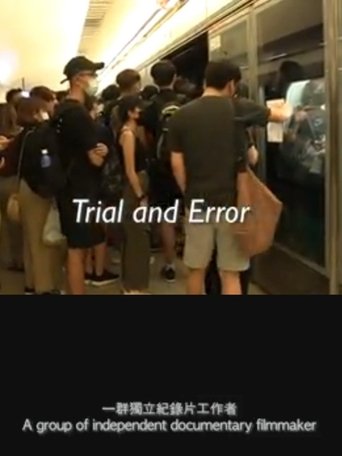
This Anti-ELAB (Anti-Extradition Law Amendment Bill) Movement documentary short takes us back to the airport occupation on 12 August 2019. Although this new form of protest soon turned into a crisis, it became an important lesson for the protesters. Compared to the tension inside the airport terminal, the long walk home at sunset on the Lantau highway, which connects the Hong Kong International Airport to the residential areas, felt like a reminiscence of a school field trip.
When the Chinese Communist Party backtracks on its promise of autonomy to Hong Kong, teenager Joshua Wong decides to save his city. Rallying thousands of kids to skip school and occupy the streets, Joshua becomes an unlikely leader in Hong Kong and one of China’s most notorious dissidents.
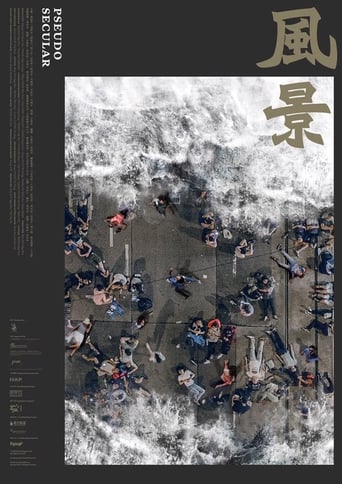
They are frozen in place, stagnating without any direction. Around them, things change rapidly.

Four years later, Hong Kong’s 2014 democratic Umbrella Movement has been nominated for a Nobel Peace Prize, yet political backlash against protesters has intensified. Repeatedly the target of censorship*, Raise the Umbrellas traces the lineage of the massive Hong Kong protest to the global Occupy movement, 1989 Tiananmen, and its democratic struggles since British colonial days. Highlights range from the Umbrella Movement’s eco-awareness and its burgeoning aspiration for independence, to its empowerment of women -- “umbrella mothers” -- and the rainbow-bridging activism of LGBTQ iconic artists. Incisive and intimate, driven by stirring on-site footage in a major Asian metropolis riven by protest, Umbrellas includes anti-Occupy views that lay bare the sheer political risk for post-colonial Hong Kong’s universal-suffragist striving to define its autonomy within China.
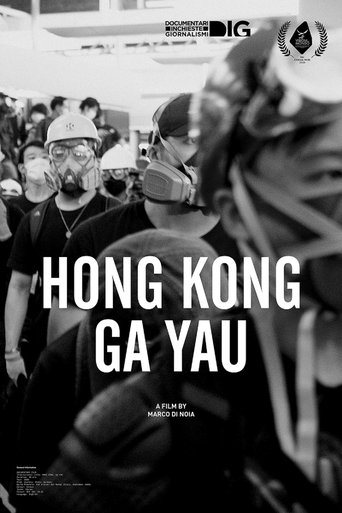
When Hong Kong, which has a legal system separate from China, brought the 2019 Extradition Bill, citizens took to the streets. Locals feared that the law, which would extradite Hong Kong criminals to the mainland, will be used to target dissidents & undermine the region's judicial independence. This film documents how the protest turned into a pro-democracy movement whose impact echoed in Beijing.

In 2019, Hong Kong was swept by demonstrations against the controversial extradition bill. At the Polytechnic University, a group of students also takes a stand for freedom and democracy. Negotiations with the police are chaotic and aggressive, conducted via megaphones and politically charged music played over loudspeakers. The colorful umbrellas which the young people use to protect themselves against the brutal police actions emphasize the group’s bravado, which borders on recklessness. What begins as an energetic battle against the establishment turns into a lopsided game of cat and mouse when the police decide to surround the building. Within its red brick walls, the university building becomes a prison. Over the nearly two weeks that follow, as fear and exhaustion grow among the hundreds of students, so does the uncertainty. Should they hang on inside, or leave the building to face the armed police?