
We’re Still Here
2013-11-16 · 26 min · Not rated
The film portrays the political situation in occupied Latvia 37 years ago, when writer Imants Ziedonis formed a group of like-minded peers into ‘’Dižkoku atbrīvotāji’’ – DAGi. Film reels and photos of the time show Imants Ziedonis and the DAGi participants – Māra Zālīte, Anna Žīgure, Roze Stiebra, Andris Buiķis, Vitolds Kucins and others. Today, with their contemporary experiences, they reflect on a time when the dream of an independent Latvia seemed impossibly far away. We’re Still Here reminds the younger generations that it’s possible to do good in the name your nation and its future not matter the circumstances.
Trailers are previews, not full movies.
No authorized playback source configured. Use the legal watch options below.
Production details
- Directors
- Zigurds Vidiņš
- Production companies
- Studija 2
- Countries
- Latvia
- Status
- Released
Top Cast
Cast unavailable.
Title information and images are supplied by TMDb. Explore our discovery guide for advice on comparing metadata and legal viewing options.
Where to watch
Availability provided by JustWatch via TMDb. Offers can change. Provider links are listed on TMDb; full playback requires a separately authorized source.
Availability not listed for this country.
Seasons & episodes
Recommendations

Director Michael Apted revisits the same group of British-born adults after a 7 year wait. The subjects are interviewed as to the changes that have occurred in their lives during the last seven years.

Just two years away from turning 30, participants in Michael Apted's documentary series are facing serious questions of identity and purpose, wondering whether they've found their place in the world.

Director Michael Apted revisits the same group of British-born adults after a 7 year wait. The subjects are interviewed as to the changes that have occurred in their lives during the last seven years.

In an intimate and joyful story of love in the face of loss, celebrated poets Andrea Gibson and Megan Falley find strength—and unexpected hilarity—in what might be their final year together.

The film follows adventurer Jeff Johnson as he retraces the epic 1968 journey of his heroes Yvon Chouinard and Doug Tompkins to Patagonia.
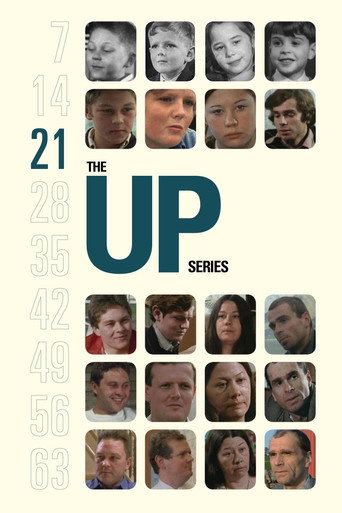
After another 7 year wait, director Michael Apted revisits the same group of British-born children from Seven Up! and 7 Plus Seven. The subjects are interviewed as to the changes that have occurred in their lives during the last seven years.

Ranjit, a farmer in India, takes on the fight of his life when he demands justice for his 13-year-old daughter, the victim of a brutal gang rape. His decision to support his daughter is virtually unheard of, and his journey unprecedented.

Bruce Conner’s most celebrated film for a reason: it takes historical moments that were replayed over and over on television—chilling repetition of Kennedy assassination coverage—and repurposes them into a meditation on how the media tries to exert authority and apply a sense of order to the anarchic. And though it may sound perverse to say so, the film is also—not incidentally—a thrill to watch. -- The A.V. Club

A compilation of over 30 years of private home movie footage shot by Lithuanian-American avant-garde director Jonas Mekas, assembled by Mekas "purely by chance", without concern for chronological order.
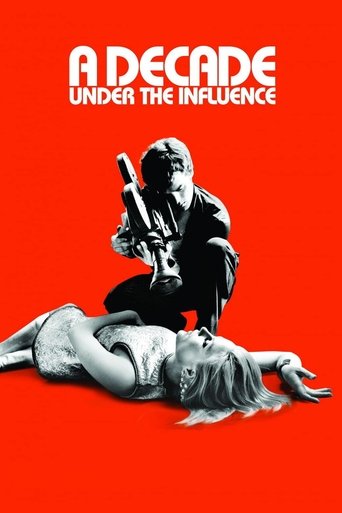
A documentary examining the decade of the 1970s as a turning point in American cinema. Some of today's best filmmakers interview the influential directors of that time.
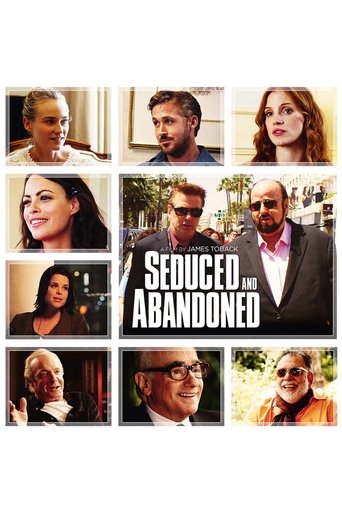
SEDUCED AND ABANDONED combines acting legend Alec Baldwin with director James Toback as they lead us on a troublesome and often hilarious journey of raising financing for their next feature film. Moving from director to financier to star actor, the two players provide us with a unique look behind the curtain at the world's biggest and most glamourous film festival, shining a light on the bitter-sweet relationship filmmakers have with Cannes and the film business. Featuring insights from directors Martin Scorsese, 'Bernando Bertolucci' and Roman Polanski; actors Ryan Gosling and Jessica Chastain and a host of film distribution luminaries.

A documentary about the life and films of director John Ford.

A 1993 documentary film about Bruce Lee. The film includes interviews from some of his fellow students and opponents who worked alongside him in his movies.
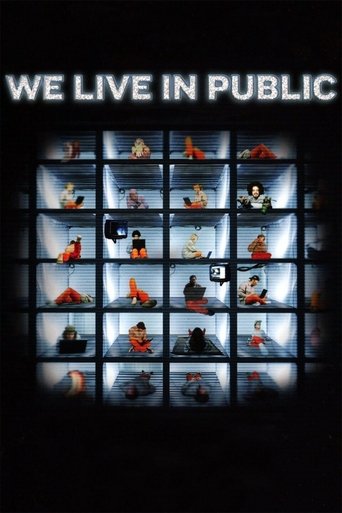
In 1999, Internet entrepreneur Josh Harris recruits dozens of young men and women who agree to live in underground apartments for weeks at a time while their every movement is broadcast online. Soon, Harris and his girlfriend embark on their own subterranean adventure, with cameras streaming live footage of their meals, arguments, bedroom activities, and bathroom habits. This documentary explores the role of technology in our lives, as it charts the fragile nature of dot-com economy.

A string of threatening emails escalates into a revenge plot involving a newly married US marshal and his ex-girlfriend.

A detailing of the rise to prominence and global sporting superstardom of six supremely talented young Manchester United football players (David Beckham, Nicky Butt, Ryan Giggs, Paul Scholes, Phil and Gary Neville). The film covers the period 1992-1999, culminating in Manchester United's European Cup triumph.

This revealing documentary honors the legendary Sidney Poitier—iconic actor, filmmaker, and civil rights activist. Featuring interviews with Denzel Washington, Spike Lee, Halle Berry, and more.

In the Realms of the Unreal is a documentary about the reclusive Chicago-based artist Henry Darger. Henry Darger was so reclusive that when he died his neighbors were surprised to find a 15,145-page manuscript along with hundreds of paintings depicting The Story of the Vivian Girls, in What is Known as the Realms of the Unreal, of the Glodeco-Angelinnian War Storm, Cased by the Child Slave Rebellion.

Alexander McQueen's rags-to-riches story is a modern-day fairy tale, laced with the gothic. Mirroring the savage beauty, boldness and vivacity of his design, this documentary is an intimate revelation of McQueen's own world, both tortured and inspired, which celebrates a radical and mesmerizing genius of profound influence.

Musician and performance artist Laurie Anderson reflects on the deaths of her husband Lou Reed, her mother and her beloved dog.
Similar titles
Vārdotājas (Wordsmiths) traces the recent rise of women's stand-up comedy in Latvia, but it is by no means just for laughs. Feelings of discomfort, shame, shock, are just some of the subjects tackled.
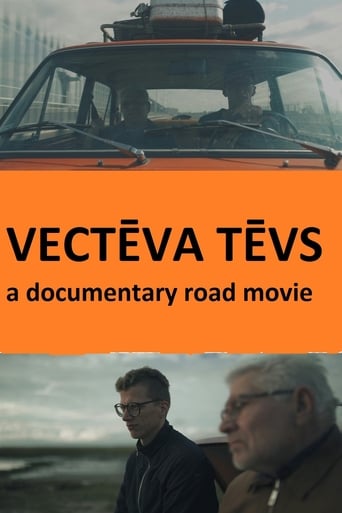
In this film a young man and his curmudgeonly grandfather are going 1,800 km to northern Russia in an old Zhiguli car, hoping to find the grave of their great-grandfather, who was deported. The grandfather Andris is sceptic over the lofty quest, initiated by his grand-son, as it’s not known what awaits them at their destination. Andris thinks they won’t find anything and will come back to Latvia without ever learning what happened to his father. However ever-optimistic Kārlis wants to use the journey not only to find answers about the past but also become closer to his grandfather who raised him. They both lost their parents as children.
Deniss is a Russian-speaking young man working at a fast food chain and spending his days in a small, gloomy apartment where all the things still remind him of his dead grandmother. Once a week he takes the stage, becoming a stand-up comedian. His jokes come from his life, which might be called dull as well as bleak, and, as he puts it, his ‘uninteresting biography’.
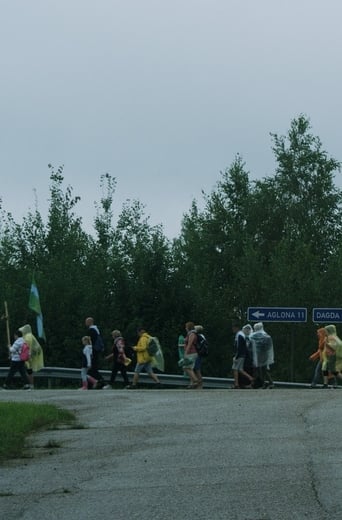
"If a person doesn't go to church anymore, then the church should go to them," says Rinalds, a calm, smiling, young man with a good sense of humor. He is a priest from a small village in Latgale, Latvia's easternmost and poorest region, and the documentary Prīsters (The Priest) follows the routines of his daily life, his thoughts of life and religion and why he chose this path for himself.

Lords of Riga allows to see an insight into a passionate subculture of bike couriers. Weaving their way through the urban traffic, they have become silent and sometimes unnoticed witnesses of everyday life in Riga as well as examples of our modern-day society. What is freedom to this bunch of rebellious messengers and where it ends?

The documentary explores issues of beauty and acceptance in a culture increasingly saturated with idealised and unattainable ideals of femininity. It is a story about the world of young girls in today's Latvia, based on conversations about girls' attitudes towards the world and their place in it.

The film follows a thirty-year-old man’s efforts to introduce radical changes in his own life: to start visiting a therapist and preparing for the demolition of his bragging childhood home. Story chronicles the troubled relationship between Mārtiņš and his mother, just as he is about to tear down his childhood home.
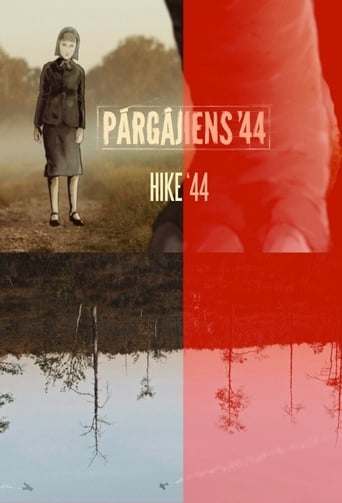
“Hike '44" is a personal story by director Lauris Abele and cinematographer Marcis Abele about how to maintain humanity when the world falls apart. The protagonist of the film, Melita Abele (89), retraces her refugee path from 1944, when, at the age of 14, she had to leave her home at the beginning of winter. Asking strangers for shelter, spend nights in the woods until she found refuge and warm hearts. Through the use of animation, the viewer will be guided through Melita's memories on a journey through recent and present-day Latvia until a series of events brings Melita to what she has been trying to accomplish for 75 years.

The three speakers represent two of the dialects, with the most common one - the middle dialect spoken in Riga and central parts of Latvia - not featured in the film. In intimate surroundings, a farmer, a schoolteacher, and a herder of ostriches talk about perceived differences between Latvian speakers, and about language policy and their lives.

The documentary chronicles the life stories of two brothers, Kristaps and Krists. Kristaps, the elder brother, is disabled and has trouble talking, but he can rap. His younger brother Krists is one of the best freestyle BMX bikers in Latvia.

Director Aija Bley's "Brīva Vieta - T17" captures the unique testimony of the modern era of Riga - the life of "antisquoters". The film tells about the daily life and dreams of the youth community and a mute fish, the so-called commune T17. The community lives in a non-landscaped building, so its occupation is a real challenge. The house is located under the paspārns of the association " Free Riga ", whose movement is based on a responsible attitude towards nature and the careful use of resources. Here, the community is motivated by the conviction that so few resources in everyday life should be consumed in the urban environment. The film follows the everyday life of the community members, who use their lifestyle to use the resources of nature, material, culture and time.

This film probes the activities of the bezvests.lv NGO that looks for missing persons and instructs others on how to find them. Since they started in 2009, they’ve helped find more than 90 people who had gone missing. It follows volunteers during training and on a search mission – theirs is a nerve-wracking task as in many cases they only locate the expired body of the missing person.

“One Of Us” follows Latvia-born athletes – wrestler Anastasija Grigorjeva, veteran gymnast Igors Vihrovs, and up-and-coming figure skater Deniss Vasiļjevs. Being of non-Latvian ethnicity, they are sometimes treated as ‘others’ by native Latvians, who welcome them into their ranks only when they’ve shown astonishing results.

A story about a train as it reflects our path of life. On it, like in life, people experience friendship and love, and sometimes feel lonely. On board, the announcement over the PA system outlines the rules, and then a reminder that the train won’t be stopping. Do we hurtle through life without making any stops? What are we thinking? We all know that the moment will come when our train pulls to a stop, but not how and when, and what happens afterwards.

An ordinary old folks’ home on the Latvian border – one of many, where our parents, grand-parents and other relatives spend their old age. Theirs is the generation whose prime years co-existed with the Soviet Union, and who were promised: work, give all you can, and we’ll take care when you’re old. The system changed and the reality is different. How to live in this reality, accept the current rules, or live in the past and have regrets. We will touch upon their world, and the dreams and hopes of Vilnis, Imants, Alberts and Elizabete.

Viktors is an entrepreneur with a unique offer – he has built a bar, bakery, spa, hotel and an auto-shop in a former “sovkhoz” cafeteria in the village of Lone. Viktors understands life, and that his words carry weight – almost 500 village inhabitants are now employed. Lone is a lively place both day and night, full of youths and many other businesses. Viktors is very proud.

Nearly everybody has been to the circus to laugh about clowns, be afraid of the lions and to eat sugar cane. However, can anyone imagine that circus artists reside right there in the circus building - above the arena in the second floor hotel rooms - where they also prepare meals, do their laundry and try out their magic tricks? For over 125 years, despite the discomfort of non-renovated premises and ubiquitous animal odor, local and foreign circus artists follow their routine to create the circus miracle. Sugarcane, Coati and Monowheel is a film about those who dwell in Riga Circus and about what happens outside the arena before and after meeting audience under the circus dome.

The heroine is a widow and a fiancé who wants to begin a new and happy life. Conflicts in her family’s past prevent it, but she does not give up – she wants to clear away the ruins and do what she can. “Enough of looking for guilt, it’s time to find a solution,” she thinks, and takes action.

A film documenting contemporary Latvian reality along the banks of the river Gauja while channelling one of the first Latvian sound documentary films, Gauja (1934). “Along with producers Sandijs Semjonovs and Gundars Rēders and editor Atis Klimovičs, we witnessed incidents and events along the banks of the river some 80 years later. We captured them along with the views of folks on this river in a documentally poetic style reflecting the reality in Latvia,” explains director Mārtiņš Grauds.
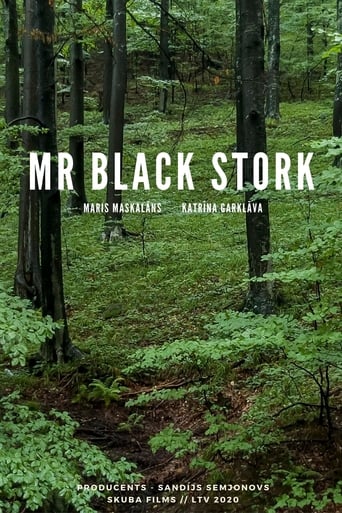
Māris Strazds (also known as "Mr Black Stork") is a man who's been studying black storks and their behaviour for forty years. His love for and relationship with these beautiful birds is longer than the relationship with his wife. Having spent more than half of his life following black storks, Māris is aware that due to deforestation the number of these birds in Latvia is rapidly approaching zero.