

Primo Levi's Journey
2006-09-12 · 91 min · ★ 5.9
In February, 1945, Primo Levi (1919-1987) and other Auschwitz survivors set off for home. The journey took more then eight months. Sixty years later, a film crew retraces Levi's steps. Levi's words, mainly from "The Truce" (1963), tell us what he experienced. In turn, we see Poland's hollow post-war factories, nationalism in the Ukraine, Soviet-style Communism in Belarus, the abandoned town of Prypiat (Chernobyl), poverty and emigration from Moldavia, Italian factories in Romania, and on across Hungary and Slovakia to Munich where Levi's rage found no listeners. Then home to Turin. An aged Mario Rigoni Stern remembers his friend. What has changed? Some issues of the war remain unsettled.
Trailers are previews, not full movies.
No authorized playback source configured. Use the legal watch options below.
Production details
- Directors
- Davide Ferrario
- Production companies
- Adriana Chiesa Enterprises, Rossofuoco, RAI Cinema
- Countries
- Italy
- Status
- Released
- Revenue
- USD 166,215
Top Cast
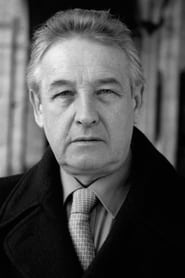 Andrzej WajdaSelf
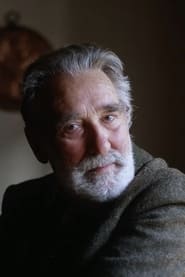 Mario Rigoni SternSelf
 Chris CooperNarrator (voice) (U.S. version)
 Umberto OrsiniNarrator (voice) (Italian version)
Title information and images are supplied by TMDb. Explore our discovery guide for advice on comparing metadata and legal viewing options.
Where to watch
Availability provided by JustWatch via TMDb. Offers can change. Provider links are listed on TMDb; full playback requires a separately authorized source.
Availability not listed for this country.
Seasons & episodes
Recommendations

“The Soviet Story” is a story of an Allied power, which helped the Nazis to fight Jews and which slaughtered its own people on an industrial scale. Assisted by the West, this power triumphed on May 9th, 1945. Its crimes were made taboo, and the complete story of Europe’s most murderous regime has never been told. Until now...

Amid the failing counteroffensive, a journalist follows a Ukrainian platoon on their mission to traverse one mile of heavily fortified forest and liberate a strategic village from Russian occupation. But the farther they advance through their destroyed homeland, the more they realize that this war may never end.

Prelude to War was the first film of Frank Capra's Why We Fight propaganda film series, commissioned by the Pentagon and George C. Marshall. It was made to convince American troops of the necessity of combating the Axis Powers during World War II. This film examines the differences between democratic and fascist states.

A documentary about World War I with never-before-seen footage to commemorate the centennial of Armistice Day, and the end of the war.

Marcel Ophuls' riveting film details the heinous legacy of the Gestapo head dubbed "The Butcher of Lyon." Responsible for over 4,000 deaths in occupied France during World War II, Barbie would escape—with U.S. help—to South America in 1951, where he lived until a global manhunt led to his 1983 arrest and subsequent trial.

When Sgt. First Class Brian Eisch is critically wounded in Afghanistan, it sets him and his sons on a journey of love, loss, redemption and legacy.
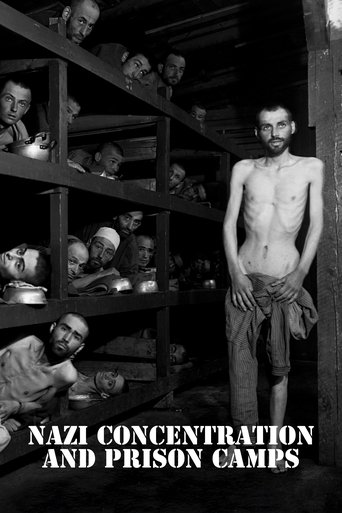
Produced and presented as evidence at the Nuremberg war crimes trial of Hermann Göring and twenty other Nazi leaders, this film consists primarily of dead and surviving prisoners and of facilities used to kill and torture during the World War II.

A love letter from a young mother to her daughter, the film tells the story of Waad al-Kateab’s life through five years of the uprising in Aleppo, Syria as she falls in love, gets married and gives birth to Sama, all while cataclysmic conflict rises around her. Her camera captures incredible stories of loss, laughter and survival as Waad wrestles with an impossible choice– whether or not to flee the city to protect her daughter’s life, when leaving means abandoning the struggle for freedom for which she has already sacrificed so much.

This documentary movie is about the battle of San Pietro, a small village in Italy. Over 1,100 US soldiers were killed while trying to take this location, that blocked the way for the Allied forces from the Germans. Preserved by the Academy Film Archive in 2005.

The history of cinematic sound, told by legendary sound designers and visionary filmmakers.

"Trinity and Beyond" is an unsettling yet visually fascinating documentary presenting the history of nuclear weapons development and testing between 1945-1963. Narrated by William Shatner and featuring an original score performed by the Moscow Symphony Orchestra, this award-winning documentary reveals previously unreleased and classified government footage from several countries.

Korengal picks up where Restrepo left off; the same men, the same valley, the same commanders, but a very different look at the experience of war.

Pete Postlethwaite stars as a man living alone in the devastated future world of 2055, looking at old footage from 2008 and asking: why didn’t we stop climate change when we had the chance?
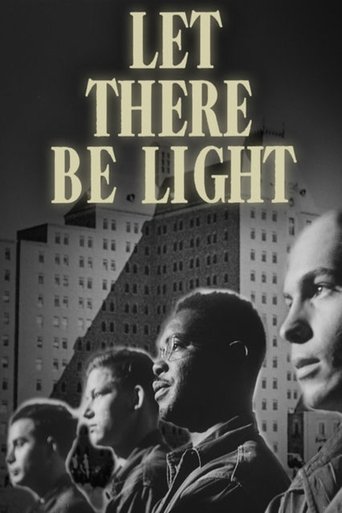
The final entry in a trilogy of films produced for the U.S. government by John Huston. Some returning combat veterans suffer scars that are more psychological than physical. This film follows patients and staff during their treatment. It deals with what would now be called PTSD, but at the time was categorised as psychoneurosis or shell-shock. Government officials deemed this 1946 film counterproductive to postwar efforts; it was not shown publicly until 1981.

Set both in Latin America and the United States, the film explores the historic and current relationship of Washington with countries such as Venezuela, Bolivia and Chile. Pilger says that the film "...tells a universal story... analysing and revealing, through vivid testimony, the story of great power behind its venerable myths. It allows us to understand the true nature of the so-called "war on terror". According to Pilger, the film’s message is that the greed and power of empire is not invincible and that people power is always the "seed beneath the snow".

An unprecedented and intimate look at the life, work and enduring legacy of British actress Audrey Hepburn (1929-1993).
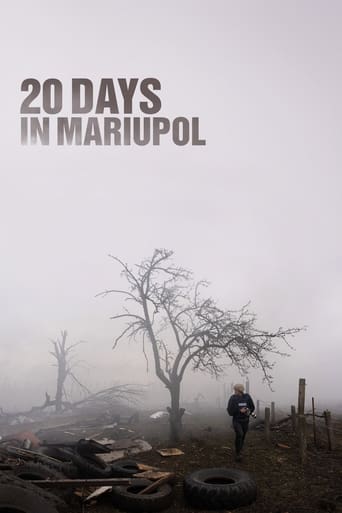
As the Russian invasion begins, a team of Ukrainian journalists trapped in the besieged city of Mariupol struggle to continue their work documenting the war's atrocities.

Filmed at night from Tel Aviv rooftops, this investigative documentary examines the civilian casualties of Israel's military operations in Gaza and the systems behind targeted killings of Palestinians.

A documentary highlighting the Soviet Union's legendary and enigmatic hockey training culture and world-dominating team through the eyes of the team's Captain Slava Fetisov, following his shift from hockey star and celebrated national hero to political enemy.
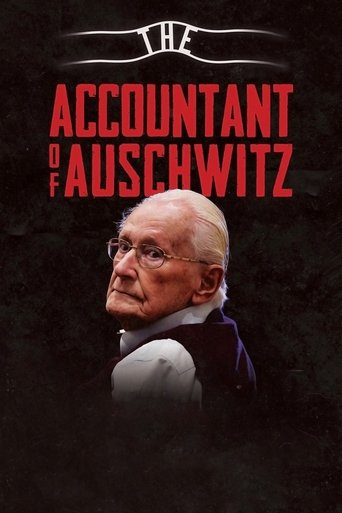
Oskar Gröning, known as the "Accountant of Auschwitz," was charged with the murder of 300,000 Jews. When he took the stand in 2015, at the age of 94, his trial made headlines worldwide.
Similar titles

Kurt Gerstein—a member of the Institute for Hygiene of the Waffen-SS—is appalled to discover that a poison gas he helped discover is being used to kill Jews. Driven by his conscience to alert the rest of the world, Gerstein teams up with a young Jesuit priest, Riccardo Fontana, but their protestations fall on deaf ears in the Vatican.

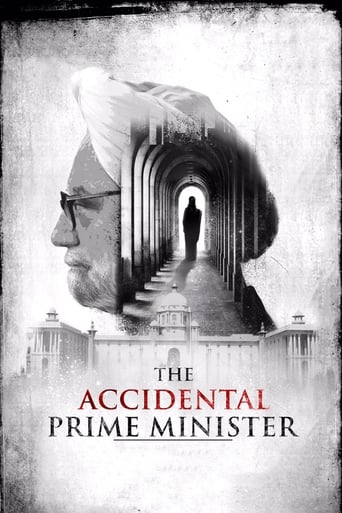
Based on the memoir by Indian policy analyst Sanjaya Baru, The Accidental Prime Minister explores Manmohan Singh's tenure as the Prime Minister of India, and the kind of control he had over his cabinet and the country.

A documentary about actress brazilian Maria Gladys, a strong presence in films by Júlio Bressane, Rogério Sganzerla among others.

A look at the life of legendary American pilot Amelia Earhart, who disappeared while flying over the Pacific Ocean in 1937 in an attempt to make a flight around the world.

After having released her fourth album "Red" in October 2012, Taylor Alison Swift continues to tear up the charts. In this film we learn how Swift becomes one of America's biggest Country and Pop music artists.

From double BAFTA nominated Writer and Director John Walsh. Monarch is part fact, part fiction and unfolds around one night when the injured ruler arrives at a manor house closed for the season.

Director James Toback takes an unflinching, uncompromising look at the life of Mike Tyson--almost solely from the perspective of the man himself. TYSON alternates between the controversial boxer addressing the camera and shots of the champion's fights to create an arresting picture of the man.
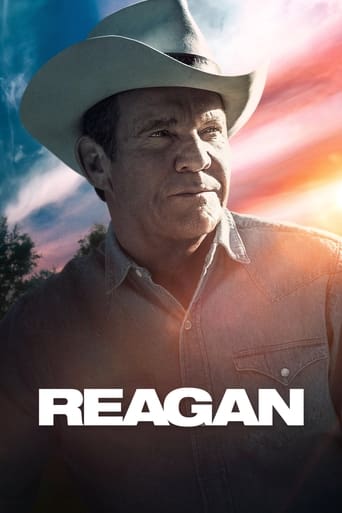
Told through the voice of former KGB agent Viktor Petrovich, whose life becomes inextricably linked with Ronald Reagan's when Reagan first caught the Soviets’ attention as an actor in Hollywood, Reagan overcomes the odds to become the 40th president of the United States.
21-year-old Keith Blauschild, formally trained in the culinary arts, is also a self-taught ice carver. Together with his fiancee Angela Boone, Keith sculpts intricate but impermanent artworks for catered affairs, hotels, cruise ships and for advertising promotions. In this short documentary profile, Keith is filmed as he fashions a prototype (a sword-bearing warrior fighting a dragon) for an upcoming ice carving competition. At the contest site, the young man joins scores of other chainsaw-wielding sculptors busily freeing their creations from blocks of ice. Although Keith does not win a prize, his devotion to ice-carving remains intact. Moving from his home in New Jersey to a new life in Florida, Keith is featured as the "Person of the Week" on a Florida news broadcast

Sarı Zeybek is a 1953 biopic film written and directed by Münir Hayri Egeli. The film specifically showed the last 300 days of Mustafa Kemal's life and portrayed his ordinary human characteristics rather than his military prowess or political talents.
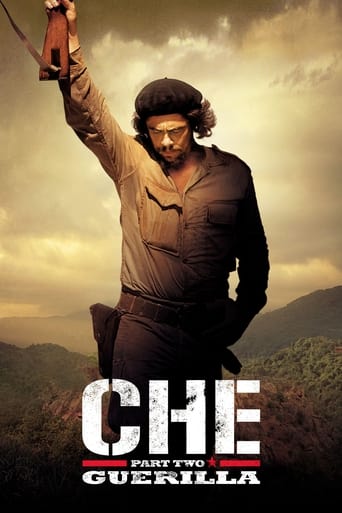
Seven years after his triumph in Cuba, Che winds up in Bolivia, where he tries to ignite the same revolutionary fires as before.

Ernesto Guevara, known as 'Che', leads a group of Cuban exiles under Fidel Castro in a revolution to overthrow Fulgencio Batista, the dictator of Cuba.
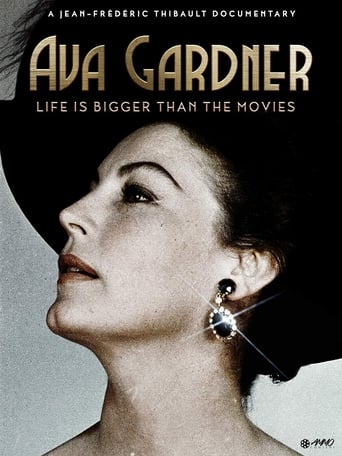
A barefoot contessa, a screwed-up princess, an exquisite drunk, a bawdy aristocrat, a nightmare for puritanical America and the moguls of Metro-Goldwyn-Mayer, Ava Gardner never stopped loving those she loved. She turned women green and made men sweat. And rejected with all her force the bulwark of normality.

Barbra Streisand grew up in working class Brooklyn, dreaming of escape from her tough childhood. A stellar student, she resisted the pressure to go to college as her sights were firmly set on Broadway. She was determined to become an actress and landed her first role aged 16, but it was two years later, when she started to sing, that her career took off. Subverting stereotypes and breaking glass ceilings, this programme looks at her rise to stardom and the remarkable achievements of her early career.
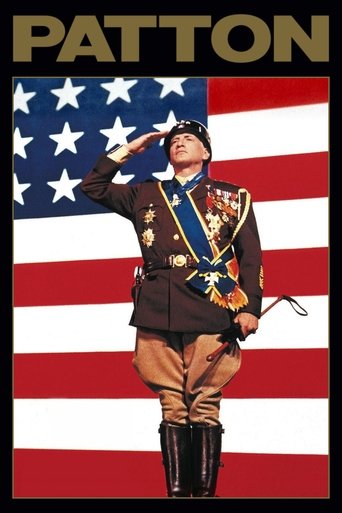
"Patton" tells the tale of General George S. Patton, famous tank commander of World War II. The film begins with Patton's career in North Africa and progresses through the invasion of Germany and the fall of the Third Reich. Side plots also speak of Patton's numerous faults such his temper and habit towards insubordination.
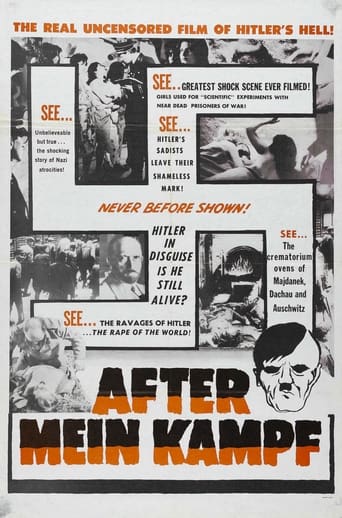
By combining actual footage with reenactments, this film offers both a documentary and fictional account of the life of Adolf Hitler, from his childhood in Vienna, through the rise of the Third Reich, to his final act of suicide in the waning days of WWII. The film also provides considerable, and often shocking, detail of the atrocities enacted by the Nazi regime under Hitler's command.
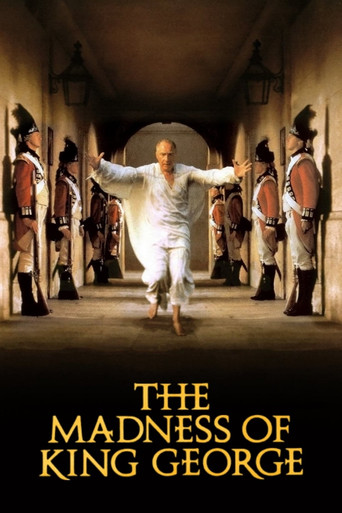
Aging King George III of England is exhibiting signs of madness, a problem little understood in 1788. As the monarch alternates between bouts of confusion and near-violent outbursts of temper, his hapless doctors attempt the ineffectual cures of the day. Meanwhile, Queen Charlotte and Prime Minister William Pitt the Younger attempt to prevent the king's political enemies, led by the Prince of Wales, from usurping the throne.
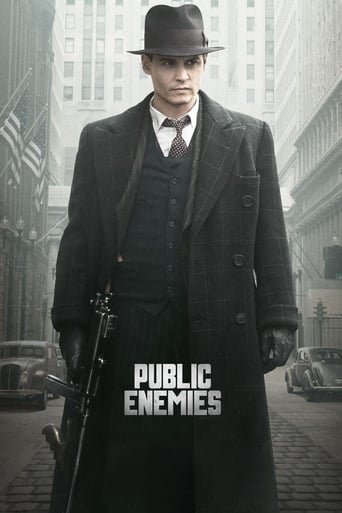
Depression-era bank robber John Dillinger's charm and audacity endear him to much of America's downtrodden public, but he's also a thorn in the side of J. Edgar Hoover and the fledgling FBI. Desperate to capture the elusive outlaw, Hoover makes Dillinger his first Public Enemy Number One and assigns his top agent, Melvin Purvis, the task of bringing him in dead or alive.