The Great Serengeti
· 50 min · ★ 5.2
The Serengeti is a vast ecosystem, home to a dazzling variety of life, and the site of the largest migration on the planet. Woodland, riverbank forests and swamps provide cover for dozens of mammal species and more than 350 varieties of bird. The fate of these animals is intimately bound with the ever changing landscape. The passage from the rainy season to the dry season means there is no rest and no stability. Those who dwell here must remain in constant motion to survive. For months they live in hope of the returning rains that will put an end to their struggle and reward their efforts.
Trailers are previews, not full movies.
No authorized playback source configured. Use the legal watch options below.
Production details
- Directors
- Unavailable
- Production companies
- National Geographic
- Countries
- Tanzania, United States of America
- Status
- Released
Top Cast
Cast unavailable.
Title information and images are supplied by TMDb. Explore our discovery guide for advice on comparing metadata and legal viewing options.
Where to watch
Availability provided by JustWatch via TMDb. Offers can change. Provider links are listed on TMDb; full playback requires a separately authorized source.
Availability not listed for this country.
Seasons & episodes
Recommendations
In the remote and forgotten wilderness of Lake Natron, in northern Tanzania, one of nature's last great mysteries unfolds: the birth, life and death of a million crimson-winged flamingos.
African Cats captures the real-life love, humor and determination of the majestic kings of the savanna. The story features Mara, an endearing lion cub who strives to grow up with her mother’s strength, spirit and wisdom; Sita, a fearless cheetah and single mother of five mischievous newborns; and Fang, a proud leader of the pride who must defend his family from a once banished lion.

Director Michael Apted revisits the same group of British-born adults after a 7 year wait. The subjects are interviewed as to the changes that have occurred in their lives during the last seven years.
Born to Be Wild observes various orphaned jungle animals and their day-to-day behavioural interactions with the individuals who rescue them and raise them to adulthood. The film unfurls in two separate geographic spheres. Half of it takes place in the rain forests of Borneo, where celebrated primatologist Dr. Birute Galdikas assists baby orangutans; the other half takes place on the arid savannahs of Kenya, where zoologist Dame Daphne Sheldrick works with baby elephant calves.
Drawing from never-before-seen footage that has been tucked away in the National Geographic archives, director Brett Morgen tells the story of Jane Goodall, a woman whose chimpanzee research revolutionized our understanding of the natural world.
Years spent recording footage of creatures from every corner of the globe is bound to produce a bit of drama. Here's a behind-the-scenes look.
After another 7 year wait, director Michael Apted revisits the same group of British-born children from Seven Up! and 7 Plus Seven. The subjects are interviewed as to the changes that have occurred in their lives during the last seven years.

Carefully picked scenes of nature and civilization are viewed at high speed using time-lapse cinematography in an effort to demonstrate the history of various regions.
A nature documentary centered on a family of chimps living in the Ivory Coast and Ugandan rain forests. Through Oscar, a little chimpanzee, we discover learning about life in the heart of the African tropical forest and follow his first steps in this world with humor, emotion and anguish. Following a tragedy, he finds himself separated from his mother and left alone to face the hostility of the jungle. Until he is picked up by an older chimpanzee, who will take him under her protection.

Director Michael Apted revisits the same group of British-born adults after a 7 year wait. The subjects are interviewed as to the changes that have occurred in their lives during the last seven years.

A visual montage portrait of our contemporary world dominated by globalized technology and violence.
In Angola's mist-shrouded highlands, three KhoiSan master trackers embark on a spiritual quest to rediscover the legendary "ghost elephants" of Lisima, creatures presumed lost but remembered in ancestral trance, ritual, and memory.

A documentary on the expletive's origin, why it offends some people so deeply, and what can be gained from its use.
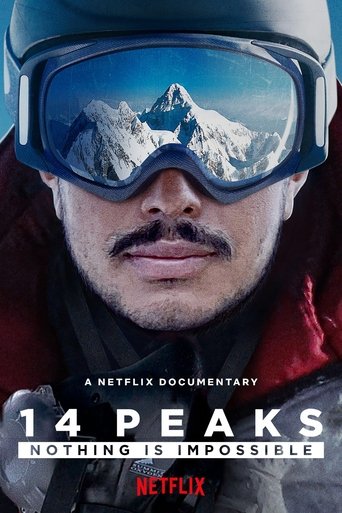
In 2019, Nepalese mountain climber Nirmal “Nims” Purja set out to do the unthinkable by climbing the world’s fourteen highest summits in less than seven months. (The previous record was eight years). He called the effort “Project Possible 14/7” and saw it as a way to inspire others to strive for greater heights in any pursuit. The film follows his team as they seek to defy naysayers and push the limits of human endurance.
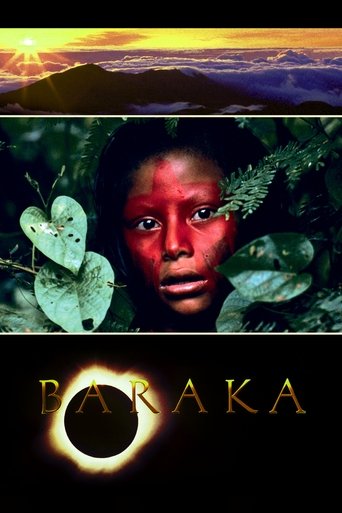
A paralysingly beautiful documentary with a global vision—an odyssey through landscape and time—that attempts to capture the essence of life.
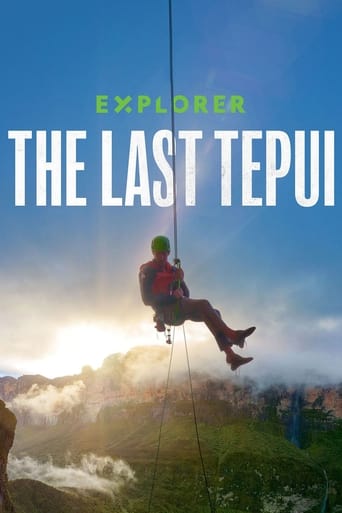
This documentary starring climber Alex Honnold and famous biologist Bruce Means document their expedition to the South American sky islands in search of new species and discoveries. Follows elite climber Alex Honnold and a world-class climbing team led by National Geographic Explorer and climber Mark Synnott on a grueling mission deep in the Amazon jungle as they attempt a first-ascent climb up a 1000 foot sheer cliff.

When Allied forces liberated the Nazi concentration camps in 1944-45, their terrible discoveries were recorded by army and newsreel cameramen, revealing for the first time the full horror of what had happened. Making use of British, Soviet and American footage, the Ministry of Information’s Sidney Bernstein (later founder of Granada Television) aimed to create a documentary that would provide lasting, undeniable evidence of the Nazis’ unspeakable crimes. He commissioned a wealth of British talent, including editor Stewart McAllister, writer and future cabinet minister Richard Crossman – and, as treatment advisor, his friend Alfred Hitchcock. Yet, despite initial support from the British and US Governments, the film was shelved, and only now, 70 years on, has it been restored and completed by Imperial War Museums under its original title "German Concentration Camps Factual Survey".
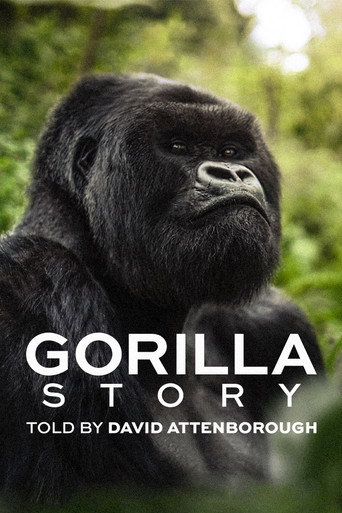
Veteran naturalist Sir David Attenborough tells the story of a remarkable group of gorillas, from his first encounter in the '70s to the present day.

Stars of "The Walking Dead," Andrew Lincoln and Danai Gurira, walk down memory lane and visit iconic locations where pivotal moments between their characters, Rick and Michonne, were filmed.
Filmmaker Christopher Quinn observes the ordeal of three Sudanese refugees -- Jon Bul Dau, Daniel Abul Pach and Panther Bior -- as they try to come to terms with the horrors they experienced in their homeland, while adjusting to their new lives in the United States.
Similar titles
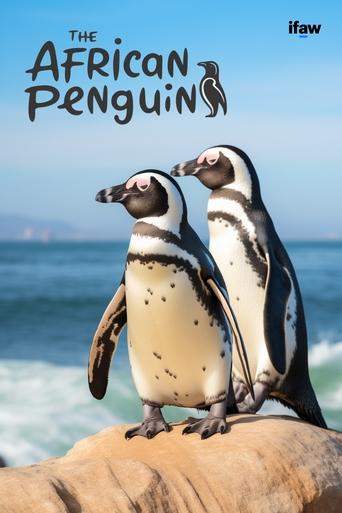
The African penguin is the only penguin that lives on the African continent. It was known as the jackass penguin because of its donkey-like call. This film covers the life cycle of this incredible bird, fom mating to laying of eggs to hunting and the moulting cycle. Sadly, it also shows the stark reality of a bird on the road to extinction.

The image of “snow monkeys” submerged in a hot spring as snow falls around them is iconic. These are Japanese macaques, the northernmost population of monkeys in the world. Highly adaptable, they are the only primates to inhabit environments that range from low coastal plains to mountainous areas 3,000 meters above sea level, with temperatures that can drop to -30 degrees Celsius. How is this single species of macaque able to thrive in such widely diverse habitats? Shot in beautiful 4K UHD, the cameras travel through Japan to capture unique monkey groups displaying different localized food habits, including a world-first footage of monkeys catching live fish as well as how such new behaviors spread among individuals in the pack.

Moon Crab is a meditation on the horseshoe crab, one of Earth's oldest living species now struggling with extreme population decline. Blending reflections on nature's cycles with experimental visuals, the film employs an array of techniques, including eco-processed film developed with seaweed, to immerse the viewer in the crab's subaquatic world. Narrated with intimate depth by physiologist Dr. Abner Lall, the filmmaker’s neighbor, this documentary captures a timeless story of resilience and fragility, urging us to reconsider our connection to the natural world.
Veteran naturalist Sir David Attenborough tells the story of a remarkable group of gorillas, from his first encounter in the '70s to the present day.
A documentary of insect life in meadows and ponds, using incredible close-ups, slow motion, and time-lapse photography. It includes bees collecting nectar, ladybugs eating mites, snails mating, spiders wrapping their catch, a scarab beetle relentlessly pushing its ball of dung uphill, endless lines of caterpillars, an underwater spider creating an air bubble to live in, and a mosquito hatching.

Roads are a major cause of habitat fragmentation for many animals and are a severe threat to many species. This story is about the newts of Chileno Valley in Petaluma, California and the group of people trying to help them survive their yearly migration to Laguna Lake.
A narrative by Puneeth Rajkumar aka Appu which explores state of Karnataka - the land, its culture and traditions, it's social issues and even it's forests, all through his curious eyes. The film is almost Appu's own journey of discovery as he understands the rich flora and fauna of the state.
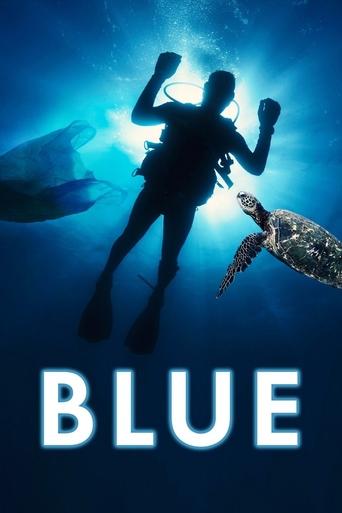
From space, our planet appears as a tiny blue dot in the vastness of space. Blue, because 99% of all living space on Earth occurs in the Ocean. But the seas are under threat. The industrialization that has occurred in the oceans over the last century mirrors the events that triggered mass extinctions on land. As we learn of the ecological crimes occurring worldwide, we also uncover the shocking truths happening on our own shorelines.

In the remote Manambolomaty lakes region, a globally unique ecosystem is home to both the Sakalava indigenous people and the endangered Madagascar Fish eagle. Through close collaboration with the local community, the region has become a stunning success for conservation - even as the rest of Madagascar's nature suffers heavy losses.

The peculiar trait of the cuckoo, which tricks another bird into hatching her egg for her, is shown in color photography.
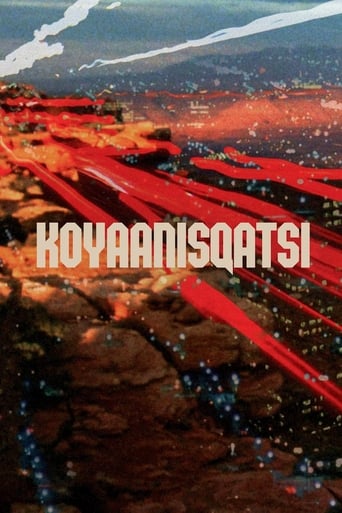
Takes us to locations all around the US and shows us the heavy toll that modern technology is having on humans and the earth. The visual tone poem contains neither dialogue nor a vocalized narration: its tone is set by the juxtaposition of images and the exceptional music by Philip Glass.
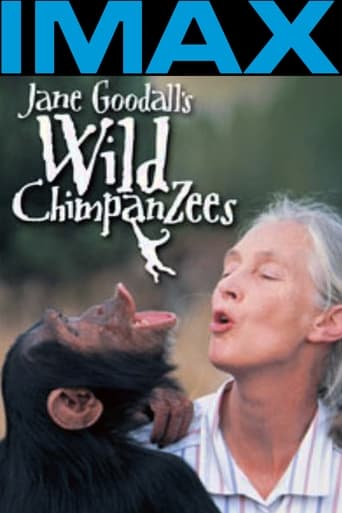
Showcased in beautiful IMAX format, this documentary takes viewers into the hearts, minds and world of chimpanzees as it profiles legendary scientist Dr. Jane Goodall's work among the chimps at Gombe Park on Africa's Lake Tanganyka. Dr. Goodall and other researchers give us an up-close look at the daily lives of the Gombe chimp families -- Fifi and sons Freud and alpha male Frodo, along with Gremlin, Gaia and the endearing Galahad.

Two otters, a mother and daughter, are inseparable as the cub faces the dangers of her first Scottish winter, and Mum works hard to ensure both survive. Never more than a few feet apart, cub and mum exhibit a very special relationship as the cub grows up, learning how to fish and fend for herself on the idyllic west coast of Scotland.
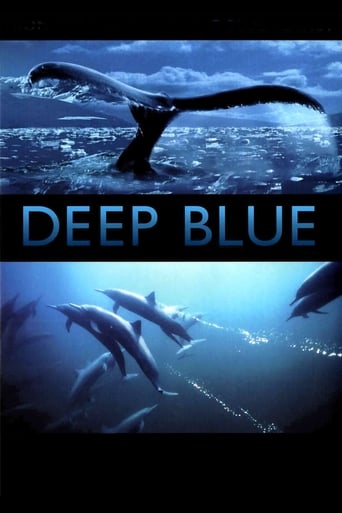
Deep Blue is a major documentary feature film shot by the BBC Natural History Unit. An epic cinematic rollercoaster ride for all ages, Deep Blue uses amazing footage to tell us the story of our oceans and the life they support.

Wild rabbits share the sea cliffs on the island of Skomer, off the Pembrokeshire coast, with seabirds like puffins and seagulls. They come in many shades, owing to their intriguing history, and each spring the island of Skomer itself is transformed by wild flowers, creating one of Britain's most beautiful natural spectacles. The green and brown island turns blue and pink for a couple of spectacular weeks under a carpet of bluebells and red campion.

A devoted pair of little owls set up home in an old orchard in rural Herefordshire. From spring blossom to autumn apples, a year in the life of the parent birds, their baby owls and the old fruit trees.

Every year, on the steppes of the Serengeti, the most spectacular migration of animals on our planet: Around two million wildebeest, Burchell's zebra and Thomson's gazelles begin their tour of nearly 2,000 miles across the almost treeless savannah. For the first time, a documentary captures stunning footage in the midst of this demanding journey. The documentary starts at the beginning of the year, when more than two million animals gather in the shadow of the volcanoes on the southern edge of the Serengeti in order to birth their offspring. In just two weeks, the animal herd's population has increased by one third, and after only two days, the calves can already run as fast as the adults The young wildebeest in this phase of their life are the most vulnerable to attacks by lions, cheetahs, leopards or hyenas. The film then follows the survivors of these attacks through the next three months on their incredible journey, a trip so long that 200,000 wildebeest will not reach the end.
The courtship behavior of Great Bustards is studied. The male Great Bustard is considerably larger than the female. This impression is reinforced during courtship when the male dances in front of the female, showing the light undersides of its wings and inflating its throat pouch.
The life cycle of the tundra wolf is a complex and balanced relationship with other animals that inhabit the tundra region. Preying on the caribou, the wolf kills just enough for the pack to survive.
