A Play Before The Bombs
2021-11-12 · 13 min · Not rated
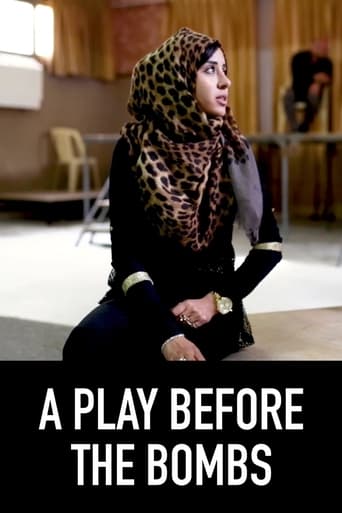
Set in the al-Mishal Cultural Center in Gaza before it was destroyed by an Israeli air strike on August 9, 2018, A Play Before The Bombs is a story that unfolds over a 4 year period. The film follows Abeer Ahmed, a young woman growing up in the Jabaliya Refugee Camp, the largest refugee camp in Gaza, as she and the other members of her cast and crew prepare to put on a play that focuses on a Palestinian woman’s right to receive inheritance. While the content of the play is tailored towards fostering a cultural discussion among Palestinians, neither the play nor the playhouse can escape the omnipresence of the Israeli siege on Gaza. A siege that shatters literal buildings as well as the hopes and dreams of the performers and community members who take refuge within the walls of al-Mishal in search of artistic fulfillment.
Trailers are previews, not full movies.
No authorized playback source configured. Use the legal watch options below.
Production details
- Directors
- Roger Hill
- Production companies
- Unavailable
- Countries
- Palestinian Territory
- Status
- Released
Top Cast
Title information and images are supplied by TMDb. Explore our discovery guide for advice on comparing metadata and legal viewing options.
Where to watch
Availability provided by JustWatch via TMDb. Offers can change. Provider links are listed on TMDb; full playback requires a separately authorized source.
Availability not listed for this country.
Seasons & episodes
Recommendations

When Sgt. First Class Brian Eisch is critically wounded in Afghanistan, it sets him and his sons on a journey of love, loss, redemption and legacy.

Prelude to War was the first film of Frank Capra's Why We Fight propaganda film series, commissioned by the Pentagon and George C. Marshall. It was made to convince American troops of the necessity of combating the Axis Powers during World War II. This film examines the differences between democratic and fascist states.

“The Soviet Story” is a story of an Allied power, which helped the Nazis to fight Jews and which slaughtered its own people on an industrial scale. Assisted by the West, this power triumphed on May 9th, 1945. Its crimes were made taboo, and the complete story of Europe’s most murderous regime has never been told. Until now...

Amid the failing counteroffensive, a journalist follows a Ukrainian platoon on their mission to traverse one mile of heavily fortified forest and liberate a strategic village from Russian occupation. But the farther they advance through their destroyed homeland, the more they realize that this war may never end.
Five broken cameras – and each one has a powerful tale to tell. Embedded in the bullet-ridden remains of digital technology is the story of Emad Burnat, a farmer from the Palestinian village of Bil’in, which famously chose nonviolent resistance when the Israeli army encroached upon its land to make room for Jewish colonists. Emad buys his first camera in 2005 to document the birth of his fourth son, Gibreel. Over the course of the film, he becomes the peaceful archivist of an escalating struggle as olive trees are bulldozed, lives are lost, and a wall is built to segregate burgeoning Israeli settlements.

A love letter from a young mother to her daughter, the film tells the story of Waad al-Kateab’s life through five years of the uprising in Aleppo, Syria as she falls in love, gets married and gives birth to Sama, all while cataclysmic conflict rises around her. Her camera captures incredible stories of loss, laughter and survival as Waad wrestles with an impossible choice– whether or not to flee the city to protect her daughter’s life, when leaving means abandoning the struggle for freedom for which she has already sacrificed so much.

This documentary movie is about the battle of San Pietro, a small village in Italy. Over 1,100 US soldiers were killed while trying to take this location, that blocked the way for the Allied forces from the Germans. Preserved by the Academy Film Archive in 2005.
With unprecedented access, this documentary follows the extraordinary journey of “Raqqa is Being Slaughtered Silently”—a group of anonymous citizen journalists who banded together after their homeland was overtaken by ISIS—as they risk their lives to stand up against one of the greatest evils in the world today.
Pete Postlethwaite stars as a man living alone in the devastated future world of 2055, looking at old footage from 2008 and asking: why didn’t we stop climate change when we had the chance?
The final entry in a trilogy of films produced for the U.S. government by John Huston. Some returning combat veterans suffer scars that are more psychological than physical. This film follows patients and staff during their treatment. It deals with what would now be called PTSD, but at the time was categorised as psychoneurosis or shell-shock. Government officials deemed this 1946 film counterproductive to postwar efforts; it was not shown publicly until 1981.
Korengal picks up where Restrepo left off; the same men, the same valley, the same commanders, but a very different look at the experience of war.

Documentary filmmaker Amy Berg investigates the life of 30-year pedophile Father Oliver O'Grady and exposes the corruption inside the Catholic Church that allowed him to abuse countless children. Victims' stories and a disturbing interview with O'Grady offer a view into the troubled mind of the spiritual leader who moved from parish to parish gaining trust ... all the while betraying so many.
Police pull over a woman who claims she just gave birth. But the baby — and the blood — aren't hers. Twisted lies unravel in this true-crime documentary.

A string of threatening emails escalates into a revenge plot involving a newly married US marshal and his ex-girlfriend.
Amber Heard and Nicole Kidman discuss their characters Mera and Atlanna.
The Japanese attack on Midway in June 1942, filmed as it happened. Preserved by the Academy Film Archive, in partnership with Twentieth Century Fox Film Corporation, in 2006.

Musician and performance artist Laurie Anderson reflects on the deaths of her husband Lou Reed, her mother and her beloved dog.

A documentary about World War I with never-before-seen footage to commemorate the centennial of Armistice Day, and the end of the war.
As the Russian invasion begins, a team of Ukrainian journalists trapped in the besieged city of Mariupol struggle to continue their work documenting the war's atrocities.
WWII from Space delivers World War II in a way you've never experienced it before. This HISTORY special uses an all-seeing CGI eye that offers a satellite view of the conflict, allowing you to experience it in a way that puts key events and tipping points in a global perspective. By re-creating groundbreaking moments that could never have been captured on camera, and by illustrating the importance of simultaneity and the hidden effects of crucial incidents, HISTORY presents the war's monumental moments in a never-before-seen context. And with new information brought to the forefront, you'll better understand how a nation ranked 19th in the world's militaries in 1939 emerged six years later as the planet's only atomic superpower.
Similar titles
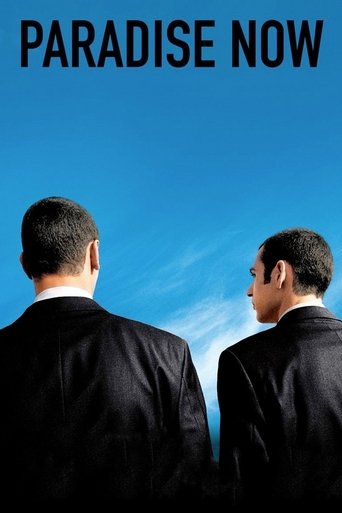
Two childhood friends are recruited for a suicide bombing in Tel Aviv
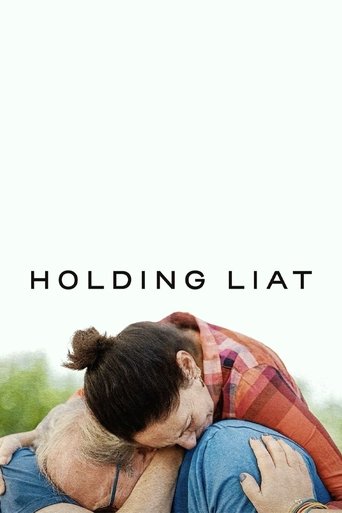
Liat Atzili was kidnapped from her kibbutz on October 7. What begins as a chronicle of her parents, sister, and children's efforts to secure her return, becomes a portrait of conflicting impulses towards anger, indifference, and compassion straining the bonds of one grieving family.
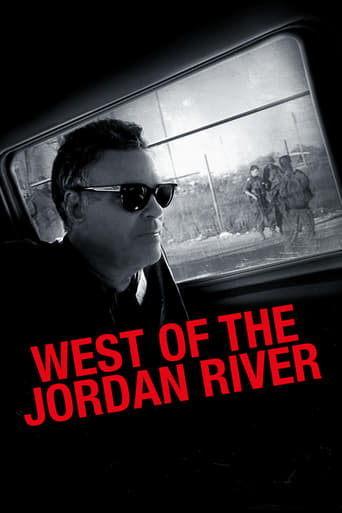
Amos Gitai returns to the occupied territories for the first time since his 1982 documentary FIELD DIARY. WEST OF THE JORDAN RIVER describes the efforts of citizens, Israelis and Palestinians, who are trying to overcome the consequences of occupation. Gitai's film shows the human ties woven by the military, human rights activists, journalists, mourning mothers and even Jewish settlers. Faced with the failure of politics to solve the occupation issue, these men and women rise and act in the name of their civic consciousness. This human energy is a proposal for long overdue change.
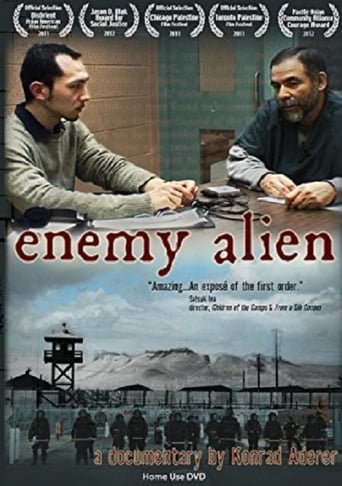
A Palestinian activist's fight for freedom draws a Japanese American filmmaker into confrontation with detention regimes of past and present.
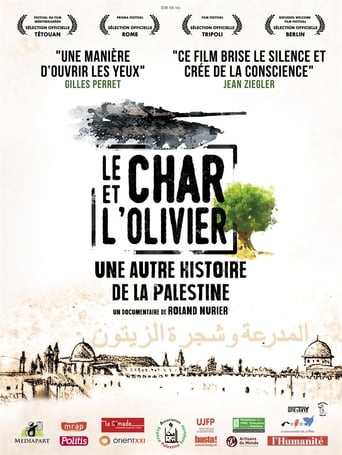
The Tank and The Olive Tree recalls a certain number of forgotten fundamentals and sheds new light on the history of Palestine. By combining geopolitical analysis, interviews with international personalities who are experts on the subject and testimonies from Palestinian and French citizens, this documentary offers the keys to understanding what the media call the Israeli-Palestinian conflict. Enough to rid people's minds of clichés and prejudices! If The Chariot and the Olivier is intended to be educational, it speaks above all of a magnificent territory, and of a people who constantly affirm that “to live is already to resist”...

Short film made from photographs taken by anthropologist and photojournalist Rogério Ferrari in Palestinian territories in 2002.

The viscous conflict between Israel and the Palestinians is now a generation old. For many of the children of the region, the terrorist war has been going on for their entire lifetimes, killing their family and friends, and overshadowing their lives. They are the Children of Rage
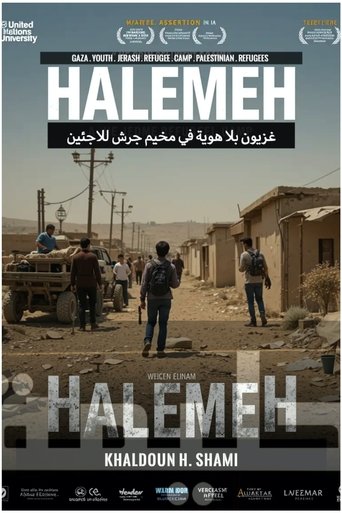
In the Gaza refugee camp of Jerash, Palestinians face the critical issue of lacking identification documents. This situation undermines their rights and hinders access to essential services and opportunities.
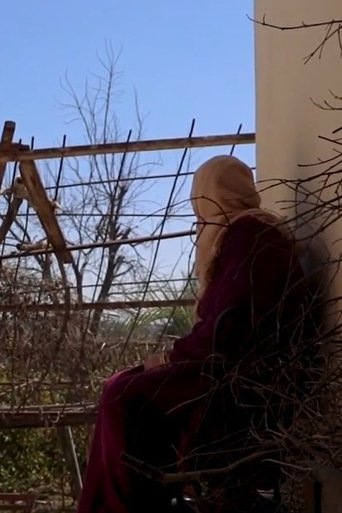
Jawaher was a farmer with her father when she was young, and a beekeeper in old age. Beekeeping to her is a way to overcome life's difficulties. Despite the difficulties she's facing; the economic situation, climate change, and wars, she's still sticking to her source of livelihood to save a living.

Filmed entirely with an iPhone, Teta, Opi & Me is a tribute to conformity, tolerance and courage. It is a poetic, meditative, multilingual, and feeling-driven short film, documenting the intricacies of the artist’s playful process in capturing her grandparents’ enduring romance through social, political and racial adversity. He comes from Bethlehem, Palestine and she comes from Vienna, Austria. Incorporating poetic filmic scenarios, vérité scenes, interviews, and home movies, the work is an inter-generational dialogue that explores themes of family, love, and the intermingling of cultures.
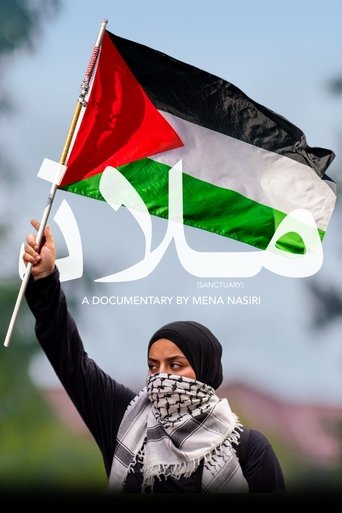
Exploring police brutality and institutional hostility towards Arab and Muslim students, this documentary reveals how the University of Michigan's broad trends of surveillance transform a sanctuary into a symbol of systemic oppression.
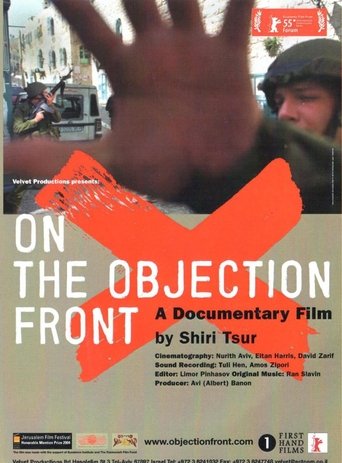
A film documenting the story of the Israeli refusnik-movement and interviews some of its protagonists. This timely documentary interweaves the stories of six soldiers who, after years of loyal reserve duty and annual active combat, find they can no longer countenance serving in the occupied territories of the West Bank and Gaza Strip. They become "refusniks" - an action that puts them at odds with deeply held national values and has devastating consequences in their own lives. In the film, six of the signers of the original "Combatants’ Letter" reveal the untenable combat experiences that led to their decision, the public outcry it provoked and the price they continue to pay for refusing to serve - including isolation, family ostracism and imprisonment. Winner, Ecumenical Jury Prize, Berlin Film Festival
In 2021, the Sheikh Jarrah neighborhood was attacked. The war lasted for 11 days, during which all forms of weapons were used. This left many victims, along with a great loss of buildings and infrastructure. But, maybe more importantly, it created deep psychological effects on all who lived through it, many of them children

Unspoken or إحكِ is about Palestinian spoken word poet Farah Chamma who, at the age of 17, became an online sensation after her poems went viral. Today, Farah finds her poetry at odds with the world she lives in. The film shows her conflict as she struggles with self-censorship and keeping her poetry authentic and real.
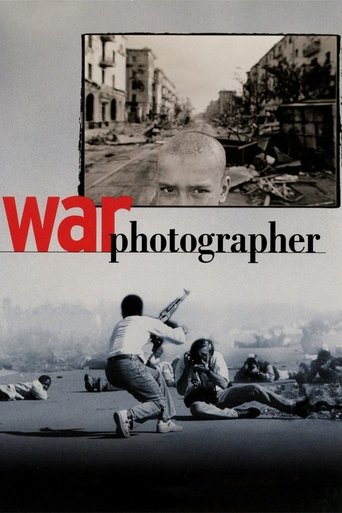
Documentary about war photographer James Nachtwey, considered by many the greatest war photographer ever.
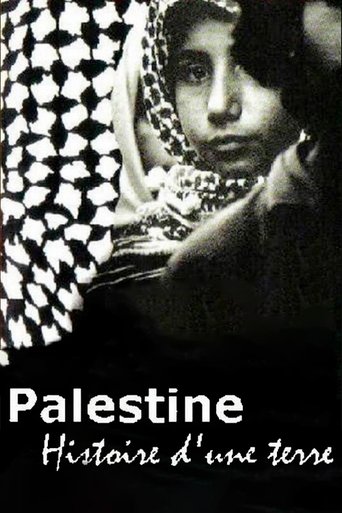
Using only rare archival and newsreel footage, this film tells the story of Palestine from the nineteenth century through current times.

A little girl wanders through a seemingly peaceful land, turning it into her playground. Almost everything she encounters becomes a source of play and wonder, as if beauty were everywhere. But behind these images lies a different reality. Driven by authentic testimonies of Palestinian children confronted with war, the film challenges the way we see: what remains of beauty when everything seems destroyed? Between fiction and testimony, this short film explores the strength and beauty of innocence in the face of the world's atrocity.

Building on Forensic Architecture’s previous investigation into herbicidal warfare and its effects on Palestinian farmers along the eastern perimeter of the occupied Gaza Strip, this investigation marks Land Day in Palestine by examining the systematic targeting of orchards and greenhouses by Israeli forces since October 2023. Our analysis reveals that this destruction is a widespread and deliberate act of ecocide that has exacerbated the ongoing catastrophic famine in Gaza and is part of a wider pattern of deliberately depriving Palestinians of critical resources for survival.
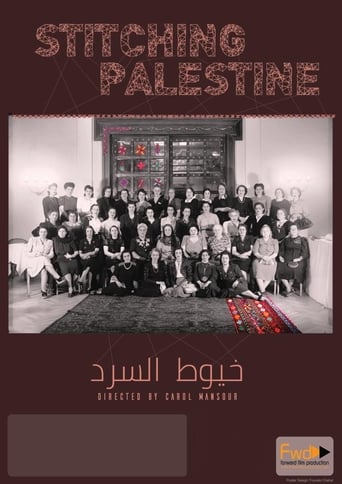
Twelve Palestinian women sit before us and talk of their life before the Diaspora, of their memories, of their lives and of their identity. Their narratives are connected by the enduring thread of the ancient art of embroidery. Twelve resilient, determined and articulate women from disparate walks of life: lawyers, artists, housewives, activists, architects, and politicians stitch together the story of their homeland, of their dispossession, and of their unwavering determination that justice will prevail. Through their stories, the individual weaves into the collective, yet remaining distinctly personal. Twelve women, twelve life-spans, and stories from Palestine; a land whose position was fixed on the map of the world, but is now embroidered on its face.