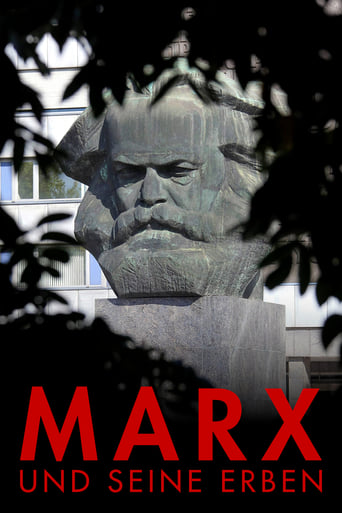
Karl Marx und seine Erben
2018-04-28 · Runtime unavailable · ★ 7.0
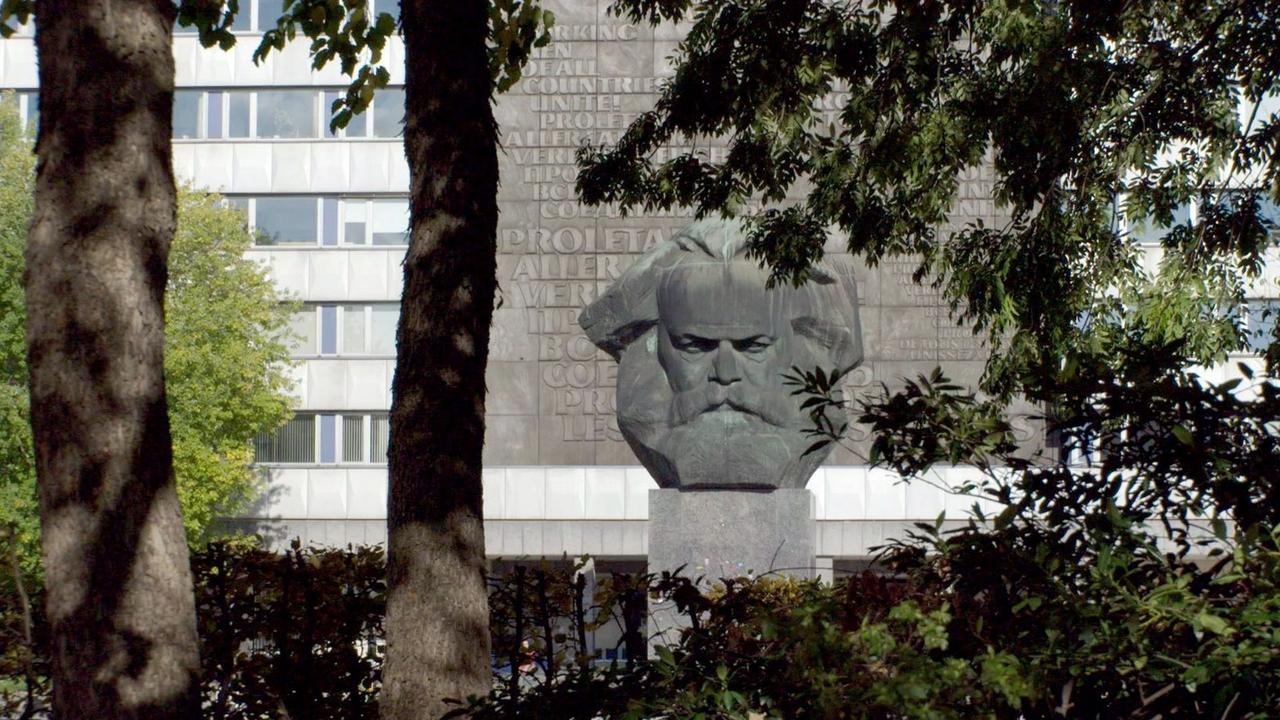
Over the past hundred years, dramatic social upheavals have taken place in the name of Karl Marx's theories. In Western Europe, the student movement of 1968 and the Eurocommunists were inspired. And in recent times, the thinker has experienced a renaissance.
Trailers are previews, not full movies.
No authorized playback source configured. Use the legal watch options below.
Production details
- Directors
- Peter Dörfler
- Production companies
- neue artfilm, WDR, SWR, ARTE
- Countries
- Germany
- Status
- Released
Top Cast
 Hansi JochmannNarrator (voice)
 Wiebke FrostNarrator (voice)
 Marco WittorfNarrator (voice)
 Werner RätzSelf
 Christina MorinaSelf
 Stephen SmithSelf
 Vladimir LeninSelf (archive footage)
 Mathias GreffrathSelf
 Zhang ShuangliSelf
 Wu WeishanSelf
 Pierre LaurentSelf
 Georges MarchaisSelf (archive footage)
 Enrico BerlinguerSelf (archive footage)
 Willi StophSelf (archive footage)
 Erich HoneckerSelf (archive footage)
 Sahra WagenknechtSelf
Title information and images are supplied by TMDb. Explore our discovery guide for advice on comparing metadata and legal viewing options.
Where to watch
Availability provided by JustWatch via TMDb. Offers can change. Provider links are listed on TMDb; full playback requires a separately authorized source.
Availability not listed for this country.
Seasons & episodes
Recommendations

In 1936, Victor H. Green (1892-1960) published The Negro Motorist Green Book, a book that was both a travel guide and a survival manual, to help African-Americans navigate safe those regions of the United States where segregation and Jim Crow laws were disgracefully applied.
In 1975, Ryszard Kapuściński, a veteran Polish journalist, embarked on a seemingly suicidal road trip into the heart of the Angola's civil war. There, he witnessed once again the dirty reality of war and discovered a sense of helplessness previously unknown to him. Angola changed him forever: it was a reporter who left Poland, but it was a writer who returned…
Featuring never-before-seen footage, this documentary delivers a startling new look at the Peoples Temple, headed by preacher Jim Jones who, in 1978, led more than 900 members to Guyana, where he orchestrated a mass suicide via tainted punch.

Oskar Gröning, known as the "Accountant of Auschwitz," was charged with the murder of 300,000 Jews. When he took the stand in 2015, at the age of 94, his trial made headlines worldwide.

The history of cinematic sound, told by legendary sound designers and visionary filmmakers.

Journey into the extraordinary world of "The Witcher" — from casting the roles to Jaskier's catchy song — in this behind-the-scenes look at the series.
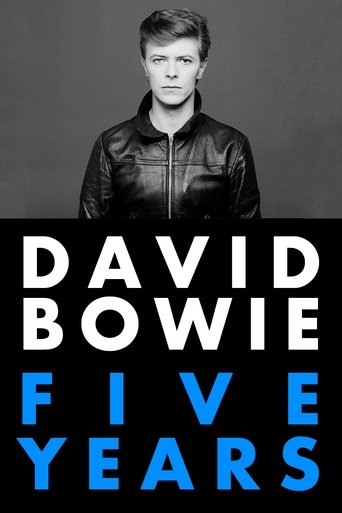
Featuring a wealth of previously unseen archive, this film looks at how Bowie continually evolved: from Ziggy Stardust to the Soul Star of Young Americans, to the ‘Thin White Duke’. It explores his regeneration in Berlin with the critically acclaimed album Heroes, his triumph with Scary Monsters and his global success with Let’s Dance. With interviews with all his closest collaborators, David Bowie - Five Years presents a unique account of why Bowie has become an ‘icon of our times’.

In the last five years of his life, David Bowie ended nearly a decade of silence to engage in an extraordinary burst of activity, producing two groundbreaking albums and a musical. David Bowie: The Last Five Years explores this unexpected end to a remarkable career. Made with remarkable access, Francis Whately’s documentary is a revelatory follow-up to his acclaimed 2013 documentary David Bowie: Five Years, which chronicled Bowie’s golden ‘70s and early-‘80s period.

A documentary examining possible historical and modern conspiracies surrounding Christianity, the 9/11 terrorist attacks, and the Federal Reserve bank.

On September 15, 1963, a bomb destroyed a black church in Birmingham, Alabama, killing four young girls who were there for Sunday school. It was a crime that shocked the nation--and a defining moment in the history of the civil-rights movement. Spike Lee re-examines the full story of the bombing, including a revealing interview with former Alabama Governor George Wallace.

Dick Proenneke retired at age 50 in 1967 and decided to build his own cabin in the wilderness at the base of the Aleutian Peninsula, in what is now Lake Clark National Park. Using color footage he shot himself, Proenneke traces how he came to this remote area, selected a homestead site and built his log cabin completely by himself. The documentary covers his first year in-country, showing his day-to-day activities and the passing of the seasons as he sought to scratch out a living alone in the wilderness.
Director Peter Joseph examines examples of economic subjugation and offers solutions based on alignment with nature.
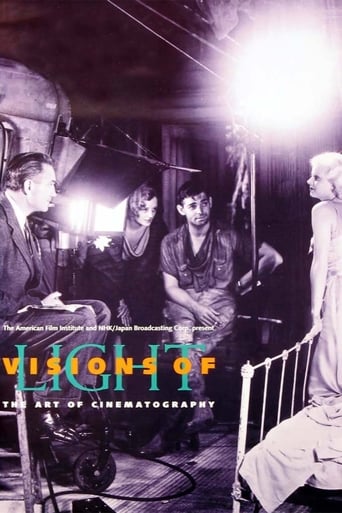
Cameramen and women discuss the craft and art of cinematography and of the "DP" (the director of photography), illustrating their points with clips from 100 films, from Birth of a Nation to Do the Right Thing. Themes: the DP tells people where to look; changes in movies (the arrival of sound, color, and wide screens) required creative responses from DPs; and, these artisans constantly invent new equipment and try new things, with wonderful results. The narration takes us through the identifiable studio styles of the 30s, the emergence of noir, the New York look, and the impact of Europeans. Citizen Kane, The Conformist, and Gordon Willis get special attention.
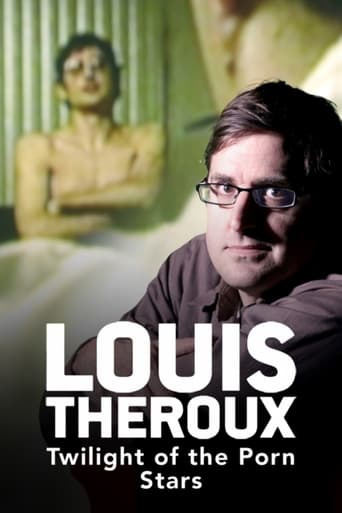
In 1997, Louis Theroux made a documentary about the world of male porn performers in Los Angeles. 15 years later, he returns to find a business struggling with the deluge of free porn on the internet. Louis revisits some of the original programme's contributors as well as meeting the latest crop of porn performers dreaming of porn stardom.

“The Soviet Story” is a story of an Allied power, which helped the Nazis to fight Jews and which slaughtered its own people on an industrial scale. Assisted by the West, this power triumphed on May 9th, 1945. Its crimes were made taboo, and the complete story of Europe’s most murderous regime has never been told. Until now...
A keen chronicle of the unlikely rise to power of Adolf Hitler (1889-1945) and a dissection of the Third Reich (1933-1945), but also an analysis of mass psychology and how the desperate crowd can be deceived and shepherded to the slaughterhouse.
This Oscar-winning documentary recounts the harrowing stories of five Hungarian Jews who endured the horrors of the Holocaust and Hitler's reign.
Louis Theroux travels to California to meet the man dubbed "the most dangerous racist in America"; Tom Metzger. Louis meets him, his family and his publicity manager as well as following him to skinhead rallies and on a visit to Mexico.
For the 20th anniversary of "Titanic," James Cameron reopens the file on the disaster.
A look behind the lens of Christopher Nolan's space epic.
Similar titles

A portrait of cabinet intrigues, the false aspirations of the party elite and the grinding reality of the 1960s, or "our little stability." Robert Meller and Janusz Dymek's documentary drama concerns the famous 1964 meat scandal, in which three death sentences were demanded and one was adjudicated and executed. The victim was Stanislaw Wawrzecki. Ostensibly, it was about fraud and bribes in the meat industry. In fact, it was about covering up the government's economic ineptitude, shortages of supplies and directing the people's anger at a few defendants.
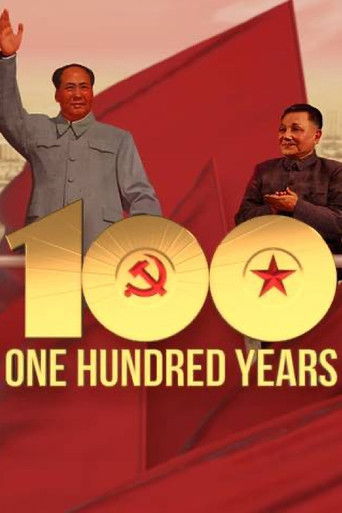
As the Communist Party of China celebrates its 100th anniversary, this documentary looks back at the party’s history, from the 1920’s, to the Civil War, the Great Leap Forward, the Great Famine, the Cultural Revolution and the reforms by Mao Zedong and Deng Xiaoping. Did the Great Famine cost more than 15 million lives? How does the Cultural Revolution continue to shape Chinese politics today? What was capitalism like after Mao’s death? Through rare and never-before-seen historical footage, expert interviews and eyewitness accounts of the Great Famine, Tiananmen incident, and the Cultural Revolution, get to know how one party has so profoundly shaped China.

Here and Elsewhere takes its name from the contrasting footage it shows of the fedayeen and of a French family watching television at home. Originally shot by the Dziga Vertov Group as a film on Palestinian freedom fighters, Godard later reworked the material alongside Anne-Marie Miéville.
"Gold of Cuba" is a documentary by Argentine filmmaker Alejandro Saderman that shows the development of Cuba through the promotion of its main industry: sugar. From the discovery of America to the figure of Reinaldo Castro, National Hero of Labor as a sugarcane cutter, the film discusses the introduction of mechanical harvesters, including the African slave labor that would later be replaced, with the abolition of slavery, by Chinese sugarcane cutters.

From World War, to revolution and ultimately rebirth, Forever Young is the story of four generations spanning a hundred years of modern Chinese history. Each generation faces its own unique set of challenges. Up against corporate corruption, the trials and tribulations of the cultural revolution, and one's duty to nation in time of war, they are faced with choosing their individual paths through history. But as the challenges and turmoil of each generation may differ as time changes, what was learned in the past cannot help but effect the choices that are made in the future as it is passed down from generation to generation. And that is the universal message that being true to yourself is precious. It is the source of strength that empowers one to become the person they want to be, to march forward as far as their hearts desire, into the future.
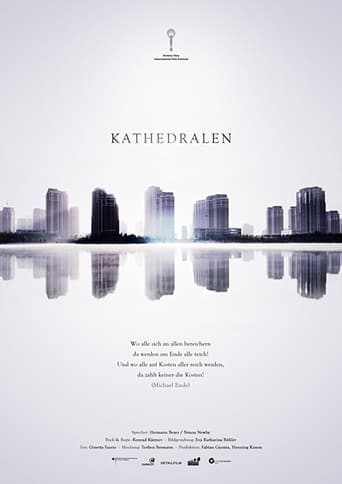
The city of Ordos, in the middle of China, was build for a million people yet remains completely empty. Ordos is not so much a place but a symbol of babylonic hype. But nothing will change - as long as people believe.

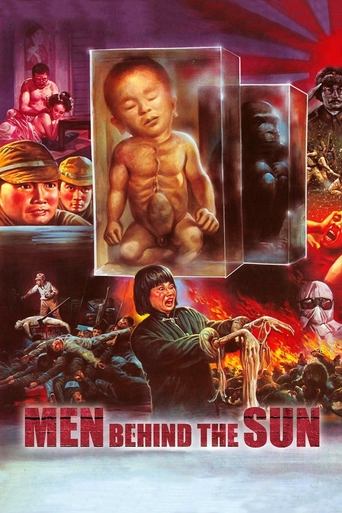
Japanese troops round up Chinese and Russian prisoners of war and take them to unit 731, where they're horribly tortured and experimented on to test new biological weapons.

Thousands of terracotta warriors guarded the first Chinese emperor's tomb. This is their story, told through archeological evidence and reenactments.
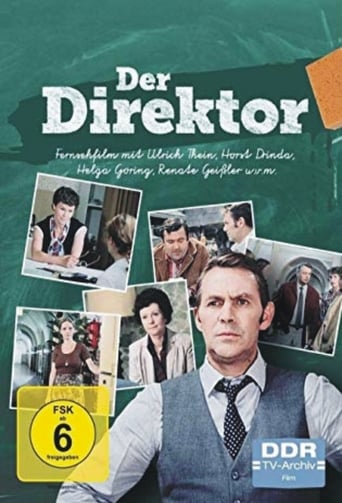
The school authorities want to read success stories in director Joachim Faber's reports. But they cannot simply be produced on an assembly line. Pupils, for example, use the wrong tone. The matter draws circles until the superiors finally talk about refusal to work. Director Faber is caught between the efforts to resolve the conflict with pedagogical means and the pressure from above.

Jerry, an ordinary immigrant dad, retired in Orlando, is recruited to be an undercover agent for the Chinese police. Jerry’s family recreates the events on film and his three sons discover a darker truth. True crime meets spy thriller in this genre-bending docufiction hybrid about an immigrant’s search for the American dream. A Slamdance Film Festival Grand Jury and Audience Award winner.
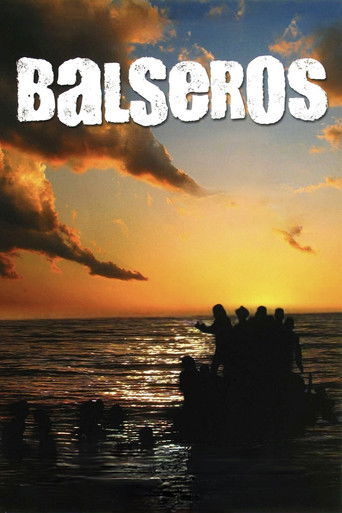
In the summer of 1994, a team of public television reporters filmed and interviewed seven Cubans a few days before their risky venture of setting out to sea in homemade rafts to reach the coast of the United States. Six made it far enough to be picked up at sea by the U.S. Coast Guard. When these balseros (rafters) were finally allowed to go to the United States, the film crew went with them to a string of several cities. Seven years later, the film crew visits them again, to discover that their destiny has been in the United States. Theirs is a true story about some of the authentic survivors of our times, the human adventure of people who are shipwrecked between two worlds.
GDR 1961: Tamara Bunke, daughter of Jewish exiles from Argentina, not only falls for the political goals of the rousing revolutionary Che Guevara during a state visit. She also meets Ulises Estrada, the commandant of Che's team. Ignited by the fire of the revolution, she gets involved in a diabolical espionage deal with the Stasi in order to cheat her way out of Cuba. In Cuba, she ends up caught between all fronts: under the watchful eye of the Stasi, which expects results from her, but in reality solely dedicated to Che's revolution, Tamara allows herself to be trained as a double spy by Che's troops. At the same time, her honest love grows for Commandante Ulises, who eventually gives her the choice of following her personal happiness and going into hiding rather than following Che's plans to liberate South America, which by now he considers a suicide mission. An unresolvable, deeply tragic conflict that ends fatally for Tamara in the battle of Bolivia's Rio Grande..

Documentary movie about testing of the largest nuclear weapon in history, the Tsar Bomba. Declassified and made available to the public in 2020.
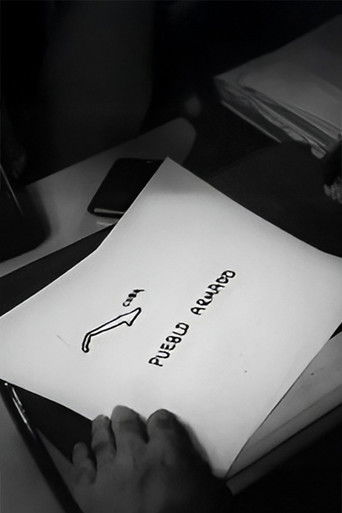
Shot in Cuba in 1961, this documentary follows a volunteer militia brigade organized in defense of the Cuban Revolution. Joris Ivens and his crew observe military training, daily life, and collective discipline among civilian volunteers. The film emphasizes popular mobilization as a defining feature of the revolutionary state.
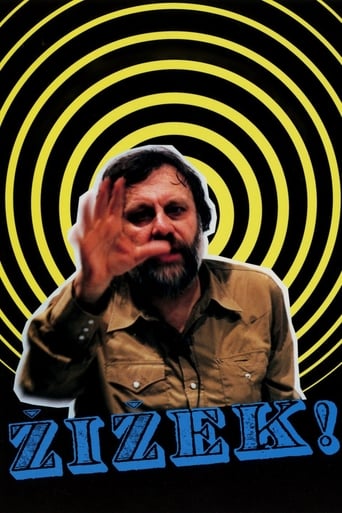
ŽIŽEK! trails the thinker as he crisscrosses the globe, racing from New York City lecture halls, through the streets of Buenos Aires, and even stopping at home in Ljubljana, Slovenia. All the while Žižek obsessively reveals the invisible workings of ideology through his unique blend of Lacanian psychoanalysis, Marxism, and critique of pop culture.
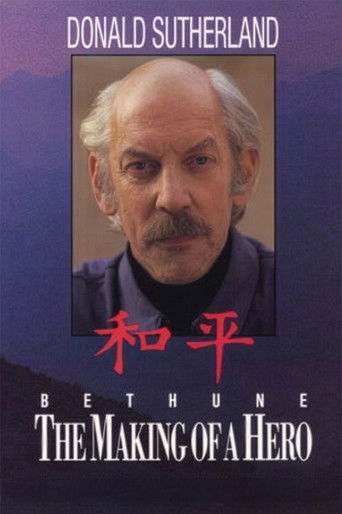
True story of Norman Bethune, a medical doctor who fought for justice in China during Mao's rise to power.