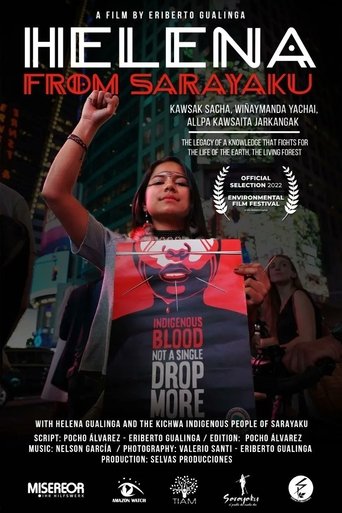
Helena of Sarayaku
2022-03-18 · 70 min · ★ 2.0
Helena is 17 years old and studies in Finland. Her father, a Swede, and her mother, indigenous Kichwa of Sarayaku, live at the heart of the Amazon in Ecuador.
Trailers are previews, not full movies.
No authorized playback source configured. Use the legal watch options below.
Production details
- Directors
- Eriberto Gualinga
- Production companies
- Amazon Watch
- Countries
- Ecuador
- Status
- Released
Top Cast
Cast unavailable.
Title information and images are supplied by TMDb. Explore our discovery guide for advice on comparing metadata and legal viewing options.
Where to watch
Availability provided by JustWatch via TMDb. Offers can change. Provider links are listed on TMDb; full playback requires a separately authorized source.
Availability not listed for this country.
Seasons & episodes
Recommendations

A string of threatening emails escalates into a revenge plot involving a newly married US marshal and his ex-girlfriend.
Nine filmmakers each profile a young girl from a different part of the world to weave a global tapestry of youth in the 21st century.

Ranjit, a farmer in India, takes on the fight of his life when he demands justice for his 13-year-old daughter, the victim of a brutal gang rape. His decision to support his daughter is virtually unheard of, and his journey unprecedented.

In an intimate and joyful story of love in the face of loss, celebrated poets Andrea Gibson and Megan Falley find strength—and unexpected hilarity—in what might be their final year together.
A road trip across five countries to explore the social and political movements as well as the mainstream media's misperception of South America while interviewing seven of its elected presidents.

A documentary about how a dominant cultural and demographic institution both sustains their traditional activities and adapts to the digital revolution.

A documentary on the expletive's origin, why it offends some people so deeply, and what can be gained from its use.

A documentary on the life of John Lennon, with a focus on the time in his life when he transformed from a musician into an antiwar activist.

An inside look at one of the most anticipated movie sequels ever with James Cameron and cast.

In the Realms of the Unreal is a documentary about the reclusive Chicago-based artist Henry Darger. Henry Darger was so reclusive that when he died his neighbors were surprised to find a 15,145-page manuscript along with hundreds of paintings depicting The Story of the Vivian Girls, in What is Known as the Realms of the Unreal, of the Glodeco-Angelinnian War Storm, Cased by the Child Slave Rebellion.

A detailing of the rise to prominence and global sporting superstardom of six supremely talented young Manchester United football players (David Beckham, Nicky Butt, Ryan Giggs, Paul Scholes, Phil and Gary Neville). The film covers the period 1992-1999, culminating in Manchester United's European Cup triumph.
Film adaptation of French economist Thomas Piketty's ground-breaking global bestseller of the same name: an eye-opening journey through wealth and power.
A documentary examining the decade of the 1970s as a turning point in American cinema. Some of today's best filmmakers interview the influential directors of that time.
An exploration of technologically developing nations and the effect the transition to Western-style modernization has had on them.
The Amazon rain forest, 1979. The crew of Fitzcarraldo (1982), a film directed by German director Werner Herzog, soon finds itself with problems related to casting, tribal struggles and accidents, among many other setbacks; but nothing compared to dragging a huge steamboat up a mountain, while Herzog embraces the path of a certain madness to make his vision come true.

From the heights of her modeling fame to her tragic death, this documentary reveals Anna Nicole Smith through the eyes of the people closest to her.
After a plane crash, four indigenous children fight to survive in the Colombian Amazon using ancestral wisdom as an unprecedented rescue mission unfolds.
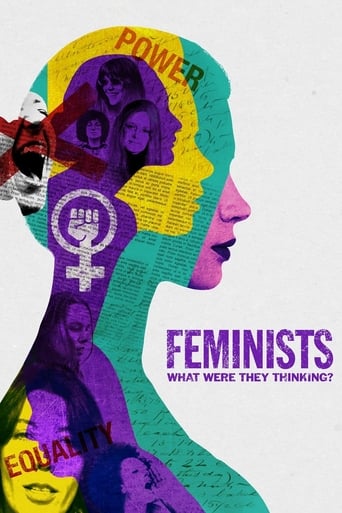
In 1977, a book of photographs captured an awakening - women shedding the cultural restrictions of their childhoods and embracing their full humanity. This documentary revisits those photos, those women and those times and takes aim at our culture today that alarmingly shows the need for continued change.

Just two years away from turning 30, participants in Michael Apted's documentary series are facing serious questions of identity and purpose, wondering whether they've found their place in the world.
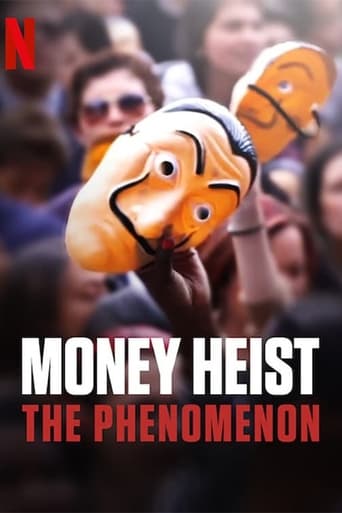
A documentary on why 'Money Heist' sparked a wave of enthusiasm around the world for a lovable group of thieves and their professor.
Similar titles

In 1921 the Kwakiut'l people of Alert Bay, British Columbia, held their last secret potlatch. In 1980 at Alert Bay, the U'mista Cultural Centre (U'mista means "something of great value that has come back") opened its doors to receive and house the cultural treasures which were seized decades earlier and only then returned to the people. The center also took up activities such as recording stories told by elders so that some part of the past would always be alive and teaching children about their heritage in order to make them feel connected to their ancestors. This film documents the cultural significance of these events for today's Kwakiut'l people. It is an eloquent testimony to the persistence and complexity of Kwakiut'l society and to the struggle for redefining cultural identity for them.
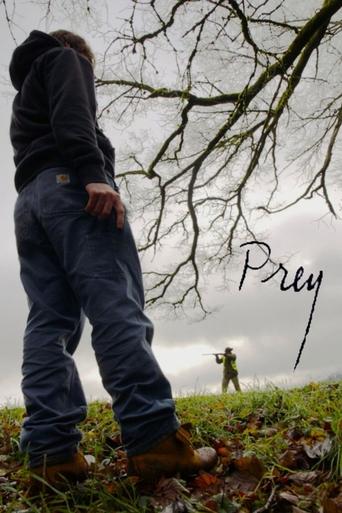
Young ecologist demonstraters travel to the countryside to confront hunters. But one of them is willing to do anything to stop them.
It’s spring in the Ecuadorian Amazon and the Uyantza festival is underway with the community celebrating all that the forest has to offer. Meanwhile, news is breaking around the world that a novel virus is spreading and a state of emergency is declared across the country. As people test positive for COVID-19 in the community, some families decide to leave and head deeper into the jungle. Disconnected from school, friends, the internet, and work, one family learns to reconnect with life in the forest. The children begin to unlearn the national curriculum, and instead are taught Indigenous knowledge that mainstream schools normally pass over. As COVID-19 wreaks havoc around the planet, the family reconnect to their ancestral ways, but as news arrives that Ecuador’s lockdown will end soon, will the family choose to return?
Dieser Dokumentarfilm zeigt die ökologischen Probleme, mit denen die Erde zu kämpfen hat. Mit Bezug auf die lange Entwicklungsgeschichte der auf der Erde lebenden Lebewesen wird insbesondere auch ein Augenmerk auf das Artensterben, das durch den Menschen verursacht wird, gelegt.
Mr. Greene recollects Navajo history through interviews with ancient tribesmen and reports on contemporary conditions, with emphasis on the progress being made at Rough Rock School in contrast with a BIA boarding school in Utah. Rough Rock is the "experimental" institution set up to give the Native Americans direct control of the process by which their children can be educated to function, productively and with a sense of identification, in two totally different worlds.
In this short film, artist Jobie Weetaluktuk turns his gaze on his family and the power of ritual through the story of a young woman and her unplanned child. In Inukjuak, an Inuit community in the Eastern Arctic, a baby boy has come into the world and they call him Timuti, a name that recurs across generations of his people, evoking other Timutis, alive and dead, who will nourish his spirit and shape his destiny.
In decades past, Native American artists who wanted to sell to mainstream collectors had little choice but to create predictable, Hollywood-style western scenes. Then came a generation of painters and sculptors led by Allan Houser (or Haozous), a Chiricahua Apache artist with no interest in stereotyped imagery and a belief that his own rich heritage was compatible with modernist ideas and techniques. Narrated by actor Val Kilmer and originally commissioned as part of an exhibit of Houser’s work at the Oklahoma History Center, this program depicts the artist’s tribal ancestry, his rise to regional and national acclaim, and the continuing success of his sons as they expand upon and depart from their father’s achievements. Key works are documented, as is Houser’s tenure at the Santa Fe–based Institute of American Indian Arts.
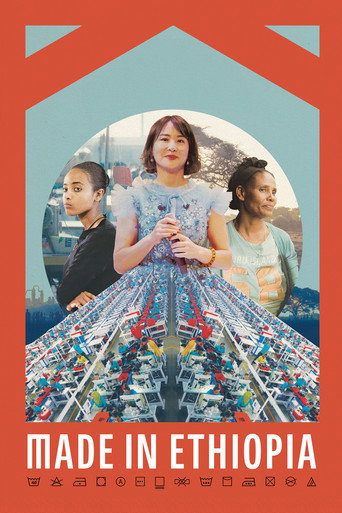
When a massive Chinese factory complex attempts a high-stakes expansion in rural Ethiopia, three women in search of prosperity have their faith in industrialization tested to the limit. Filmed over four years with singular access, Made in Ethiopia lifts the curtain on China’s historic but misunderstood impact on Africa, and explores contemporary Ethiopia at a moment of profound crisis. The film was awarded the Jury Special Mention at Tribeca Festival.
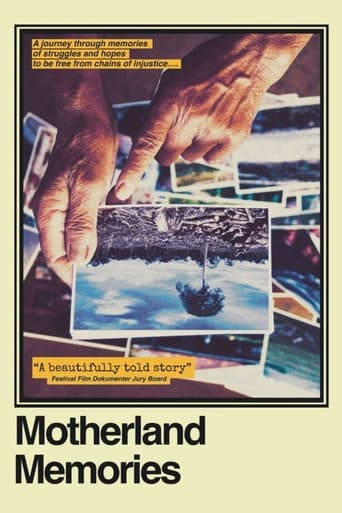
Ompung Putra Boru, a sixties indigenous Batak woman from Humbang Hasundutan, North Sumatra, retraces her life stories through photographs that interweave her past and present as a wife, mother, healer and indigenous land defender in two neighboring villages. Her multi-layered stories are juxtaposed with visual records of everyday life in the two villages, where people’s living space is still increasingly threatened by a giant pulp expansion.

Extremely dry soil, dead animals in the fires of Australia and other visible effects of climate change every day lead to anguish and hopelessness, for which the term environmental grief is used. One way of dealing with the crisis is to take a proactive approach to environmental protection. The heroines of the film embark on this path. With their radical but strictly non-violent gatherings in public spaces, they call for a "Rebellion against extinction" to prevent ecological collapse.
“Let’s Do It!” is a story about how a national cleanup campaign in a small European country grew into an ambitious global environmental movement. The idea spread far and wide, bringing about new wave of civic activism in many countries. However, even good initiatives can hit rough spots. The important thing is not to lose hope. This documentary captures the passion to change the world over the course of 10 years, culminating in World Clean-Up Day in 2018. The movie also showcases how grass-root initiatives can grow and subside and how some ambitions can be defeated only to give rise to even more ambitious ones.

Indigenous chief Juma Xipaia fights to protect tribal lands despite assassination attempts. Her struggle intensifies after learning she's pregnant, while her husband, Special Forces ranger Hugo Loss, stands by her side.
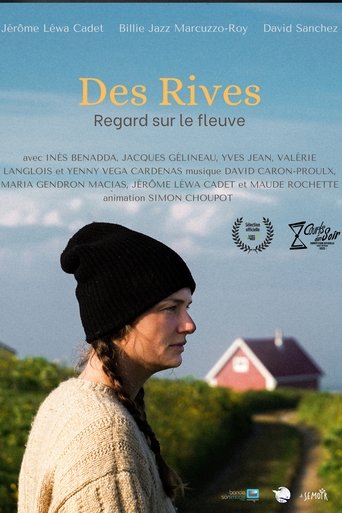
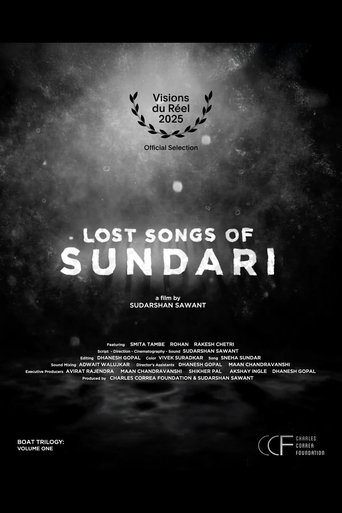
In Mumbai, once an island city linked by the sea, modern bridges and land reclamation have reshaped the landscape, disrupting the lives of its original communities.

A searing examination of the contamination that sparked an international catastrophe and the decades’ long battle with some of the world’s largest chemical companies for justice and compensation.
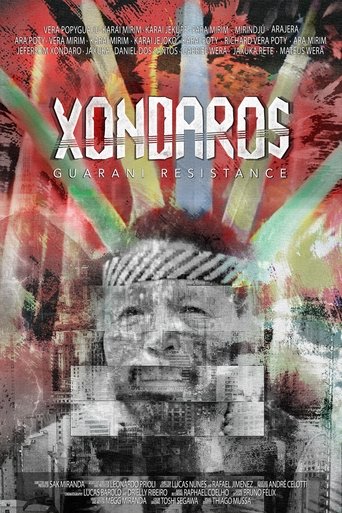
The 6 Guarani villages of Jaraguá, in São Paulo, fight for land rights, for human rights and for the preservation of nature. They suffer from the proximity to the city, which brings lack of resources, pollution of rivers and springs, racism, police violence, fires, lack of infrastructure and sanitation, among others. Unable to live like their ancestors, their millenary culture is lost as it merges with the urban culture.
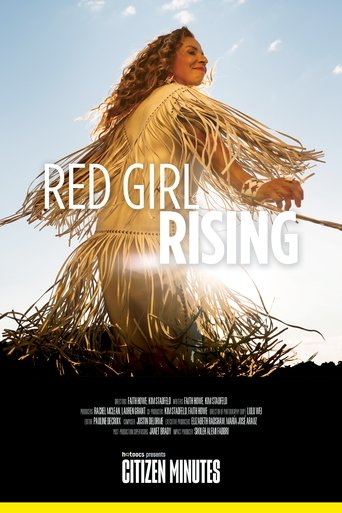
Joyce Jonathan Crone—Mohawk matriarch, retired teacher, activist, humanitarian—reaches forward into her community of Huntsville, Ontario, opening hearts and bridging gaps for Indigenous education.

It begins at the margins of power: a few teenagers protest outside parliament, cardboard signs in hand and an unyielding determination in their eyes. From there, Helena Molin’s long-term portrait unfolds—of a generation forced early on to confront the ruthlessness of politics. Their fight for the climate and for justice runs parallel to a life that should be about friendship, play, and future dreams, but is repeatedly interrupted by the failures of the adult world. The result is an intimate and powerful depiction of what happens when moral responsibility is placed in the hands of those still searching for their place in the world.
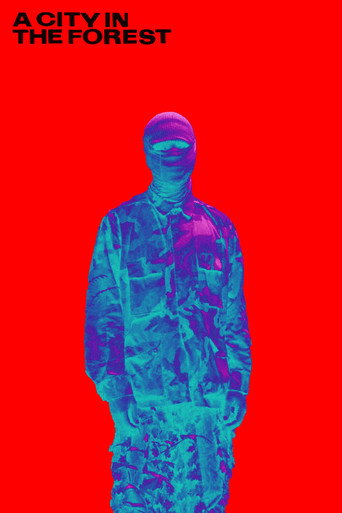
When a private police foundation in Atlanta tries to raze an urban forest to build the country’s largest police training facility, a diverse, decentralized, and intersectional movement defends the forest from what they call “Cop City.” A City in the Forest paints a collective portrait of the country’s most urgent social justice story, where a web of activists fight back against environmental racism, political corruption, police violence, and the criminalization of dissent.