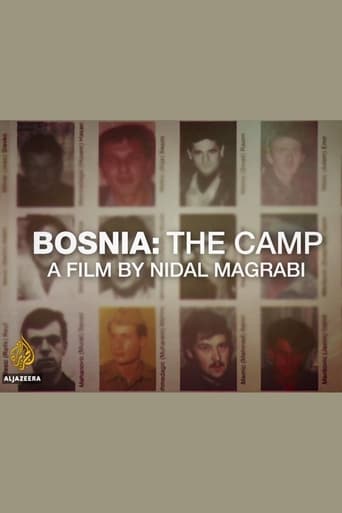
Bosnia: The Camp
2017-01-01 · 46 min · Not rated
From May to August of 1992, during the Bosnian War, more than 3000 Bosnian Muslims--known as Bosniaks--and Croats were murdered by Serbian authorities in the town of Prejidor, Bosnia, and its surroundings and in the Omarska concentration camp near the city.
Trailers are previews, not full movies.
No authorized playback source configured. Use the legal watch options below.
Production details
- Directors
- Nidal Magrabi
- Production companies
- Unavailable
- Countries
- United Kingdom
- Status
- Released
Top Cast
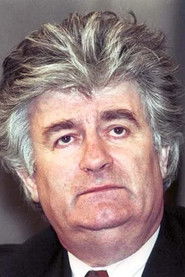 Radovan KaradžićHimself (archive footage)
Title information and images are supplied by TMDb. Explore our discovery guide for advice on comparing metadata and legal viewing options.
Where to watch
Availability provided by JustWatch via TMDb. Offers can change. Provider links are listed on TMDb; full playback requires a separately authorized source.
Availability not listed for this country.
Seasons & episodes
Recommendations

Amid the failing counteroffensive, a journalist follows a Ukrainian platoon on their mission to traverse one mile of heavily fortified forest and liberate a strategic village from Russian occupation. But the farther they advance through their destroyed homeland, the more they realize that this war may never end.

When Allied forces liberated the Nazi concentration camps in 1944-45, their terrible discoveries were recorded by army and newsreel cameramen, revealing for the first time the full horror of what had happened. Making use of British, Soviet and American footage, the Ministry of Information’s Sidney Bernstein (later founder of Granada Television) aimed to create a documentary that would provide lasting, undeniable evidence of the Nazis’ unspeakable crimes. He commissioned a wealth of British talent, including editor Stewart McAllister, writer and future cabinet minister Richard Crossman – and, as treatment advisor, his friend Alfred Hitchcock. Yet, despite initial support from the British and US Governments, the film was shelved, and only now, 70 years on, has it been restored and completed by Imperial War Museums under its original title "German Concentration Camps Factual Survey".
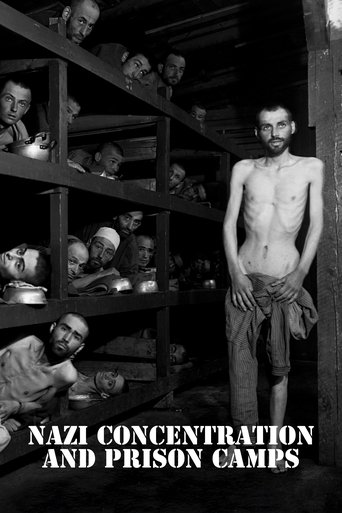
Produced and presented as evidence at the Nuremberg war crimes trial of Hermann Göring and twenty other Nazi leaders, this film consists primarily of dead and surviving prisoners and of facilities used to kill and torture during the World War II.
As the Russian invasion begins, a team of Ukrainian journalists trapped in the besieged city of Mariupol struggle to continue their work documenting the war's atrocities.

Prelude to War was the first film of Frank Capra's Why We Fight propaganda film series, commissioned by the Pentagon and George C. Marshall. It was made to convince American troops of the necessity of combating the Axis Powers during World War II. This film examines the differences between democratic and fascist states.
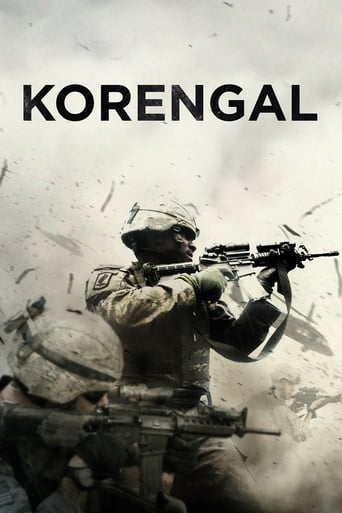
Korengal picks up where Restrepo left off; the same men, the same valley, the same commanders, but a very different look at the experience of war.
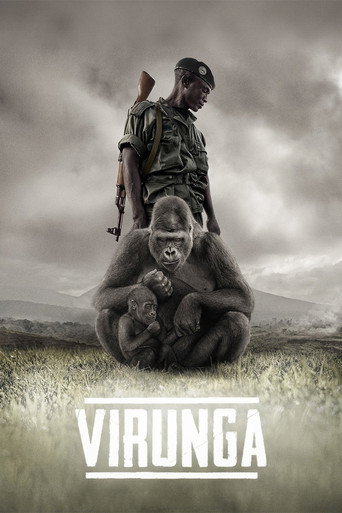
Virunga in the Democratic Republic of the Congo is Africa's oldest national park, a UNESCO world heritage site, and a contested ground among insurgencies seeking to topple the government that see untold profits in the land. Among this ongoing power struggle, Virunga also happens to be the last natural habitat for the critically endangered mountain gorilla. The only thing standing in the way of the forces closing in around the gorillas: a handful of passionate park rangers and journalists fighting to secure the park's borders and expose the corruption of its enemies. Filled with shocking footage, and anchored by the surprisingly deep and gentle characters of the gorillas themselves, Virunga is a galvanizing call to action around an ongoing political and environmental crisis in the Congo.

When Sgt. First Class Brian Eisch is critically wounded in Afghanistan, it sets him and his sons on a journey of love, loss, redemption and legacy.
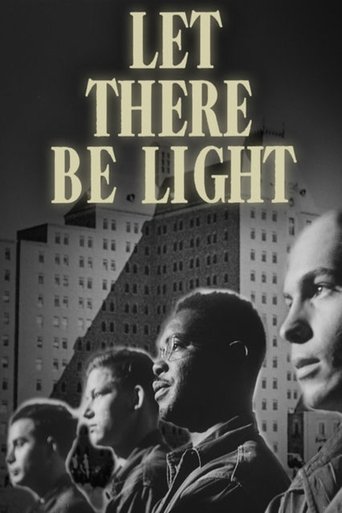
The final entry in a trilogy of films produced for the U.S. government by John Huston. Some returning combat veterans suffer scars that are more psychological than physical. This film follows patients and staff during their treatment. It deals with what would now be called PTSD, but at the time was categorised as psychoneurosis or shell-shock. Government officials deemed this 1946 film counterproductive to postwar efforts; it was not shown publicly until 1981.

This documentary movie is about the battle of San Pietro, a small village in Italy. Over 1,100 US soldiers were killed while trying to take this location, that blocked the way for the Allied forces from the Germans. Preserved by the Academy Film Archive in 2005.

Marcel Ophuls' riveting film details the heinous legacy of the Gestapo head dubbed "The Butcher of Lyon." Responsible for over 4,000 deaths in occupied France during World War II, Barbie would escape—with U.S. help—to South America in 1951, where he lived until a global manhunt led to his 1983 arrest and subsequent trial.

“The Soviet Story” is a story of an Allied power, which helped the Nazis to fight Jews and which slaughtered its own people on an industrial scale. Assisted by the West, this power triumphed on May 9th, 1945. Its crimes were made taboo, and the complete story of Europe’s most murderous regime has never been told. Until now...

A love letter from a young mother to her daughter, the film tells the story of Waad al-Kateab’s life through five years of the uprising in Aleppo, Syria as she falls in love, gets married and gives birth to Sama, all while cataclysmic conflict rises around her. Her camera captures incredible stories of loss, laughter and survival as Waad wrestles with an impossible choice– whether or not to flee the city to protect her daughter’s life, when leaving means abandoning the struggle for freedom for which she has already sacrificed so much.
Filmed at night from Tel Aviv rooftops, this investigative documentary examines the civilian casualties of Israel's military operations in Gaza and the systems behind targeted killings of Palestinians.
During the chaotic final weeks of the Vietnam War, the North Vietnamese Army closes in on Saigon as the panicked South Vietnamese people desperately attempt to escape. On the ground, American soldiers and diplomats confront a moral quandary: whether to obey White House orders to evacuate only U.S. citizens.

A documentary about World War I with never-before-seen footage to commemorate the centennial of Armistice Day, and the end of the war.

Documentary filmmaker Amy Berg investigates the life of 30-year pedophile Father Oliver O'Grady and exposes the corruption inside the Catholic Church that allowed him to abuse countless children. Victims' stories and a disturbing interview with O'Grady offer a view into the troubled mind of the spiritual leader who moved from parish to parish gaining trust ... all the while betraying so many.
With unprecedented access, this documentary follows the extraordinary journey of “Raqqa is Being Slaughtered Silently”—a group of anonymous citizen journalists who banded together after their homeland was overtaken by ISIS—as they risk their lives to stand up against one of the greatest evils in the world today.

Through deeply personal interviews with her siblings and an examination of the photographs, letters, and belongings left behind, Mariska assembles a new portrait of her mother Jayne Mansfield, an extraordinary and complex woman.

Al Pacino's deeply-felt rumination on Shakespeare's significance and relevance to the modern world through interviews and an in-depth analysis of "Richard III."
Similar titles
The commandant of Auschwitz, Rudolf Höss, and his wife Hedwig, strive to build a dream life for their family in a house and garden next to the camp.
The story of Holocaust survivor Emil A. Fish, who was nine years old when he and his family in Bardejov, Slovakia were sent to a concentration camp.
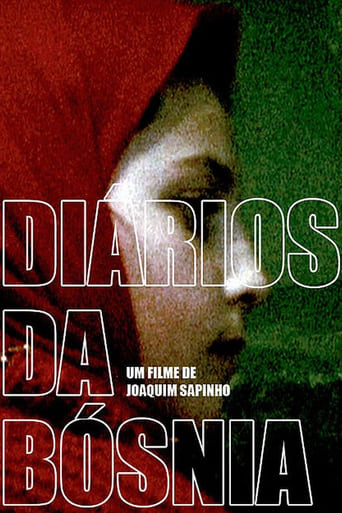
I went to Bosnia after war ended, in 1996, when the Danton Peace Accord was being implemented. Bosnia had been divided in two entities, which separated the two main opposing forces of the conflict; the Serb Bosnians and the Muslim Bosnians. Two years later, in 1998, I returned to Bosnia... This movie is a diary of the two voyages, in which I deal with the memories of the war, the death and destruction and with the victim’s struggle who don’t know how to return home.

In Germany at the height of World War II, a ragtag group of American soldiers discover Doctor Mengele's diabolical plan to create an unstoppable army of Nazi werewolves.
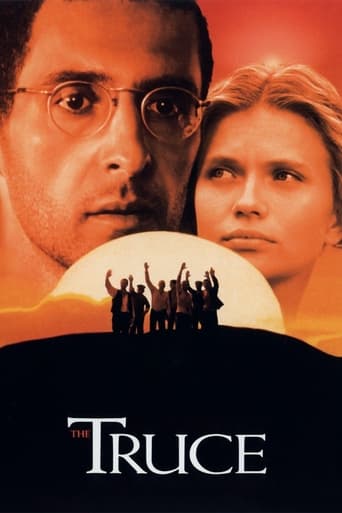
After the liberation of Auschwitz, an Italian prisoner of War begins a torturous voyage home to Turin, through a Europe caught between war and peace.
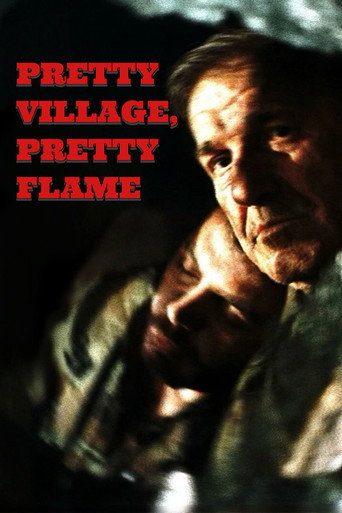
In the opening stages of the Bosnian War, a small group of Serbian soldiers are trapped in a tunnel by a Muslim force.
A small bar in Sarajevo is a safe space for queer people.
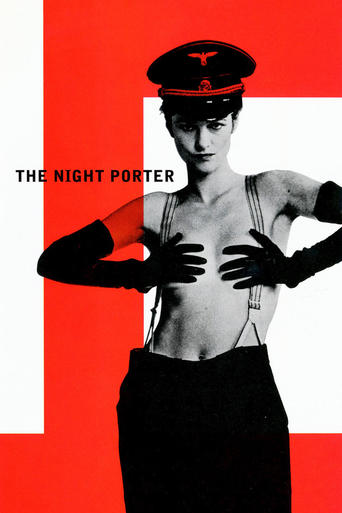
A concentration camp survivor discovers her former torturer and lover working as a porter at a hotel in postwar Vienna. When the couple attempt to re-create their sadomasochistic relationship, his former SS comrades begin to stalk them.
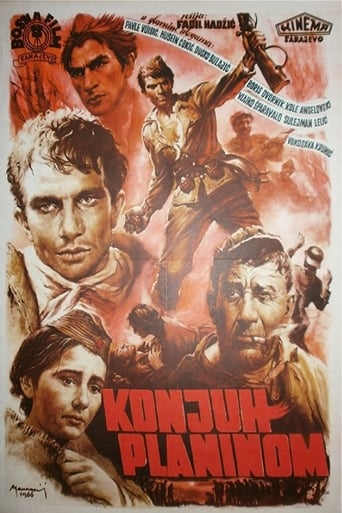
An exciting story of Husine coalminers who formed a partisan batch and put up an armed resistance during WW2 in Bosnia and Herzegovina.

If the conflict in Bosnia has become something of a forgotten war, it's not for the want of trying from the immensely powerful BBC film Warriors, the story of five young soldiers and their harrowing experiences in the region.

It is 1940. The first transport of prisoners arrives at the newly created concentration camp Auschwitz. One of them is Tadeusz “Teddy” Pietrzykowski, pre-war boxing champion of Warsaw. The camp officers force him to fight in the ring for his and other prisoners’ lives. However, his every win strengthens the hope that Nazis are not invincible. Auschwitz officers notice the growing resistance. The confrontation with the authorities of the camp becomes inevitable.

The horrors of war are examined from the view points of lifelong friends (Linus Roache, Vincent Perez), who end up on opposing sides in the civil war in Sarajevo. One is an expert marksman, who trains the snipers used to terrify the city and the other becomes a freedom fighter, who rejects his friend's offer to gain an escape from the city. As might be expected, the two eventually have to face-off against one another.

Story of Yugoslav prisoners of war in Germany during Second World War. Based on the novel “Farewell in October” by Oto Bihalji-Merin.
Recently, two photo albums with photos from Auschwitz were found in 1944. One belongs to Officer Karl Höcker and the other prisoner Lili Jacob, who survived the concentration camp. The pictures taken during the same months show completely different worlds. A documentary that once again tells this important and awful part of Europe's history.
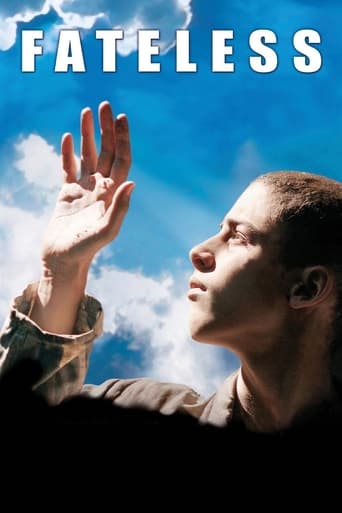
A Hungarian youth comes of age at Buchenwald during World War II. György Köves is 14, the son of a merchant who's sent to a forced labor camp. After his father's departure, György gets a job at a brickyard; his bus is stopped and its Jewish occupants sent to camps. There, György find camaraderie, suffering, cruelty, illness, and death. He hears advice on preserving one's dignity and self-esteem. He discovers hatred. If he does survive and returns to Budapest, what will he find? What is natural; what is it to be a Jew? Sepia, black and white, and color alternate to shade the mood.
A hotel in the centre of town is a war-time home and refuge for many of Sarajevo's homeless people. Every morning they leave the hotel and wander around the destroyed city gathering again at the defunct hotel in the afternoon. This film follows their separate fates through the bitter comparing of images of the bums with those of dogs abandoned by their owners and now left et the mercy of the war ravaged streets of Sarajevo.
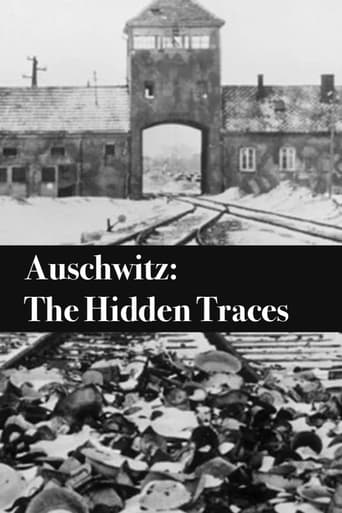
Examines documents and traces of the atrocities that took place at the Auschwitz concentration camp. Years after the end of the war, expert analysis of the remnants of these documents has helped shed light on the stories of prisoners.

Pasqualino Frafuso, known in Naples as "Pasqualino Seven Beauties" is a petty thief who lives off of the profits of his seven sisters while claiming to protect their honor at any cost, Pasqualino is arrested for murder and later sent to fight in the army after committing sexual assault. The Germans capture him and he gets sent to a concentration camp where he plots to make his escape by seducing a German officer.

A detachment of the Polish IFOR forces in Bosnia is led by Major Keller, who is being investigated for insubordination during a patrol in Srebrenica. The investigation is to be led by two arriving officers - Lieutenant Czacki and Major Kusz who will also replace Keller as CO. When the camp's RTO receives a communication from a downed Norwegian chopper, Keller ignores his standing orders and leads a platoon to rescue the crew.
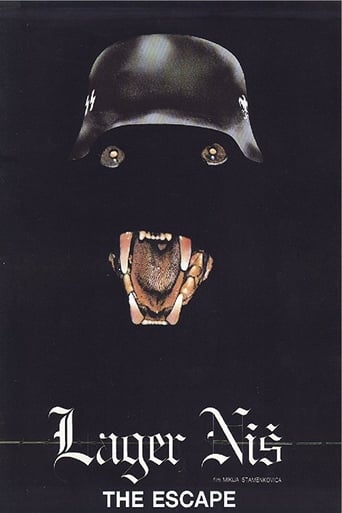
The tragic story of a group of prisoners, ordinary people, were detained in the camp at Lager in Naise at the beginning of WWII, after that mighty torture and abuse by the Germans, will try escape from the camp. A few succeeded.