
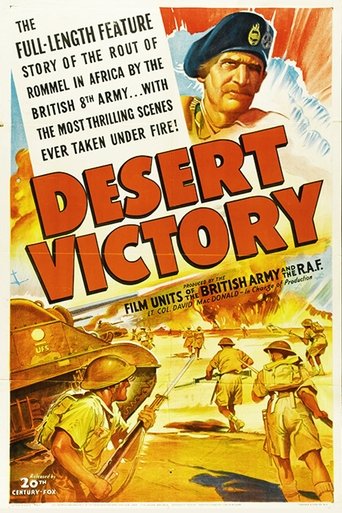
Desert Victory
1943-04-12 · 60 min · ★ 6.3
A featureless land fit only for war, as the narrator, J. L. Hodson stated in the early scenes: "If war was to be fought then let it begin here". In endless miles of rock-strewn scrub desert, where civilians hardly existed. Desert Victory tells the story of the Allied campaign to drive Germany and Italy from North Africa is analysed, with the major portion of the film examining the battles at El Alamein, including some re-enactment. Won "Best Documentary Feature" at the 16th Academy Awards in 1944.
Trailers are previews, not full movies.
No authorized playback source configured. Use the legal watch options below.
Production details
- Directors
- David MacDonald, Roy Boulting
- Production companies
- The Army Film & Photographic Unit, Royal Air Force Film Production Unit, British Army Film Unit, Army Film Unit
- Countries
- United Kingdom, United States of America
- Status
- Released
Top Cast
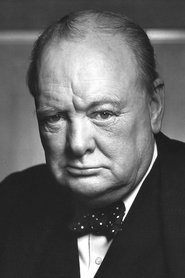 Winston ChurchillSelf (archive footage)
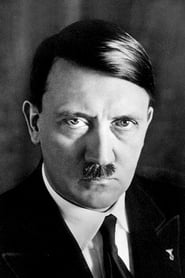 Adolf HitlerSelf (archive footage)
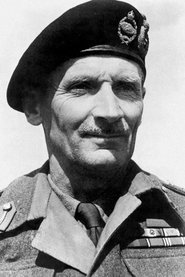 Bernard L. MontgomerySelf (archive footage)
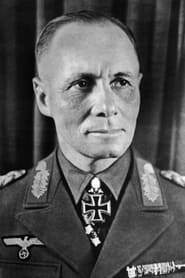 Erwin RommelSelf (archive footage)
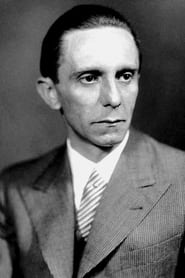 Joseph GoebbelsSelf (archive footage) (uncredited)
Title information and images are supplied by TMDb. Explore our discovery guide for advice on comparing metadata and legal viewing options.
Where to watch
Availability provided by JustWatch via TMDb. Offers can change. Provider links are listed on TMDb; full playback requires a separately authorized source.
Streaming
FlixFling
Rental
Amazon Video, FlixFling
Purchase
Amazon Video, FlixFling
Free
Fawesome
With ads
Plex, Amazon Prime Video Free with Ads, Amazon MX Player
View authorized watch options on TMDbSeasons & episodes
Recommendations

Amid the failing counteroffensive, a journalist follows a Ukrainian platoon on their mission to traverse one mile of heavily fortified forest and liberate a strategic village from Russian occupation. But the farther they advance through their destroyed homeland, the more they realize that this war may never end.

This documentary movie is about the battle of San Pietro, a small village in Italy. Over 1,100 US soldiers were killed while trying to take this location, that blocked the way for the Allied forces from the Germans. Preserved by the Academy Film Archive in 2005.

Prelude to War was the first film of Frank Capra's Why We Fight propaganda film series, commissioned by the Pentagon and George C. Marshall. It was made to convince American troops of the necessity of combating the Axis Powers during World War II. This film examines the differences between democratic and fascist states.

Korengal picks up where Restrepo left off; the same men, the same valley, the same commanders, but a very different look at the experience of war.

A documentary about World War I with never-before-seen footage to commemorate the centennial of Armistice Day, and the end of the war.

A love letter from a young mother to her daughter, the film tells the story of Waad al-Kateab’s life through five years of the uprising in Aleppo, Syria as she falls in love, gets married and gives birth to Sama, all while cataclysmic conflict rises around her. Her camera captures incredible stories of loss, laughter and survival as Waad wrestles with an impossible choice– whether or not to flee the city to protect her daughter’s life, when leaving means abandoning the struggle for freedom for which she has already sacrificed so much.

When Sgt. First Class Brian Eisch is critically wounded in Afghanistan, it sets him and his sons on a journey of love, loss, redemption and legacy.

“The Soviet Story” is a story of an Allied power, which helped the Nazis to fight Jews and which slaughtered its own people on an industrial scale. Assisted by the West, this power triumphed on May 9th, 1945. Its crimes were made taboo, and the complete story of Europe’s most murderous regime has never been told. Until now...
During the chaotic final weeks of the Vietnam War, the North Vietnamese Army closes in on Saigon as the panicked South Vietnamese people desperately attempt to escape. On the ground, American soldiers and diplomats confront a moral quandary: whether to obey White House orders to evacuate only U.S. citizens.
With unprecedented access, this documentary follows the extraordinary journey of “Raqqa is Being Slaughtered Silently”—a group of anonymous citizen journalists who banded together after their homeland was overtaken by ISIS—as they risk their lives to stand up against one of the greatest evils in the world today.

Meet the real-life airmen who inspired Masters of the Air as they share the harrowing and transformative events of the 100th Bomb Group.

When Allied forces liberated the Nazi concentration camps in 1944-45, their terrible discoveries were recorded by army and newsreel cameramen, revealing for the first time the full horror of what had happened. Making use of British, Soviet and American footage, the Ministry of Information’s Sidney Bernstein (later founder of Granada Television) aimed to create a documentary that would provide lasting, undeniable evidence of the Nazis’ unspeakable crimes. He commissioned a wealth of British talent, including editor Stewart McAllister, writer and future cabinet minister Richard Crossman – and, as treatment advisor, his friend Alfred Hitchcock. Yet, despite initial support from the British and US Governments, the film was shelved, and only now, 70 years on, has it been restored and completed by Imperial War Museums under its original title "German Concentration Camps Factual Survey".

The final entry in a trilogy of films produced for the U.S. government by John Huston. Some returning combat veterans suffer scars that are more psychological than physical. This film follows patients and staff during their treatment. It deals with what would now be called PTSD, but at the time was categorised as psychoneurosis or shell-shock. Government officials deemed this 1946 film counterproductive to postwar efforts; it was not shown publicly until 1981.

Set both in Latin America and the United States, the film explores the historic and current relationship of Washington with countries such as Venezuela, Bolivia and Chile. Pilger says that the film "...tells a universal story... analysing and revealing, through vivid testimony, the story of great power behind its venerable myths. It allows us to understand the true nature of the so-called "war on terror". According to Pilger, the film’s message is that the greed and power of empire is not invincible and that people power is always the "seed beneath the snow".
As the Russian invasion begins, a team of Ukrainian journalists trapped in the besieged city of Mariupol struggle to continue their work documenting the war's atrocities.

Pete Postlethwaite stars as a man living alone in the devastated future world of 2055, looking at old footage from 2008 and asking: why didn’t we stop climate change when we had the chance?

Produced and presented as evidence at the Nuremberg war crimes trial of Hermann Göring and twenty other Nazi leaders, this film consists primarily of dead and surviving prisoners and of facilities used to kill and torture during the World War II.
Directors Hetherington and Junger spend a year with the 2nd Battalion of the United States Army located in one of Afghanistan's most dangerous valleys. The documentary provides insight and empathy on how to win the battle through hard work, deadly gunfights and mutual friendships while the unit must push back the Taliban.

A documentary about the life and films of director John Ford.
Over a period of two years, Mark Cowen and his crew travelled to thirty U.S. states and ten European cities, to interview the veterans of Easy Company. The stories told by the veterans themselves, create a history of the Second World War from the point of view of this heroic company of men, made famous in the mini-series Band of Brothers.
Similar titles
An anti-British propaganda film from Nazi Germany which depicts the life of the South African politician Paul Kruger and his eventual defeat by the British during the Boer War.

Women play a heroic role in the Volunteer Army fighting the Japanese in the puppet state of Manchukuo.
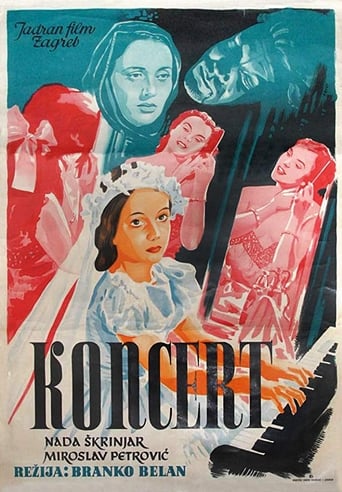
Celebrating the end of World War II and liberation of their city, a group of students is set on holding a cultural evening. They invite Ema, a reclusive piano teacher from the same building, to play for them. Ema declines, but starts reminscing back on her own life and the historical events that have seemingly overshadowed it.
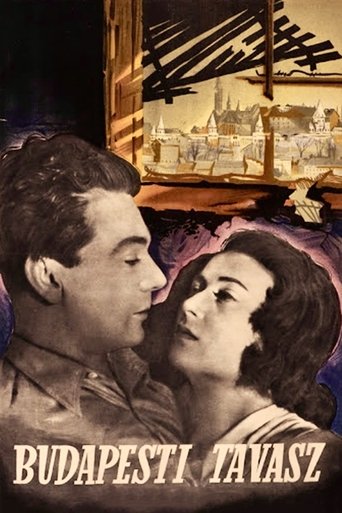
At Christmas Eve in 1944 the runaway Pintér and Gozsó get through the Soviet blockade around Budapest. Pintér intends to hide in a flat abandoned by his own relatives, but he finds his relatives called the Turnovszkys, who are hiding the Jewish Jutka as well. Love unfolds between Zoltán and Jutka.

During the Nazi occupation of 1944 Rome, Resistance leader Giorgio Manfredi is pursued by the Nazis as he seeks refuge and a means of escape.
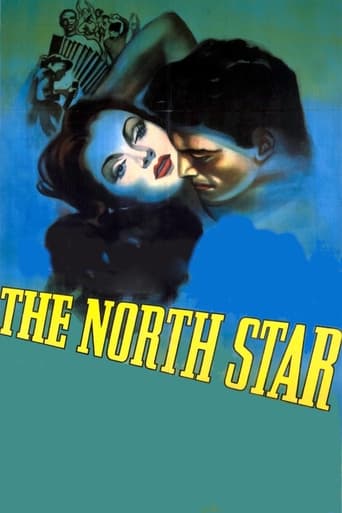
A Ukrainian village must suddenly contend with the Nazi invasion of June 1941. Later re-edited and released as "Armored Attack."
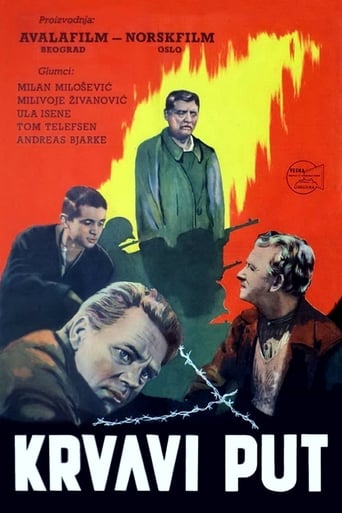
Yugoslav Partizans, captured by Nazis, are sent to concentration camps in distant Norway. The local population help some Partizans survive or flee to neutral Sweden.
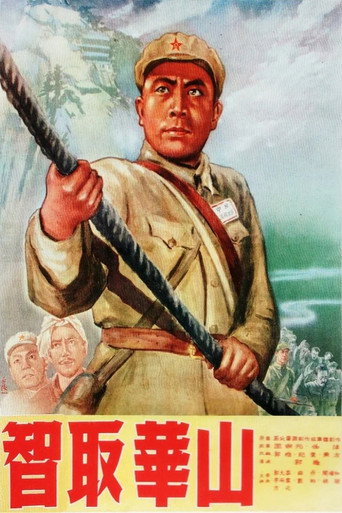
After the major campaigns, the Liberation War’s focus shifted to the northwest. Hu Zongnan retreated south, and Fang Zhiqiao led his remnants to Mount Hua, known for its rugged terrain. Fang deployed forces at key passes, but a military intelligence officer, with herbalist Chang Shenglin’s help, cut off enemy communication by reaching the North Peak. A political offensive led to the surrender of the enemy at Qianshi Zhuang, controlling all passages between the North and West Peaks. Trapped, Fang Zhiqiao’s troops, with shattered morale, launched a futile counterattack, leading to his despairing lament.

Travelers Hansel and Zikmund sail from Africa to South America. On their journey to film, they capture clouds of locusts on the plains of Argentina's Chaco, a snake farm in Butantane, skyscrapers in Buenos Aires and Rio de Janeiro, a visit to lepers in Paraguay, waterfalls in Iguazu, a daring expedition to the jungles of the Marañon river basin to hunt skull hunters. an Indian settlement in Panama and the journey ends prematurely in Mexico amidst the ruins of ancient Indian temples and pyramid.

Stach is a wayward teen living in squalor on the outskirts of Nazi-occupied Warsaw. Guided by an avuncular Communist organizer, he is introduced to the underground resistance—and to the beautiful Dorota. Soon he is engaged in dangerous efforts to fight oppression and indignity, maturing as he assumes responsibility for others’ lives.

Fanfan is a young handsome peasant. He joins the army to escape marriage because a gypsy girl predicted he will get glory and the king's daughter as a wife. But the gypsy girl was in fact Adeline, the daughter of the recruiting officer. Once he has discovered the stratagem, Fanfan refuses to forget this dream and decides to fulfill the destiny of the fake prediction.
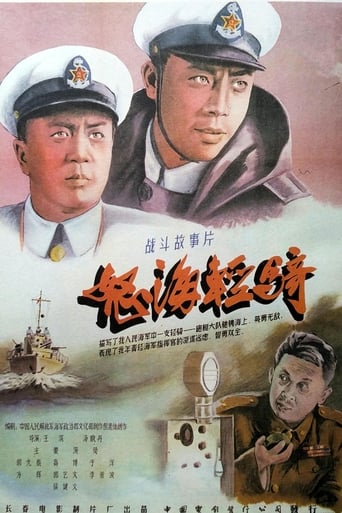
A film about the expulsion of the Kuomintang from the coastal islands of the People's Republic of China. In the early 1950s, with the aim of liberating Woyushang Island, the naval base headquarters sent the Third Artillery Squadron, commanded by Longjiang Li, to reconnoiter the enemy's firepower deployment. With the help of local fishermen, they defeated two enemy reconnaissance groups, demoralizing the enemy. The enemy transport ship left Chinese territorial waters. The political instructor led the artillery squadron to intercept the enemy ship to prevent it from bringing in reinforcements. As a result, the navy and air force launched a coordinated operation and liberated Voyushang Island.

American conductor John Meredith and his manager, Hank Higgins, go to Russia shortly before the Nazi invasion of the Soviet Union. Meredith falls in love with beautiful Soviet pianist Nadya Stepanova while they travel throughout the country on a 40-city tour. Along the way, they see happy, healthy, smiling, free Soviet citizens, blissfully living the Communist dream. This bliss is destroyed by the German invasion.

A group of boys decide to form a guerrilla unit in order to sabotage and spy on the American enemy after one of the communist-controlled cities falls to them.

This film revolves around Choghtu Khong Tayiji, a 17th century Mongolian prince who waged a campaign of independence against Tibetan and Manchu forces.
A young doctor and a group of injured are hiding in an underground shelter and are liberated by Soviet soldiers.
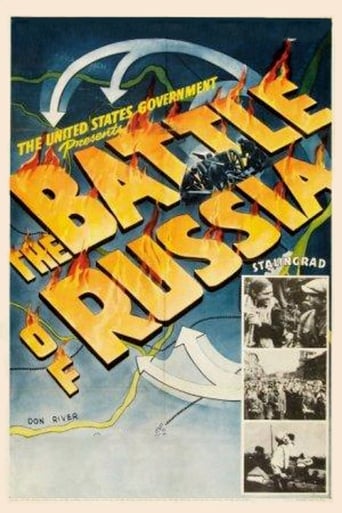
The fifth film of Frank Capra's Why We Fight propaganda film series, revealing the nature and process of the fight between the Soviet Union and Germany in the Second World War.

Twelve-year-old Hai Wa sends a secret letter containing Japanese military information to the Eight Route Army during the anti-Japanese war.

The struggle of two Serbian peasants to choose between love of their families and love of their country.