
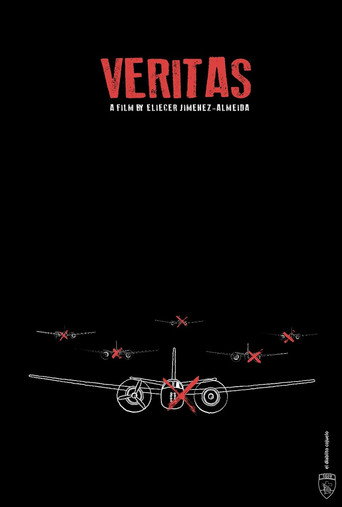
Veritas
· 67 min · Not rated
The invasion of the Bay of Pigs (Cuba, 1961) is revealed to us 60 years later, in the voice of the vanquished. Recounted with the distance of a lifetime, the protagonists narrate events that range from military preparation through their defeat on Cuban beaches, the vexations of the prison and their own liberation, to the return to American territory. The love of country, the horrors of war and the feeling of abandonment (not having the promised help), are thoroughly relived by these men who have not stopped missing their motherland.
Trailers are previews, not full movies.
No authorized playback source configured. Use the legal watch options below.
Production details
- Directors
- Eliecer Jiménez Almeida
- Production companies
- Louisiana Educational Television Authority
- Countries
- Unavailable
- Status
- Released
Top Cast
Cast unavailable.
Title information and images are supplied by TMDb. Explore our discovery guide for advice on comparing metadata and legal viewing options.
Where to watch
Availability provided by JustWatch via TMDb. Offers can change. Provider links are listed on TMDb; full playback requires a separately authorized source.
Availability not listed for this country.
Seasons & episodes
Recommendations
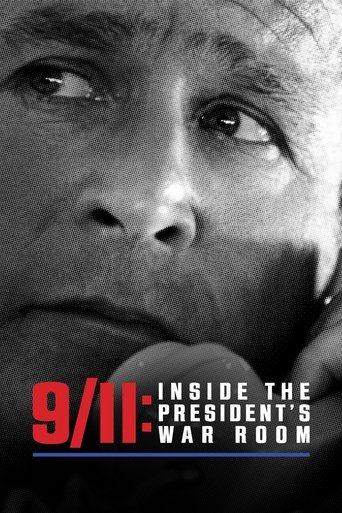
Experience the events of September 11, 2001 through the eyes of President Bush and his closest advisors as they personally detail the crucial hours and key decisions from that historic day.

“The Soviet Story” is a story of an Allied power, which helped the Nazis to fight Jews and which slaughtered its own people on an industrial scale. Assisted by the West, this power triumphed on May 9th, 1945. Its crimes were made taboo, and the complete story of Europe’s most murderous regime has never been told. Until now...
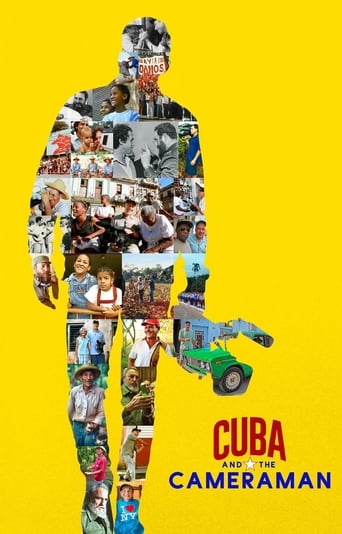
This revealing portrait of Cuba follows the lives of Fidel Castro and three Cuban families affected by his policies over the last four decades.

The history of cinematic sound, told by legendary sound designers and visionary filmmakers.

Cameramen and women discuss the craft and art of cinematography and of the "DP" (the director of photography), illustrating their points with clips from 100 films, from Birth of a Nation to Do the Right Thing. Themes: the DP tells people where to look; changes in movies (the arrival of sound, color, and wide screens) required creative responses from DPs; and, these artisans constantly invent new equipment and try new things, with wonderful results. The narration takes us through the identifiable studio styles of the 30s, the emergence of noir, the New York look, and the impact of Europeans. Citizen Kane, The Conformist, and Gordon Willis get special attention.

Through deeply personal interviews with her siblings and an examination of the photographs, letters, and belongings left behind, Mariska assembles a new portrait of her mother Jayne Mansfield, an extraordinary and complex woman.

Over 35 years after Bob Lazar's revelations, this documentary exposes secrets of a facility the government still denies. Featuring Lazar's testimony, recreations, and new evidence, it reopens a case that continues to spark global curiosity

In this fascinating Oscar-nominated documentary, American guitarist Ry Cooder brings together a group of legendary Cuban folk musicians (some in their 90s) to record a Grammy-winning CD in their native city of Havana. The result is a spectacular compilation of concert footage from the group's gigs in Amsterdam and New York City's famed Carnegie Hall, with director Wim Wenders capturing not only the music -- but also the musicians' life stories.
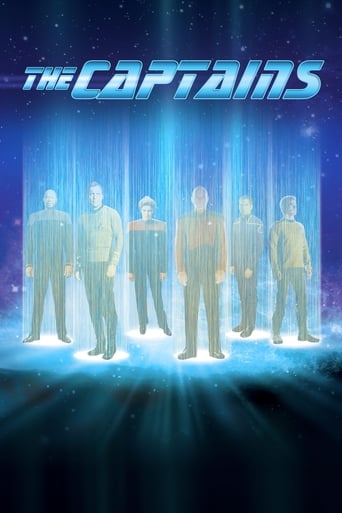
The Captains is a feature-length documentary film written and directed by William Shatner. The film follows Shatner as he interviews the other actors who have portrayed starship captains in the Star Trek franchise.

The story lives forever in this feature-length documentary that charts the making of Star Wars: The Rise of Skywalker.

When Sgt. First Class Brian Eisch is critically wounded in Afghanistan, it sets him and his sons on a journey of love, loss, redemption and legacy.
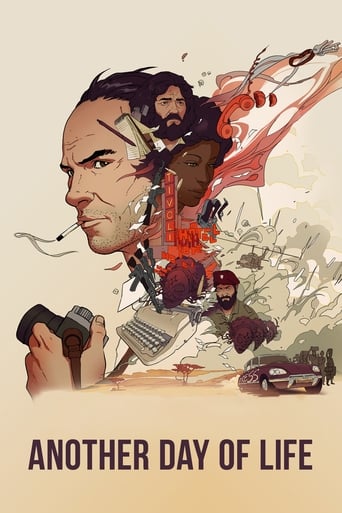
In 1975, Ryszard Kapuściński, a veteran Polish journalist, embarked on a seemingly suicidal road trip into the heart of the Angola's civil war. There, he witnessed once again the dirty reality of war and discovered a sense of helplessness previously unknown to him. Angola changed him forever: it was a reporter who left Poland, but it was a writer who returned…
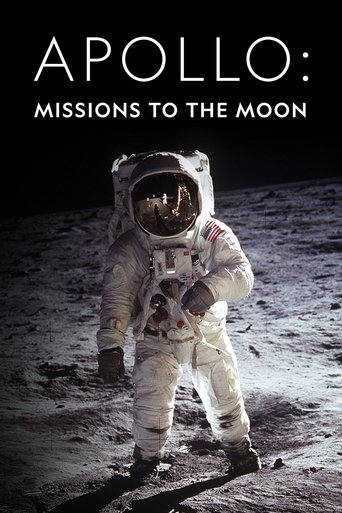
National Geographic's riveting effort recounts all 12 crewed missions using only archival footage, photos and audio.

The special focuses on how Star Wars is relevant today and the history that inspired it, and also makes various connections to Greek mythology. It consists of several interviews with well-known politicians, journalists, and critics, along with historical content and clips from all six of the Star Wars movies.

A visual montage portrait of our contemporary world dominated by globalized technology and violence.
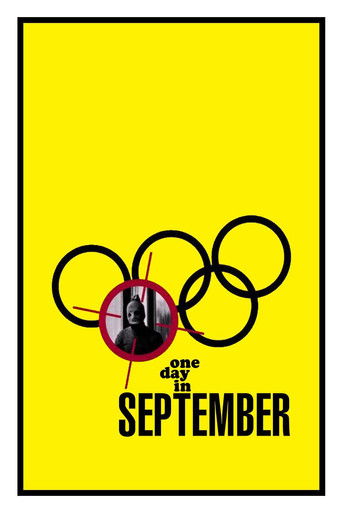
The full story of the 1972 Munich Olympics Massacre and the Israeli revenge operation 'Wrath of God.' The 1972 Munich Olympics were interrupted by Palestinian terrorists taking Israeli athletes hostage. Besides footage taken at the time, we see interviews with the surviving terrorist, Jamal Al Gashey, and various officials detailing exactly how the police, lacking an anti-terrorist squad and turning down help from the Israelis, botched the operation.

Prelude to War was the first film of Frank Capra's Why We Fight propaganda film series, commissioned by the Pentagon and George C. Marshall. It was made to convince American troops of the necessity of combating the Axis Powers during World War II. This film examines the differences between democratic and fascist states.
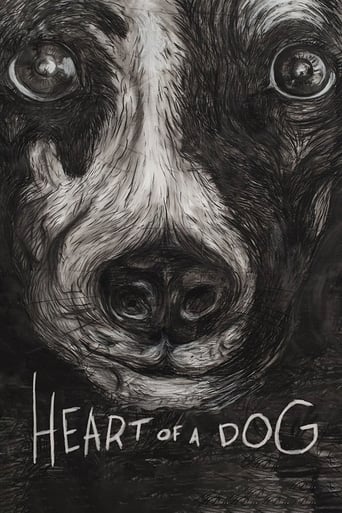
Musician and performance artist Laurie Anderson reflects on the deaths of her husband Lou Reed, her mother and her beloved dog.

Exploring the company founding and the implosion of the business by outside investors who took over the company, left it bankrupt and under investigation.
This documentary brings to life the stories of four people believed by their family and friends to be “DB Cooper,” a man who hijacked a 727 flying out of Seattle and jumped from the plane over the wilds of Washington State with a parachute and $200,000, never to be heard from again.
Similar titles
2019 marks the 30th year since the fall of the Berlin Wall and the end of the Cold War. Rich Hall examines the relationship between the West and the USSR in his inimitable fashion.
Acclaimed Florida novelist Randy Wayne White travels to Cuba with former pitchers Bill "Spaceman" Lee (Boston Red Sox) and Jon Warden (Detroit Tigers), and a band of baseball enthusiasts to find and revive the children's baseball league founded by American writer Ernest Hemingway in the days before Fidel Castro came to power.
The notion of a Cuban civil society is often misrepresented in the U.S. mainstream media. According to most sources, Cuban civil society is limited to the opposition, which has little impact on the Cuban political scenario. Regardless, yearly, the U.S. government allocates tens of millions of taxpayer money to empower dissidents in the island. By doing so, it overlooks genuine expressions of pluralism, reform and contestation which are shaping the Cuban public sphere, sometimes in autonomous ways, sometimes within State-run institutions. Through in-depth interviews to members of Cuban Civil society, this documentary explores the complexities associated to these processes, following the itinerary of the debate about the concept of civil society generated in Cuba, since the 90s to the present.
Contrasting radical mobs, anarchy, and 1960s counterculture with footage of American manufacturing and innovation, this film celebrates the concept of American exceptionalism and argues that anti-Vietnam War protesters were influenced by communism, atheism, and immorality. Set mostly in a university library, this political debate between a medical student, his 1770s ancestor, and a history professor is a sequel to the 1972 National Education Program film, Brink of Disaster! Two additional characters appear in this drama: a 19th-century steamboat captain, and the student’s grandfather - an early 20th-century automobile worker. The National Education Program at Harding College in Searcy, Arkansas created a variety of widely-distributed anti-communism films from the mid-1940s to the early 1970s.
A deconstruction of the known history of the Cuban revolution.
In the cabin the conductor activates the gear lever; his motion breaks the inertia. Behind is the station, then images of the machinery, the resignation of travelers, and the landscape. The events are increasingly bizarre; there is no destination, only the journey as metaphor.
A documentary about former Major League Baseball player, Bill "The Spaceman" Lee. Lee was the ultimate gonzo player, a brilliant left handed pitcher who defied every manager or front office executive who tried to control him. The fans loved him and so did sportswriters who delighted in asking the usual baseball questions, only to get philosophical responses involving the relationship between existentialism and the curveball or the effects of karma on a pitcher's rotator cuff.
A cinematic, character-driven insight to what it meant to produce and to own a car in communist times: the Socialist propaganda dreams and the hard reality of living that dream. The freedom that these slow and clumsy vehicles were giving to their owners; the cars as an instrument in the Cold War battle; legends and homemade tune-ups as an attempt to stand at least a little bit off the crowd.
Written and directed by James Orr, the 53-minute video chronicles the entire process of Cuban cigar making, from planting to packaging, offering rare, never before seen footage of the facilities where these cigars are produced, and the people who make them. Suckling serves as host of the movie, guiding viewers through this journey across Cuba. Suckling has been traveling to Cuba regularly since the early 1990s, first as European Editor of Cigar Aficionado magazine, and now with his own website, www.jamessuckling.com. He has visited the tobacco plantations, sorting houses, factories, and cigar shops hundreds of times over two decades, but in “Cigars: The Heart And Soul Of Cuba,” he aims to discover why Cuban cigars are the best in the world – and he does. The documentary has already garnered much praise from premiering to select audiences in Cuba, Mexico, the United Kingdom, Canada, and China, and is now available for purchase online worldwide.
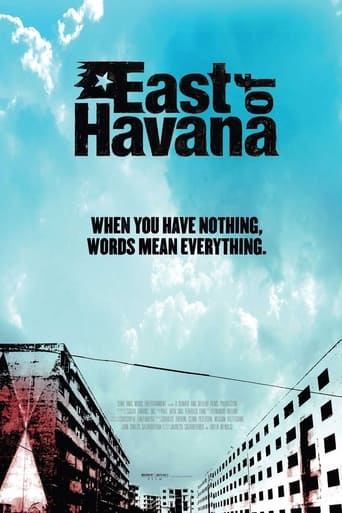
Documenting the hardships of three gifted Cuban rappers trying to survive in the harsh ghettos of Havana.
The story of a group of surfers from Havana struggling to establish a niche for their sport in Cuba’s restrictive society. Guided by Eduardo Valdes, founder of the Havana Surf Association, two filmmakers travel across the island to the notorious Guantanamo province, home to the U.S. Naval Station at Guantanamo Bay, as well as the country’s best waves. Searching for surf along this controversial coast, they discover a forbidden paradise just miles from the American border, and learn what it means to be a surfer and a citizen of modern-day Cuba.
Project Iceworm was the code name for a top-secret United States Army program during the Cold War to build a network of mobile nuclear missile launch sites under the Greenland ice sheet. The ultimate objective of placing medium-range missiles under the ice — close enough to strike targets within the Soviet Union — was kept secret from the Danish government. To study the feasibility of working under the ice, a highly publicized "cover" project, known as Camp Century.


Documentary about the Cold War spy George Blake, who betrayed his colleagues to the KGB, then escaped from Wormwood Scrubs five years later and fled to the Soviet Union.
"Our Cities Must Fight" is a civil defense film that was produced for the U.S. government to illustrate the importance of not abandoning urban centers during an atomic bombing. The film cautions that doing so would make it easier for the invading "enemy."
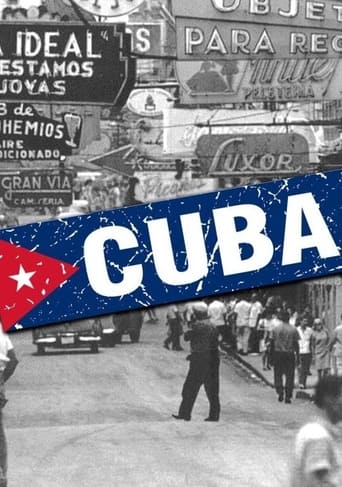
The fifties in Cuba, at the time of the "dias felices", the happy days, the American mobsters were the kings of the country, Hemingway lived there, the Hollywood stars came to hide their secrets, the number of bars and clubs rose amazingly, celebrities came to spend vacation, the business of cigars flourished, gambling was not a vice, everybody was dancing on frenzied music, while rum and cigars were flowing. At the beginning of the fifties, the huge storm that threatened Cuba was unpredictable.
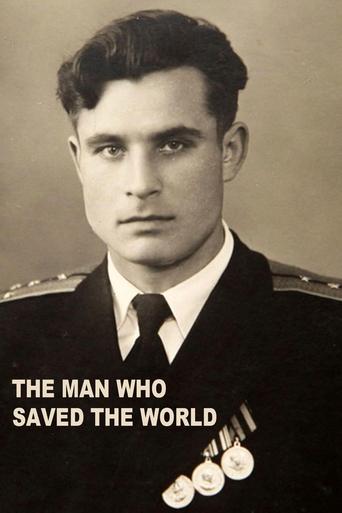
During the Cuban Missile Crisis of 1962, Soviet Navy officer Vasily Arkhipov refused to launch a nuclear strike and saved the world from nuclear war and total destruction.

The story focus on Caridad and Georgina, who had learned the art of Cantonese Opera in Havana as a young age and performed as divas for over a decade before their lives were changed by Fidel Castro's revolution.
A different history of the Cold War: how Estonians under Soviet tyranny began to feel the breeze of freedom when a group of anonymous dreamers successfully used improbable methods to capture the Finnish television signal, a window into Western popular culture, brave but harmless warriors who helped change the fate of an entire nation.

In 1950s Havana, a romance blooms between two young revolutionaries whose clandestine printing press publishes pamphlets meant to stir up rebellion against the dictatorship of Fulgencio Batista. As their popularity grows, so, too, does their revolutionary zeal and their desire to mobilize other urban guerilla units.