
First Strike
1979-01-01 · 49 min · Not rated
Dramatization of a devastating nuclear strike against the United States by the Soviet Union, followed by interviews with analysts and military figures. Produced by the United States Air Force.
Trailers are previews, not full movies.
No authorized playback source configured. Use the legal watch options below.
Production details
- Directors
- Fleming B. Fuller
- Production companies
- KRON-TV, The United States Air Force
- Countries
- United States of America
- Status
- Released
Top Cast
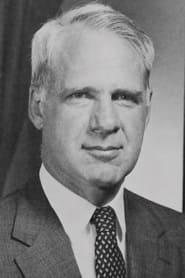 James R. SchlesingerSelf
Title information and images are supplied by TMDb. Explore our discovery guide for advice on comparing metadata and legal viewing options.
Where to watch
Availability provided by JustWatch via TMDb. Offers can change. Provider links are listed on TMDb; full playback requires a separately authorized source.
Availability not listed for this country.
Seasons & episodes
Recommendations

Amid the failing counteroffensive, a journalist follows a Ukrainian platoon on their mission to traverse one mile of heavily fortified forest and liberate a strategic village from Russian occupation. But the farther they advance through their destroyed homeland, the more they realize that this war may never end.

This documentary movie is about the battle of San Pietro, a small village in Italy. Over 1,100 US soldiers were killed while trying to take this location, that blocked the way for the Allied forces from the Germans. Preserved by the Academy Film Archive in 2005.

Prelude to War was the first film of Frank Capra's Why We Fight propaganda film series, commissioned by the Pentagon and George C. Marshall. It was made to convince American troops of the necessity of combating the Axis Powers during World War II. This film examines the differences between democratic and fascist states.

“The Soviet Story” is a story of an Allied power, which helped the Nazis to fight Jews and which slaughtered its own people on an industrial scale. Assisted by the West, this power triumphed on May 9th, 1945. Its crimes were made taboo, and the complete story of Europe’s most murderous regime has never been told. Until now...
Meet the real-life airmen who inspired Masters of the Air as they share the harrowing and transformative events of the 100th Bomb Group.
Korengal picks up where Restrepo left off; the same men, the same valley, the same commanders, but a very different look at the experience of war.
As the Russian invasion begins, a team of Ukrainian journalists trapped in the besieged city of Mariupol struggle to continue their work documenting the war's atrocities.

A love letter from a young mother to her daughter, the film tells the story of Waad al-Kateab’s life through five years of the uprising in Aleppo, Syria as she falls in love, gets married and gives birth to Sama, all while cataclysmic conflict rises around her. Her camera captures incredible stories of loss, laughter and survival as Waad wrestles with an impossible choice– whether or not to flee the city to protect her daughter’s life, when leaving means abandoning the struggle for freedom for which she has already sacrificed so much.
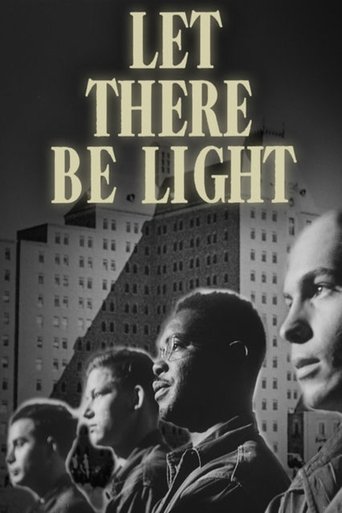
The final entry in a trilogy of films produced for the U.S. government by John Huston. Some returning combat veterans suffer scars that are more psychological than physical. This film follows patients and staff during their treatment. It deals with what would now be called PTSD, but at the time was categorised as psychoneurosis or shell-shock. Government officials deemed this 1946 film counterproductive to postwar efforts; it was not shown publicly until 1981.

When Sgt. First Class Brian Eisch is critically wounded in Afghanistan, it sets him and his sons on a journey of love, loss, redemption and legacy.
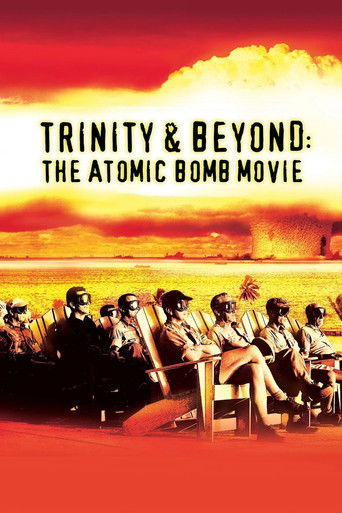
"Trinity and Beyond" is an unsettling yet visually fascinating documentary presenting the history of nuclear weapons development and testing between 1945-1963. Narrated by William Shatner and featuring an original score performed by the Moscow Symphony Orchestra, this award-winning documentary reveals previously unreleased and classified government footage from several countries.

An inside look at one of the most anticipated movie sequels ever with James Cameron and cast.
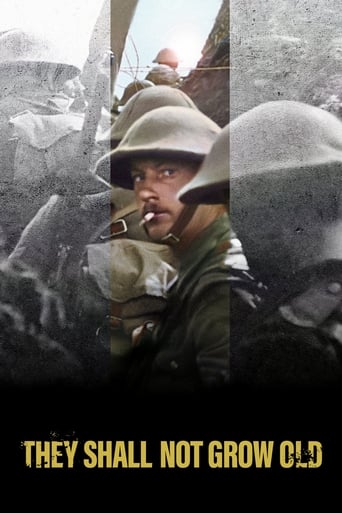
A documentary about World War I with never-before-seen footage to commemorate the centennial of Armistice Day, and the end of the war.
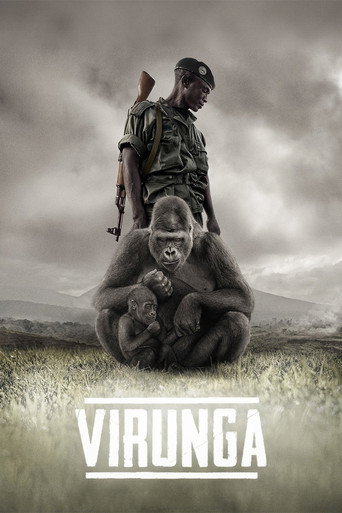
Virunga in the Democratic Republic of the Congo is Africa's oldest national park, a UNESCO world heritage site, and a contested ground among insurgencies seeking to topple the government that see untold profits in the land. Among this ongoing power struggle, Virunga also happens to be the last natural habitat for the critically endangered mountain gorilla. The only thing standing in the way of the forces closing in around the gorillas: a handful of passionate park rangers and journalists fighting to secure the park's borders and expose the corruption of its enemies. Filled with shocking footage, and anchored by the surprisingly deep and gentle characters of the gorillas themselves, Virunga is a galvanizing call to action around an ongoing political and environmental crisis in the Congo.
With unprecedented access, this documentary follows the extraordinary journey of “Raqqa is Being Slaughtered Silently”—a group of anonymous citizen journalists who banded together after their homeland was overtaken by ISIS—as they risk their lives to stand up against one of the greatest evils in the world today.
During the chaotic final weeks of the Vietnam War, the North Vietnamese Army closes in on Saigon as the panicked South Vietnamese people desperately attempt to escape. On the ground, American soldiers and diplomats confront a moral quandary: whether to obey White House orders to evacuate only U.S. citizens.

A string of threatening emails escalates into a revenge plot involving a newly married US marshal and his ex-girlfriend.

Pete Postlethwaite stars as a man living alone in the devastated future world of 2055, looking at old footage from 2008 and asking: why didn’t we stop climate change when we had the chance?
Police pull over a woman who claims she just gave birth. But the baby — and the blood — aren't hers. Twisted lies unravel in this true-crime documentary.

Director Michael Apted revisits the same group of British-born adults after a 7 year wait. The subjects are interviewed as to the changes that have occurred in their lives during the last seven years.
Similar titles
Two isolated Canadian soldiers come to grip with a difficult order: launch a nuclear strike against the former USSR, some 25 years after the end of the Cold War.
Edward Peden purchased a former US military launch site in the 1980s, and has been living in it ever since. Meanwhile, Larry Hall is building million-dollar condominiums inside of an underground missile silo.
An instructional film released by the UK Warning and Monitoring Organization which depicts its operations in the lead-up to and aftermath of a hypothetical nuclear attack on the United Kingdom.

The smallest of sparks can lead to the largest of explosions. Such is the case of the Atomic Bomb and the minds who have conceived of the deadliest force the world has ever known. This new documentary Atomic: The History of the A-Bomb follows this weapon of mass destruction from inception to detonation.
When Peter Watkins’ banned nuclear war masterpiece "The War Game" reached Toronto in 1967, it found an unlikely home at Cinecity, a new cinema determined to challenge audiences. Drawing on archival research and eyewitness accounts, this documentary explores the film’s enduring impact and the role Cinecity played in shaping Canadian film culture.
We've all heard of the atomic bomb, but in the late 1950s, an idea was conceived of a bomb which would maximize damage to people, but minimize damage to buildings and vital infrastructure: perfect for an occupying army. This is the story of a man and his bomb: a melding of world events and scientific discovery inspire the neutron bomb, one of the most hated nuclear weapons ever invented.
Since 1950, there have been 32 nuclear weapon accidents, known as "Broken Arrows." A Broken Arrow is defined as an unexpected event involving nuclear weapons that result in the accidental launching, firing, detonating, theft or loss of the weapon. To date, six nuclear weapons have been lost and never recovered.Now, recently declassified documents reveal the history and secrecy surrounding the events known as "Broken Arrows". There have been 32 nuclear weapon accidents since 1950. Six of these nuclear weapons have been lost and never recovered. What does this say about our defense system? What does this mean to our threatened environment? What do we do to rectify these monumental "mistakes"? Using spectacular special effects, newly uncovered and recently declassified footage, filmmaker Peter Kuran explores the accidents, incidents and exercises in the secret world of nuclear weapons.
Documentary about the dangers of the nuclear arms race, including an interview with an eyewitness of the bomb drop on Hiroshima and scientific statements describing the devastating consequences of a nuclear war.
Explores a ticking-clock scenario about what would happen in the event of a nuclear war, based on dozens of exclusive new interviews with military and civilian experts who built the weapons and have been privy to the response plans and have been responsible for those decisions should they need to be made.

In the midst of an international crisis, President Bennett has less than 10 minutes to authorize a nuclear strike. But with incomplete intelligence and opposing views from his advisors, he must make a choice that will shape the world forever.
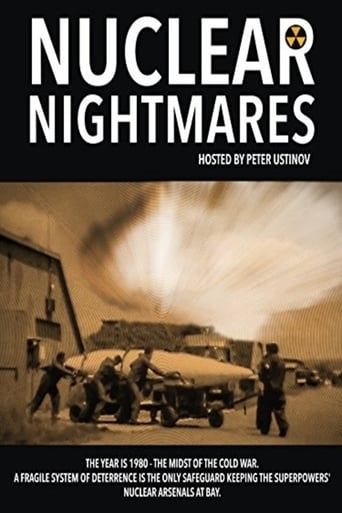
Peter Ustinov hosts this haunting 1980 documentary exploring the world's nuclear weaponry and the fragile system that deters either side from initiating the first nuclear strike. Although the world's political climate has mellowed since the Cold War era, Nuclear Nightmares takes the viewer back in time to gain a perspective of what it was like to live under a very real nuclear threat.
An archive-based feature documentary viewing the dramatic climax of the Cold War through the lens of the ABC network, as it narrowly succeeds in producing the most watched, most controversial made-for-TV movie, THE DAY AFTER (1983). With irreverent humor and sobering apocalyptic vision, this film reveals how a commercial broadcaster seized a moment of unprecedented television viewership, made an emotional connection with an audience of over 100 million and forced an urgent conversation with the US President on how to collectively confront and resolve the most pressing issue of the time - nuclear proliferation.
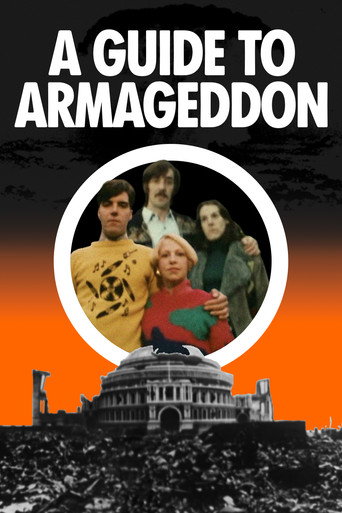
A documentary film about the effects of nuclear weapons. What would be the effects on people and buildings if one medium-sized nuclear bomb was dropped on a large city? How effectively would various types of shelter protect us? In an experimental trial, two couples live in fallout shelters for ten days each.

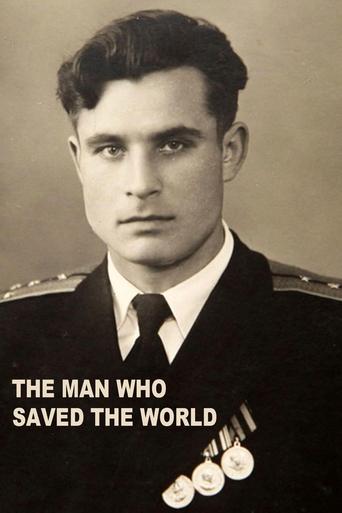
During the Cuban Missile Crisis of 1962, Soviet Navy officer Vasily Arkhipov refused to launch a nuclear strike and saved the world from nuclear war and total destruction.

a soldier returns from a war in Europe, only to grow more bitter as he realises a more sinister truth.
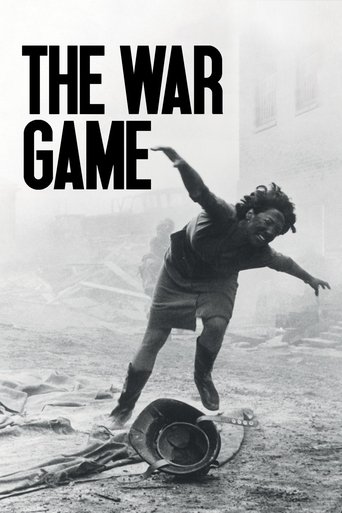
A hypothetical Chinese invasion of South Vietnam triggers a new world war between East and West. In Rochester, Kent, the anticipation of a nuclear attack leads to mass evacuations. When a stray missile explodes, the ensuing firestorm blinds all those who see it. It's not long before the fabric of society is ripped apart from radiation poisoning, a lack of infrastructure and rioting for food and other necessities.
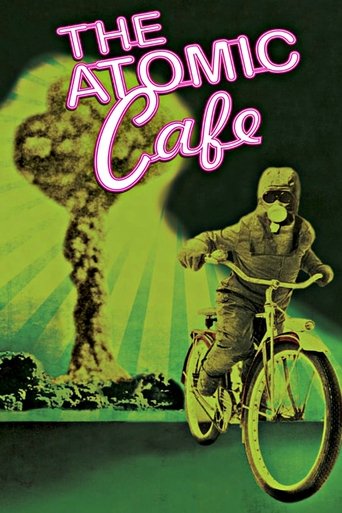
A disturbing collection of 1940s and 1950s United States government-issued propaganda films designed to reassure Americans that the atomic bomb was not a threat to their safety.
Portrays the challenges of creating a film about nuclear disaster amid public apathy. It captures behind-the-scenes moments as the crew discusses the gravity of nuclear threats, the importance of preparation, and the emotional impact of a nuclear attack. The narrative emphasizes the need for individuals to take responsibility for their safety and community in the event of an attack, blending factual information with a call to action.

With the help of government-issued pamphlets, an elderly British couple build a shelter and prepare for an impending nuclear attack, unaware that times and the nature of war have changed from their romantic memories of World War II.