Kapyong
2011-04-28 · 54 min · Not rated
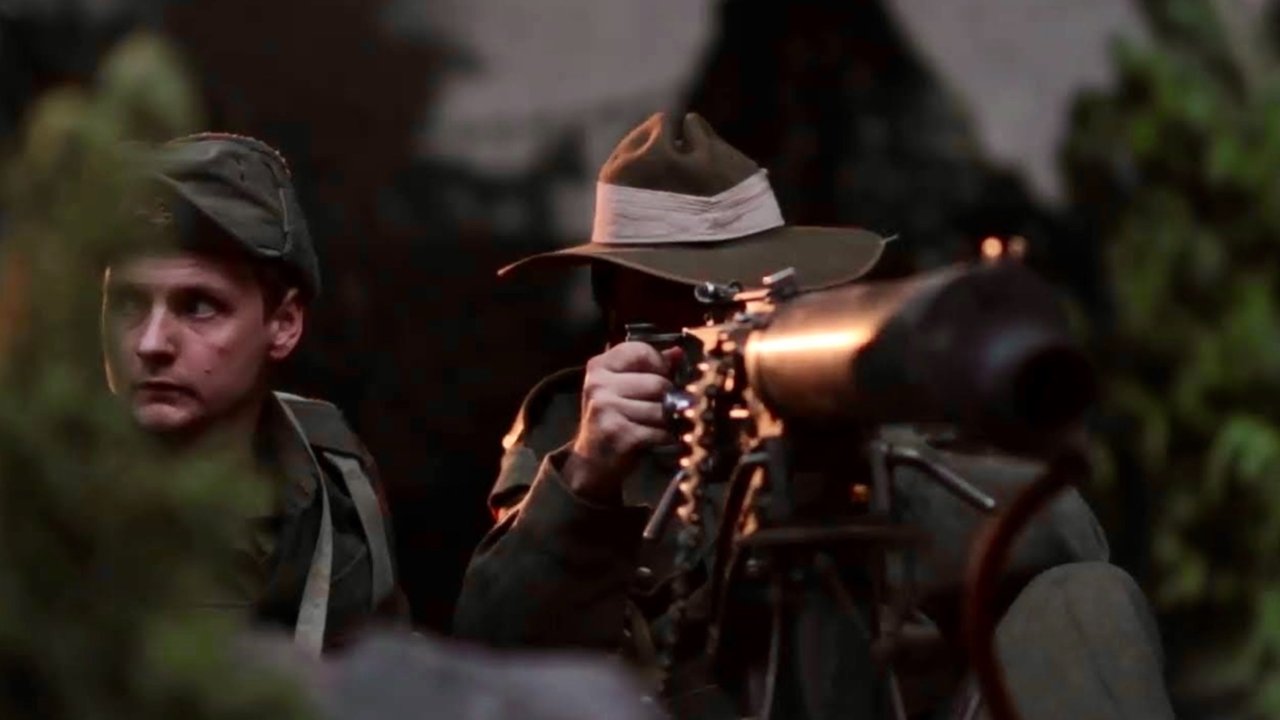
On April 24, 1951, following a rout of the South Korean army, the Chinese People Volunteer Army pursued their enemy to the lines of Australian and Canadian troops still digging fall-back defences, 39 kilometres to the rear. Here, sometimes at the length of a bayonet, often in total darkness, individual was pitted against individual in a struggle between a superpower and a cluster of other nations from across the world. They fought for a valley, the ancient and traditional invasion route to Seoul. If it fell the southern capital and the war, was lost. The United Nations troops had the military advantage of the high ground and artillery support: the Chinese relied entirely on vastly superior numbers. As a result, young men from both sides found a battle which was very close and very personal. The Battle of Kapyong became the turning point of China's Fifth Offensive in that Korea spring... Written by John Lewis
Trailers are previews, not full movies.
No authorized playback source configured. Use the legal watch options below.
Production details
- Directors
- Dennis K. Smith
- Production companies
- Screen Australia, Film Victoria
- Countries
- Australia
- Status
- Released
Top Cast
 John WatersNarrator
 Cory CorbettCanadian Lieutenant
 Yuki NagashimaChinese Soldier
 Steven CarrollNapalm victim
 Rick TonnaSoldier
Title information and images are supplied by TMDb. Explore our discovery guide for advice on comparing metadata and legal viewing options.
Where to watch
Availability provided by JustWatch via TMDb. Offers can change. Provider links are listed on TMDb; full playback requires a separately authorized source.
Streaming
Magellan TV, Xive TV Documentaries Amazon Channel
Free
Kanopy
View authorized watch options on TMDbSeasons & episodes
Recommendations

Amid the failing counteroffensive, a journalist follows a Ukrainian platoon on their mission to traverse one mile of heavily fortified forest and liberate a strategic village from Russian occupation. But the farther they advance through their destroyed homeland, the more they realize that this war may never end.

Prelude to War was the first film of Frank Capra's Why We Fight propaganda film series, commissioned by the Pentagon and George C. Marshall. It was made to convince American troops of the necessity of combating the Axis Powers during World War II. This film examines the differences between democratic and fascist states.

Five broken cameras – and each one has a powerful tale to tell. Embedded in the bullet-ridden remains of digital technology is the story of Emad Burnat, a farmer from the Palestinian village of Bil’in, which famously chose nonviolent resistance when the Israeli army encroached upon its land to make room for Jewish colonists. Emad buys his first camera in 2005 to document the birth of his fourth son, Gibreel. Over the course of the film, he becomes the peaceful archivist of an escalating struggle as olive trees are bulldozed, lives are lost, and a wall is built to segregate burgeoning Israeli settlements.
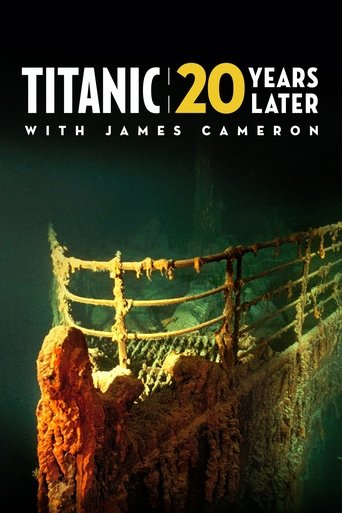
For the 20th anniversary of "Titanic," James Cameron reopens the file on the disaster.

A look at the story behind Marvel Studios and the Marvel Cinematic Universe, featuring interviews and behind-the-scenes footage from all of the Marvel films, the Marvel One-Shots and "Marvel's Agents of S.H.I.E.L.D."!
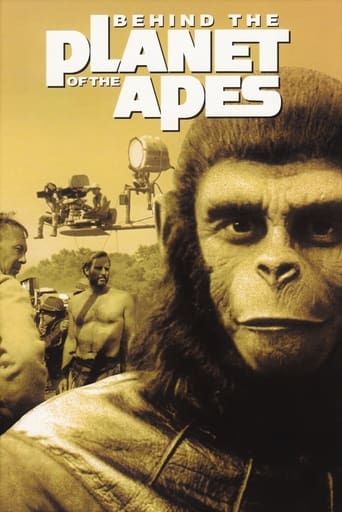
Roddy McDowall takes you, film by film, from production meetings to make-up sessions, then right onto the movie set to see the actual filming of the science fiction masterpiece. The most comprehensive history of Planet of the Apes ever created, this fascinating 127-minute documentary explores one of the most imaginative and influential series in movie history.
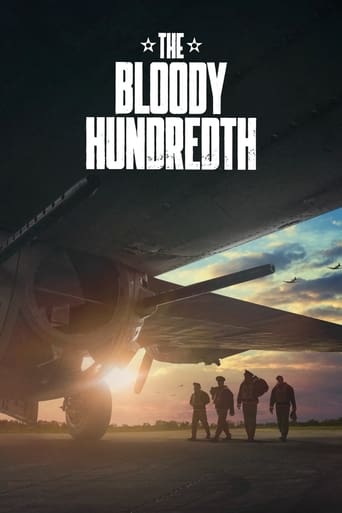
Meet the real-life airmen who inspired Masters of the Air as they share the harrowing and transformative events of the 100th Bomb Group.

An ambitious and wide-ranging documentary exploring Andre’s upbringing in France, his celebrated career in WWE, and his forays in the entertainment world.
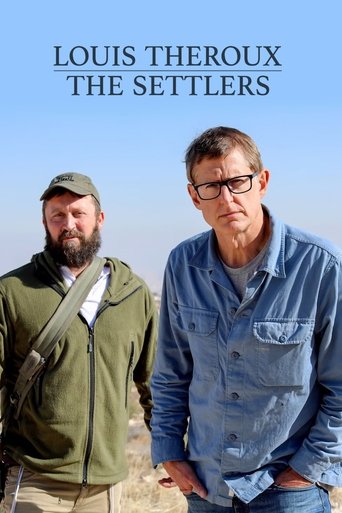
Fourteen years after his first visit, Louis Theroux meets some of the growing community of religious-nationalist Israelis who have settled in the occupied West Bank.
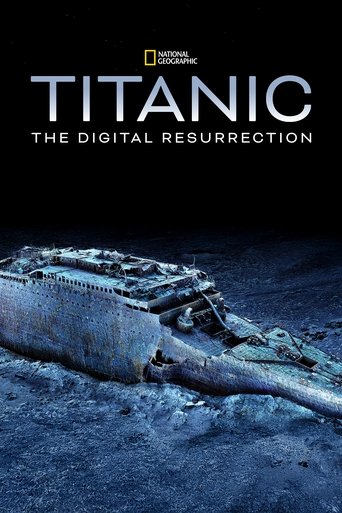
Using cutting-edge scanning technology and state-of-the-art CGI, a team of experts creates the first high-resolution 3D digital twin of the Titanic wreck. Through a groundbreaking immersive investigation, they uncover the ship’s final moments, shedding light on the acts of heroism and cowardice aboard—and revealing the true story behind the sinking of the “unsinkable” ship.

Dick Proenneke retired at age 50 in 1967 and decided to build his own cabin in the wilderness at the base of the Aleutian Peninsula, in what is now Lake Clark National Park. Using color footage he shot himself, Proenneke traces how he came to this remote area, selected a homestead site and built his log cabin completely by himself. The documentary covers his first year in-country, showing his day-to-day activities and the passing of the seasons as he sought to scratch out a living alone in the wilderness.

Learn the incredible behind-the-scenes story of how the original Star Wars movie was brought to the big screen in this fascinating documentary hosted by C-3PO and R2-D2 which includes interviews with George Lucas and appearances by Mark Hamill, Harrison Ford and Carrie Fisher.
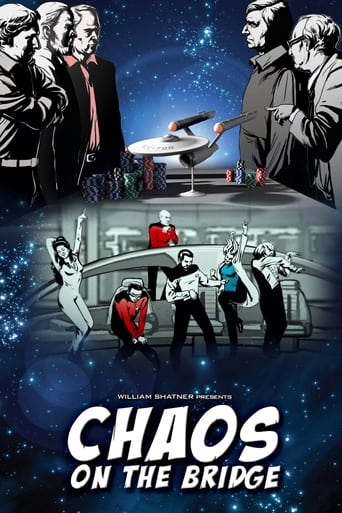
Canadian acting legend William Shatner takes viewers inside the creation of Star Trek: The Next Generation, the bold attempt in 1986 to recreate the success of the original television series, in which Shatner played Captain James T. Kirk.

In the last five years of his life, David Bowie ended nearly a decade of silence to engage in an extraordinary burst of activity, producing two groundbreaking albums and a musical. David Bowie: The Last Five Years explores this unexpected end to a remarkable career. Made with remarkable access, Francis Whately’s documentary is a revelatory follow-up to his acclaimed 2013 documentary David Bowie: Five Years, which chronicled Bowie’s golden ‘70s and early-‘80s period.

The inside story of SpaceX's plan to get humanity to Mars, providing an unprecedented glimpse into one of the world's most revolutionary companies. A behind-the-scenes journey with Elon Musk and his engineers as they persevere amidst both disheartening setbacks and huge triumphs to advance the space industry faster than we ever thought possible.
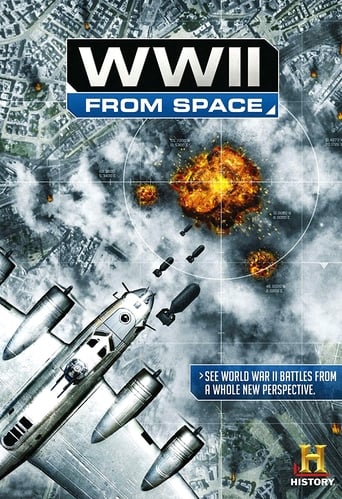
WWII from Space delivers World War II in a way you've never experienced it before. This HISTORY special uses an all-seeing CGI eye that offers a satellite view of the conflict, allowing you to experience it in a way that puts key events and tipping points in a global perspective. By re-creating groundbreaking moments that could never have been captured on camera, and by illustrating the importance of simultaneity and the hidden effects of crucial incidents, HISTORY presents the war's monumental moments in a never-before-seen context. And with new information brought to the forefront, you'll better understand how a nation ranked 19th in the world's militaries in 1939 emerged six years later as the planet's only atomic superpower.

Director Peter Joseph examines examples of economic subjugation and offers solutions based on alignment with nature.

Winfrey speaks with Markle about everything from stepping into life as a Royal, marriage, motherhood, her philanthropic work and how she is handling life under intense public pressure. Later, the two are joined by Prince Harry as they speak about their move to the United States and their future hopes and dreams for their expanding family.

Louis Theroux spends time with a small and very committed subculture of ultra-nationalist Jewish settlers. He discovers a group of people who consider it their religious and political obligation to populate some of the most sensitive areas of the West Bank, especially those with a spiritual significance dating back to the Bible. Throughout his journey, Louis gets close to the people most involved with driving the extreme end of the Jewish settler movement - finding them warm, friendly, humorous, and deeply troubling.

Louis meets the Phelps family — the people at the heart of the controversial Westboro Baptist Church. The Phelps have rabid anti-homosexual beliefs, and often campaign at the funerals of American soldiers. They believe that every tragedy in the world is God's punishment for homosexuality.
Similar titles

One of the world's most acclaimed comedies, M*A*S*H focuses on three Korean War Army surgeons brilliantly brought to life by Donald Sutherland, Tom Skerritt and Elliott Gould. Though highly skilled and deeply dedicated, they adopt a hilarious, lunatic lifestyle as an antidote to the tragedies of their Mobile Army Surgical Hospital, and in the process infuriate Army bureaucrats. Robert Duvall, Gary Burghoff and Sally Kellerman co-star as a sanctimonious Major, an other-worldly Corporal, and a self-righteous yet lusty nurse.
Nearly 250,000 South Korean children were adopted to the West as “orphans” in the 60 years following the Korean War. Some to loving homes. Others to tragic ends. Raised in places where they looked like nobody else, many were told to forget their past and be grateful. But the innate desire to understand where you came from has led many Korean adoptees to search for their roots. In the process, they discover lies in their past and families they never knew existed. In this documentary series, correspondent Wei Du travels around the world to meet Korean adoptees and accompany a few on their journey to reclaim who they are. Together, they reveal how an “orphan rescue” mission separated families and erased the roots of hundreds of thousands.
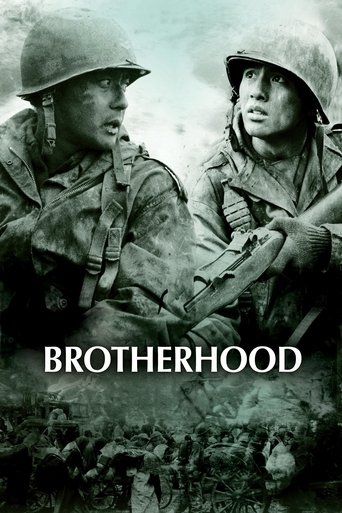
When two brothers are forced to fight in the Korean War, the elder decides to take the riskiest missions if it will help shield the younger from battle.
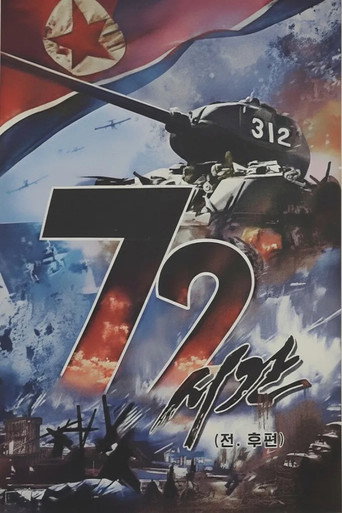
The movie tells the story of the first three days of the Korean war

With the largest humanitarian undertaking ever made by Sweden, in 1950 volunteers rushed to help setting up the Swedish Red Cross Field Hospital in Busan. This was 69 years ago. Today the aging Swedish samaritans can testify how the Korean war became the start of new relations, new friendships, and lasting, strong bonds between Sweden and Korea.
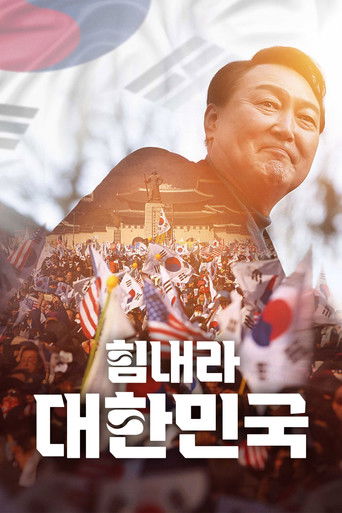
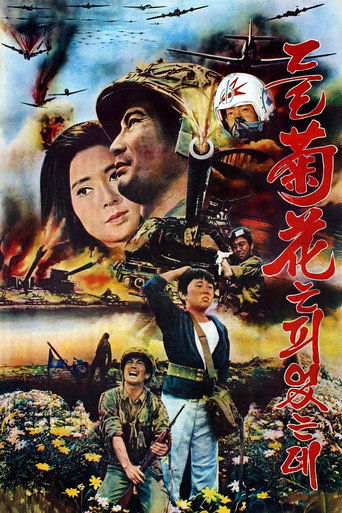
A look at the Korean War through the eyes of a mute boy who was kept as a mascot by a regiment of soldiers near the front lines.

They speak the same language, share a similar culture and once belonged to a single nation. When the Korean War ended in 1953, ten million families were torn apart. By the early 90s, as the rest of the world celebrated the end of the Cold War, Koreans remain separated between North and South, fearing the threat of mutual destruction. Beginning with one man's journey to reunite with his sister in North Korea, filmmakers Takagi and Choy reveal the personal, social and political dimensions of one of the last divided nations on earth. The film was also the first US project to get permission to film in both South & North Korea.
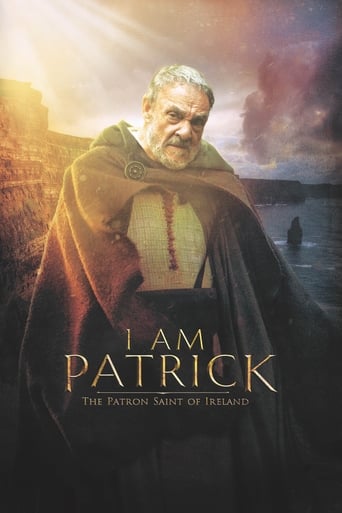
Peels back centuries of legend and myth to tell the story of Saint Patrick through historical reenactments, expert interviews and Patrick’s own writings, tracing his journey from man to saint. https://www.youtube.com/watch?v=i95AQhvtzsA

A cafe is growing, tucked in to the mountainside air raid shelter of the DMZ borderlands. A light light flickers, illuminating the past, present, and future. I'll see you at the DMZ! Shim was a free, one-day pop-up cafe staged in Yangji-ri village’s air raid shelter at the Korean DMZ. Referencing Korean cafe culture’s fixation on third place, the DMZ’s evolution from security tourism, to ecological peace tourism, and its repurposing as art production site, Shim attempts to intervene and align the past and present. Yangji-ri was one of many minbuk propaganda villages established by the Park Chung Hee regime in the 1960s to showcase the farming bounty and prosperity of the south for a North Korean gaze. The village was formerly part of the Civilian Control Line (CCL) until 2013 when it was reterritorialized as a normal part of South Korea.

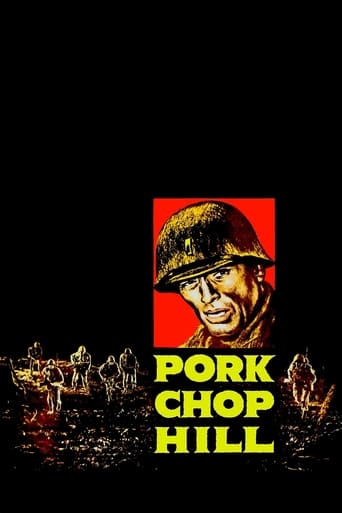
Korean War, April 1953. Lieutenant Clemons, leader of the King company of the United States Infantry, is ordered to recapture Pork Chop Hill, occupied by a powerful Chinese Army force, while, just seventy miles away, at nearby the village of Panmunjom, a tense cease-fire conference is celebrated.
In July 1951, all the sides to the Korean War sought a ceasefire. For a ceasefire, the Allied and Communist forces began to hold talks at Naebongjang, located northeast of Kaesong. However, they only sharply opposed each other and didn't make progress in the negotiation. In October 1951, the two sides met again in the small village of Neolmun-ri below Gaeseong. They set up tents there to negotiate and named the place Panmunjom. The name Panmunjeom is a combination word of Panmun, meaning Neulmun-ri, and “Jom,” of an inn.
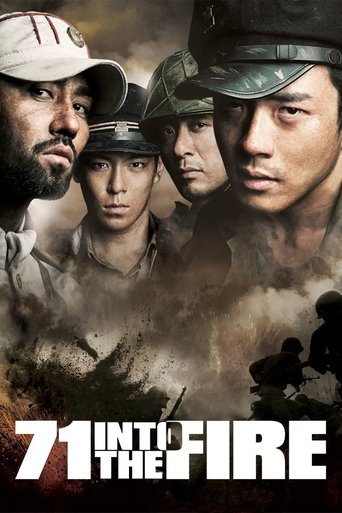
In August 1950, waiting for UN troops to arrive, the South Korean army assembled to protect Nakdong River. Only 71 student-soldiers are left behind to guard the city of Pohang. Now they are on a mission to defend the country from North Korean troops.
A visit to the famed aircraft carrier USS Midway and interviews with men who served aboard it bring the exciting story of the vessel to life in this dramatic documentary. In service for 47 years, the Midway saw heavy action during the Vietnam War, and its hair-raising missions to rescue downed pilots were legendary. After Vietnam, the Midway, now berthed in San Diego, participated in numerous operations, including the Gulf War.

Theatre of War is an essay on how to represent war, performed by former enemies. British and Argentinian veterans of the Falklands war come together to discuss, rehearse and re-enact their memories 35 years after the conflict.

The Nazi death camp at Sobibor was created solely for the mass extermination of Jews. But on October 14, 1943 the inmates fought back, in the biggest and most successful prison outbreak of the Second World War. Of the 600 inmates present on the day of the escape, 300 escaped. Around 50 survived the war and of that 50, only a handful are still alive. This is their last chance to reveal the true story of their escape.
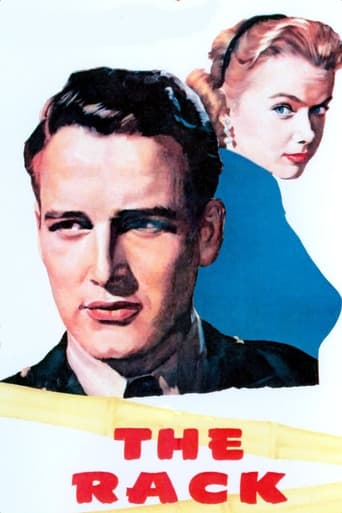
Army Captain Edward Hall returns to the U.S. after two years in a prison camp in the Korean War. In the camp, he was brainwashed and helped the Chinese convince the other prisoners that they were fighting an unjust war. When he comes back he is charged for collaboration with the enemy. Where does loyalty end in a prison camp, when the camp is a living hell?

With the outbreak of the Korean War, Su-ji and Oh-mok lose their parents. Along with their brother Su-cheol, they go live with their mother's parents. As they go to take refuge, Su-ji loses Oh-mok by accident. Time passes and with her older brother Su-cheol's success, Su-ji enters the high society. But due to the guilt of losing her younger sister Oh-mok, she does a lot of charity work constantly looking for Oh-mok. When Su-ji finally finds Oh-mok in an orphanage, she turns coldly away from Oh-mok for not having any evidence to prove that she is her sister. Oh-mok marries Il-hwan whom she has met at the orphanage and they live a hard life. Finally, Su-ji is convinced that Oh-mok is her sister but after living through such hardship, Oh-mok breathes her last.