Romans
· Runtime unavailable · ★ 7.5
Romans is a documentary created by Tony Robinson about the Roman Empire. It was first broadcast on Channel 4 on September 20, 2003. This documentary is 3 hours in length, consists of 4 episodes and makes extensive use of research. The first two episodes portrays the life of the Dictator Julius Caesar while the remaining are portraits of Emperor Caligula and Emperor Nero. Tony Robinson is portraying Caligula in a different perspective, than what is normally associated with a the "mad emperor", by using various sources that examines his childhood in order to portray him in a better light. The last episode portrays emperor Nero.
Trailers are previews, not full movies.
No authorized playback source configured. Use the legal watch options below.
Production details
- Creators
- Unavailable
- Production companies
- Unavailable
- Countries
- Unavailable
- Status
- Ended
Top Cast
Cast unavailable.
Title information and images are supplied by TMDb. Explore our discovery guide for advice on comparing metadata and legal viewing options.
Where to watch
Availability provided by JustWatch via TMDb. Offers can change. Provider links are listed on TMDb; full playback requires a separately authorized source.
Availability not listed for this country.
Seasons & episodes
Recommendations
Turning points in ancient Roman history and some of the Empire's greatest stories are brought to life in this drama documentary series.
Infographics and archival footage deliver bite-size history lessons on scientific breakthroughs, social movements and world-changing discoveries.
Told from the perspective of the rebel leaders, the series chronicles a wave of rebellions against absolute power by those the Roman Empire called “barbarians” – tribes they viewed as beyond the fringe of civilization that lived a brutish and violent existence. But these also were men and women who launched epic struggles that shaped the world to come with a centuries-long fight to defeat the sprawling empire.

Explore Marvel’s rich legacy of pioneering characters, creators and storytelling to reflect the world outside your window. Each documentary, helmed by a unique filmmaker, showcases the intersections of storytelling, pop culture, and fandom within the Marvel Universe.
Biography is a documentary television series. It was originally a half-hour filmed series produced for CBS by David Wolper from 1961 to 1964 and hosted by Mike Wallace. The A&E Network later re-ran it and has produced new episodes since 1987. The older version featured historical figures such as Helen Keller and Mark Twain, or long-dead entertainment figures such as Will Rogers or John Barrymore. The A&E series has placed the emphasis on such people as Marilyn Monroe, Elvis Presley, Plácido Domingo, Freddie Mercury, Jacqueline Kennedy Onassis, Eric Clapton, Pope John Paul II, Gene Tierney, Selena, Diego Rivera, Mao Zedong and Queen Elizabeth II, and fictional characters like The Phantom, Superman, Hamlet, Betty Boop, and Santa Claus. The program ended up profiling enough figures that in 1999, A&E spun it off into an entire network, The Biography Channel.
Actor Zac Efron journeys around the world with wellness expert Darin Olien in a travel show that explores healthy, sustainable ways to live.
Explores WWII from Germany's invasion of Poland through the atomic age, examining pivotal battles, wartime leaders like Churchill and Roosevelt, and the human cost of total war.

Through the prism of Jeff Goldblum's always inquisitive and highly entertaining mind, nothing is as it seems. Each episode is centered around something we all love — like sneakers or ice cream — as Jeff pulls the thread on these deceptively familiar objects and unravels a wonderful world of astonishing connections, fascinating science and history, amazing people, and a whole lot of surprising big ideas and insights.

TV's most-watched history series brings to life the compelling stories from our past that inform our understanding of the world today.

Doctor Who Confidential is a documentary to complement the revival of the long-running British science fiction television series Doctor Who. Each episode was broadcast on BBC Three on Saturdays, immediately after the broadcast of the weekly television episode on BBC One. The running time of the first two series was 30 minutes, being extended to 45 minutes in the third. BBC Three also broadcast a cut-down edition of the programme, lasting 15 minutes, shown after the repeats on Sundays and Fridays and after the weekday evening repeats of earlier seasons.
Don Wildman unearths relics from the world's greatest institutions to reveal secrets from the past. He examines each artifact to illuminate history's most incredible triumphs, sensational crimes and bizarre encounters.

Award-winning actor and nervous explorer Eugene Levy steps out of his comfort zone for a whirlwind tour of the world's most beautiful and intriguing destinations.
Steve Martin is one of the most beloved and enigmatic figures in entertainment. Dive into his extraordinary story from two distinct points of view—past and present—as Martin reflects on how his beginnings led to his unexpectedly fulfilling life today.
The series heads to the very frontiers of space and science to produce the definitive television history of science fiction, told through its impact on cinema, television and literature, with the help of filmmakers, writers, actors, and graphic artists. Each episode will explore one of the enduring themes of science fiction: time travel; the exploration of space; robots and artificial intelligence; and aliens.

Motoring programme featuring reviews of and reports about cars of all types.
An in-depth look at the history and pop cultural significance of horror films.
Part detective story, part true-life drama, long-running series explores some of the most iconic moments in history to debunk myths and shed new light on past events. Using the latest investigative techniques, forensic science and historical examination, it shatters accepted wisdom, challenges prevailing ideas, overturns existing hypotheses, spotlights forgotten mysteries, and ultimately rewrites history.
WWII in HD is a 10-part American documentary television miniseries that originally aired from November 15 to November 19, 2009 on the History Channel. The program focuses on the firsthand experiences of twelve American service members during World War II, including an Army nurse, a member of the Tuskegee Airmen, a second generation Japanese American and prisoner of war, and an Austrian Jewish immigrant. The twelve members recorded their time in both theaters and some had later interviews; found footage from the battlefield was paired with the stories of the twelve service members. The episodes premiered on five consecutive days, with two episodes per day. The series is narrated by Gary Sinise and was produced by Lou Reda Productions in Easton, Pennsylvania, United States.
An immersive, action-packed and discovery-led series following International teams of Egyptologists as they unearth the world's richest seam of ancient archaeology - Egypt's Valley of the Kings.
This docuseries takes an unprecedented look at the enduring and influential legacy of DC, allowing fans to rediscover the universe of characters, as well as the iconic comic book company’s origins, its evolution and its nearly nine-decade cultural impact across every artistic medium.
Similar titles
Alice embarks on her most ambitious journey to date, in search of the Roman Empire, travelling 1300 miles through Italy, France and Spain to discover the origins and secrets of Rome’s success.
Told from the perspective of the rebel leaders, the series chronicles a wave of rebellions against absolute power by those the Roman Empire called “barbarians” – tribes they viewed as beyond the fringe of civilization that lived a brutish and violent existence. But these also were men and women who launched epic struggles that shaped the world to come with a centuries-long fight to defeat the sprawling empire.

At its height, the Roman Empire encompassed Europe, the Middle East and North Africa. How did it keep prospering for over 400 years? And why did it come to a rapid end? What can we learn from the Roman Empire and what guiding principles does it offer us today?
Archaeologists are making new discoveries about life during the glory days of the Roman Empire.
Archaeologist and historian Richard Miles traces the development of Western civilization, from the first cities in Mesopotamia to the fall of the Roman Empire. In this six-part series, Miles travels through the Middle East, Egypt, Pakistan and the Mediterranean to discover how the challenges of society -- religion and politics, art and culture, war and diplomacy, technology and trade -- were dealt with and fought over in order to maintain a functioning civilization. Stories are told of disappeared, ruined and modern cities, from ancient Iraq to modern Damascus, to reveal how successes and failures of the ancients shaped the world today.

This stylish mix of documentary and historical epic chronicles the reign of Commodus, the emperor whose rule marked the beginning of Rome's fall.


In this eight-part documentary, Roman engineering expert Isaac Moreno Gallo takes you on a tour through the different techniques and architectural elements that gave shape and life to the Roman Empire.
The history of Rome is a 1,000-year-long epic, filled with murder, ambition, betrayal and greed and encompassing such legendary characters as Rome’s Iron Age founders Romulus and Remus and its greatest general Julius Caesar. Larry is accompanied by some of Europe and America’s foremost classical experts who reveal the atmosphere of intrigue, conflict and violence at the places where the saga unfolded.
Travel back in time to one of the most glorious empires in history. For over 1,000 years, Rome was the center of the known world, bringing to her subjects a common language, shared culture and wealth beyond imagination. But war, barbarian attacks and moral decay eventually took their toll, and the empire slowly began to crumble. Experience ancient history come to life, from Rome's primitive beginnings to the height of its glory – and its eventual downfall. Filmed in 10 countries, this documentary combines location footage of ancient monuments, detailed reenactments, period art and writings, and fascinating insights from scholars and public figures. Witness the ancient world come to life – and see history in all its drama.
A series of eight episodes documenting 250.000 years of history. Charles Groenhuijsen takes us along sights and locations that historically harbored various inhabitants of ‘The Lowlands’. In what today is known as The Netherland, Belgium, Germany, New York, Ghana, Surinam, and Indonesia, Charles will be looking for the stories of ‘our’ past through potsherds, bones, stones, ancient text's, drawings, paintings, pictures, radio, and tv- fragments

This series follows international teams of archaeologists on the front line, as they embark on a season of excavations to unravel the secrets of life in the Roman Empire. Crawling beneath Pompeii, unearthing an enormous lost coliseum, and hauling a 2000 year old battleship ram from the depths of the ocean, they race to unlock the secrets of this ancient civilization.
Bettany Hughes relives eight pivotal days that defined the Roman Empire and made it the world's first superpower.

Traveling the Roman Empire is a matchless grand tour covering an astonishing range of landscapes, cultures, and history. Even if you have explored many of these places before, Darius will give you fresh insights and a new appreciation for the remarkable achievements of a single-minded city on the Tiber that had the vision, discipline, and institutions to conquer the known world and make it prosper.
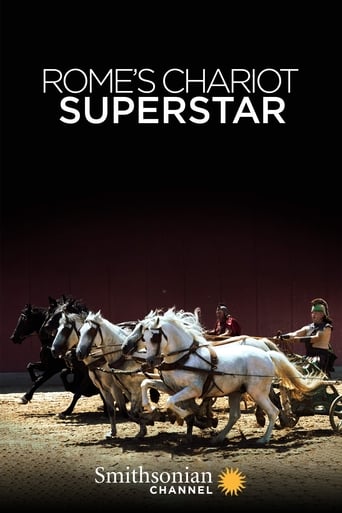
In 90 A.D., ancient Rome played host to a sporting spectacle that attracted crowds three times the size of the Colosseum?s gladiator games: chariot racing. Every week, 150,000 fans packed the massive Circus Maximus, not just to cheer on the speed, fury, and danger of the races, but to witness the champion charioteer, Flavius Scorpus. Examine his improbable rise from young slave to arguably the most successful competitor in the sport?s history.
Three people's fates are interwoven in the Battle of the Teutoburg Forest in 9 A.D., during which Germanic warriors halt the spread of the Roman Empire.
A down-to-earth account of the lives of both illustrious and ordinary Romans set in the last days of the Roman Republic.

Against the background of decline of the Roman Empire, "Peplum" takes us into the lives of Bravus, a former slave who became adviser to the tyrannical Emperor Maximus. Under pressure, stuck between a professional life stressful and chaotic family life, his days are not looking easy. Indeed, work side Bravus must wet the gown to slow a decline that has a tendency to accelerate under the leadership of the incompetent messy, cruel, capricious and narcissistic Maximus. Personal side, he must face every night his son Caius freshly converted to Christianity, his wife Octavia, foreign to the codes of good Roman society and daughter Lydia sassy which assimilates too well. "Peplum" or how to avoid the burn out in a declining society. The parallel with today can not be a coincidence.
Acclaimed blackly comic historical drama series. Set amidst a web of power, corruption and lies, it chronicles the reigns of the Roman emperors - Augustus, Tiberius, Caligula and finally Claudius.
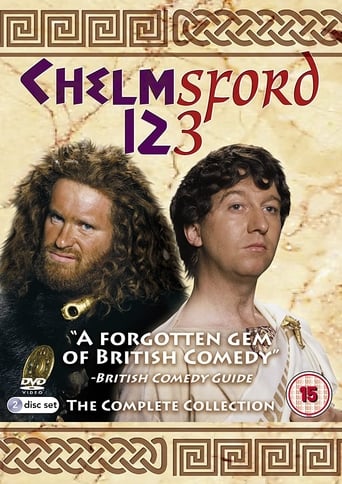
Chelmsford, Britain in the year AD 123; there is a power struggle between Roman governor Aulus Paulinus and the British chieftain, Badvoc. Britain is a miserable place, cold and wet – just the place to exile Aulus for accidentally insulting the Emperor's horse, but also give him something useful to do. Aulus, probably a play on Aulus Platorius Nepos, the governor of Roman Britain between 122 and 125, was a rather delicate Roman, who was usually outwitted by the scheming Badvoc, who hadn't had a haircut for twenty-five years.