Yo no creo en los hombres
1991-06-10 · 44 min / episode · ★ 7.0
María Dolores is a beautiful woman dating Arturo. He is an unscrupulous man who takes advantage of María's kindness to deceive her; he eventually abandons her to marry another woman. Some time later, Arturo attempts to seduce María. She tries to resist, and a struggle ensues during which Arturo dies. María is found guilty of his death and imprisoned. While in jail, she vows never to trust—let alone get involved with—a man again. After her release, María meets Gustavo, a lawyer who falls in love with her. Through him, she learns to trust men once more. Ultimately, she marries Gustavo, and they live happily.
Trailers are previews, not full movies.
No authorized playback source configured. Use the legal watch options below.
Production details
- Creators
- Caridad Bravo Adams
- Production companies
- Televisa
- Countries
- Mexico
- Status
- Ended
Top Cast
 Gabriela RoelMaría Dolores Robledo
 Alfredo AdameGustavo Miranda
 Rafael RojasArturo Ibáñez
 Bruno ReyPedro Miranda
 Oscar MorelliLawyer Salas
 Bárbara GilLaura Miranda
 Martha NavarroEsperanza Robledo
 Ana ColcheroMaleny Ibáñez
Title information and images are supplied by TMDb. Explore our discovery guide for advice on comparing metadata and legal viewing options.
Where to watch
Availability provided by JustWatch via TMDb. Offers can change. Provider links are listed on TMDb; full playback requires a separately authorized source.
Availability not listed for this country.
Seasons & episodes
Recommendations

When Refugio and her three sons—Patricio, Edmundo, and Ignacio—are forced out of their home, a twist of fate brings them to Mexico City, where they begin a new life. Eighteen years later, they are settled in a small apartment in a working-class neighborhood. Refugio holds a modest job; although she suffers from serious vision problems, she neglects her own health to attend to her sons' needs. Patricio is studying law and dreams of a comfortable, prosperous future; his mother admires him for his charitable nature. Meanwhile, Edmundo begins courting Lucero—unintentionally hurting Ignacio, who secretly loved her—while Refugio tries in vain to make Patricio understand that he will never be happy with Olga.

María Alejandra Rivas Cavalier, a young aspiring surgeon with a prestigious family name, joins the highly regarded internship program at Santa María University Hospital. There, alongside a group of new friends and her relationship with renowned surgeon Andrés Guerra, she faces medical and personal challenges that shape her journey. Amid intriguing medical cases and the quest for her own path, the hospital becomes her new home and the stage where friendship, love, and sacrifice intertwine.

En Nombre Del Amor is a Mexican telenovela produced by Televisa. It is a remake of Cadenas de Amargura. En Nombre Del Amor was produced by Carlos Moreno, and filming began on August 4, 2008. It premiered in the United States July 7, 2009 on Univision and ended its run on March 7, 2010 in a two-hour grand finale on a Sunday. Starring for Allison Lozz and Sebastián Zurita, as adult stars Victoria Ruffo, Arturo Peniche with Leticia Calderón as the villain protagonist and main villain, co-starring for Laura Flores, Alfredo Adame, Víctor Cámara, and the participation of Altair Jarabo as youth antagonist.

A heartbreaking story in which power, obsession, and desire will tragically mark the love between Paulina and Adrián who will fight for their love against all odds, even if it takes their life.

Para Volver a Amar is a Televisa telenovela that aired on the Canal de las Estrellas channel in Mexico from July 12, 2010 to January 30, 2011. It stars Rebecca Jones, Rene Strickler, Alejandro Camacho, Alejandra Barros, and Africa Zavala. The Mexican version however is taken from the original Colombian soap opera series "El Último Matrimonio Feliz". The story is about six women who befriend each other and help each other deal with the pains of life, particularly in regards to marriage and relationships. They'll realize that even amidst their problems, happiness is not impossible to attain. It won seven Premios TVyNovelas awards for Best Telenovela of the Year, Best Male Villain, Best First Actress, Best First Actor, Best Co-Star Actress, Best Co-Star Actor, and Best Young Lead Actor. Para Volver a Amar aired in the United States on Univision from March 8, 2011 to October 28, 2011 at 12am/11pm central.

Barrera de amor is a Mexican telenovela produced by Ernesto Alonso for Televisa and originally broadcast on Canal de las Estrellas from October 10, 2005, to May 12, 2006. It is based on an original story by Liliana Abud and was adapted by Orlando Merino and Jaime García Estrada. The telenovela stars Yadhira Carrillo and Sergio Reynoso and was the final production by legendary producer Ernesto Alonso. The story follows María Teresa “Maite” Galván, a young woman deeply in love with the widowed veterinarian Luis Antonio Romero. Their happiness is shattered by the cruelty of the powerful Valladolid family, whose lies, abuse, and thirst for revenge force the couple apart. As Maite struggles against injustice and betrayal, she must fight to protect her loved ones and overcome the barriers that stand between her and true love.

In the village of San Andres, the rivalry between two families the Valdes and the Ramirez is centered on "El Manantial", a beautiful fountain of water that happens to bathe the small property of the Valdes and not the neighboring ranch, the rich and prosperous hacienda "Piedras Grandes", where the best cattle are raised and is property of the Ramirez. But the spring is not the real reason for the hatred between the families. Justo Ramirez, married to Margarita Insunza, had a relationship with Francisca Rivero, wife of his enemy and neighbor Rigoberto Valdes. This relationship, founded in the betrayal, will cause the utmost bitterness and the destruction between the two families. The Valdes have a beautiful daughter named Alfonsina, who was born in the same year as Alejandro, the son and heir of the Ramirez. Although they have grown separately with their souls full of prejudices against their respective families, the two cannot avoid feeling attracted to each other. Margarita will not permit this and so she tells her husband to make sure her son will never be together with Alfonsina so he could marry Barbara, her cousin's daughter. Justo rapes Alfonsina and she leaves along with her mom and her aunt. Five years later... Alfonsina is graduating from school and has a good life until her mother commits suicide because she found out she was deathly ill and could no longer live with the guilt of her lifestyle. Before dying, her mother confesses to Alfonsina that Justo Ramirez destroyed her life and after that Alfonsina vows revenge on the man who destroyed her family. She returns to San Andres and there she once again sees Alejandro who is now engaged to Barbara. Their love is still present in their hearts. They will have to fight for their love and see if they can be happy by the shores of El Manantial... El Manantial is a Mexican telenovela that first aired in 2001, starring Adela Noriega and Mauricio Islas. The telenovela received TVyNovelas Award for Best Telenovela, in 2002.

Worlds collide when a vengeance-obsessed young woman from the other side of the tracks captures the attention of two well-off friends.

Las Vías del Amor is a Mexican telenovela that aired on the Televisa channel in Mexico and Univision in the United States from 2002-2003.

Amar sin límites is a Mexican telenovela that was produced by Televisa and broadcast on that company's El Canal de las Estrellas. The program debuted on 16 October 2006 at 7:30 pm; the first ten episodes were only thirty minutes long, with the program expanding to an hour long on 30 October and taking over the 7:00 time slot previously occupied by Duelo de Pasiones. After 135 episodes, the telenovela completed its run on 20 April 2007, and was subsequently replaced with Muchachitas como tú. In the United States, Amar sin límites aired on Univisión from 17 July 2007 through 18 January 2008 at 8:00 pm. This limited-run serial is a remake of the 2003 Argentine telenovela Resistiré; it is the first such remake, as a second adaptation, Watch Over Me, was created for MyNetworkTV in the United States and debuted in December 2006. Amar sin límites stars as protagonists Karyme Lozano and Valentino Lanús, whose characters, Diego and Azul, endure a tortured romance that becomes entangled in the world of organized crime thanks to Azul's fiancé, Mauricio, portrayed by René Strickler.

Story of love between Marimar and Sergio. Sergio is from a wealthy family, and Marimar lives with her poor grandparents in a hut in front of the ocean.

Renata, an energetic woman, is treated cruelly by her mother and sister. Falling in love with Jerónimo changes her life for the better, but his misguided quest to avenge his brother's death jeopardizes their relationship.

The story follows Isabel—known as "Chispita"—who was separated from her mother after the latter lost her memory in an accident. After growing up in an orphanage, Isabel is adopted by a widowed businessman, Don Alejandro; he hopes she will bring joy to the life of his daughter, Lili, who has become sad and ill-tempered since her mother's death—largely due to the influence of her teacher, the wicked Miss Irene. However, contrary to Alejandro's expectations, Isabel is not welcomed by his daughter; instead, she must contend with the malicious traps set for her by Lili and Miss Irene. Yet, Isabel also finds friends in the household, such as Juan Carlos (Lili’s older brother) and Gloria (the family’s maid). From her new home, Chispita begins the search for her mother.

Amarte es mi pecado is a Mexican telenovela produced by Ernesto Alonso for Televisa and originally broadcast on Canal de las Estrellas from January 5 to May 14, 2004. Created by Liliana Abud, with adaptation by Jaime García Estrada and Orlando Merino, the story follows Leonora Madrigal, a young woman whose life is marked by betrayal, sacrifice, and forbidden love. After being accused of a crime she did not commit, Leonora faces the consequences of a painful past while trying to rebuild her life and find happiness. The telenovela explores themes of love, revenge, ambition, and redemption.

María Mercedes, a poor girl who sells lottery tickets, meets a rich man who hates his own family and sees in María Mercedes an opportunity to make their lives miserable.

The story revolves around four beautiful 21-year-old girls who come from different social strata. The first of them, Laura, is a middle-class girl, serious, sensitive and studious, who can study computer science at a private university because she won a scholarship. There he meets Jimena de la O, daughter of a millionaire businessman. At first, there will be a lot of friction between the two, but little by little a strong bond of friendship will form between them. Jimena is the typical rich, dissipated and irresponsible girl, for whom promiscuity, alcohol and drugs have marked her life since her mother died.

Nearly 30 years after her mom's murder, a political strategist launches a calculated plan to ruin the Colombian presidential candidate who killed her.

Danna Paola stars as Patito, Eleazar Gómez as Mateo, Violeta Isfel and Cynthia Klitbo, play antagonist roles as Antonella and Bianca. The telenovela features adult protagonists also, René Strickler and Vanessa Guzmán. It first aired on Sunday, 8 March 2009, as the first telenovela to debut on a Sunday in Mexico. After a year of success, becoming a major hit in Mexico, especially among children, its final episode was also on a Sunday, 7 March 2010.

The story of four girls: Elena Olivares, Isabel Flores, Leticia Hernández and Monica Sánchez Zuñiga. The villain is Federico Cantú, a psycho killer who will stop at nothing until he gets Guillermo's fortune.

Martín (Iván Sánchez) hurries to Mina Escondida after getting an urgent letter from his brother begging to be rescued from the hell in which he's living. On arrival, Martin despairs upon finding out that Demetrio (Pablo Montero), his brother, has committed suicide. His sorrow is transformed into hatred and a thirst for vengeance against the woman who caused his brother suffering and brought him to death.
Similar titles

Chepe Fortuna and Niña Cabrales are from different social classes. Chepe is a poor fisherman and Niña is from a wealthy family. He wants to become mayor to stop her wealthy family from building a port to industrialize the town. Niña is an ecologist and dissident from her family. She wants to help the community. Their love is brought together by dreams and the past, though they do not know it.

La sonrisa del diablo is a Mexican telenovela produced by Ernesto Alonso for Televisa and originally broadcast on Canal de las Estrellas from February 24 to July 31, 1992. It is the second adaptation of the 1970 telenovela of the same name, originally created by Luisa Xamar, and was adapted by Fernanda Villeli and Marcia Yance. The story follows Déborah San Román, a beautiful and ambitious young woman who stops at nothing to achieve wealth and power. After marrying a wealthy widower while secretly maintaining a relationship with her unscrupulous lover, she manipulates and betrays everyone around her. As her web of lies and crimes grows, love, honesty, and justice begin to threaten her ruthless ambitions.

Buscando el paraíso is a Mexican youth telenovela produced by Luis de Llano Macedo and Marco Flavio Cruz for Televisa and originally broadcast on Canal de las Estrellas from November 8, 1993, to April 1, 1994. Directed by Benjamín Cann, the telenovela stars Pedro Fernández and Yolanda Andrade, with Karla Álvarez and Alejandro Ibarra in antagonist roles. The story follows Dalia and Andrea Montero Machado, two sisters with very different personalities. While Andrea is confident and charismatic, Dalia is shy and insecure. Dalia secretly falls in love with Ángel, Andrea's former boyfriend, who begins a relationship with her only to hurt her. After being abandoned and discovering she is pregnant, Dalia finds support in Julio, a humble and hardworking young man. However, jealousy, betrayal, and unresolved feelings threaten their chance at happiness.
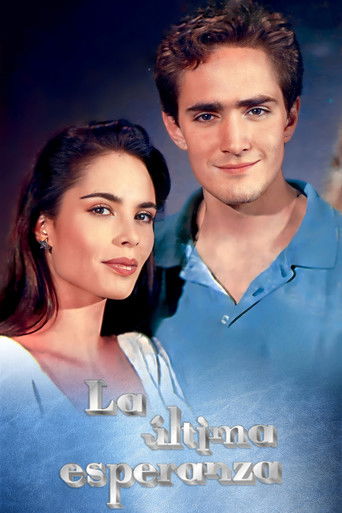
La última esperanza is a Mexican telenovela produced by Eugenio Cobo for Televisa and originally broadcast on Canal de las Estrellas from February 1 to May 14, 1993. It is a remake of the 1973 Mexican telenovela Muñeca, which was itself based on the 1971 Argentine telenovela Así en la villa como en el cielo, created by Abel Santa Cruz. The story follows Estelita Suárez, a kind-hearted young woman who lives in the impoverished neighborhood of La Última Esperanza while caring for her alcoholic father. Her life changes when she meets Daniel Burana, a wealthy young man who disguises himself as a poor resident to win her love. As their romance blossoms, they must confront family greed, corruption, and betrayal while fighting to protect their community from those determined to destroy it.

Clarisa is a Mexican telenovela produced by Juan Osorio for Televisa and originally broadcast on Canal de las Estrellas from March 15 to June 11, 1993. Created by Ramón Obón, Lupita Obón, Pilar Obón, and María Teresa García, with literary editing by Dinorah Issak, the telenovela stars Gabriela Roel and Manuel Landeta. Set in the 1930s, the story follows Clarisa González León, a kind-hearted young woman who becomes the target of her ambitious and resentful sister, Elide. After tragedy strikes her family, Clarisa loses her husband and is led to believe that her newborn daughter has died. Years later, determined to uncover the truth, she embarks on a journey marked by love, betrayal, family secrets, and the hope of reuniting with her child.


Retrato de familia is a Mexican telenovela produced by Lucy Orozco for Televisa and originally broadcast on Canal de las Estrellas from October 23, 1995, to January 19, 1996. Created by Jesús Calzada, the telenovela stars Helena Rojo, Alfredo Adame, Diana Bracho, and Yolanda Andrade. The story is set in Guadalajara and centers on the Mariscal Preciado family. The story follows Cecilia Mariscal, a devoted mother whose troubled marriage to Agustín falls apart, leaving her to rebuild her life. When she falls in love with Dr. Esteban Acuña, she faces unexpected opposition from her own daughter, Elvira, who also becomes obsessed with him. As family rivalries, forbidden love, betrayal, and long-hidden secrets emerge, the Mariscal family's relationships are pushed to the breaking point.

Prohibido Amar is a Mexican telenovela produced by Azteca in 2013. It is a remake of Colombian telenovela, La Sombra del Deseo.

An Intelligence Agent is sent to El Principe, on the border with Morocco, to investigate a possible police collaboration with a terrorist cell but finds unexpected love in the least suitable person: a drug baron's sister.

Rebeca murders her sister Adriana to end up with the man she loved, and becomes the step mother of her niece Lucía. Nora, Lucía's half sister and daughter of Rebeca, resents Lucía for the same reasons Rebeca hated Adriana, as history repeats itself.

La Viuda Negra is a 2014 Spanish-language telenovela produced by RTI Producciones and Televisa for United States-based television network Univisión and for Colombia-based television network Caracol Television. It is an adaptation of the book La patrona de Pablo Escobar de José Guarnizo based on history from Griselda Blanco.

After her parents death, the little Cecilia is under the care of her aunts: Natalia and Evangelina. Evangelina is a cruel woman who doesn't love the child and she treats her bad. Unlike Evangelina, Natalia is good and will help Cecilia because she is her real mother. She was seduced and got pregnant by Padre Julio. Evangelina hates Padre Julio because in the past he preferred Natalia to her. Many years later, there is a problem, because Evangelina doesn't want to give Cecilia money to attend the University. But Cecilia wins a grant and she can study now. She is engaged and wants to marry Giovanni, but Evangelina is against. She will poison him with a drink. Then Cecilia meets and falls in love with Gerardo, who is engaged to Sofia. Sofia's parents are Marta and Armando. Armando returns home after abandoning his family for many years. Marta has a romance with Manuel, but Sofia and Armando are opposed. Ines and Renato, who are Gerardo's parents, also are opposed to his romance with Cecilia. She breaks up the romance and goes to sor Angelina's nunnery to become a nun. Sonia and Roberto try to separate Gerardo from Cecilia. Then Cecilia finds out the truth about her birth and meets padre Julio. Natalia discovers that Evangelina tries to appropriate the whole patrimony of Cecilia and Evangelina kills her.

Story about a woman that is unhappily married and with two daughters. She constantly reprimands Cristina and baby Raquel. What the people around her don't know is that Raquel is not her husband's daughter as everyone believes. Raquel is Eugenia and León's daughter. She has always loved him, not her husband. That is the reason she's always angry at Cristina.

Esmeralda, whom everyone knows as "The Stray Cat," is a girl who grows up in wretched conditions, yet possesses a special sweetness and charm. Her best friend is Pablo, a wealthy boy who defends her against the other children's teasing.

The Poor, Rich Family is a story of love, romance, twists of fate, and countless amusing situations involving two families with nothing in common—yet who are now forced to live under the same roof. On one side are the millionaire Ruizpalacios family; on the other, the Mendonças, a classic working-class family.

La malquerida is a Mexican telenovela produced by José Alberto Castro for Televisa. It is an adaptation of the play "La malquerida", written by Spanish playwright Jacinto Benavente. Victoria Ruffo and Christian Meier will star as the adult protagonist, Ariadne Díaz and Mane de la Parra will star as the young protagonists, while Brandon Peniche will star as the main antagonist.

Para toda la vida is a Mexican telenovela produced by Lucero Suárez and Juan Osorio for Televisa, in co-production with Megavisión, and originally broadcast on Canal de las Estrellas from April 15 to August 2, 1996. It is a remake of the 1985 telenovela Vivir un poco, which was itself based on the Chilean telenovela La madrastra by Arturo Moya Grau. The story follows Elena, a woman who is wrongfully convicted of murder during a trip to Chile. After spending fifteen years in prison, she returns to Mexico under a new identity to uncover who framed her, expose the truth behind the conspiracy that destroyed her life, and reunite with the family that believes she died years earlier.