Tito
2010-09-01 · Runtime unavailable · Not rated
Tito is a 2010 Croatian documentary television miniseries about Yugoslav leader Josip Broz Tito. The first episode aired March 19, 2010. The series is a co-production by Croatian Radiotelevision and Mediteran film. The two first collaborated on the series Long Dark Night, which at a top audience of 1.8 million viewers was one of the most-watched domestic productions in history. After the announcement of the documentary, Broz's granddaughter Saša announced that she and her family would use all means possible to obstruct filming. Tito cost a reported 1 million euros to make.
Trailers are previews, not full movies.
No authorized playback source configured. Use the legal watch options below.
Production details
- Creators
- Antun Vrdoljak
- Production companies
- Hrvatska Radiotelevizija
- Countries
- Croatia
- Status
- Ended
Top Cast
 Tarik FilipovićOne of Tito's doctors
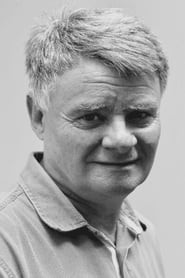 Ivo GregurevićStalin
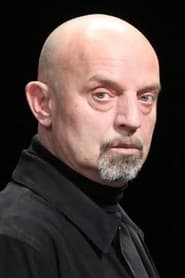 Goran GrgićArchbishop Stepinac
 Darko Janeš
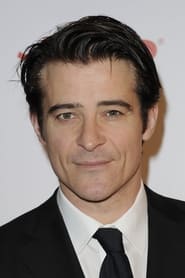 Goran VišnjićAndrija Hebrang
 Nataša Janjić MedančićOlga Hebrang
 Hrvoje Kečkeš
 Ljubomir Kerekeš
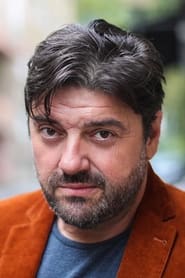 Goran NavojecMarshall Tolbukhin
 Suzana NikolićTito's mother
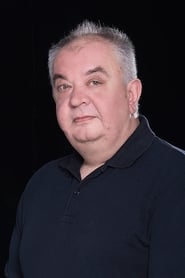 Damir Lončar
 Igor Mešin
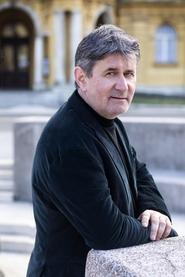 Vedran Mlikota
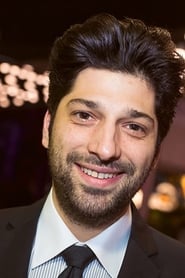 Borko Perić
 Žarko Potočnjak
 Filip Radoš
Title information and images are supplied by TMDb. Explore our discovery guide for advice on comparing metadata and legal viewing options.
Where to watch
Availability provided by JustWatch via TMDb. Offers can change. Provider links are listed on TMDb; full playback requires a separately authorized source.
Availability not listed for this country.
Seasons & episodes
Recommendations
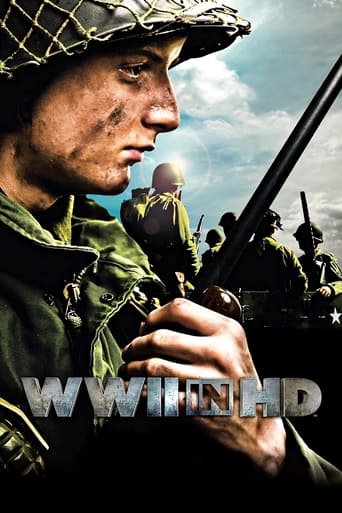
WWII in HD is a 10-part American documentary television miniseries that originally aired from November 15 to November 19, 2009 on the History Channel. The program focuses on the firsthand experiences of twelve American service members during World War II, including an Army nurse, a member of the Tuskegee Airmen, a second generation Japanese American and prisoner of war, and an Austrian Jewish immigrant. The twelve members recorded their time in both theaters and some had later interviews; found footage from the battlefield was paired with the stories of the twelve service members. The episodes premiered on five consecutive days, with two episodes per day. The series is narrated by Gary Sinise and was produced by Lou Reda Productions in Easton, Pennsylvania, United States.
The documentary series explores different political figures throughout history.
The story of the Second World War through the personal accounts of a handful of men and women from four American towns. The war touched the lives of every family on every street in every town in America and demonstrated that in extraordinary times, there are no ordinary lives.
Through vividly enhanced archival footage and voices from all sides of the conflict, this docuseries brings WWII to life like never before.
Oliver Stone's re-examination of under-reported events in American history.
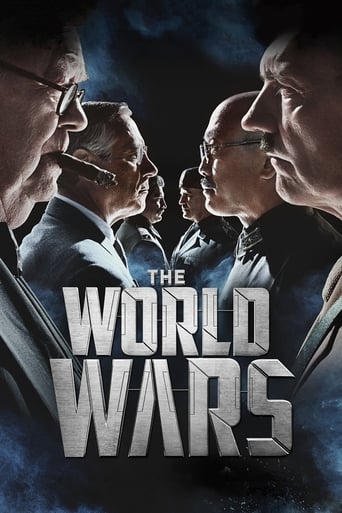
The story of three decades of war told through the eyes of various men who were its key players: Roosevelt, Hitler, Patton, Mussolini, Churchill, Tojo, DeGaulle and MacArthur. The series examines the two wars as one contiguous timeline starting in 1914 and concluding in 1945 with these unique individuals coming of age in World War I before ultimately calling the shots in World War II.
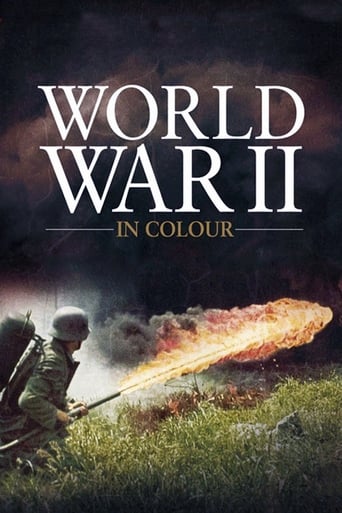
World War II In Colour is a 13-episode television documentary miniseries recounting the events of World War II narrated by Robert Powell. The show covers the Western Front, Eastern Front, and the Pacific War. It is on syndication in America on the Military Channel. This series is in full color, combining both original and colorized footage.
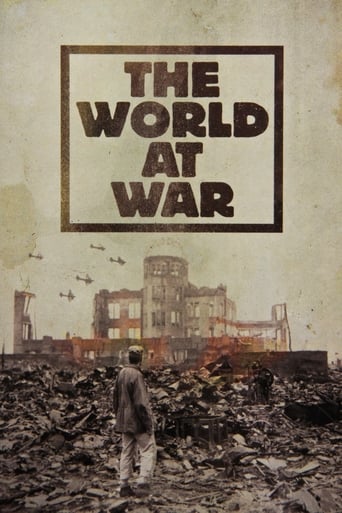
A documentary series that gives a historical account of the events of World War II, from its roots in the 1920s to the aftermath and the lives it profoundly influenced.
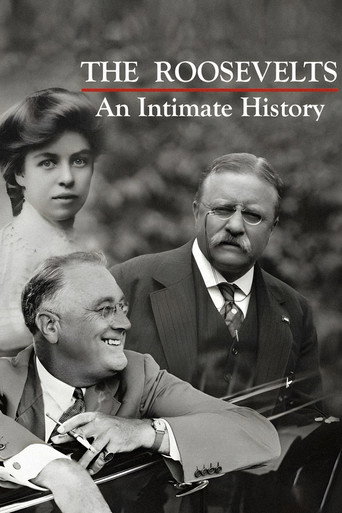
Chronicles the lives of Theodore, Franklin and Eleanor Roosevelt, three members of the most prominent and influential family in American politics. It is the first time in a major documentary television series that their individual stories have been interwoven into a single narrative. This seven-part, fourteen hour film follows the Roosevelts for more than a century, from Theodore’s birth in 1858 to Eleanor’s death in 1962.
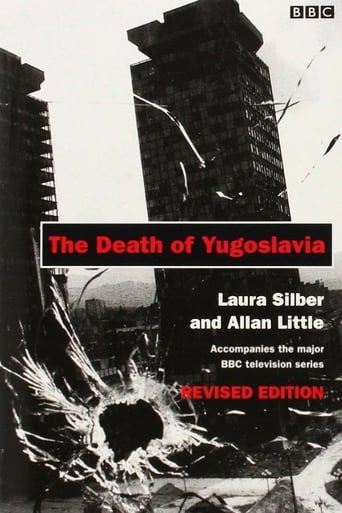
The Death of Yugoslavia is a BAFTA-award winning BBC documentary series first broadcast in 1995. It covers the collapse of the former Yugoslavia. It is notable in its combination of never-before-seen archive footage interspersed with interviews of most of the main players in the conflict, including Slobodan Milošević, the then President of Serbia. Norma Percy won the 1996 BAFTA TV Award for 'Best Factual Series' for the documentary. However, it has been argued that it presents a potentially slightly biased point-of-view; for instance during the trial of Milošević before the ICTY in The Hague, Judge Bonomy called the nature of much of the commentary "tendentious" (partisan).
The First 48 follows detectives from around the country during these first critical hours as they race against time to find the suspect. Gritty and fast-paced, it takes viewers behind the scenes of real-life investigations with unprecedented access to crime scenes, autopsies, forensic processing, and interrogations.
This captivating docuseries examines Winston Churchill's pivotal role in World War II and the formative events that made him an ideal leader for the era.

Gripping historical footage and expert commentary give detailed insights into the leading figures and decisive turning points of World War II.

Using highly advanced colourisation techniques, critical moments from World War II, from Stalingrad to The Battle of Britain, are shown in a whole new light.
Surviving power struggles, betrayals and plots, Hitler's inner circle of Nazi leaders seizes control of Germany and designs its disastrous future.

A “psychological exposé” into the minds of the most diabolical antagonists in WWE history and their impact on mainstream culture.
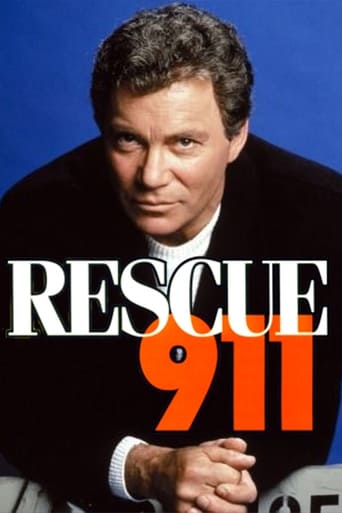
Rescue 911 is an informational reality-based television series that premiered on April 18, 1989 and ended on August 27, 1996. The series was hosted by William Shatner and featured reenactments of emergency situations that often involved calls to 911. Though never intended as a teaching tool, various viewers used the knowledge they obtained watching the show. Two specials, titled "100 Lives Saved" and "200 Lives Saved," were dedicated to viewers who had written to CBS with their stories on how the knowledge they obtained watching the show allowed them to save the life of someone else. At least 350 lives have been saved as a result of what viewers learned from watching it.
A documentary on the American Civil War narrated by Ken Burns, covering the secession of the Confederacy to the assassination of Abraham Lincoln.
Five acclaimed contemporary directors tell the story of five legendary Hollywood filmmakers who enlisted in the armed forces to document World War II.
Dynamic reenactments and expert commentaries bring to life the tumultuous history and power struggles of a warring 16th-century feudal Japan.
Similar titles
A moving story about the residents of correctional facility, rejected by parents and environment. Going through a strict regimen of life in the home, they are constantly trying to reverse the fate in their favor. Although they were given a chance to change, their actions always return to the beginning. Constantly on the border between personal whims and once-in-a-lifetime opportunity to become humans, they remain as wolves who find hard to change their mood. What finally remains is a perpetual dilemma whether their fate is innate, or is it forced by the communities in which they grew up...
An intriguing history of Yugoslav nuclear program that proposed to build an atomic bomb and 16 nuclear facilities on Yugoslav soil. Only one project came to fruition, the nuclear power plant in Krsko, Slovenia.

Story of forbidden love between Serbian guy and German girl in Vojvodina, Yugoslavia. Story begins in 1940's, just as war broke out and then goes threw this turbulent period to the 1960's, showing what was happening in Novi Sad. Germans have to fleed back to Germany, everything changed, but love remained
The Death of Yugoslavia is a BAFTA-award winning BBC documentary series first broadcast in 1995. It covers the collapse of the former Yugoslavia. It is notable in its combination of never-before-seen archive footage interspersed with interviews of most of the main players in the conflict, including Slobodan Milošević, the then President of Serbia. Norma Percy won the 1996 BAFTA TV Award for 'Best Factual Series' for the documentary. However, it has been argued that it presents a potentially slightly biased point-of-view; for instance during the trial of Milošević before the ICTY in The Hague, Judge Bonomy called the nature of much of the commentary "tendentious" (partisan).
Grlom u jagode is a 1975 Yugoslavian TV miniseries directed by Srđan Karanović and co-written by Karanović and Rajko Grlić. Depicting the life and times of a young man nicknamed Bane Bumbar, the series achieved huge popularity throughout SFR Yugoslavia. Revolving around Bane, his family, and his circle of friends, the series also portrays 1960s Belgrade, Serbia and Yugoslavia.
Through two films, this documentary reveals the creation and disintegration, within our own time, of a neighbouring European State named Yugoslavia. Part One covers the 1918-1980 period. Part Two covers the 1980-2001 period.

In this three-part documentary series, Coen Verbraak looks back on the events of that time with the Dutchbat soldiers involved.
A sequel to One Song a Day Takes Mischief Away (1970) set in 1964.
The intertwined lives of numerous characters set in 1990s Belgrade who all try to live happily during rather unhappy times.

This true story is made up of two episodes that show Operation Hydra. After the fall of the Uzice Republic and the success of the first enemy offensive, the British sent their mission and this series shows the events.

Who were the Yugoslav Partisans? A docuseries about the founding and evolution of the largest armed resistance in Europe during World War II.
A 12-episode documentary series about the Independent State of Croatia.
Alija Izetbegović, a prominent political leader, tries to hold his country together while negotiating an agreement that will mean the end of the war. At the same time, the story of the Kahramanović family offers an insider's perspective on the war.
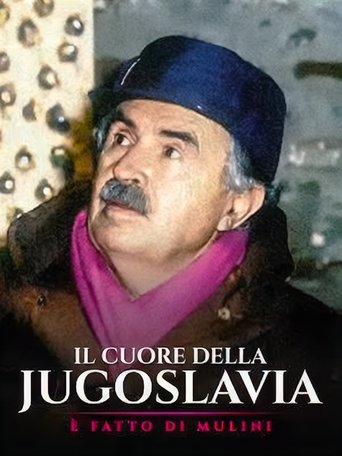
Italian writer and screenwriter Tonino Guerra's journey to discover Yugoslavia, from the big cities to the heart of its countryside, between a past of traditions and ancient rituals and a future still to be built. Filmed in 1979, the reportage in the then still united country has the flavour of both an intimate diary and a detailed travel documentary.
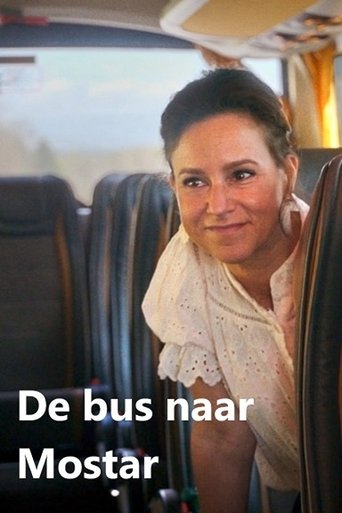
A girls' handball team from Mostar fled the war in the former Yugoslavia in the early 1990s, thanks to their coach. After a perilous bus journey, they arrived in Oosterblokker; without their parents, living in fear and uncertainty. Searching for answers, the women returned 33 years later, by bus to Mostar.
Innovative weekly half hour PBS music performance series. The Session was one of the first nationally broadcast rock music series featuring up and coming artists.

La Viuda Negra is a 2014 Spanish-language telenovela produced by RTI Producciones and Televisa for United States-based television network Univisión and for Colombia-based television network Caracol Television. It is an adaptation of the book La patrona de Pablo Escobar de José Guarnizo based on history from Griselda Blanco.

The anthology series showcases how a single social media post, instigated by negative emotions, can change one's life forever.

Satiate Your Soul project, a journey to a more refined and quality life.

The Poor, Rich Family is a story of love, romance, twists of fate, and countless amusing situations involving two families with nothing in common—yet who are now forced to live under the same roof. On one side are the millionaire Ruizpalacios family; on the other, the Mendonças, a classic working-class family.