

Las Juanas
1997-01-23 · 45 min / episode · ★ 7.4
Las Juanas is a Colombian telenovela. It first aired in 1997 on the Colombian Network RCN. The show was written by Bernardo Romero Pereira, and was his most successful telenovela after the globally distributed series Café and Yo Soy Betty, La Fea.
Trailers are previews, not full movies.
No authorized playback source configured. Use the legal watch options below.
Production details
- Creators
- Bernardo Romero Pereiro
- Production companies
- RCN
- Countries
- Colombia
- Status
- Ended
Top Cast
 Xilena AycardiJuana Mani
 Angie CepedaJuana Valentina
 Catherine SiachoqueJuana Caridad
 Rafael NovoaRubén Calixto
 Miguel VaroniManuel F.
 Susana TorresJuana Bautista
 Carolina SabinoJuana Matilde
 Pepe SánchezCalixto Salguero
Title information and images are supplied by TMDb. Explore our discovery guide for advice on comparing metadata and legal viewing options.
Where to watch
Availability provided by JustWatch via TMDb. Offers can change. Provider links are listed on TMDb; full playback requires a separately authorized source.
Seasons & episodes
Recommendations

Amar a Muerte is a Mexican telenovela produced by W Studios for Televisa and originally broadcast on Las Estrellas from October 29, 2018, to March 3, 2019. It is based on the Colombian telenovela En Cuerpo Ajeno, created by Julio Jiménez. The story follows the extraordinary lives of three people whose souls are mysteriously reincarnated into different bodies after their deaths. As they adjust to their new identities, they confront love, revenge, family conflicts, and long-hidden secrets.

Popular telenovela produced in Mexico in 1979, starring Verónica Castro, Rogelio Guerra and Rocío Banquells. Castro also sang the theme Aprendí a Llorar, a song written by Lolita de la Colina. The telenovela was produced by Chilean Valentín Pimstein and Carlos Romero, it was directed by Rafael Banquells. The story was written by Inés Rodena and adapted by Valeria Philips.

Mar de Amor is a Spanish-language telenovela produced by Nathalie Lartilleux with protagonists Zuria Vega, Mario Cimarro and Mariana Seoane and antagonists Ninel Conde, Marcelo Córdoba and Manuel Landeta. This is a remake of the 1978 Venezuelan telenovela María del Mar.

La Patrona is a Spanish-language telenovela produced by United States-based television network Telemundo Studios, Miami and Mexican Argos Comunicación. The telenovela is a remake of the Venezuelan telenovela La Dueña, written by José Ignacio Cabrujas. The name reflects a local term or slang in Mexico to address a person recognized as the main boss. However, the title is also a reflection of both the protagonist and the antagonist struggle to conquer power, authority and respect in a labor field traditionally deemed to be a man's job.

En tierras salvajes is a Mexican telenovela produced by Salvador Mejía Alejandre for Televisa and originally broadcast on Las Estrellas from July 31, 2017, to February 25, 2018. The story follows Isabel Montero, a young woman caught in a love triangle with brothers Daniel and Aníbal Otero. As rivalry, family conflicts, and hidden secrets come to light, their lives become intertwined in a struggle between love, ambition, betrayal, and redemption.

La Impostora, is a Spanish-language telenovela presumably to be produced by United States-based television network Telemundo Studios, Miami.
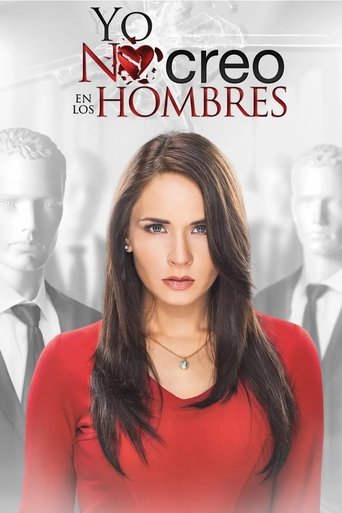
Yo no creo en los hombres (I don't trust men anymore) is a Mexican telenovela produced by Giselle González for Televisa. It is based on Yo no creo en los hombres (1991), produced in México.
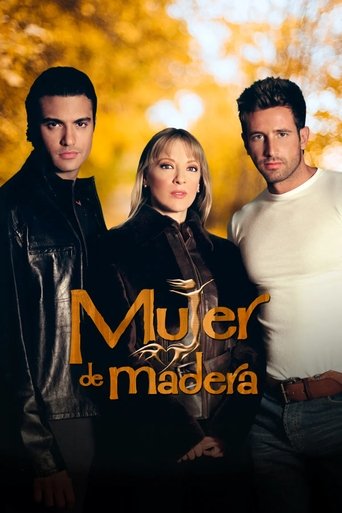
Mujer de Madera is a Mexican telenovela produced by Televisa in 2004. One unusual feature of this telenovela is that the main character is played by different actresses before and after her stay in hospital due to a forest fire.
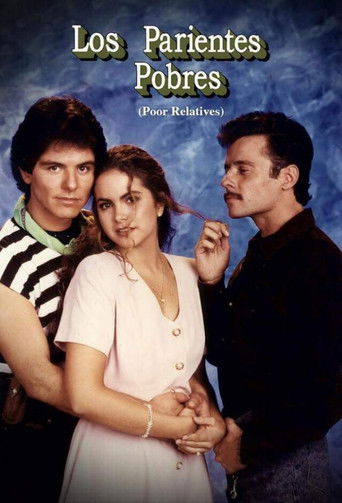
Los Parientes Pobres is a telenovela made by Mexican TV network Televisa. It is a telenovela set in Mexico. This telenovela was broadcast in 1993.

Esmeralda is a telenovela that was released by Televisa in 1997. It is a remake of a 1970 Venezuelan telenovela of that same name, and was itself remade in Brazil in 2004. Another version is Topacio from Venezuela in 1984. One of the most famous telenovela all the time.

Mi Pequeña Traviesa is a Mexican youth and family telenovela produced and directed by Pedro Damián for Televisa and originally broadcast on Canal de las Estrellas from December 8, 1997, to April 24, 1998. It is an adaptation of the Argentine telenovela Me llaman Gorrión, created by Abel Santa Cruz. The telenovela stars Michelle Vieth and Héctor Soberón. The story follows Julia González, a young woman whose dreams of pursuing a professional career are interrupted after her father is left paralyzed in an accident. To support her family, she disguises herself as a boy in order to find work. Along the way, she falls in love with Alberto Miranda, and together they must overcome social differences, family conflicts, and the many obstacles that stand in the way of their happiness.

Rebeca murders her sister Adriana to end up with the man she loved, and becomes the step mother of her niece Lucía. Nora, Lucía's half sister and daughter of Rebeca, resents Lucía for the same reasons Rebeca hated Adriana, as history repeats itself.

Hermanas, un amor compartido is a Mexican telenovela produced by Silvia Cano for TelevisaUnivision and originally broadcast on Las Estrellas in 2026. It is based on the Turkish series Ağlama Anne (2018), created by Serdar Oğuz. Adapted by Rossana Curiel, Cecilia Piñeiro, and Juan Pablo Balcázar, the telenovela stars Adriana Louvier, Danna García, Osvaldo Benavides, and Juan Martín Jáuregui. The story follows Rebeca and Mónica, two sisters who have always shared a strong bond despite their different personalities. Their relationship is shattered when a secret from Rebeca’s past resurfaces: years earlier, she abandoned her daughter Aura and entrusted her care to Mónica. After being separated from her child, Rebeca returns determined to recover her daughter, while Mónica refuses to lose the girl she raised as her own. The sisters must confront love, guilt, family conflicts, and the difficult question of what truly defines motherhood.
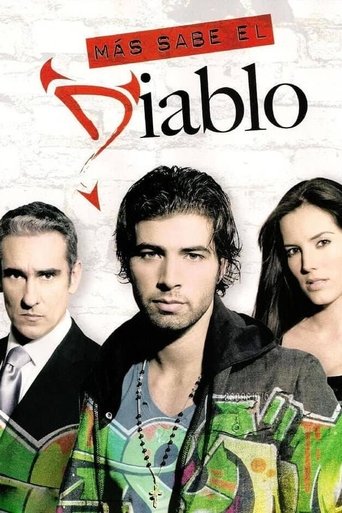
Set in New York, the serial features the street-wise Ángel, who treats life as a game he plays to win. He tangles with the power-hungry Martín, who is engaged to a stunning, feisty lawyer named Manuela. She decides to defend Ángel, even though Martín wants to destroy him. Neither of the men know that Ángel is Martín's own son. Our hero learns that love is the only key to survival.
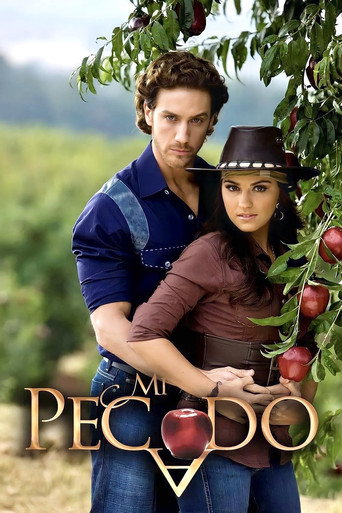
Paulino Córdoba, Gabino Roura, Rodolfo Huerta, and Matías Quiroga have been friends since childhood; however, as adults, their priorities shifted, and a sin now threatens to destroy their friendship. Paulino owns the El Milagro apple hacienda and is married to Rosario; they have two children, César and Lucrecia. Rosario has always favored her son while openly rejecting her daughter. Lucrecia was raised by Delfina, Rosario’s maid and Manuel’s mother.

Story of love between Marimar and Sergio. Sergio is from a wealthy family, and Marimar lives with her poor grandparents in a hut in front of the ocean.

Cuna de lobos is a Mexican soap opera produced by Televisa and broadcast by Canal de las Estrellas in 1986 to 1987. The serial, about the struggle for power within a wealthy Mexican dynasty, was enormously popular in its native Mexico. It was also a hit in several foreign countries, including the United States, Germany and Australia. The soap opera starring antagonistically María Rubio as the main villain interpreting the evil "Catalina Creel", with Gonzalo Vega, Diana Bracho, Alejandro Camacho and Rebecca Jones.

The beautiful young Montserrat is forced to marry a man she does not love in order to save her family from ruin and maintain their social standing.
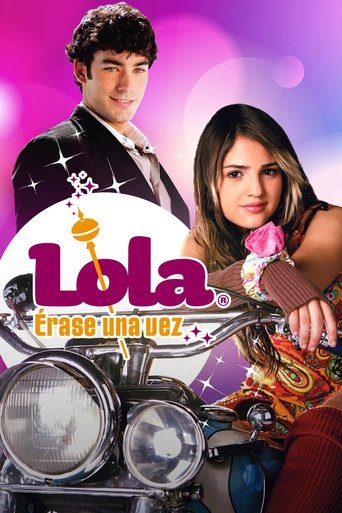
Lola... Érase Una Vez is a teen targeted Mexican melodrama telenovela produced by Televisa that is an adaptation of the Argentine global phenomenon and teenage telenovela Floricienta. The show tells the story of a modern Cinderella, Lola, a 20 year old girl, who works as a nanny and sings in a rock band and meets her so call Prince Charming. It debuted in Mexico on February 26, 2007, starring Aarón Díaz and Eiza González. The show had gained popularity among teens and children not only in Mexico but also internationally including Venezuela, Spain and the in United States. With concert performances filling major auditoriums and songs by the protagonist become radio hits. It debuted in the United States on Univision in March 2008 and ended on January 26, 2009. The series consisted of 224 episodes which aried Monday through Friday at 3 P.M, intentionally for teenagers to watch after school, as is typical for most teenage & children telenovelas in Spanish networks.

La Mujer Del Vendaval is a 2012 Mexican telenovela produced by Mapat L. de Zatarain for Televisa. It is a remake of the Venezuelan telenovela Un Esposo para Estela. Ariadne Díaz and José Ron star as the main protagonists, while Chantal Andere, Marco Muñoz, Manuel Flaco Ibañez and Florencia del Saracho as the main antagonists.