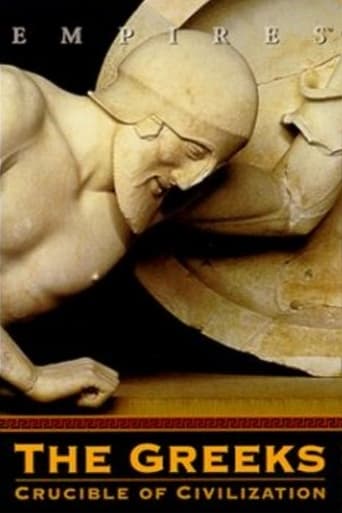
The Greeks: Crucible of Civilization
2000-02-09 · 52 min / episode · ★ 7.4
In the fourth and fifth centuries, B.C., the Greeks built an empire that stretched across the Mediterranean from Asia to Spain. They laid the foundation of modern science, politics, warfare and philosophy, and produced some of the most breathtaking art and architecture the world has ever seen. It was perhaps the most spectacular flourishing of imagination and achievement in recorded history.
Trailers are previews, not full movies.
No authorized playback source configured. Use the legal watch options below.
Production details
- Creators
- Unavailable
- Production companies
- DeVillier Donegan Enterprizes, Atlantic Productions
- Countries
- United States of America
- Status
- Ended
Top Cast
 Liam NeesonSelf - Narrator
 Vernon DobtcheffCleisthenes
 Jeffery DenchPericles
Title information and images are supplied by TMDb. Explore our discovery guide for advice on comparing metadata and legal viewing options.
Where to watch
Availability provided by JustWatch via TMDb. Offers can change. Provider links are listed on TMDb; full playback requires a separately authorized source.
Availability not listed for this country.
Seasons & episodes
Recommendations
Horizon tells amazing science stories, unravels mysteries and reveals worlds you've never seen before.
Experience the wonders of our world like never before in this epic series from Jon Favreau and the producers of Planet Earth. Travel back 66 million years to when majestic dinosaurs and extraordinary creatures roamed the lands, seas, and skies.
An immersive, action-packed and discovery-led series following International teams of Egyptologists as they unearth the world's richest seam of ancient archaeology - Egypt's Valley of the Kings.

Through the prism of Jeff Goldblum's always inquisitive and highly entertaining mind, nothing is as it seems. Each episode is centered around something we all love — like sneakers or ice cream — as Jeff pulls the thread on these deceptively familiar objects and unravels a wonderful world of astonishing connections, fascinating science and history, amazing people, and a whole lot of surprising big ideas and insights.

An insider's look at the engineering and scientific miracles behind the things that form the modern world.
Bourdain travels across the globe to uncover little-known areas of the world and celebrate diverse cultures by exploring food and dining rituals. Known for his curiosity, candor, and acerbic wit, Bourdain takes viewers off the beaten path of tourist destinations – including some war-torn parts of the world – and meets with a variety of local citizens to offer a window into their lifestyles, and occasionally communes with an internationally lauded chef on his journeys.
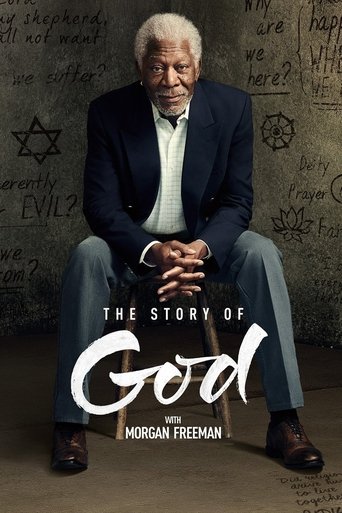
Morgan Freeman presents his quest in order to find how most religions perceive life after death, what different civilizations thought about the act of creation and other big questions that mankind has continuously asked.
Consistently stunning documentaries transport viewers to far-flung locations ranging from the torrid African plains to the chilly splendours of icy Antarctica. The show's primary focus is on animals and ecosystems around the world. A comic book based on the show, meant to be used an as educational tool for kids, was briefly distributed to museums and schools at no cost in the mid-2000s.

The history of the sport of baseball in America, told through archival photos, film footage, and the words of those who contributed to the game in each era. Writers, historians, players, baseball personnel, and fans review key events and the significance of the game in America's history.
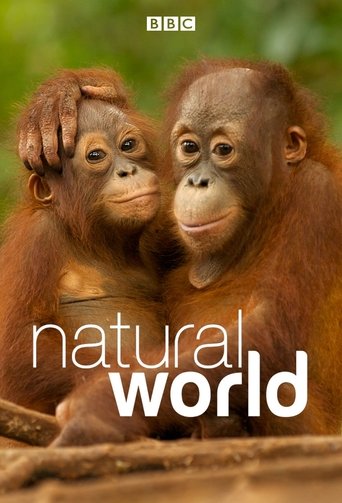
Natural World is a nature documentary television series broadcast annually on BBC Two and regarded by the BBC as its flagship natural history brand. It is currently the longest-running series in its genre on British television, with more than 400 episodes broadcast since its inception in 1983. Natural World is produced by the BBC Natural History Unit in Bristol, but individual programmes can be in-house productions, collaborative productions with other broadcasters or films made and distributed by independent production companies and purchased by the BBC. Natural World programmes are often broadcast as PBS Nature episodes in the USA. Since 2008, most Natural World programmes have been shot and broadcast in high definition.
From the planets to the stars and out to the edge of the unknown, history and science collide in a wondrous yet deadly adventure through space and time.
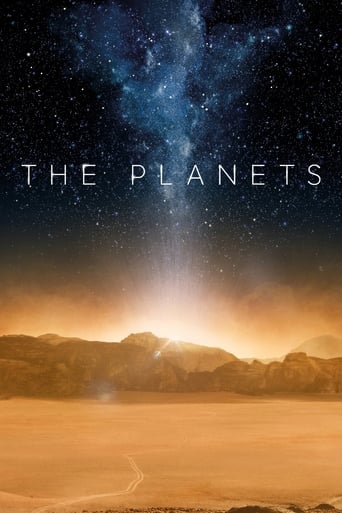
Professor Brian Cox explores the dramatic lives of the eight majestic planets/worlds that make up our solar system.
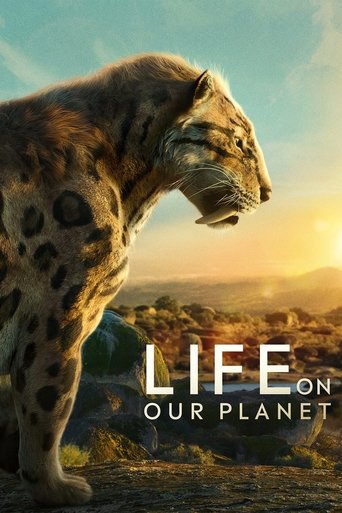
Life's extraordinary journey to conquer, adapt and survive on Earth across billions of years comes alive in this groundbreaking nature docuseries.
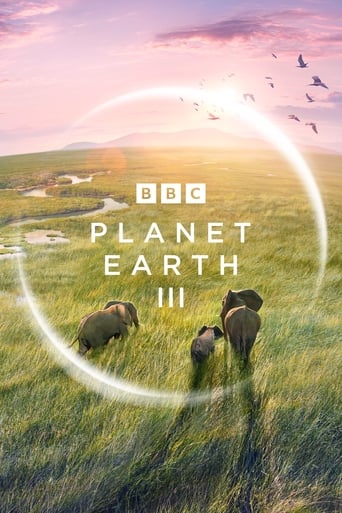
Journeying to the far reaches of our planet, this eight part series follows some of the world's most amazing species, telling extraordinary stories that are dramatic, thrilling, funny and sometimes heart-breaking, but always full of hope.

Award-winning actor and nervous explorer Eugene Levy steps out of his comfort zone for a whirlwind tour of the world's most beautiful and intriguing destinations.
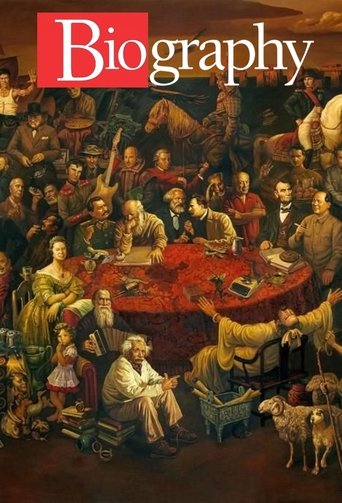
Biography is a documentary television series. It was originally a half-hour filmed series produced for CBS by David Wolper from 1961 to 1964 and hosted by Mike Wallace. The A&E Network later re-ran it and has produced new episodes since 1987. The older version featured historical figures such as Helen Keller and Mark Twain, or long-dead entertainment figures such as Will Rogers or John Barrymore. The A&E series has placed the emphasis on such people as Marilyn Monroe, Elvis Presley, Plácido Domingo, Freddie Mercury, Jacqueline Kennedy Onassis, Eric Clapton, Pope John Paul II, Gene Tierney, Selena, Diego Rivera, Mao Zedong and Queen Elizabeth II, and fictional characters like The Phantom, Superman, Hamlet, Betty Boop, and Santa Claus. The program ended up profiling enough figures that in 1999, A&E spun it off into an entire network, The Biography Channel.

30 for 30 is the title for a series of documentary films airing on ESPN, its sister networks, and online highlighting interesting people and events in sports history. This currently includes four "volumes" of 30 episodes each, a 13-episode series under the ESPN Films Presents title in 2011–2012, and a series of 30 for 30 Shorts shown through the ESPN.com website. The series has also expanded to include Soccer Stories, which aired in advance of the 2014 FIFA World Cup, and audio podcasts. This entry refers to the main Volumes of the series presented by ESPN
From the first dinosaurs to the last, this epic documentary series examines their 165 million years on Earth and the forces that shaped their evolution.
Have you ever wondered what goes on behind the scenes of the most legendary monuments and powerful organizations in the United States? America’s Book of Secrets lifts the veil of mystery, giving you unparalleled access to historical narratives and insider information previously hidden from the public. Through in-depth research and exclusive channels, this series delves into a variety of familiar but enigmatic American institutions, from the FBI and the Pentagon to Fort Knox and Area 51. Go beyond the locked doors and security checkpoints of government agencies, famous landmarks and stealthy societies to glimpse the hidden worlds you were never intended to see.

Hosts Tanner Foust, Adam Ferrara and Rutledge Wood embark on adventures as they test cars in extreme stunts, intense challenges and first-person reviews using their unique perspectives.
Similar titles
Tutored by Aristotle, helpless witness to his father's assassination, and a brilliant, pioneering tactician, Alexander the Great had conquered the known world--and sealed his legacy as one of history's most remarkable rulers--by the age of 25. In the year 334 B.C., 20-year-old King Alexander of Macedonia decided to bring the farthest reaches of the world under one domain. Over the next 12 years, he led a grand army across more than 20,000 miles and eventually brought all of Asia under his control, only to perish from battle wounds at the age of 32. Incorporating dramatic onsite reenactments with high-end computer graphics and the expertise of renowned scholars, THE TRUE STORY OF ALEXANDER THE GREAT is a special presentation from THE HISTORY CHANNEL®, examining the life and career of this military genius, impassioned lover, and fearless leader.
Horizon tells amazing science stories, unravels mysteries and reveals worlds you've never seen before.
What would we be without mucus? Can we live on water? How much does life weigh? Finding out the answers is the aim of ARTE's new science show. In a nod to Douglas Adams's "Hitchhiker's Guide to the Galaxy", where the figure 42 is the ultimate answer to all questions, 42 tries to provide the answers.
Crash Course World History is a video course hosted by John Green that teaches world history from growing the first crops in the First Agricultural Revolution to global textile production in the 2010s. Across the series, it builds skills in identifying and explaining historical developments, analyzing events in broader context, and tracing patterns and connections across time and place—aiming to help viewers become more informed citizens of the world. Season 1 follows the 2012 AP World History curriculum in a 42-episode chronological survey, while Season 2 continues in 30 episodes with a more thematic approach that focuses on systems and encourages viewers to question how “history” is written and what biases shape it.
The Greco-Persian War was pivotal in the creation of the modern world - yet all that is generally remembered are the 300 Spartans at Thermopylae. This documentary examines the whole history, from the Ionian Revolt (497BC) to the Peace of Callias (449BC), and also covers the legacies of the war - including Democracy.

A journey that tells the thought of the greatest protagonists of Western philosophy, from its origins to the great thinkers of the twentieth century, through the story of great contemporary philosophers.
Series of programmes about psychology, in which Jonathan Miller talks to eminent psychologists about their theories and beliefs.
Who was Homer, and what is the meaning of The Odyssey? In this documentary we follow the footsteps of Ulysses, also known by his Greek name Odysseus—a hero as relevant today as he was nearly three thousand years ago, on a journey across some of the most fascinating landscapes and seascapes of the Mediterranean region. With the help of prominent international scholars, we seek to resolve the questions that still surround one of humanity’s greatest literary works and its enigmatic author.

The Essential Lectures of Alan Watts video series was recorded in 1971 above Muir Woods, California, and in 1972 aboard the ferryboat the SS Vallejo in Sausalito. Produced by his son Mark and directed by long-time archivist Henry Jacobs, the series explores core philosophical themes that spawned over Watts' career.

Polish-Flemish philosopher Alicja Gescinska interviews national and international personalities with diverse philosophical and religious backgrounds.

“Years of innocence” signifies the return to the sports memories that have been the balm of the souls of our grandparents, our fathers and those younger people who have heard the narratives or studied the photographs of the great idols of older times. We return to the age of football, when figures of the sport emerged from a completely different setting compared to that of recent years. In this day and age, now that the era of “prosperity” has lapsed into decline, looking at those figures who excelled in conditions of extreme poverty, hunger, terror and the weight of History, offers the most exciting model for today's young people. Through football, we focus on a Greece, true but not ideal, that inspired us, that was lost and which we wish to restore in order to inspire us again, in the midst of such a gloomy juncture.
David Malone’s 3-part series takes a fresh look at how the universe was formed, from a scientific and theological point of view. TESTING GOD re-examines the relationship between science and religion and asks: is science’s claim to victory premature?

The history of our modern Indo-Arabic numeral system begins in Mesopotamia, leads through India to the Arab world – and from there around the globe. This three-part series explores how the "Arabic numerals" began their triumphant march and the special role that zero played in this process. From its beginnings to modern computer science – today, numbers are the universal language of the world.
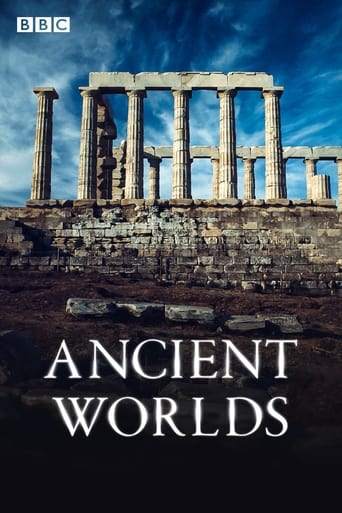
Archaeologist and historian Richard Miles traces the development of Western civilization, from the first cities in Mesopotamia to the fall of the Roman Empire. In this six-part series, Miles travels through the Middle East, Egypt, Pakistan and the Mediterranean to discover how the challenges of society -- religion and politics, art and culture, war and diplomacy, technology and trade -- were dealt with and fought over in order to maintain a functioning civilization. Stories are told of disappeared, ruined and modern cities, from ancient Iraq to modern Damascus, to reveal how successes and failures of the ancients shaped the world today.


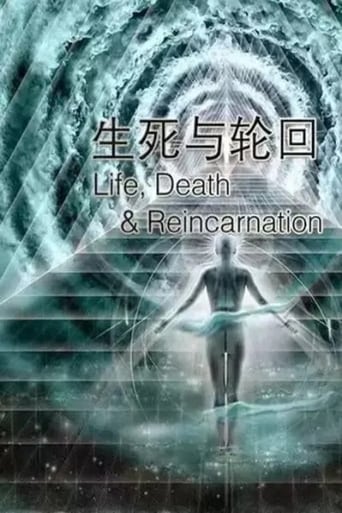
An epic adventure that aims to unravel the mystery at the heart of our existence: the questions of our identity and our destiny. The series features some of the world’s most baffling real life stories and exciting findings in the fields of consciousness studies, near-death experiences and past-life memories. Adventurous researchers following the evidence where it leads them have discovered that the lines of evidence converge to a conclusion that is refreshingly new – yet perennially known.
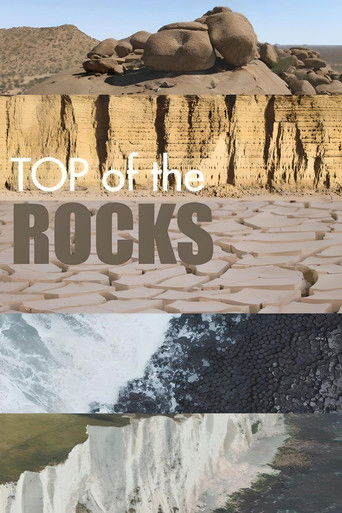
A 360 ° journey across the planet around five iconic stones which have shaped our planet and have inspired Human civilizations. An ambitious 4K series to reveal the secret life that hides within the mineral world and the way these source rocks connect cultures together and still impacts our landscapes and environment today.