Wheel of Fortune
1988-07-19 · 30 min / episode · ★ 8.0
Wheel of Fortune is a British television game show created by Merv Griffin. Contestants compete to solve word puzzles, similar to those used in Hangman, to win cash and prizes. The title refers to the show's giant carnival wheel that contestants spin throughout the course of the game to determine their cash and/or prizes. The programme aired between 19 July 1988 and 21 December 2001 and was produced by Scottish Television for the ITV network and mostly follows the same general format from the original version of the programme from the United States.
Trailers are previews, not full movies.
No authorized playback source configured. Use the legal watch options below.
Production details
- Creators
- Merv Griffin
- Production companies
- Scottish Television Enterprises
- Countries
- United Kingdom
- Status
- Returning Series
Top Cast
 Jenny PowellSelf - Co-host
Title information and images are supplied by TMDb. Explore our discovery guide for advice on comparing metadata and legal viewing options.
Where to watch
Availability provided by JustWatch via TMDb. Offers can change. Provider links are listed on TMDb; full playback requires a separately authorized source.
Availability not listed for this country.
Seasons & episodes
Recommendations
This game show sees contestants solve word puzzles, similar to those used in Hangman, to win cash and prizes determined by spinning a giant carnival wheel.
American version of the tense gameshow where contestants tackle a series of multiple-choice questions to win large cash prizes.
Guy Fieri sends four talented chefs running through the aisles in a high stakes, high skills, grocery store cooking competition. The chefs are hit by real-world challenges like finding workarounds when all the essential ingredients are suddenly "out-of-stock" or having to create a masterpiece when you can only cook with "5 items or less" or on a $10 budget. In the end, the food does the talking, as the last chef standing has the chance to make some serious dough!
America's favorite quiz show where contestants are presented with general knowledge clues in the form of answers, and must phrase their responses in question form.
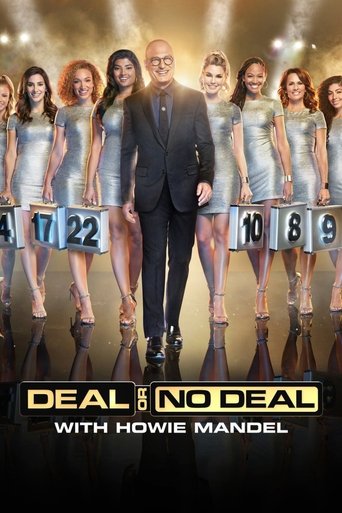
A contestant must choose from 26 sealed briefcases containing a marker for various amounts of cash from one penny to $1 million. The player then eliminates the remaining 25 cases one by one. The chosen ones are opened and the amount of money inside revealed. After several cases are opened, the player is tempted by the Banker to accept an offer of cash in exchange for not continuing the game and possibly winning a larger sum of money.

Takeshi's Castle was a Japanese game show that aired between 1986 and 1990 on the Tokyo Broadcasting System. It featured the Japanese actor Takeshi Kitano as a count who owns a castle and sets up difficult challenges for players to get to him. Contestants throw themselves into daunting physical challenges as they attempt to storm Takeshi's Castle and win the grand prize of one million yen. The show has become a cult television hit around the world. A special live "revival" was broadcast on April 2, 2005, for TBS's 50th anniversary celebrations.
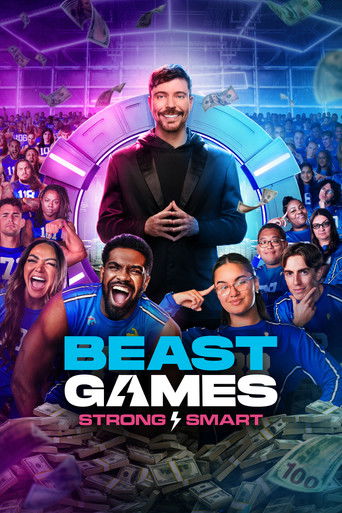
I gathered 1,000 people to fight for $5,000,000, the LARGEST cash prize in TV history! We're also giving away a private island, Lamborghinis, and millions more in cash throughout the competition! Go watch to see the greatest show ever made!
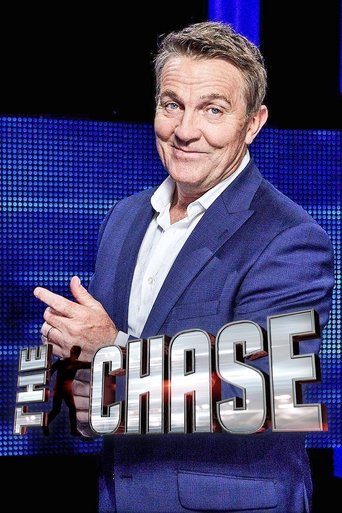
The Chase isn’t just a quiz… it’s a race, where the players must ensure they stay one step ahead of ‘The Chaser’, a ruthless quiz genius determined to stop them winning at all costs.
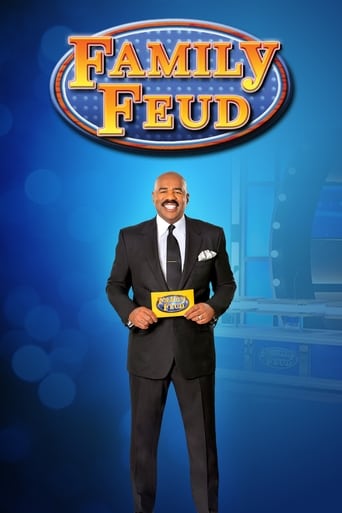
Two families compete against each other in a contest to name the most popular responses to a survey question posed to 100 people.
Quiz in which contestants try to score as few points as possible by plumbing the depths of their general knowledge to come up with the answers no-one else can think of.
Comedy quiz show full of quirky facts, in which contestants are rewarded more if their answers are 'quite interesting'.

The clock is ticking as contestants compete in games of lexical dexterity and numerical agility.
Footage from the popular game show, Takeshi's Castle has been re-edited, re-written and re-voiced into a hilarious, intentionally over-produced, modern "action/X-treme" sports show.

Players from all walks of life will compete to win up to £50,000. All living in one modern block but separately in individual apartments, the players will never come face-to.face, and can only interact with one another through an specially-designed app called The Circle.
A gameshow hosted by Ant and Dec filled with stunts, sketches, and special guest appearances.
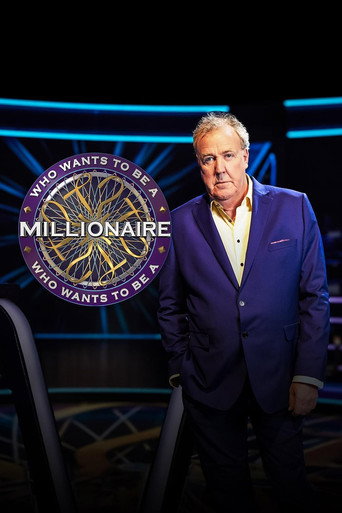
A game show created in the United Kingdom, in which contestants attempt to answer general knowledge questions in an intimidating atmosphere in order to scoop the £1 million top prize. The original series was hosted by Chris Tarrant, and its modern-day revival is hosted by Jeremy Clarkson.
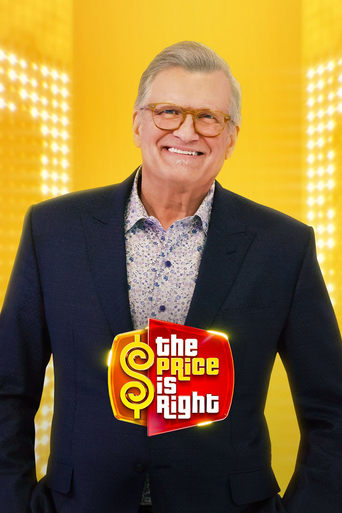
"Come on down!" The Price Is Right features a wide variety of games and contests with the same basic challenge: Guess the prices of everyday (or not-quite-everyday) retail items.
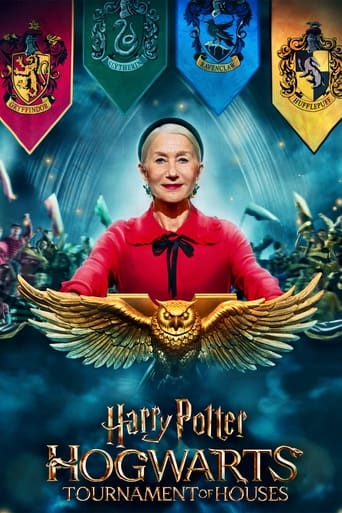
Wizarding World fans put their Harry Potter knowledge to the test for the ultimate honor to be named House Cup champion.
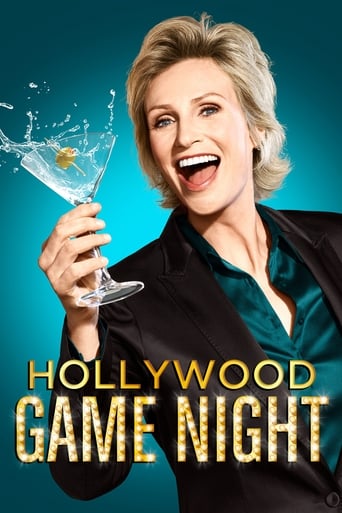
Two contestants are transported from their everyday lives into a once-in-a-lifetime night of fun and celebration as they play party games with some of their favorite celebrities and compete for the chance to win up to $25,000.
Each week a group of four famous faces go toe to toe in testing their general knowledge skills in a variety of entertaining games.
Similar titles

In this original show, 50 contestants from all over France compete in a series of questions that really put their brains to the test. But only one of them will make it to the “Final Circle” and win up to 50,000 euros! In a spectacular 360-degree setting, the contestants sit in a circle around Arthur. There are a total of 6 circles, each corresponding to a level of difficulty. In each circle, the contestants compete in 6 categories that require them to use every ounce of their brainpower: visual memory, language, logical reasoning, memory, math, and spatial reasoning. Only the best earn the right to move on to the next circle. The further the contestants advance through the circles, the harder the questions become and the tougher the competition gets! Until the final circle, where only one contestant can win the 50,000 euros!

Two for the Money is an American game show television program which ran from 1952 to 1957. The show ran for one season on NBC, and four seasons on CBS. It was a Mark Goodson-Bill Todman production, and was initially sponsored by Old Gold cigarettes. Humorist Herb Shriner was the host for most of the show's run, with fellow humorist Sam Levenson hosting the last season.
Tous contre un was a daily quiz show, broadcast live on Télé-Québec from September 2001 to March 2003 and hosted by Marc-André Coallier. Contestants had to answer questions based on the day's current news. Television viewers could also play on the Internet and win prizes. The final game of each program pitted the studio winner against 10 Internet contestants. The program's chief innovation was its proprietary computer system which allowed a perfect synchronisation between questions displayed on the television screen and on the Internet players' display screens. The program was produced by Groupe Tele-Vision Inc. and was created by Eric F. Lemieux and Daniel Cormier.
Memory Game was a short-lived American television game show that aired on NBC. The series – hosted by former baseball star and then-current Today personality Joe Garagiola – ran from February 15 to July 30, 1971. The show's creator and packager was Merv Griffin, and its announcer was Johnny Olson, a legendary game-show announcer more synonymous with Goodson-Todman Productions, who would launch CBS' The New Price is Right the following year.
L’union fait la force is a French language game show airing weekdays on Radio-Canada. It is hosted by Patrice L'Ecuyer. The content of the show are primarily "quizzes" that pertain to words in the French language. The quizzes range from everything from guessing words all the way up to Pictionary-style games. The game consists of two teams, made up of four competitors and supporters behind them. The team represents the organization. The teams compete for points via the abovementioned "quizzes". The team that earns the most points wins a prize of C$1,000. Tuesday and Thursday editions of the show include a special round, La petite école, in which contestants answer questions written by elementary and secondary school students, with each question pertaining to a grade level.
Who's Still Standing? was the American adaptation of the Israeli game show Lauf al Hamiliyon, which offers contestants the opportunity to win up to US$1 million while competing in head-to-head trivia battles. Ben Bailey, host of the game show Cash Cab, hosted the show which originally ran on NBC from December 19, 2011 to January 30, 2012. On May 13, 2012, it was announced that the show will not be renewed for a second season due to high production costs, despite having acceptable ratings.
Double Your Money is a British quiz show hosted by Hughie Green. Originally broadcast on Radio Luxembourg, it transferred to ITV in 1955, a few days after the commercial channel began broadcasting. It was produced by Associated-Rediffusion until 1964 and then by Rediffusion London, and it finished in 1968 when the company lost its franchise. There were 260 thirty-minute episodes. Throughout its run the show was one of the most consistently popular programmes on British television. The quiz format was similar to The 64,000 Dollar Question, with prize money approximately doubling at each question up to £1000, and multi-part answers being required at the harder stages. When contestants hit the £1,000 Treasure Trail, they were placed in sound-proofed 'isolation booths', where the fans were turned off and the temperature grew, making contestants sweat and look nervous. The 8 November 1966 show came from The House of Friendship, Moscow, Russia, where Monica Rose and Natasha Vasylyeva were both hostesses and, because the Communist Party would not allow money to be given away, the big prize was a television set. The Polish version of this quiz was "Wielka Gra".
Shoot for the Stars is a game show created and produced by Bob Stewart, and aired on the NBC television network. The show aired from January 3 to September 30, 1977, and was produced in New York City. During most of its run, it had originally videotaped at NBC's headquarters in Rockefeller Center, but some weeks of episodes were recorded at Studio 50 at CBS, also known as the Ed Sullivan Theater. Shoot for The Stars was the last NBC game show to originate from New York City. Geoff Edwards hosted the show, with Bob Clayton as announcer. Frequent celebrity players included Debralee Scott, Nipsey Russell, Anita Gillette, Tony Randall, and Bill Cullen.

Teams of two duke it out for a $300,000 grand prize and pop culture bragging rights in this fresh twist on America's most beloved quiz show.

Joel Dommett hosts a high octane game show, where two families battle against each other in a thrilling game with a uniquely challenging twist. With an impressive prize of a whopping £20,000, the contestants will have to answer questions hidden within a montage of moving images. To win the cash, the contestants will have to shout the answers displayed on TV screens. For every category that they get right they move further up the money ladder but the pressure is on, as the families will have to bank as much cash as possible and avoid crashing out altogether.
The show creates a unique blend of darts, action, and entertainment in a futuristic arena – hosted by the dynamic duo Elmar Paulke and Negah Amiri.

"Test Pattern," MuchMusic's inaugural game show in the late 1980s to early 1990s, featured Bill St. Amour on music and sound, with announcer Bill Carroll. Hosted by Dan Gallagher and produced by Sidney M. Cohen, it included Canadian musicians and used foam bricks to select topics in a points-based contest. Season one had four five-time champions who won trips, later competing for a home stereo in a "Tournament of Champions." Notably, winning a 2-slice toaster became an iconic prize. The show concluded after two seasons.

Children lip sync pop songs in celebration of their favorite artists.
Double Talk is an American game show that aired on the ABC network in 1986. Henry Polic II hosted this word game created by Bob Stewart, which contained elements of the previous Stewart-produced game show Shoot for the Stars. Bob Hilton was the announcer for the show's first two weeks and was replaced starting on the third week by Johnny Gilbert. Near the end of its run, the show was retitled Celebrity Double Talk. However, no format changes took place with the change in the show's title.

Winning Streak is a popular Irish game show that airs on RTÉ One, where five contestants compete for prizes up to €500,000. The show began in 1990 and has been hosted by various presenters, including Mike Murphy, Derek Mooney, Kathryn Thomas, Aidan Power, Marty Whelan, and currently Geri Maye. The show is funded by the Irish National Lottery and has been a top-rated program, although it experienced a drop in viewership in 2008/2009.
A quiz show that pits four-member teams from the country’s universities against each other.
The Who, What, or Where Game was an American television game show that was broadcast weekdays on NBC from December 29, 1969 to January 4, 1974. The host was Art James, and the announcer was Mike Darrow; Ron Greenberg packaged the show, which was recorded in NBC studios 6A and 8H in Rockefeller Plaza in New York City.
Celebrity Showmance sees six single celebrities paired into three very unlikely ‘couples’ who go to hilarious lengths to convince the public that they’re in a real, romantic relationship.
Dotto is an American television quiz show which aired on CBS from January 6 to August 15, 1958 and was hosted by Jack Narz. Although it quickly became the highest-rated daytime game show on television, its end came when it became the unexpected first casualty – and ignition – of the quiz show scandals that rocked American broadcasting as the 1950s closed.