Burial among the Tetela
2023-03-22 · 17 min · Not rated
Short ethnographic documentary on the Tetela tribe in Congo based upon footage and commentary by director Luc de Heusch from 1953 reassembled by Damien Mottier (Université Paris Nanterre) and Grace Winter (CINEMATEK).
Trailers are previews, not full movies.
No authorized playback source configured. Use the legal watch options below.
Production details
- Directors
- Grace Winter, Damien Mottier, Luc de Heusch
- Production companies
- Université Paris Nanterre, Films Henri Storck, Cinematek
- Countries
- Belgium
- Status
- Released
Top Cast
Cast unavailable.
Title information and images are supplied by TMDb. Explore our discovery guide for advice on comparing metadata and legal viewing options.
Where to watch
Availability provided by JustWatch via TMDb. Offers can change. Provider links are listed on TMDb; full playback requires a separately authorized source.
Availability not listed for this country.
Seasons & episodes
Recommendations

In an intimate and joyful story of love in the face of loss, celebrated poets Andrea Gibson and Megan Falley find strength—and unexpected hilarity—in what might be their final year together.

A documentary about how a dominant cultural and demographic institution both sustains their traditional activities and adapts to the digital revolution.

A documentary on the expletive's origin, why it offends some people so deeply, and what can be gained from its use.

A compilation of over 30 years of private home movie footage shot by Lithuanian-American avant-garde director Jonas Mekas, assembled by Mekas "purely by chance", without concern for chronological order.

A visual montage portrait of our contemporary world dominated by globalized technology and violence.
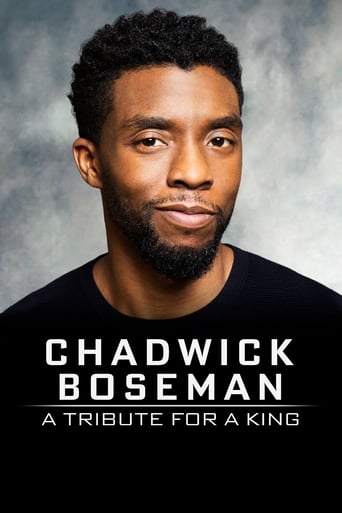
A tribute to Chadwick Boseman, celebrating his life and legacy.
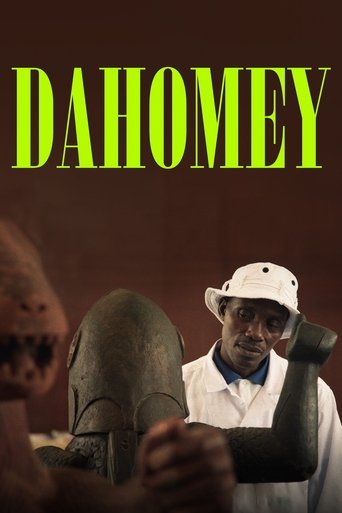
Thousands of royal artifacts of Dahomey, a West African kingdom, were taken by French colonists in the 19th century for collection and display in Paris. Centuries later, a fraction returned to their home in modern-day Benin. This dramatized documentary follows the journey of 26 of the treasures as told by cultural art historians, embattled university students, and one of the repatriated statues himself.

Over 35 years after Bob Lazar's revelations, this documentary exposes secrets of a facility the government still denies. Featuring Lazar's testimony, recreations, and new evidence, it reopens a case that continues to spark global curiosity

A documentary about the Bibliothèque Nationale in Paris. It presents the building, with its processes of cataloguing and preserving all sorts of printed material, as both a monument of cultural memory and as a monstrous, alien being.

A documentary about the life and films of director John Ford.

A documentary on the modeling industry's 'supply chain' between Siberia, Japan, and the U.S., told through the experiences of the scouts, agencies, and a 13-year-old model.

A detailing of the rise to prominence and global sporting superstardom of six supremely talented young Manchester United football players (David Beckham, Nicky Butt, Ryan Giggs, Paul Scholes, Phil and Gary Neville). The film covers the period 1992-1999, culminating in Manchester United's European Cup triumph.

Amber Heard and Nicole Kidman discuss their characters Mera and Atlanna.
Nine filmmakers each profile a young girl from a different part of the world to weave a global tapestry of youth in the 21st century.

Director Michael Apted revisits the same group of British-born adults after a 7 year wait. The subjects are interviewed as to the changes that have occurred in their lives during the last seven years.
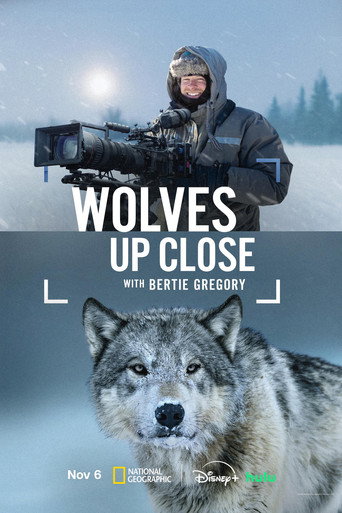
Reconnecting with a pack of wolves he has followed for seven years, Bertie sets out to capture one of the Arctic's most dangerous and rarely filmed hunts: wolves taking on a bull moose, prey roughly ten times their size. Led by Kona, a striking white breeding male, the pack faces a critical winter as dwindling food supplies, an encroaching rival wolf and an aging leader threaten its survival.

Through deeply personal interviews with her siblings and an examination of the photographs, letters, and belongings left behind, Mariska assembles a new portrait of her mother Jayne Mansfield, an extraordinary and complex woman.

A non-narrated documentary following the lovesome lives of four infants from birth to their first birthday. The babies featured are two from rural areas: Ponijao from Opuwo, Namibia, and Bayar from Bayanchandmani, Mongolia, as well as two from urban areas: Mari from Tokyo, Japan, and Hattie from San Francisco, USA.

From the heights of her modeling fame to her tragic death, this documentary reveals Anna Nicole Smith through the eyes of the people closest to her.

This revealing documentary honors the legendary Sidney Poitier—iconic actor, filmmaker, and civil rights activist. Featuring interviews with Denzel Washington, Spike Lee, Halle Berry, and more.
Similar titles
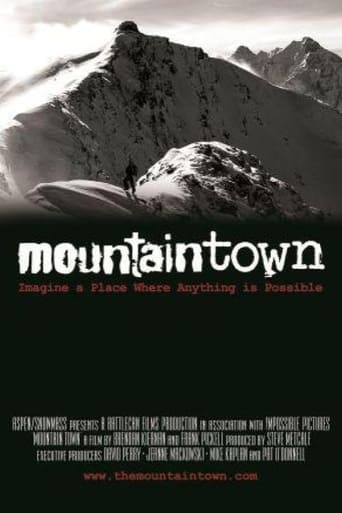
This documentary looks at the stories of a few people in Aspen Colorado and how they contribute to the community.
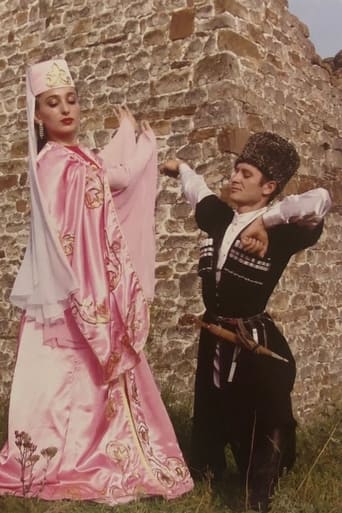
Film about the singing and dancing culture of the Ingush people
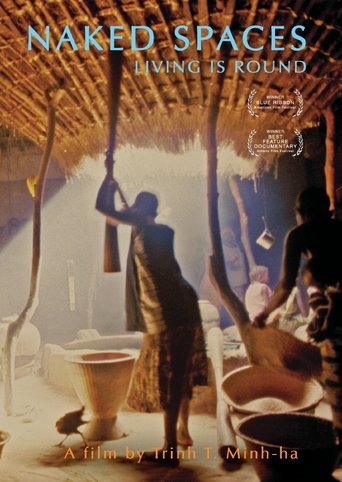
Shot with stunning elegance and clarity, NAKED SPACES explores the rhythm and ritual of life in the rural environments of six West African countries (Mauritania, Mali, Burkino Faso, Togo, Benin and Senegal). The nonlinear structure of NAKED SPACES challenges the traditions of ethnographic filmmaking, while sensuous sights and sounds lead the viewer on a poetic journey to the most inaccessible parts of the African continent: the private interaction of people in their living spaces.
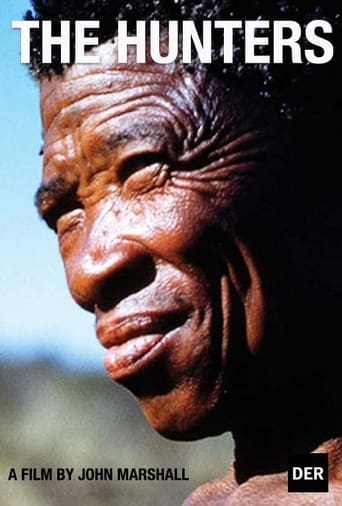
An ethnographic documentary following four Ju/’hoansi (!Kung) men during a multi-day giraffe hunt in the Kalahari Desert, filmed during the Smithsonian–Harvard Peabody expedition of 1952–53.
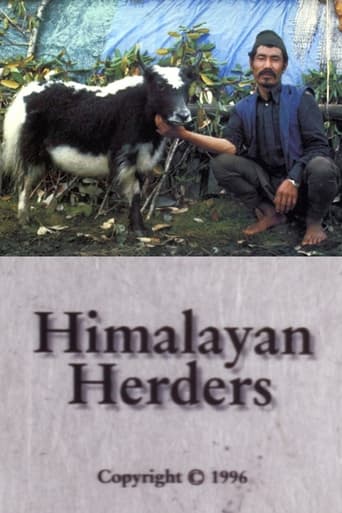
John Bishop and Naomi Bishop present a portrait a peculiar life style of the Himalayan indigenous Sherpa people in their documentary , the Himalayan Herders. The 76 minutes long film is about the diverse culture and life style of herders community near Mt. Everest region of Nepal.The film was made in 1997 as a part of Case Studies in Cultural Anthropology Series.

An experimental ethnographic documentary that criticizes the colonizer view of anthropology.
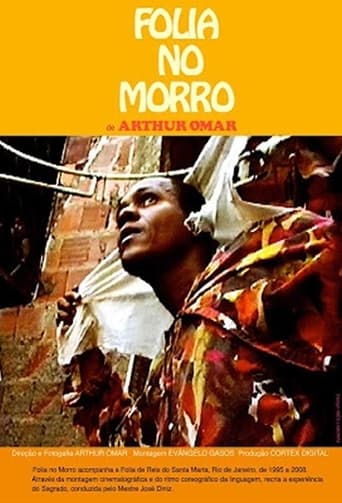
An ethnographic documentary following the Folia de Reis party that is celebrated every year at Morro de Santa Marta on Rio de Janeiro.
Early Mondo film featuring primitive rituals, animals being butchered, unusual birth defects, and a legit trepanation scene.
This provocative and profound film documents the Choqela ceremony, an agricultural ritual and song of the Aymara Indians of Peru. By offering several different translations of the proceedings, the film acknowledges the problems of interpretation as an inherent dilemma of anthropology.

The film tells two parallel stories. One, set in the present, tells of a pagent about the conquest of America, while the other, set in the 15th century, tells of a group of conquistadors coming ashore searching for gold. The film takes place in an unnamed country.
Ñaalec (Fabián Valdez) is a Moqoit college student disenchanted with formal ways of learning and embarrassed by his drunken classmates. He seeks to recover his people's culture by learning from elders who still remember the old ways. Ñaalec travels to the Nanaicalo Nqote ("eye of the dragon"), a sacred lake whose water gave people the power of the gods. This docudrama is part of a series of community-created films supported by CEFREC (led by Iván Sanjinés, son of legendary Bolivian filmmaker Jorge Sanjinés).
Short ethnographic documentray about Arba'een, a Shia Muslim religious observance
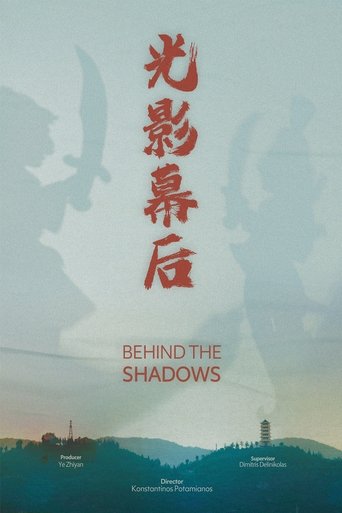
The Greek shadow puppetry began 130 years ago. A student of Greek shadow puppetry travels to China, where shadow puppetry began over 2000 years ago. There he follows Chinese shadow puppeteer master He Shihong in Wushan of China. Watching his performances and listening to him talk about his art and his career in it, many parallels are drawn and he expresses them by including his Greek shadow puppetry teacher in the film. This documentary is a cultural bridge between Greece and China through the art of shadow puppetry.
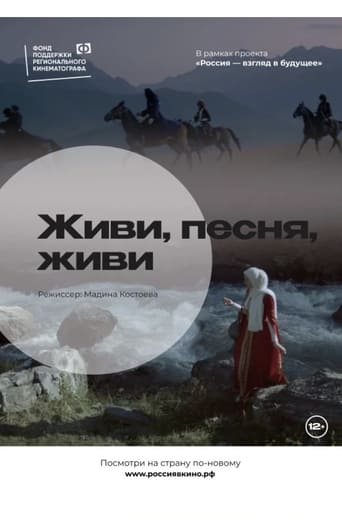
The film tells the story of ancient Ingush lullabies - Ingush women and men tell the lullabies of their families and the stories associated with them: love, friendship, blood feud.
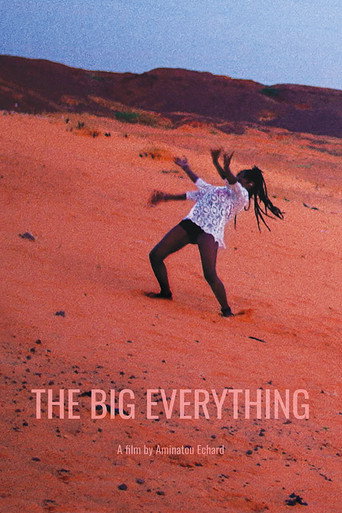
How’s the Big Everything? Garba asks Nicole. For them, the “Big Everything” encompasses family, politics, History, daily life, the stars, small things, and time passing like the wind. By delving into their memories, at the time of Niger’s independence, we come face to face with the complexity of the present.
Short ethnographic documentary showing some everyday life scenes based upon footage shot by director Luc de Heusch in Congo in 1954 reassembled by Damien Mottier (Université Paris Nanterre) and Grace Winter (CINEMATEK).
A revealing one-shot portrait of two Nepali newlyweds in a moment of rest and playful interaction, Stephanie Spray's Untitled challenges our perception of two themes at the very core of ethnographic filmmaking: human relationships and the ways in which they can be experienced by the viewer. Only fourteen minutes long, Untitled is uncut, rejecting the implications of edited sequences and also purposefully excluding subtitles over the couple's conversation. The style of the film confronts the history of ethnography as a controversial study of the "other" by refusing us any clear messages or meanings behind what is being presented, challenging the viewer to come up with their own answers to any questions that may arise.
Short ethnographic documentary showing a leopard dance based upon footage shot by director Luc de Heusch in Congo in 1954 reassembled by Damien Mottier (Université Paris Nanterre) and Grace Winter (CINEMATEK).

A meditative stroll through Sacramento landmarks, from the gentrified to the urban.
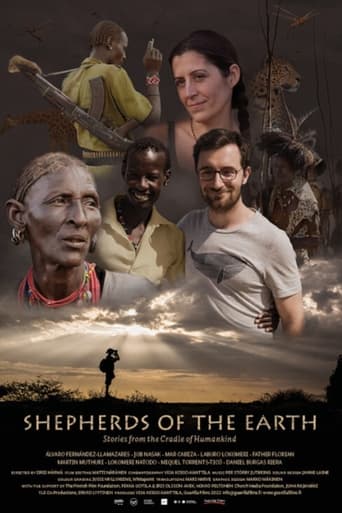
The region of Lake Turkana, located in Kenya and Ethiopia, is considered to be “the Cradle of Humankind”. Among other finds, primate fossils from millions of years ago have been discovered in the region. But what about the region’s modern inhabitants and their relationship to their environment? Iiris Härmä, whose previous work includes the award-winning Leaving Africa, had the chance of joining Helsinki University’s researchers, Álvaro Fernández-Llamazares and Mar Cabeza, on their pre-pandemic trip to study the Daasanach people’s relationship to their environment through traditional animal tales. The researchers hope that storytelling would help to bridge the gap between people’s everyday lives and conservation efforts.