
An Oppressed People Is Always Right
1976-05-31 · 44 min · ★ 7.0
In May 1974, the Israeli Air Force carried out an extermination operation against the Palestinian refugee camp Nabatiyeh. With this as a starting point, it is reviewed how the last 50 years of Zionist colonization of Palestine have partly led to the establishment of the state of Israel, partly to the expulsion of a people, the Palestinians, from their land. The film shows scenes of daily life in Palestinian refugee camps. We hear various of the inhabitants talk about their desire to return to their country, and we follow how the resistance movement works to free women from their traditional backward role. At the same time, the emergence of the armed resistance struggle is analysed, and the significance of the latest military technological developments for guerilla wars in the 3rd world is explained.
Trailers are previews, not full movies.
No authorized playback source configured. Use the legal watch options below.
Production details
- Directors
- Nils Vest
- Production companies
- Ebbe Preisler Film
- Countries
- Denmark
- Status
- Released
Top Cast
Title information and images are supplied by TMDb. Explore our discovery guide for advice on comparing metadata and legal viewing options.
Where to watch
Availability provided by JustWatch via TMDb. Offers can change. Provider links are listed on TMDb; full playback requires a separately authorized source.
Availability not listed for this country.
Seasons & episodes
Recommendations
Five broken cameras – and each one has a powerful tale to tell. Embedded in the bullet-ridden remains of digital technology is the story of Emad Burnat, a farmer from the Palestinian village of Bil’in, which famously chose nonviolent resistance when the Israeli army encroached upon its land to make room for Jewish colonists. Emad buys his first camera in 2005 to document the birth of his fourth son, Gibreel. Over the course of the film, he becomes the peaceful archivist of an escalating struggle as olive trees are bulldozed, lives are lost, and a wall is built to segregate burgeoning Israeli settlements.
Fourteen years after his first visit, Louis Theroux meets some of the growing community of religious-nationalist Israelis who have settled in the occupied West Bank.

In the Realms of the Unreal is a documentary about the reclusive Chicago-based artist Henry Darger. Henry Darger was so reclusive that when he died his neighbors were surprised to find a 15,145-page manuscript along with hundreds of paintings depicting The Story of the Vivian Girls, in What is Known as the Realms of the Unreal, of the Glodeco-Angelinnian War Storm, Cased by the Child Slave Rebellion.
Using the book 'Fragments', which collects Marilyn Monroe's poems, notes and letters, and with participation from the Arthur Miller and Truman Capote estates who have contributed more material, each of the actresses will embody the legend at various stages in her life.

A documentary on the expletive's origin, why it offends some people so deeply, and what can be gained from its use.

Director Michael Apted revisits the same group of British-born adults after a 7 year wait. The subjects are interviewed as to the changes that have occurred in their lives during the last seven years.
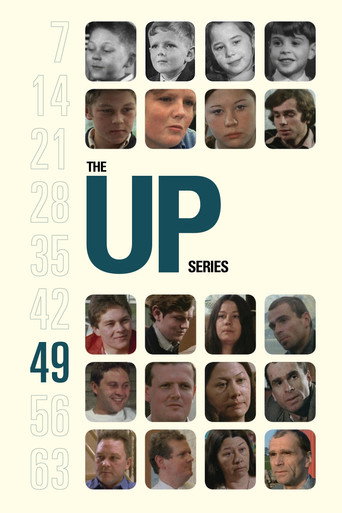
49 Up is the seventh film in a series of landmark documentaries that began 42 years ago when UK-based Granada's World in Action team, inspired by the Jesuit maxim "Give me the child until he is seven and I will give you the man," interviewed a diverse group of seven-year-old children from all over England, asking them about their lives and their dreams for the future. Michael Apted, a researcher for the original film, has returned to interview the "children" every seven years since, at ages 14, 21, 28, 35, 42 and now again at age 49.In this latest chapter, more life-changing decisions are revealed, more shocking announcements made and more of the original group take part than ever before, speaking out on a variety of subjects including love, marriage, career, class and prejudice.
After another 7 year wait, director Michael Apted revisits the same group of British-born children from Seven Up! and 7 Plus Seven. The subjects are interviewed as to the changes that have occurred in their lives during the last seven years.

This revealing documentary honors the legendary Sidney Poitier—iconic actor, filmmaker, and civil rights activist. Featuring interviews with Denzel Washington, Spike Lee, Halle Berry, and more.
Global superstar Jennifer Lopez reflects on her multifaceted career and the pressure of life in the spotlight in this intimate documentary.

An unprecedented and intimate look at the life, work and enduring legacy of British actress Audrey Hepburn (1929-1993).

When Allied forces liberated the Nazi concentration camps in 1944-45, their terrible discoveries were recorded by army and newsreel cameramen, revealing for the first time the full horror of what had happened. Making use of British, Soviet and American footage, the Ministry of Information’s Sidney Bernstein (later founder of Granada Television) aimed to create a documentary that would provide lasting, undeniable evidence of the Nazis’ unspeakable crimes. He commissioned a wealth of British talent, including editor Stewart McAllister, writer and future cabinet minister Richard Crossman – and, as treatment advisor, his friend Alfred Hitchcock. Yet, despite initial support from the British and US Governments, the film was shelved, and only now, 70 years on, has it been restored and completed by Imperial War Museums under its original title "German Concentration Camps Factual Survey".

An inside look at one of the most anticipated movie sequels ever with James Cameron and cast.
In the early-morning hours of July 23, 2007, in Cheshire, Conn., ex-convicts Steven Hayes and Joshua Komisarjevsky broke into the family home of William Petit, his wife, Jennifer, and their daughters, Michaela, 11, and Hayley, 17. Dr. Petit was beaten and tied to a pole in the basement. The three women were bound in their bedrooms while the men ransacked the house. The brutal ordeal continued throughout the morning, ending with rape, arson and a horrific triple homicide.
More than 65 million people around the world have been forced from their homes to escape famine, climate change and war, the greatest displacement since World War II. Filmmaker Ai Weiwei examines the staggering scale of the refugee crisis and its profoundly personal human impact. Over the course of one year in 23 countries, Weiwei follows a chain of urgent human stories that stretch across the globe, including Afghanistan, France, Greece, Germany and Iraq.

Musician and performance artist Laurie Anderson reflects on the deaths of her husband Lou Reed, her mother and her beloved dog.
Filmmaker Lawrence Shapiro discusses voice-over acting with the talented people behind the characters.

A compilation of over 30 years of private home movie footage shot by Lithuanian-American avant-garde director Jonas Mekas, assembled by Mekas "purely by chance", without concern for chronological order.

In an intimate and joyful story of love in the face of loss, celebrated poets Andrea Gibson and Megan Falley find strength—and unexpected hilarity—in what might be their final year together.

As a visually radical memoir, CAMERAPERSON draws on the remarkable footage that filmmaker Kirsten Johnson has shot and reframes it in ways that illuminate moments and situations that have personally affected her. What emerges is an elegant meditation on the relationship between truth and the camera frame, as Johnson transforms scenes that have been presented on Festival screens as one kind of truth into another kind of story—one about personal journey, craft, and direct human connection.
Similar titles
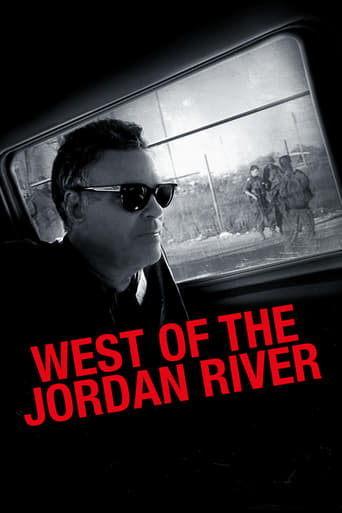
Amos Gitai returns to the occupied territories for the first time since his 1982 documentary FIELD DIARY. WEST OF THE JORDAN RIVER describes the efforts of citizens, Israelis and Palestinians, who are trying to overcome the consequences of occupation. Gitai's film shows the human ties woven by the military, human rights activists, journalists, mourning mothers and even Jewish settlers. Faced with the failure of politics to solve the occupation issue, these men and women rise and act in the name of their civic consciousness. This human energy is a proposal for long overdue change.
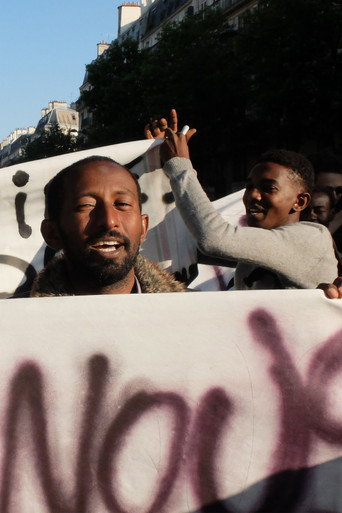
La Chapelle neighbourhood, Paris. Hundreds of exiled people from East Africa survive on the streets, chased violently by the police, yet seeking to defend their rights as asylum seekers. Some months later, having finally obtained their rightful housing, two Sudanese young men return to the sites where they first landed and talk about their arrival in Paris during this agitation.
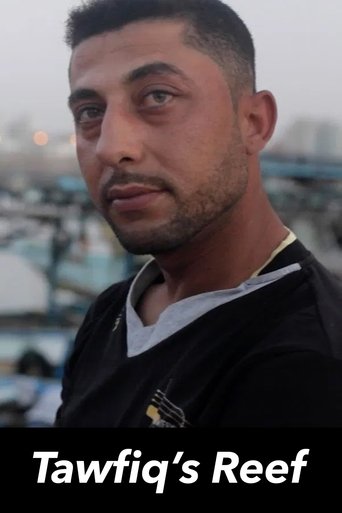
Tawfiq’s Reef chronicles the plight of Palestinian fishermen in Gaza, heavily restricted in the area in which they can fish, often indebted, shot at, harassed or imprisoned by the Israeli Navy on the narrow sliver of fishing waters available to them off the Gaza coastline, making this one of the most dangerous professions in the world.
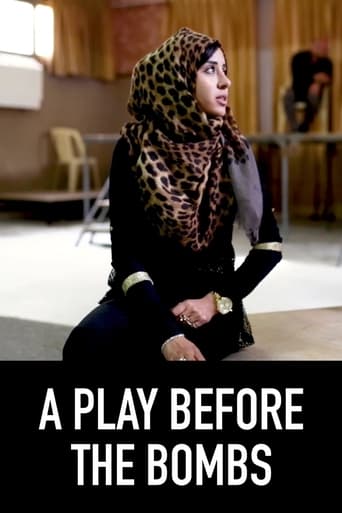
Set in the al-Mishal Cultural Center in Gaza before it was destroyed by an Israeli air strike on August 9, 2018, A Play Before The Bombs is a story that unfolds over a 4 year period. The film follows Abeer Ahmed, a young woman growing up in the Jabaliya Refugee Camp, the largest refugee camp in Gaza, as she and the other members of her cast and crew prepare to put on a play that focuses on a Palestinian woman’s right to receive inheritance. While the content of the play is tailored towards fostering a cultural discussion among Palestinians, neither the play nor the playhouse can escape the omnipresence of the Israeli siege on Gaza. A siege that shatters literal buildings as well as the hopes and dreams of the performers and community members who take refuge within the walls of al-Mishal in search of artistic fulfillment.

A music festival symbolizing peace, freedom, and eternal love transforms into a horrifying nightmare of terror. Survivors, marked by death and trauma, reconstruct the event through their perspectives, embodying the lost innocence and beauty of youth, forever scarred by the tragic events that unfolded. This is a horrifying glimpse through the eyes of the individuals who endured the brutal October 7th onslaught at the Nova Music Festival.
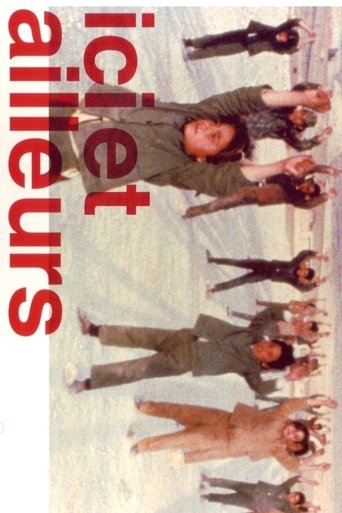
Here and Elsewhere takes its name from the contrasting footage it shows of the fedayeen and of a French family watching television at home. Originally shot by the Dziga Vertov Group as a film on Palestinian freedom fighters, Godard later reworked the material alongside Anne-Marie Miéville.

Relentless: The Struggle for Peace in the Middle East was produced by the pro-Israel media watchdog group HonestReporting [sic]. The concentrates on the causes of the Second Intifada through an examination of compliance the Oslo Accords, by Israel and the Palestinian Authority. It pays particular attention to the failure of the Palestinian Authority to "educate for peace". The documentary shows interviews with Itamar Marcus, director of Palestinian Media Watch, S. El-Herfi, Raanan Gissin, Caroline Glick, John Loftus, Sherri Mandel, Yariv Oppenheim, Daniel Pipes, Tashbih Sayyed and Natan Sharansky.

Historian Tom Holland traces the origins of Isis’ barbaric and sadistic violence which it claims is justified by the tenets and scriptures of Islam.

BLESSED BLESSED OBLIVION weaves together a portrait of masculine performativity in East Jerusalem, as manifested in gyms, body shops and hair dressing parlors.

On 23 March 2025 in Tel al-Sultan, Gaza, Israeli forces massacred fifteen Palestinian aid workers travelling in clearly marked humanitarian vehicles, later burying their bodies and vehicles in a shallow mass grave. Earshot and Forensic Architecture worked with the Palestine Red Crescent Society and survivors of the massacre to reconstruct the incident with unprecedented precision. The Last Responders is an investigative documentary about this massacre. Anchored in the situated testimonies of two survivors, the film draws on firsthand video and voice recordings captured during the night of the attack by the Palestine Red Crescent Society. Through these materials, the film probes acts of execution and concealment, while reconstructing a fuller account of what unfolded in Tel al-Sultan in the hours and days that followed.
A cell phone was the only thing that kept Yonas, an Eritrean refugee, connected to Jérôme, the French journalist who wanted to tell his story. They met in Libya in 2019, in the abyss of a detention center. Yonas managed to escape and attempted several times to cross the Mediterranean. Like many others who jump from one hell to another, Yonas's only option was to flee forward, and what lay before him was a small boat. Yonas's News chronicles the epic journey in which his life was at stake, summarized in the WhatsApp and voice messages, photos, and videos he was able to exchange with Jérôme. Jérôme Tubiana, journalist, researcher, and member of Doctors Without Borders, has visited Libya five times between 2018 and 2020.

Guy Hircefeld, a veteran who served in the Israeli military at the start of its occupation of Palestine in the 1980s, now fights against the Israeli occupation. His only weapon is a camera.
Initially embarking on an unplanned personal filmmaking project, Ilias Boukhemoucha finds himself drawn to the overlooked corners and marginalized communities within Canadian cities.
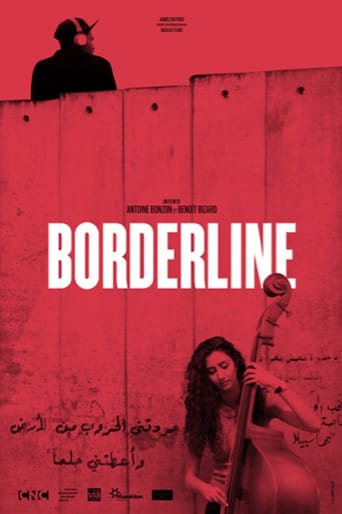

On May 8, 1989, Sports Illustrated ran an article about Ultimate frisbee… about a team with no name hailing from New York City that was about to change the sport forever. From its 1968 New Jersey birth to its unanimous 2015 recognition by the International Olympic Committee, FLATBALL circles the globe to showcase four decades of world-class Ultimate and goes even further: to a set of fields in the Middle East to understand and demystify the unique spirit of the game.
Assassinated Lebanese intellectual Mahdi Amel — often dubbed “the Arab Gramsci” — famously said: “He who resists is never defeated.” What use is his thought to us today, and what is our responsibility as image makers to Gaza?
Poetry is everywhere, even in the refugee camps where absolute misery reigns. In front of old plastic advertising posters on which are drawn in giant format the big icons of luxury and consumerism that make up their shelters, refugee children stand like kings. Symbols of life at the heart of war, fragility, and death, these children are shown by Jocelyne Saab as precious notes of hope in the heart of a dehumanized world. One Dollar a Day was filmed in the Syrian refugee camps of the Bekaa plain, Lebanon in 2015, with text by Etel Adnan.
AMIN portrays Qashqai musician Amin Aghaie, a young modern nomad and his family who despite facing steep financial, cultural and political obstacles are dedicated to their art and culture. Amin travels to remote towns and villages to record the music of the surviving masters whose numbers decline each year. His nomadic family are selling their meager belongings to help support their son's education in performance and ethnomusicology at Tchaikovsky's Conservatory in Kyiv, Ukraine, but it is not enough. Amin, desperate to finish his academic education, sells his violins one at a time just to pay for his tuition.
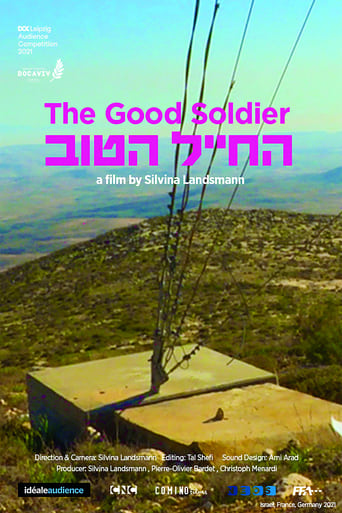
A look inside the work of Breaking the Silence, an organization of former IDF combat soldiers who collect and publish testimonies of soldiers who served in the occupied territories. For six months, director Silvina Landsmann, camera in hand, accompanied the staff of the organization. The many hours of footage have been refined into a film that dives into the heart of Breaking the Silence’s work: guided tours of Hebron and the surrounding area, public lectures and house meetings, internal staff meetings and media strategy. All the while the organization is forced to justify its very existence, both internally and to the broader public, and to justify its place in the political debate. The Good Soldier raises questions about Israel’s dynamic mainstream and the challenges of confronting it.
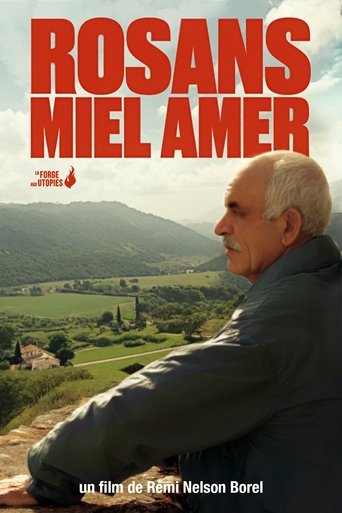
In 1963, Rosans, a village in the Hautes-Alpes region depopulated by the rural exodus, welcomed Harkis (military soldiers) forced to leave Algeria for supporting France during the Algerian War. Around thirty families settled in a camp below Rosans. Nearly half a century after their arrival, first- and second-generation Harkis and native Rosanais recount their experiences of this culture clash, often painful, sometimes happy. Language barriers, religious differences, living in barracks for 14 years, and unemployment were all obstacles to overcome in order to be accepted and then achieve mutual enrichment. Enriched with archive footage to explain the historical context of the time, the film seeks above all to express feelings and unspoken words.