
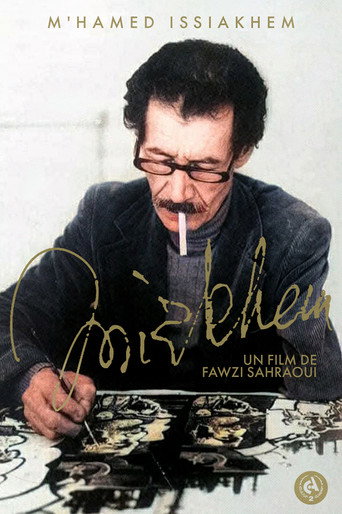
M'hamed Issiakhem
1985-12-01 · 43 min · ★ 10.0
M'hamed Issiakhem (Kabyle: Mḥemmed Isyaxem; Arabic: محمد إسياخم)—born on June 17, 1928, in Taboudoucht (Aghribs), then part of the Tizi Ouzou Department in Algeria, and who died on December 1, 1985, in Algiers—was an Algerian painter and a leading figure of modern painting in Algeria. In 1943, he handled a grenade stolen from a US military camp, and it exploded; two of his sisters and a nephew were killed. Hospitalized for two years, he underwent the amputation of his left arm. From 1947 to 1951, he studied in Algiers, first at the Société des Beaux-Arts and later at the École des Beaux-Arts. "A country without artists is a dead country... I hope we are alive..." These words were spoken in a film by Fawzi Sahraoui—produced by the RTA in 1985 and shot just months before the painter M'hamed Issiakhem passed away. It is a fascinating docudrama in which Issiakhem opens up with subtlety, passion, and generosity.
Trailers are previews, not full movies.
No authorized playback source configured. Use the legal watch options below.
Production details
- Directors
- Fawzi Sahraoui
- Production companies
- Radiodiffusion Télévision Algérienne (RTA)
- Countries
- Algeria
- Status
- Released
Top Cast
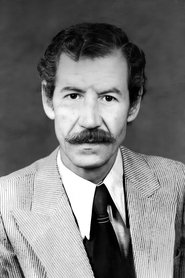 M'hamed IssiakhemSelf
Title information and images are supplied by TMDb. Explore our discovery guide for advice on comparing metadata and legal viewing options.
Where to watch
Availability provided by JustWatch via TMDb. Offers can change. Provider links are listed on TMDb; full playback requires a separately authorized source.
Availability not listed for this country.
Seasons & episodes
Recommendations
As his life comes to its end, famous Hollywood director Orson Welles puts it all on the line at the chance for renewed success with the film The Other Side of the Wind.
Marlon Riggs, with assistance from other gay Black men, especially poet Essex Hemphill, celebrates Black men loving Black men as a revolutionary act. The film intercuts footage of Hemphill reciting his poetry, Riggs telling the story of his growing up, scenes of men in social intercourse and dance, and various comic riffs, including a visit to the "Institute of Snap!thology," where men take lessons in how to snap their fingers: the sling snap, the point snap, the diva snap.

Just two years away from turning 30, participants in Michael Apted's documentary series are facing serious questions of identity and purpose, wondering whether they've found their place in the world.

A documentary about the life and films of director John Ford.

In an intimate and joyful story of love in the face of loss, celebrated poets Andrea Gibson and Megan Falley find strength—and unexpected hilarity—in what might be their final year together.

Alexander McQueen's rags-to-riches story is a modern-day fairy tale, laced with the gothic. Mirroring the savage beauty, boldness and vivacity of his design, this documentary is an intimate revelation of McQueen's own world, both tortured and inspired, which celebrates a radical and mesmerizing genius of profound influence.

Director Michael Apted revisits the same group of British-born adults after a 7 year wait. The subjects are interviewed as to the changes that have occurred in their lives during the last seven years.

Musician and performance artist Laurie Anderson reflects on the deaths of her husband Lou Reed, her mother and her beloved dog.

The story of artist Lil Peep from his birth in Long Island and meteoric rise as a genre blending pop star & style icon, to his death due to an accidental opioid overdose in Arizona at just 21 years of age.

A love letter from a young mother to her daughter, the film tells the story of Waad al-Kateab’s life through five years of the uprising in Aleppo, Syria as she falls in love, gets married and gives birth to Sama, all while cataclysmic conflict rises around her. Her camera captures incredible stories of loss, laughter and survival as Waad wrestles with an impossible choice– whether or not to flee the city to protect her daughter’s life, when leaving means abandoning the struggle for freedom for which she has already sacrificed so much.
Artists in LA discover the work of forgotten Polish sculptor Stanislav Szukalski, a mad genius whose true story unfolds chapter by astounding chapter.
Documentary about legendary Paramount producer Robert Evans, based on his famous 1994 autobiography.

A compilation of over 30 years of private home movie footage shot by Lithuanian-American avant-garde director Jonas Mekas, assembled by Mekas "purely by chance", without concern for chronological order.

In the Realms of the Unreal is a documentary about the reclusive Chicago-based artist Henry Darger. Henry Darger was so reclusive that when he died his neighbors were surprised to find a 15,145-page manuscript along with hundreds of paintings depicting The Story of the Vivian Girls, in What is Known as the Realms of the Unreal, of the Glodeco-Angelinnian War Storm, Cased by the Child Slave Rebellion.
Filmmaker Christopher Quinn observes the ordeal of three Sudanese refugees -- Jon Bul Dau, Daniel Abul Pach and Panther Bior -- as they try to come to terms with the horrors they experienced in their homeland, while adjusting to their new lives in the United States.
Before computer graphics, special effects wizardry, and out-of-this world technology, the magic of animation flowed from the pencils of two of the greatest animators The Walt Disney Company ever produced -- Frank Thomas and Ollie Johnston. Frank and Ollie, the talent behind BAMBI, PINOCCHIO, LADY AND THE TRAMP, THE JUNGLE BOOK, and others, set the standard for such modern-day hits as THE LION KING. It was their creative genius that helped make Disney synonymous with brilliant animation, magnificent music, and emotional storytelling. Take a journey with these extraordinary artists as they share secrets, insights, and the inspiration behind some of the greatest animated movies the world has ever known!

As a visually radical memoir, CAMERAPERSON draws on the remarkable footage that filmmaker Kirsten Johnson has shot and reframes it in ways that illuminate moments and situations that have personally affected her. What emerges is an elegant meditation on the relationship between truth and the camera frame, as Johnson transforms scenes that have been presented on Festival screens as one kind of truth into another kind of story—one about personal journey, craft, and direct human connection.
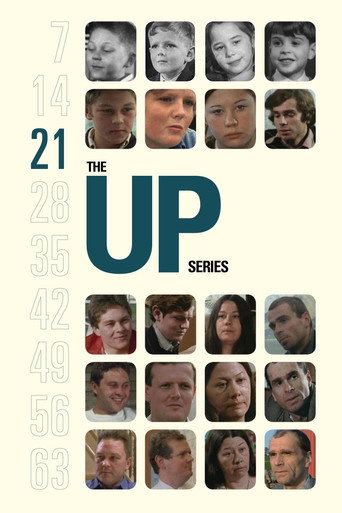
After another 7 year wait, director Michael Apted revisits the same group of British-born children from Seven Up! and 7 Plus Seven. The subjects are interviewed as to the changes that have occurred in their lives during the last seven years.

Director Michael Apted revisits the same group of British-born adults after a 7 year wait. The subjects are interviewed as to the changes that have occurred in their lives during the last seven years.
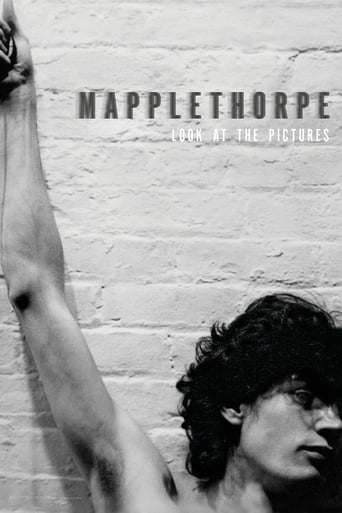
Nude men in rubber suits, close-ups of erections, objects shoved in the most intimate of places—these are photographs taken by Robert Mapplethorpe, known by many as the most controversial photographer of the twentieth century. Openly gay, Mapplethorpe took images of male sex, nudity, and fetish to extremes that resulted in his work still being labelled by some as pornography masquerading as art. But less talked about are the more serene, yet striking portraits of flowers, sculptures, and perfectly framed human forms that are equally pioneering and powerful.
Similar titles
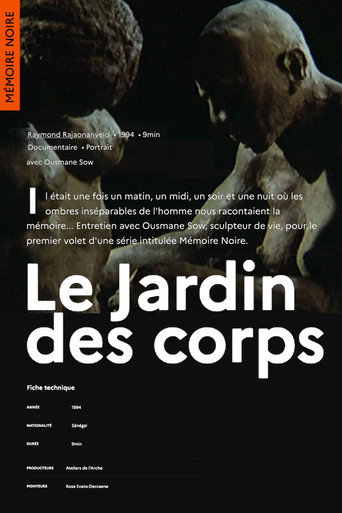
Once upon a time there was a morning, noon, evening and night when the inseparable shadows of man told us about memory... Interview with Ousmane Sow, life sculptor, for the first part of a series entitled Black Memory.

12 years later, a failed school short film is resignified to share the multiple experiences that exist in the creation of a film.
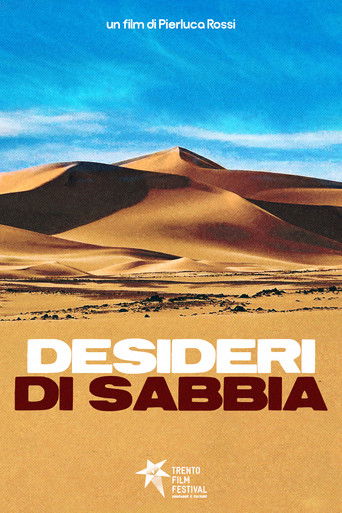
This documentary film by Pierluca Rossi recounts a journey to the southern Algerian Sahara, near Amguid, a small Tuareg village renowned for its unusual nearby crater. In the Tefedest massif, with its mythical summit, Garet el Djenoun, on the slopes of a vast sand dune rising to over 400 meters, one can practice an unusual sport: sandboarding, a new technique to try. Surprising speeds can be reached, and participants can familiarize themselves with the equipment of this new sport, perhaps paving the way for new practices.
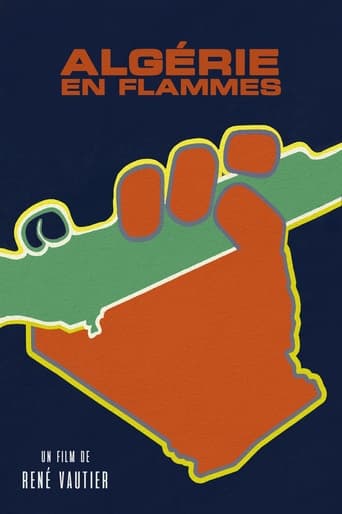
These are the first images shot in the ALN maquis, camera in hand, at the end of 1956 and in 1957. These war images taken in the Aurès-Nementchas are intended to be the basis of a dialogue between French and Algerians for peace in Algeria, by demonstrating the existence of an armed organization close to the people. Three versions of Algeria in Flames are produced: French, German and Arabic. From the end of the editing, the film circulates without any cuts throughout the world, except in France where the first screening takes place in the occupied Sorbonne in 1968. Certain images of the film have circulated and are found in films, in particular Algerian films. Because of the excitement caused by this film, he was forced to go into hiding for 25 months. After the declaration of independence, he founded the first Algerian Audiovisual Center.
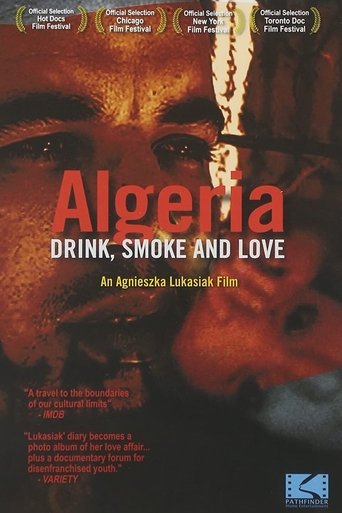
Agnieszka Lukasiak travels to Algeria to capture it's conflict on camera. When she arrives, she's immediately sidetracked by romance with her host, Habib. She turns the camera on herself as she falls in love with him. the atmosphere quickly diminishes when Habib's family steps in and kicks her out. Not to be deterred, on her second visite to Algeria to seek Habib's love, she begins her real journey to expose the underside of the country.
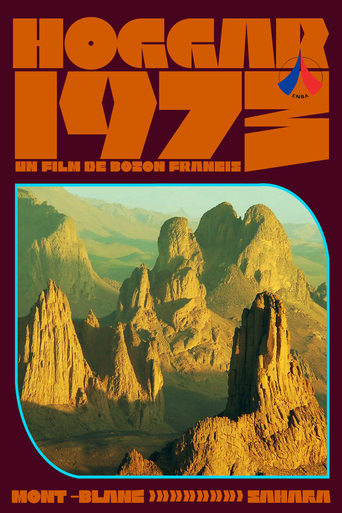
In 1973, 6 guides from the National Ski and Mountaineering School (ENSA), including Charles Daubas and Walter Cecchinel, left by truck from Chamonix to Tamanrasset in the desert in Algeria with the aim of climbing some peaks of the Atakor massif including Adaouda and Tizouyag where they do the first of "La Voie de l'ENSA".
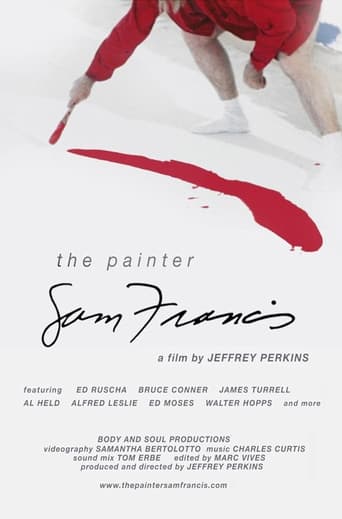
Forty years in the making, 'The Painter Sam Francis' is artist Jeffrey Perkins' intimate portrait of abstract expressionist painter Sam Francis. The film retraces Francis' life and career from his childhood in California to his artistic maturation in post-war Paris, his time spent in Japan, and his prominence in the United States. It reveals a man in constant struggle with physical maladies and his own demons, but for whom creativity was a powerful life-sustaining force.
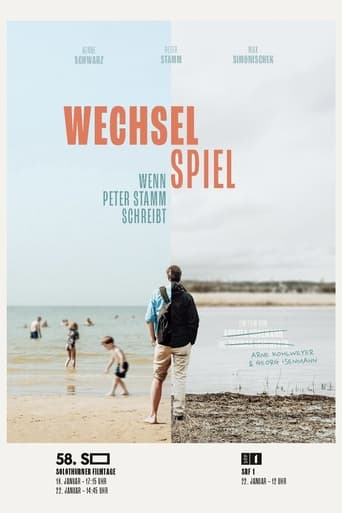
Two documentary filmmakers become the plaything of writer Peter Stamm and subject of the novel whose creation they actually wanted to document.
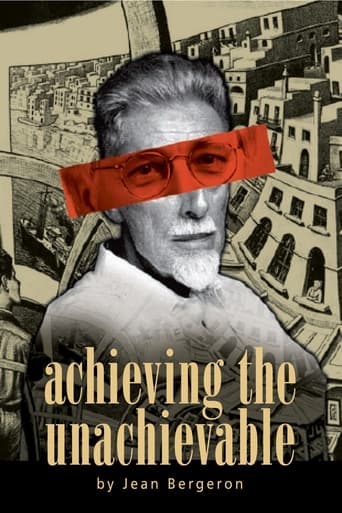
M.C. Escher is among the most intriguing of artists. In 1956 he challenged the laws of perspective with his graphic Print Gallery and his uncompleted master-piece quickly became the most puzzling enigma of modern art. Fifty years later, can mathematician Hendrik Lenstra complete it? Should he?
It is summer, a day in the life under the blistering heat. This is an archival journey through different pairs of eyes and different layers of skin - all in the hopes of finding someplace to sit and do nothing, while the world around you always wants you to do something.
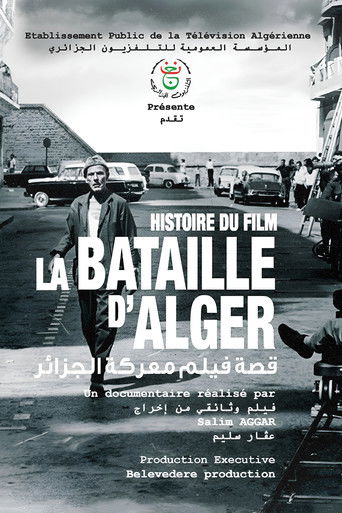
More than fifty years after the release of the film “The Battle of Algiers” in theaters in June 1966, director Salim Aggar found, after a search which lasted more than a year and a half, the actors, extras and technicians who worked on the film directed by Gillo Pentecorvo and produced by Yacef Saadi. In this documentary full of anecdotes and stories about the filming of the film, the director found the actress who played the role of Hassiba Ben Bouali, the young 17-year-old actress who played Bouhamidi's bride but especially certain figures important parts of the film who were barely 10 years old at the time of filming and who no one will recognize today. Beyond the important historical aspect of the film, the documentary focused mainly on the social, cinematographic and cultural aspect of the film and its impact on a generation which had just regained independence.
The film approaches the work of the Greek artist Nikos Koniaris. The particular way in which the painter depicts human suffering is presented through a film - a hybrid of real recording and directed material. The grief, the sick body, is reflected in self portraits, portraits of dying strangers and paintings of dead models. The paintings, apart from his work, also express a different version of himself. All together contribute to the depiction of man as a "garment of pain".
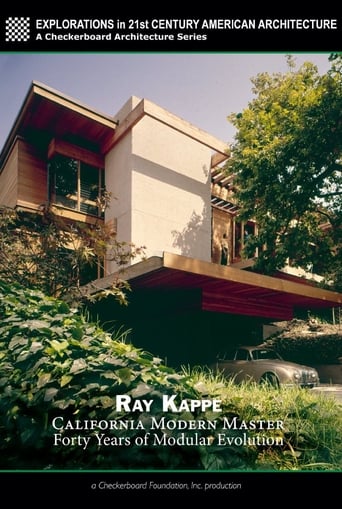
Explorations in 21st Century American Architecture Series: Ray Kappe has long been a cult figure in the architectural scene in and around Los Angeles. In 1972, he founded the influential, avant garde Southern California Institute of Architecture (SCI-ARC), where many of the younger-generation architects have studied or taught.
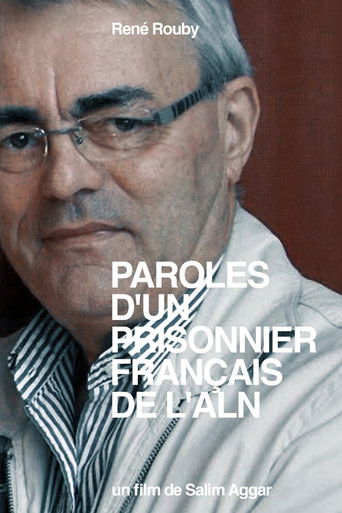
The image of French prisoners was very often evoked in Algerian cinema and literature, but until today, no Algerian or even European report or documentary had given voice to one of these French prisoners of the war of Algeria. In the interest of truth and writing history, we set out in search of one of these French witnesses. This witness is René Rouby, prisoner of Amirouche's group for more than 114 days in 1958 in the Akfadou region in Kabylia. This is the first testimony from a French prisoner of the ALN (the National Liberation Army).
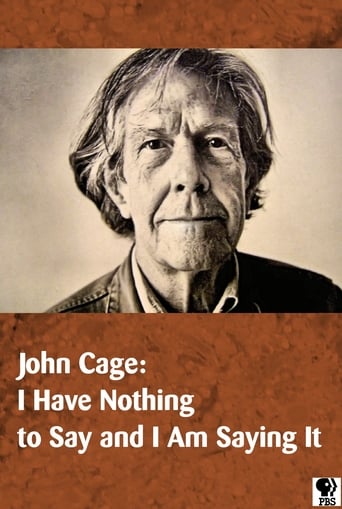
This 56-minute documentary on America's most controversial and unique composer manages to cover a great many aspects of Cage's work and thought. His love for mushrooms, his Zen beliefs and use of the I Ching, and basic bio details are all explained intelligently and dynamically. Black Mountain, Buckminster Fuller, Rauschenberg, Duchamp are mentioned. Yoko Ono, John Rockwell, Laurie Anderson, Richard Kostelanetz make appearances. Fascinating performance sequences include Margaret Leng-Tan performing on prepared piano, Merce Cunningham and company, and performances of Credo In Us, Water Music, and Third Construction. Demystifies the man who made music from silence, from all sounds, from life.
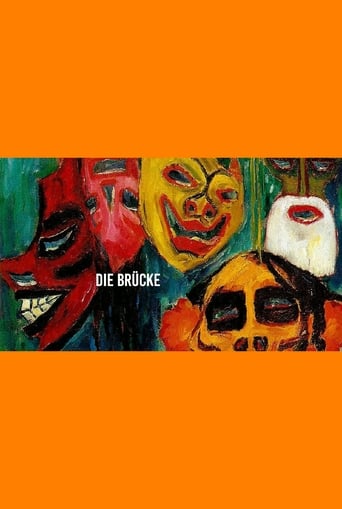
This movement marks the beginning of modern art in Germany. It is the German equivalent of French Fauvism, from which it draws its main inspiration, but it carries an Expressionist and social emphasis that is characteristic of Nordic 'angst.' The artists of Die Brucke were restless creatures, over-sensitive, haunted by religious, sexual, political or moral obsessions. Dramatic landscapes and nudes, mystical and visionary compositions, scenes of the countryside, the streets, the circus, the cafe-dansants and the demi-monde were their principal subjects. Their pure colours blaze in acid stridency, encompassed by rough, dry contours which show the influence of African art and primitive woodcuts. The work of the following is shown: Kirchner, Fritz Bleyl, Erich Heckel, Schmidt-Rottluff, Otto Muller, Emil Nolde and Max Pechstein.

Composed of three parts, this montage film addresses all aspects relating to the role of women in Algerian society: their ambitions, the role of the State and the help of organizations that were created during the struggle for female emancipation. .

February 22, 2019 marks the start of a historic movement in Algeria, initially against the candidacy of President Bouteflika for a fifth term, then for the departure of all former dignitaries of the regime and the establishment of a Second Republic. Algerian-Canadian filmmaker Sara Nacer returns to Algeria to capture this “Hirak” (movement in Arabic) through her camera. Through her journey, she invites us to discover the young generation who are leading the "Smile Revolution" and building Algeria 2.0, with a strong political, cultural and social awareness.
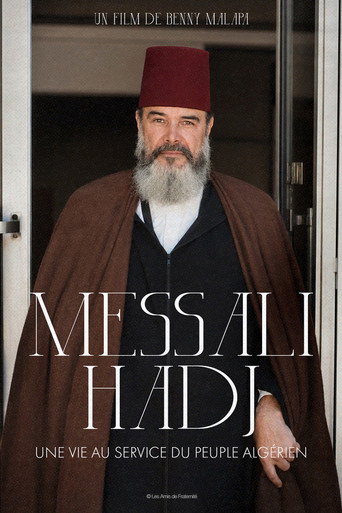
The life and political activism of Messali Hadj (1898-1974), an Algerian internationalist politician who played a pioneering role in the process leading to Algerian independence, which he demanded as early as 1927. He was initially secretary of the North African Star (ENA), then in 1937 he founded the Algerian People's Party (PPA), in 1946 he founded the Movement for the Triumph of Democratic Liberties (MTLD), and finally in 1954, the Algerian National Movement (MNA). In 1937, the leadership of the North African Star (ENA) created its flag, green with a white star and crescent. Messali Hadj's wife, Emilie Busquant-Messali, simply sewed this ENA flag by machine; it would later become the flag of the PPA. In 1943, Messali Hadj, in conjunction with the party leadership, created the ENA-PPA flag, green and white with a red star and crescent, which would later become the current flag of the People's Democratic Republic of Algeria.