
Ali Salem, architect of resistance
2008-01-01 · Runtime unavailable · Not rated
Ali Salem Hamudi Mohamed - Yahdih, was born in 1955 in El Aaiún (Western Sahara). He completed his secondary schooling in the "Spanish" Sahara. A scholarship allowed him to enrol at the Universidad de la Peninsula in 1975, but Morocco's invasion of the Sahara led him to return to the city of his birth and go into exile with his people, participating in the resistance and helping to organise the Tindouf Refugee Camps (Algeria). In 1980, the Polisario Front and the Government of Cuba offered him the opportunity to study Architecture at the University of Havana. On his return to the Camps in 1985 he worked for the SADR's Department of Construction. He designed more than twenty public buildings, including town halls, schools and nursery schools, and also collaborated with international aid organisations to build hospitals and training colleges. All of these buildings were built collectively by the Saharan people. ;In 1999 he emigrated to Spain. His family joined him five years later.
Trailers are previews, not full movies.
No authorized playback source configured. Use the legal watch options below.
Production details
- Directors
- José Luis Tirado
- Production companies
- Asociación de Amigos del Pueblo Saharaui de Sevilla, ZAP Producciones
- Countries
- Western Sahara
- Status
- Released
Top Cast
Cast unavailable.
Title information and images are supplied by TMDb. Explore our discovery guide for advice on comparing metadata and legal viewing options.
Where to watch
Availability provided by JustWatch via TMDb. Offers can change. Provider links are listed on TMDb; full playback requires a separately authorized source.
Availability not listed for this country.
Seasons & episodes
Recommendations
More than 65 million people around the world have been forced from their homes to escape famine, climate change and war, the greatest displacement since World War II. Filmmaker Ai Weiwei examines the staggering scale of the refugee crisis and its profoundly personal human impact. Over the course of one year in 23 countries, Weiwei follows a chain of urgent human stories that stretch across the globe, including Afghanistan, France, Greece, Germany and Iraq.

Explore the evolution of Buzz Lightyear from toy to human in the making of Pixar’s Lightyear. Dive into the origin and cultural impact of everyone’s favorite Space Ranger, the art of designing a new “human Buzz,” and the challenges faced by the Lightyear crew along the way.
Filmmaker Christopher Quinn observes the ordeal of three Sudanese refugees -- Jon Bul Dau, Daniel Abul Pach and Panther Bior -- as they try to come to terms with the horrors they experienced in their homeland, while adjusting to their new lives in the United States.

Ranjit, a farmer in India, takes on the fight of his life when he demands justice for his 13-year-old daughter, the victim of a brutal gang rape. His decision to support his daughter is virtually unheard of, and his journey unprecedented.
A road trip across five countries to explore the social and political movements as well as the mainstream media's misperception of South America while interviewing seven of its elected presidents.

A detailing of the rise to prominence and global sporting superstardom of six supremely talented young Manchester United football players (David Beckham, Nicky Butt, Ryan Giggs, Paul Scholes, Phil and Gary Neville). The film covers the period 1992-1999, culminating in Manchester United's European Cup triumph.
A behind the scenes look into George Romero's groundbreaking horror classic Night of the Living Dead.

Just two years away from turning 30, participants in Michael Apted's documentary series are facing serious questions of identity and purpose, wondering whether they've found their place in the world.

Global superstar Jennifer Lopez reflects on her multifaceted career and the pressure of life in the spotlight in this intimate documentary.
Alex Gibney explores the charged issue of pedophilia in the Catholic Church, following a trail from the first known protest against clerical sexual abuse in the United States and all way to the Vatican.
Director John Dullaghan’s biographical documentary about infamous poet Charles Bukowski, Bukowski: Born Into This, is as much a touching portrait of the author as it is an exposé of his sordid lifestyle. Interspersed between ample vintage footage of Bukowski’s poetry readings are interviews with the poet’s fans including such legendary figures such as Lawrence Ferlinghetti, Joyce Fante (wife of John), Bono, and Harry Dean Stanton. Filmed in grainy black and white by Bukowski’s friend, Taylor Hackford, due to lack of funding, the old films edited into this movie paint Bukowski’s life of boozing and brawling romantically, securing Bukowski’s legendary status.

A documentary chronicling Queen and Lambert's incredible journey since they first shared the stage together on "American Idol" in 2009.
49 Up is the seventh film in a series of landmark documentaries that began 42 years ago when UK-based Granada's World in Action team, inspired by the Jesuit maxim "Give me the child until he is seven and I will give you the man," interviewed a diverse group of seven-year-old children from all over England, asking them about their lives and their dreams for the future. Michael Apted, a researcher for the original film, has returned to interview the "children" every seven years since, at ages 14, 21, 28, 35, 42 and now again at age 49.In this latest chapter, more life-changing decisions are revealed, more shocking announcements made and more of the original group take part than ever before, speaking out on a variety of subjects including love, marriage, career, class and prejudice.
Guzmán’s final installment shifts from covering the actions of Allende’s opponents to those who battled to revive & promote their toppled leader’s vision for a new Chile.

In an intimate and joyful story of love in the face of loss, celebrated poets Andrea Gibson and Megan Falley find strength—and unexpected hilarity—in what might be their final year together.

Documentary filmmaker Amy Berg investigates the life of 30-year pedophile Father Oliver O'Grady and exposes the corruption inside the Catholic Church that allowed him to abuse countless children. Victims' stories and a disturbing interview with O'Grady offer a view into the troubled mind of the spiritual leader who moved from parish to parish gaining trust ... all the while betraying so many.

Morgan Spurlock tours the Middle East to discuss the war on terror with Arabic people.

Using the book 'Fragments', which collects Marilyn Monroe's poems, notes and letters, and with participation from the Arthur Miller and Truman Capote estates who have contributed more material, each of the actresses will embody the legend at various stages in her life.

A string of threatening emails escalates into a revenge plot involving a newly married US marshal and his ex-girlfriend.

A night of drunken chaos rocks a quiet Dutch town in this shocking documentary about a teen's birthday invite that accidentally went viral on Facebook.
Similar titles

Syngman Rhee, the founding president of the Republic of Korea spent a total of thirty years in Hawaii. The first 25 years occurred before he was elected the founding president and five years were after he resigned from the presidency. What is the significance of 30 years in one’s life span?
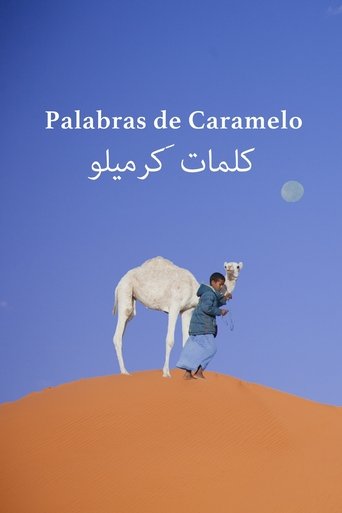
In a refugee camp in the Sahara desert lives a deaf boy who wants to learn to write. Welcome to the silent world of Kori and his best friend the camel Caramelo.
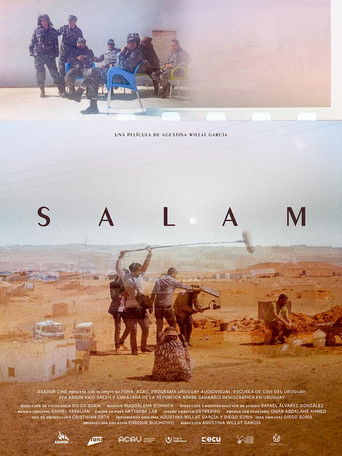
The Sahrawi people have lived in exile for almost half a century in the driest desert of the African continent. There, where basic resources such as water are scarce, there is a film school. As the world looks the other way, a group of young filmmakers carries out a battle against oblivion.

In the stunning and starkly beautiful landscape of Western Sahara, Walter Bencini recounts his journey to meet the Saharawi people, uprooted from their lands for decades and confined to desert tent camps named after the Moroccan cities where they once lived. It's the solidarity journey of a group of people from Valdarno, delivering the money and medicines raised through various initiatives directly into the hands of the beneficiaries.
It follows Chilean writer Antonio Skármeta as he celebrates the end of the autocrats. Cheerful farewell rituals accompany others facing political persecution on their way to fly home.
Dos Islas is a poetic story about old age, family and the bond between a granddaughter and a grandmother. The woman, who just turned 102, tells stories about her past and childhood. In a literary and visual way she describes the most minute details. The film dazzles the viewer with love and optimism, the time passes slowly between the two islands, which might be real people, real places or the products of the main character’s imagination.
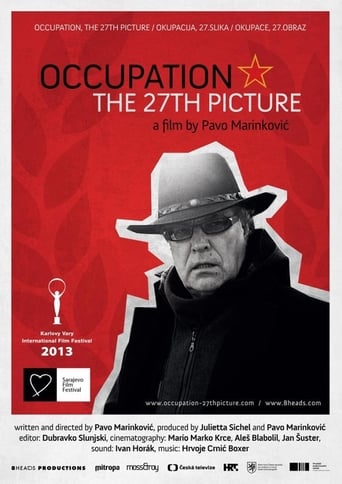
We encounter the controversial Croatian film director Lordan Zafranovic in voluntary exile in Prague. The film follows his rise from a talented outsider to the celebrated Yugoslav director of the acclaimed war film, 'An Occupation in 26 Pictures'. His life story is an unconventional depiction of a rise and fall that reveals compromises made in order to survive artistically during communism, as well as the missed opportunities and miscalculations that led to his inability to adapt in later years. Is the charismatic Zafranovic a national traitor or a victim of historical circumstances in which the only thing he wanted to do, in his own words, was to be himself and make films?
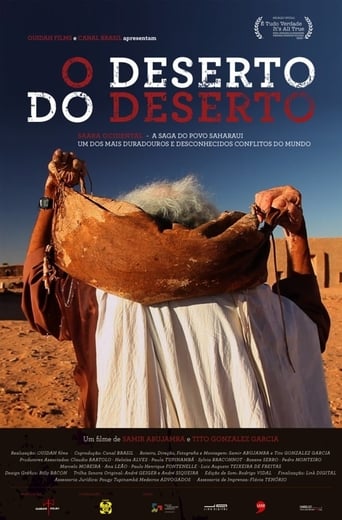
'The Desert of the Desert' is a feature documentary about one of the longest-running and least- known colonial conflicts and the plight of the Sahrawi desert nomads of Western Sahara since Morocco's 1975 invasion. Shot in Jan./Feb. 2014 in the Saharawi Liberated Territories of Western Sahara, and in the Saharawi Refugee Camps in Tindouf, Algeria, the film shows the saga of the Sahrawis, their struggle to regain their homeland and the sad paradox of a nomadic people forced to live in confinement. During production, the crew made a rare treck through 3,000 kilometers of bleak and dangerous desert, becoming unwitting participants in the conflict when their jeep was blown up by an anti-tank mine less than a kilometer from their destination on Western Sahara's Atlantic coast.
A film essay by Asher de Bentolila Tlalim, an Israeli filmmaker living in London, GALOOT ("Exile" in Hebrew) is an extended meditation on the Israeli-Palestinian conflict through the eyes of those living at a distance. Through international visits (London, Israel, Morocco and Poland) and dialogue-with Palestinian refugees, the new immigrants to Israel who now occupy their homes, the current occupants of his family's former house in Tangiers, the residents of the former village of his wife's family in Lisensk, a scientist, a jazz musician, and others-the filmmaker explores the position of exile, with its unique pain and perspective on what others may be too close to perceive.

Ahmemulić prepares tongue in her mother’s way – skinned, seasoned, boiled, sliced. She can then in turn serve her son her mother’s tongue. The skinned lamb tongue here becomes a brutal metaphor for a doubly impossible language – the acquired Swedish and a Serbo-Croatian that has begun to dissolve.

Only women, children and old people live in this Armenian village, while the men work in Russia. A life with a rhythm of its own, an independent daily life marked nonetheless by exile.
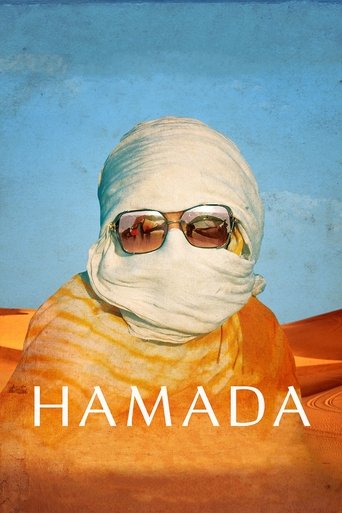
Filled with vitality, humor and unexpected situations, Hamada paints an unusual portrait of a group of young friends living in a refugee camp in the middle of nowhere. Western Sahara is known as “the last colony in Africa” and this conflict is the longest and one of the least known ongoing disputes in the continent, but the Sahrawi people refuse to become invisible.
On an island in the Indian Ocean, the Comoros archipelago, unoccupied houses await the arrival of their owners. These places without souls and half built abound across the landscape. The myth of eternal return is repeated in the Comorian diaspora.
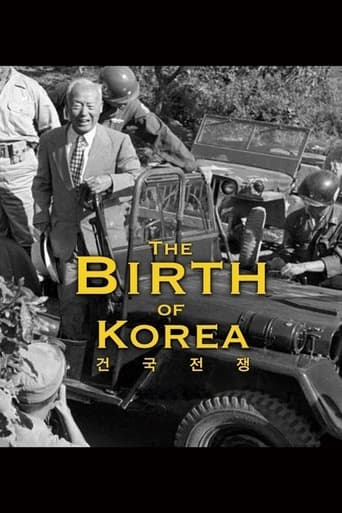
Since South and North Korea's liberation in 1945, North Korea, a communist dictatorship that suppresses freedom and oppresses human rights, and South Korea, which has entered the path of economic prosperity and advanced countries based on freedom and democracy, have taken different paths. How did the two countries with the same language, history, and race, become divided into two extreme countries? A work that highlights the sacrifices and struggles of President Syngman Rhee and the first generation of founding members who worked to create and protect today's Republic of Korea over the past 70 years of history.
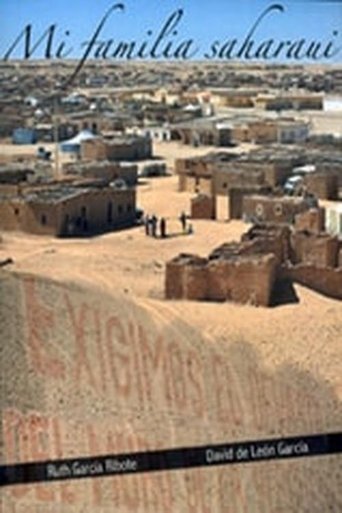
My Sahrawi family' is a report - documentary that reflects the bonds of unity between Sahrawi families and Spanish families who every summer welcome minors from refugee camps into their homes.
During the 1965 mass killings to eliminate the Indonesian Communist Party, the new regime banned scholars in the Soviet Union and China, forcing them into exile across Europe. This documentary follows those displaced individuals as they navigate the Netherlands, Czech Republic, Sweden, Germany, and Indonesia, reflecting on the traumatic events that uprooted their lives.


Education Center for disabled children located in the Sahrawi refugee camps in Algeria. Despite the precarious conditions in which this population lives since 40 years ago, the Polisario Front as the representative of the Sahrawi people has promoted inclusion as a way to avoid marginalization and discrimination of one of the most vulnerable populations within these territories: children with special needs. "Castro" is the man who devotes his life to this beautiful project fighting all odds: physical, psychic, social, economic, and even the incomprehensions of his own society. The Sahrawis are living (resisting) in one of the harshest deserts on Earth but Castro has the magic formula to achieve the inclusion of these wonderful beings in his society and in the rest of the world: MUSAWAT, EQUALITY.
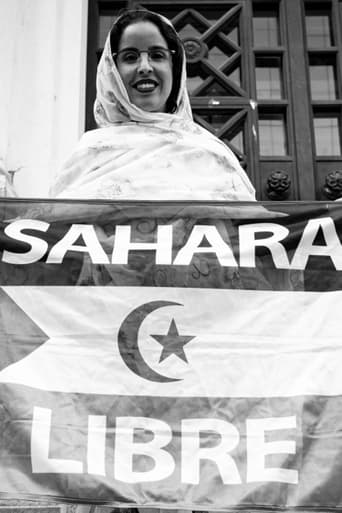
The Sahara has been and is populated by peoples who have passed through and occupied it since time immemorial. The Sahrawis are one of these peoples. When Spain withdrew from its colony in 1976, Morocco invaded. Thousands have had to leave their lands to seek refuge in camps in the Sahara, in neighboring Algeria, and thousands have had to migrate to Spain and other destinations outside the Sahara. And it is the women who built the camps while the men fought, and it is they who have increasingly gained social, cultural, and political influence in the territory and in the diaspora. This is their history and their reality.