
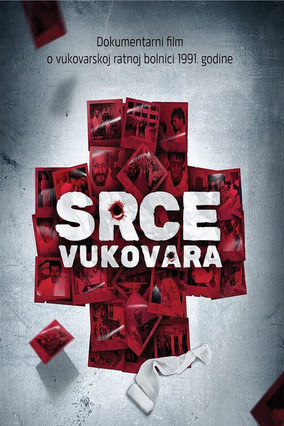
The Heart of Vukovar
2017-11-14 · Runtime unavailable · Not rated
The Heart of Vukovar is a Croatian documentary which shows the events of the Vukovar war hospital during the Croatian Homeland War. The hospital was a symbol of the defense of Vukovar agains the occupying Serbian forces. The movie shows how it managed to operate under impossible conditions after being bombarded, up until the day the city fell to occupying forces
Trailers are previews, not full movies.
No authorized playback source configured. Use the legal watch options below.
Production details
- Directors
- Stipe Majić Pipe
- Production companies
- UHBTC, Amico Studio
- Countries
- Croatia
- Status
- Released
Top Cast
Title information and images are supplied by TMDb. Explore our discovery guide for advice on comparing metadata and legal viewing options.
Where to watch
Availability provided by JustWatch via TMDb. Offers can change. Provider links are listed on TMDb; full playback requires a separately authorized source.
Availability not listed for this country.
Seasons & episodes
Recommendations

Amid the failing counteroffensive, a journalist follows a Ukrainian platoon on their mission to traverse one mile of heavily fortified forest and liberate a strategic village from Russian occupation. But the farther they advance through their destroyed homeland, the more they realize that this war may never end.

Prelude to War was the first film of Frank Capra's Why We Fight propaganda film series, commissioned by the Pentagon and George C. Marshall. It was made to convince American troops of the necessity of combating the Axis Powers during World War II. This film examines the differences between democratic and fascist states.

When Sgt. First Class Brian Eisch is critically wounded in Afghanistan, it sets him and his sons on a journey of love, loss, redemption and legacy.
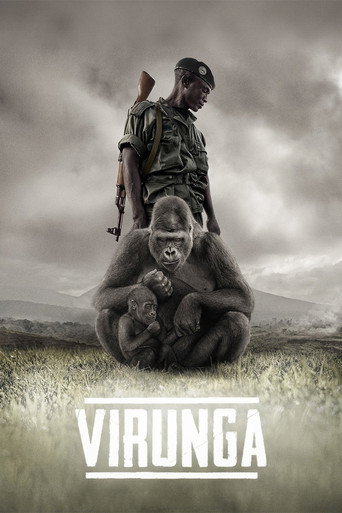
Virunga in the Democratic Republic of the Congo is Africa's oldest national park, a UNESCO world heritage site, and a contested ground among insurgencies seeking to topple the government that see untold profits in the land. Among this ongoing power struggle, Virunga also happens to be the last natural habitat for the critically endangered mountain gorilla. The only thing standing in the way of the forces closing in around the gorillas: a handful of passionate park rangers and journalists fighting to secure the park's borders and expose the corruption of its enemies. Filled with shocking footage, and anchored by the surprisingly deep and gentle characters of the gorillas themselves, Virunga is a galvanizing call to action around an ongoing political and environmental crisis in the Congo.

A documentary about World War I with never-before-seen footage to commemorate the centennial of Armistice Day, and the end of the war.
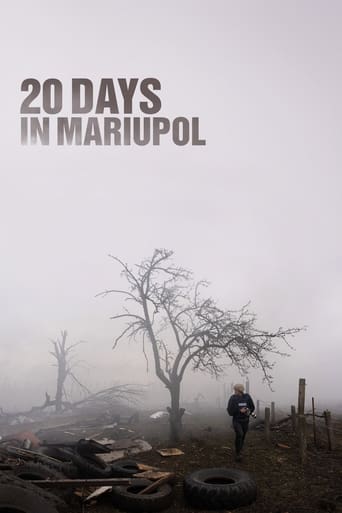
As the Russian invasion begins, a team of Ukrainian journalists trapped in the besieged city of Mariupol struggle to continue their work documenting the war's atrocities.

“The Soviet Story” is a story of an Allied power, which helped the Nazis to fight Jews and which slaughtered its own people on an industrial scale. Assisted by the West, this power triumphed on May 9th, 1945. Its crimes were made taboo, and the complete story of Europe’s most murderous regime has never been told. Until now...

Set both in Latin America and the United States, the film explores the historic and current relationship of Washington with countries such as Venezuela, Bolivia and Chile. Pilger says that the film "...tells a universal story... analysing and revealing, through vivid testimony, the story of great power behind its venerable myths. It allows us to understand the true nature of the so-called "war on terror". According to Pilger, the film’s message is that the greed and power of empire is not invincible and that people power is always the "seed beneath the snow".

This documentary movie is about the battle of San Pietro, a small village in Italy. Over 1,100 US soldiers were killed while trying to take this location, that blocked the way for the Allied forces from the Germans. Preserved by the Academy Film Archive in 2005.

A love letter from a young mother to her daughter, the film tells the story of Waad al-Kateab’s life through five years of the uprising in Aleppo, Syria as she falls in love, gets married and gives birth to Sama, all while cataclysmic conflict rises around her. Her camera captures incredible stories of loss, laughter and survival as Waad wrestles with an impossible choice– whether or not to flee the city to protect her daughter’s life, when leaving means abandoning the struggle for freedom for which she has already sacrificed so much.
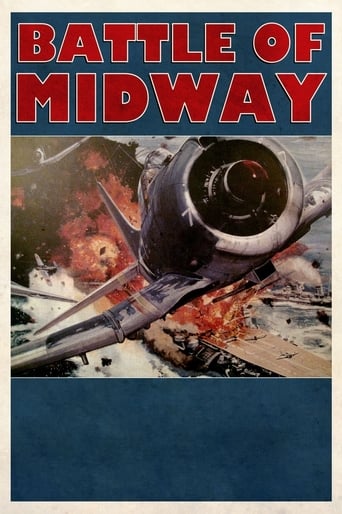
The Japanese attack on Midway in June 1942, filmed as it happened. Preserved by the Academy Film Archive, in partnership with Twentieth Century Fox Film Corporation, in 2006.

Marcel Ophuls' riveting film details the heinous legacy of the Gestapo head dubbed "The Butcher of Lyon." Responsible for over 4,000 deaths in occupied France during World War II, Barbie would escape—with U.S. help—to South America in 1951, where he lived until a global manhunt led to his 1983 arrest and subsequent trial.
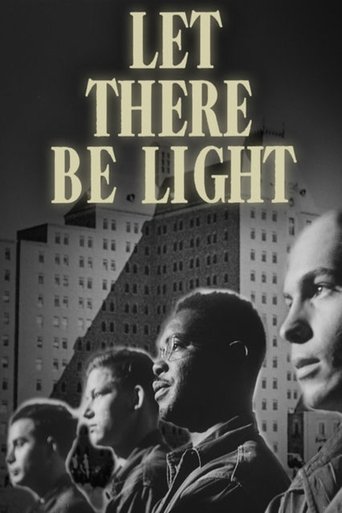
The final entry in a trilogy of films produced for the U.S. government by John Huston. Some returning combat veterans suffer scars that are more psychological than physical. This film follows patients and staff during their treatment. It deals with what would now be called PTSD, but at the time was categorised as psychoneurosis or shell-shock. Government officials deemed this 1946 film counterproductive to postwar efforts; it was not shown publicly until 1981.

Pete Postlethwaite stars as a man living alone in the devastated future world of 2055, looking at old footage from 2008 and asking: why didn’t we stop climate change when we had the chance?
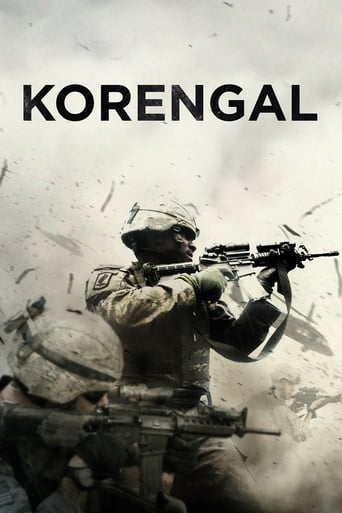
Korengal picks up where Restrepo left off; the same men, the same valley, the same commanders, but a very different look at the experience of war.
With unprecedented access, this documentary follows the extraordinary journey of “Raqqa is Being Slaughtered Silently”—a group of anonymous citizen journalists who banded together after their homeland was overtaken by ISIS—as they risk their lives to stand up against one of the greatest evils in the world today.
During the chaotic final weeks of the Vietnam War, the North Vietnamese Army closes in on Saigon as the panicked South Vietnamese people desperately attempt to escape. On the ground, American soldiers and diplomats confront a moral quandary: whether to obey White House orders to evacuate only U.S. citizens.

Through deeply personal interviews with her siblings and an examination of the photographs, letters, and belongings left behind, Mariska assembles a new portrait of her mother Jayne Mansfield, an extraordinary and complex woman.

An inside look at one of the most anticipated movie sequels ever with James Cameron and cast.
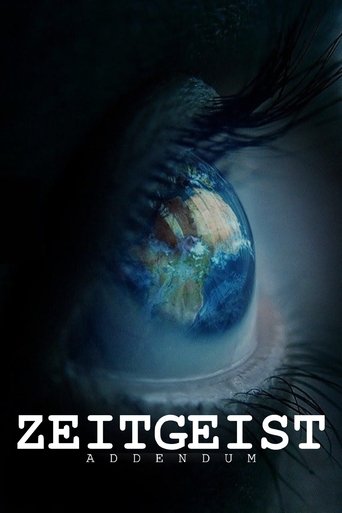
Director Peter Joseph examines examples of economic subjugation and offers solutions based on alignment with nature.
Similar titles
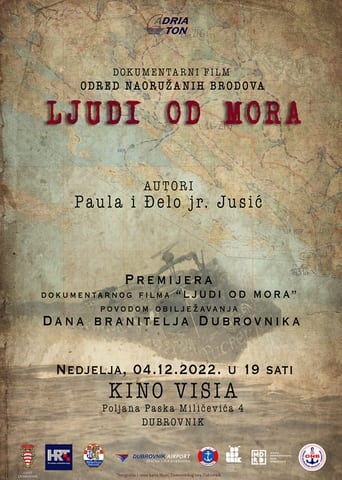
Documentary about The Armed Boats Squadron Dubrovnik, a volunteer unit of the Croatian Navy that ran the naval blockade during the siege of Dubrovnik which formed part of the Croatian War of Independence in 1991–1992.
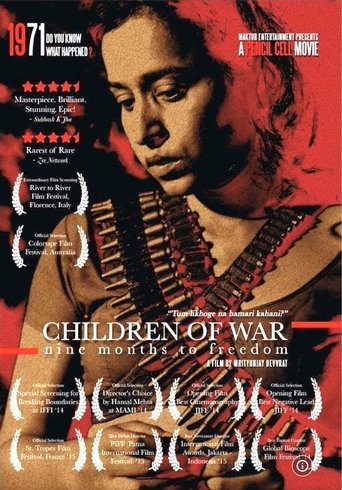
Children of War is a movie based on the true events of the 1971 Genocide. Can we, in search of power, become animals? A genocide; neglected! The first use of rape as a weapon of war; undocumented! The lives of millions; unaccounted! The culprits; unpunished!

As children, a Mozambique native and a Portuguese colonialist were friends. Years have passed and Mozambique is fighting for its independence. Two childhood friends meet on opposing sides.
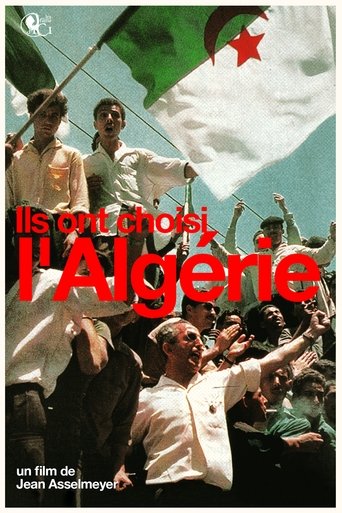
Many of them participated in the struggle for Algerian independence. There are "those who believed in heaven", priests, Christians committed against torture, friends of the "natives", there are "those who did not believe in it", communist activists, students, progressive intellectuals, others remained in this country because they could not imagine living anywhere other than in this land of all passions. They are European and chose to stay in Algeria after independence, most of them opted for Algerian nationality. The film is another vision of the history of Algeria from the end of the fifties to the present day, told by these Europeans filmed at home, or in the context of their activities, illustrated by unpublished archive documents.
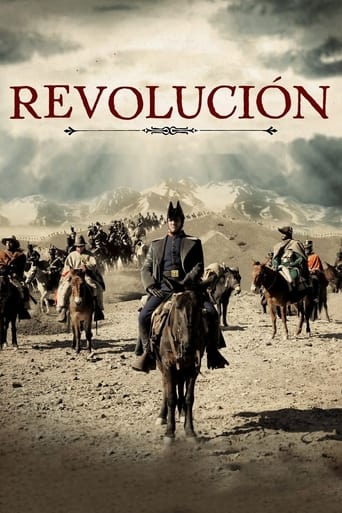
Buenos Aires, 1880. A journalist interviews Manuel Esteban Corvalán, one of the last living men who crossed the Andes in 1817 with José de San Martín, during the Argentinian and Chilean wars of independence, as one of his secretaries, when he was only 15 years old.
A film about short-lived Slovenian war of independence.
During the Napoleonic Wars the British Army realised that it needed skirmishers, as a result it raised 2 Rifle Regiments both armed with the icon Baker Rifle. This programme explains how the Riflemen of the 95th Rifles were dressed and equipped. It is an ideal accompaniment to our Series on the 95th Rifles.
"O Corneteiro Lopes" is a story of love and courage. The city of Salvador is under siege by Brazilian troops, however, they lose strength in the course of battles. The Portuguese Luiz Lopes, alongside the Brazilian army, contrary to the orders of General Labatut, changes the fortunes of the Battle of Pirajá.
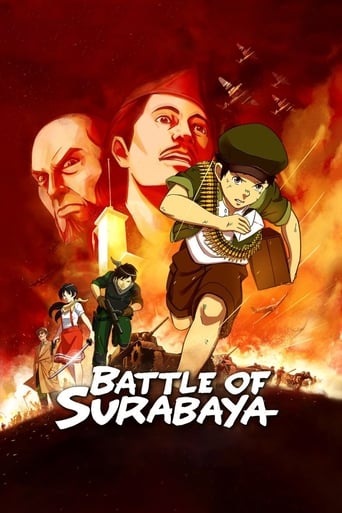
Musa, who is only a thirteen-year-old shoe shiner, undergoes destiny through his adventure of waging war during the war time. Will he manage to bring peace among the troops who keep on fighting for nothing?
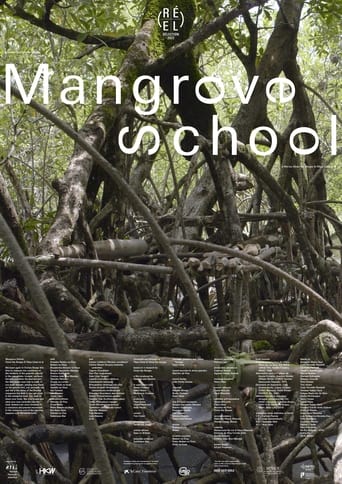
We went to research the conditions of the students in the guerrilla schools in the mangroves. Instead, we soon became ourselves the learners and the first lesson was how to walk. In the mangrove school the learning happens with the whole body.

The life of Michèle Firk — a trailblazing French journalist, film critic, aspiring director and communist activist involved in various liberation struggles in the second half of the 20th century — as told by narrator Alice Diop, modern day French director.
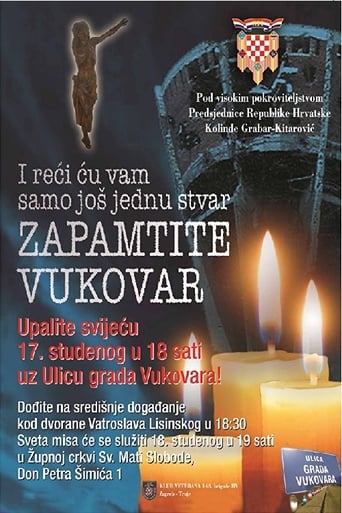
During the early stages of the Croatian War of Independance the Serbian paramilitary forces, assisted heavily by the People's Army of Yugoslavia, manage to make their way into the small town of Vukovar, which quickly becomes a no man's land. However, despite the chaos around him, radio reporter Siniša Glavašević is determined the get the word out, chronicling both the efforts of the Croatian army and the siege of the enemy side.
Eastern Croatian front, sometime during the 1990s. A group of civilian refugees from Vukovar try to establish a somewhat normal life in a camp established on the train station in Sokolovica. One of them is Vinko, a disabled man whose psyche is slowly decaying with paranoia, PTSD and physical pain. After he learns that his wife Jelka had befriended Klaus, a young and handsome German voulonteer, his mind begins to spiral further into darkness.

Using original ITN frontline footage, this documentary chronicles the 1991 Battle of Vukovar and its significance in the Croatian War of Independence.

The third and final film in the award-winning box office hit RED AND WHITE trilogy set during the 1947-48 Indonesian revolution, as a band of guerrillas fights for Indonesia's freedom on land, sea and air against the Dutch empire.

Set during the first Anglo-Boer War 1880-1881 details the events leading up to this final battle ending in one of the most humiliating defeats for Britain in history.
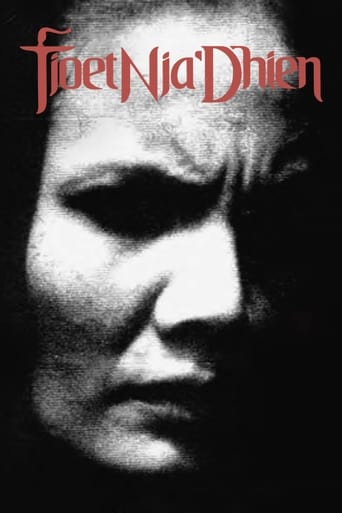
Set in 1896, "Tjoet Nja' Dhien" celebrates one of Indonesia's great heroes who fought for independence from the Dutch. The pious Muslim people of Aceh, a city that had flourished since ancient times as a trade port, enter into a fierce war with the Dutch. Tjoet Nja' Dhien, the widow of a rebel leader operating in Aceh in Sumatra, assumes the leadership when her husband Teuku Uma is killed in an ambush. Dhien's charismatic presence and power of survival motivate the locals to join and later continue their opposition to the Dutch. Despite personal obstacles, she remained in the thick of the struggle for ten years.
Stolen Kosovo is a Czech language documentary by director Václav Dvořák (b. 1948), about the Serbian–Albanian conflict in Kosovo. The documentary describes the situation, first in a short overview of the history of the area, followed by the 1990s conflicts and bombing of Serbia by NATO forces in 1999 and ending with the situation after the Kosovo War. The documentary focuses on the 1990s in the time of Slobodan Milošević's rule as well as on numerous interviews of Serbian civilians and, less, of Albanian insurgents against the Milošević regime.

Using real recorded footage from the 1990s the documentary depicts the town of Novska during the Croatian Civil War from 1990 to 1995.
Having as “covers” the leaving for battle and the coming back of Penes Curcanul, the hero of a popular poem by Vasile Alecsandri, the film represents the well-known episodes of the Romanian-Russian-Turkish war (the “Independence War”) of 1877, such as: the mobilization, the Romanian army’s crossing of the Danube, the battles of Plevna and Grivita, aspects from the hospitals full of wounded soldiers and the surrender of Osman Pasha. The film ends with newsreel sequences from the Royal Parade in Bucharest on the 10th of May, 1912. This is the first feature-length Romanian film.