They Chose Algeria
2007-01-01 · 55 min · ★ 10.0
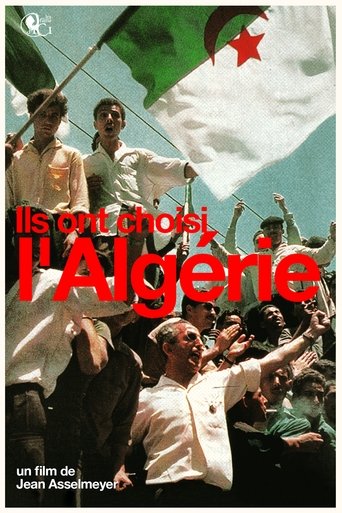
Many of them participated in the struggle for Algerian independence. There are "those who believed in heaven", priests, Christians committed against torture, friends of the "natives", there are "those who did not believe in it", communist activists, students, progressive intellectuals, others remained in this country because they could not imagine living anywhere other than in this land of all passions. They are European and chose to stay in Algeria after independence, most of them opted for Algerian nationality. The film is another vision of the history of Algeria from the end of the fifties to the present day, told by these Europeans filmed at home, or in the context of their activities, illustrated by unpublished archive documents.
Trailers are previews, not full movies.
No authorized playback source configured. Use the legal watch options below.
Production details
- Directors
- Jean Asselmeyer
- Production companies
- BL Films, Établissement National de Télévision (ENTV)
- Countries
- France, Algeria
- Status
- Released
Top Cast
 Henri AllegSelf
Title information and images are supplied by TMDb. Explore our discovery guide for advice on comparing metadata and legal viewing options.
Where to watch
Availability provided by JustWatch via TMDb. Offers can change. Provider links are listed on TMDb; full playback requires a separately authorized source.
Availability not listed for this country.
Seasons & episodes
Recommendations

Director Claude Lanzmann spent 11 years on this sprawling documentary about the Holocaust, conducting his own interviews and refusing to use a single frame of archival footage. Dividing Holocaust witnesses into three categories – survivors, bystanders, and perpetrators – Lanzmann presents testimonies from survivors of the Chelmno concentration camp, an Auschwitz escapee, and witnesses of the Warsaw Ghetto Uprising, as well as a chilling report of gas chambers from an SS officer at Treblinka.
An intimate portrait of the small shops and shopkeepers of the Rue Daguerre in Paris, a picturesque street that has been the filmmaker’s home for more than 50 years.
Candid interviews of ordinary people on the meaning of happiness, an often amorphous and inarticulable notion that evokes more basic and fundamentally egalitarian ideals of self-betterment, prosperity, tolerance, economic opportunity, and freedom.
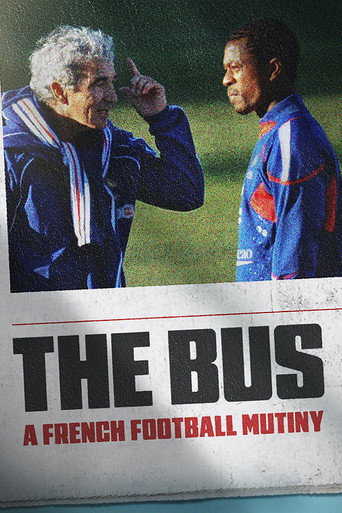
This documentary revisits the French football team's controversial 2010 World Cup and the bus strike that sparked global headlines and national outrage.

A documentary about World War I with never-before-seen footage to commemorate the centennial of Armistice Day, and the end of the war.

The history of cinematic sound, told by legendary sound designers and visionary filmmakers.
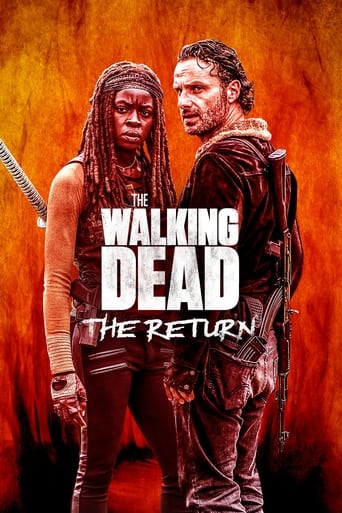
Stars of "The Walking Dead," Andrew Lincoln and Danai Gurira, walk down memory lane and visit iconic locations where pivotal moments between their characters, Rick and Michonne, were filmed.

A documentary on the expletive's origin, why it offends some people so deeply, and what can be gained from its use.

A compilation of over 30 years of private home movie footage shot by Lithuanian-American avant-garde director Jonas Mekas, assembled by Mekas "purely by chance", without concern for chronological order.
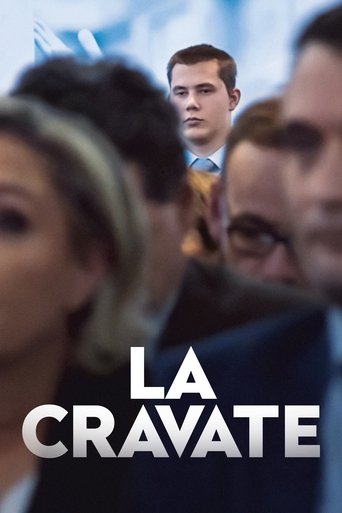
Bastien is twenty years old and has been an activist for five years in the main extreme right party. When the presidential campaign begins, he's invited by his superior to commit even further. Initiated into the art of decking himself out like a politician, he starts to dream of a career, but old demons surge forth...

This revealing documentary honors the legendary Sidney Poitier—iconic actor, filmmaker, and civil rights activist. Featuring interviews with Denzel Washington, Spike Lee, Halle Berry, and more.
Filmmaker Alain Resnais documents the atrocities behind the walls of Hitler's concentration camps.
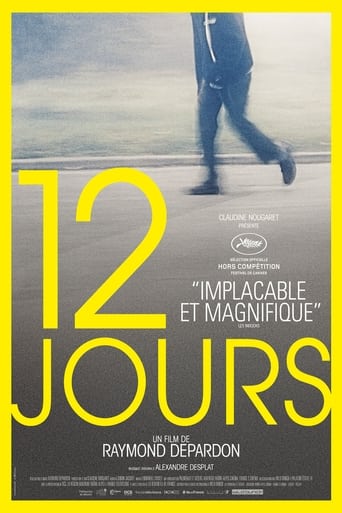
A new documentary by filmmaker-photographer Raymond Depardon – where justice and psychiatry meet.

“The Soviet Story” is a story of an Allied power, which helped the Nazis to fight Jews and which slaughtered its own people on an industrial scale. Assisted by the West, this power triumphed on May 9th, 1945. Its crimes were made taboo, and the complete story of Europe’s most murderous regime has never been told. Until now...

In an intimate and joyful story of love in the face of loss, celebrated poets Andrea Gibson and Megan Falley find strength—and unexpected hilarity—in what might be their final year together.
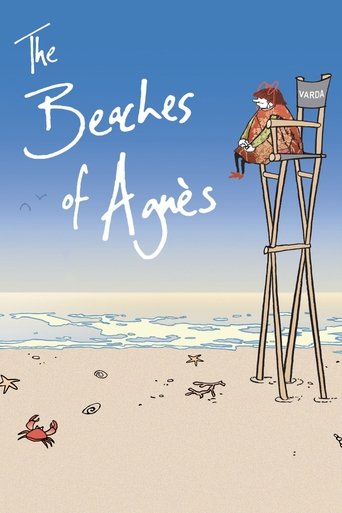
Filmmaking icon Agnès Varda, the award-winning director regarded by many as the grandmother of the French new wave, turns the camera on herself with this unique autobiographical documentary. Composed of film excerpts and elaborate dramatic re-creations, Varda's self-portrait recounts the highs and lows of her professional career, the many friendships that affected her life and her longtime marriage to cinematic giant Jacques Demy.
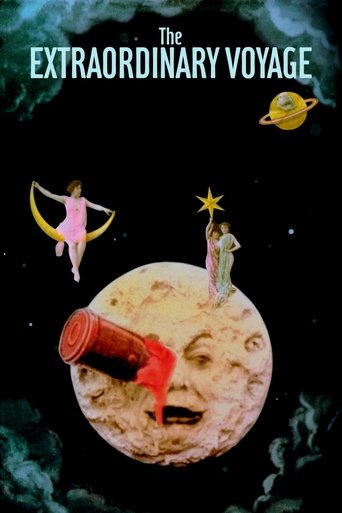
An account of the extraordinary life of film pioneer Georges Méliès (1861-1938) and the amazing story of the copy in color of his masterpiece A Trip to the Moon (1902), unexpectedly found in Spain and restored thanks to the heroic efforts of a group of true cinema lovers.

A documentary about the life and films of director John Ford.
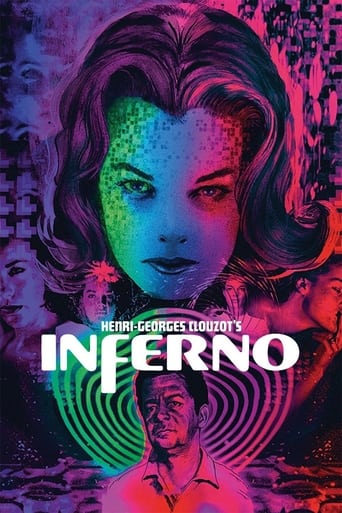
In 1964, Henri-Georges Clouzot's production of L'Enfer came to a halt. Despite huge expectations, major studio backing and an unlimited budget, after three weeks the production collapsed. This documentary presents Inferno's incredible expressionistic original rushes, screen tests, and on-location footage, whilst also reconstructing Clouzot's original vision, and shedding light on the ill-fated endeavor through interviews, dramatizations of unfilmed scenes, and Clouzot's own notes.
He's devoted his career to uncovering stories the powerful want buried. From My Lai to Abu Ghraib, dig into the life's work of journalist Seymour Hersh.
Similar titles

The climbing couple Heinz Mariacher and Luisa Iovane abandon their usual winter training spot to go in search of places more conducive to free climbing in Algeria in the Sahara desert, more precisely in the Hoggar massif, which saw pass the cream of world climbing Lionel Terray, Roger Frison-Roche, Lucien Bérardini, Michel Vaucher, Pierre Mazeaud, Guido Monzino, Patrick Edlinger, Patrick Berhault and many others. Their objective, to climb the east face of Garet El Djenoun, 500 m high, failed because the wall was too smooth and the cracks unstable. The journey continues in the Hoggar massif towards other peaks, where they find the climbing conditions they were hoping for. An overhang in the face of Tizouyag Nord will prove to be a major challenge for Heinz Mariacher.
Former petty criminal Ali la Pointe becomes a commander of the Algerian Front de Liberation Nationale, directing a guerilla insurgency against the colonial French occupation. Paratrooper commander Colonel Phillippe Mathieu, a veteran of World War II and the First Indochina War, is sent to Algeria to reinforce efforts to squelch the uprisings.
He is a 75-year-old half-blind man. He takes 3000 steps every day. Since 2004 he has made a decision: he will no longer talk about cinema. Boudjemâa, our living memory. That of Algerian cinema, African cinema, Arab cinema, cinema in short. The Algiers Cinematheque. The “masterpiece of Algerian cinema”. Boudjemâa Karèche directed it for 34 years. So why does Boudjemâa no longer talk about cinema? The answer lies next to the circumstances which caused his ouster from the Cinémathèque. Boudjemâa was silent. The time has come for him to let the word think for itself.
This video takes a particular viewpoint, with the camera placed behind a zone of blur. Slowly, we experience the perception of an expanded time. An expectation is created and resolved in the observation of the passage of boats that dissolve into the nebulousness, disappearing from our sight like a mirage.
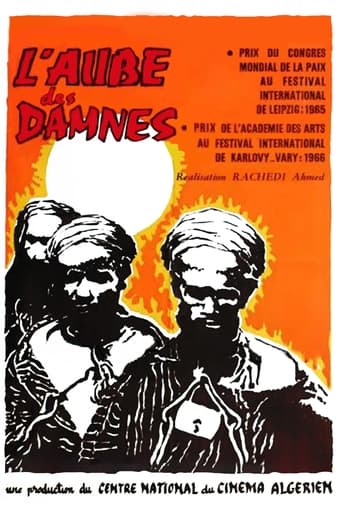
This excellent feature-length documentary - the story of the imperialist colonization of Africa - is a film about death. Its most shocking sequences derive from the captured French film archives in Algeria containing - unbelievably - masses of French-shot documentary footage of their tortures, massacres and executions of Algerians. The real death of children, passers-by, resistance fighters, one after the other, becomes unbearable. Rather than be blatant propaganda, the film convinces entirely by its visual evidence, constituting an object lesson for revolutionary cinema.
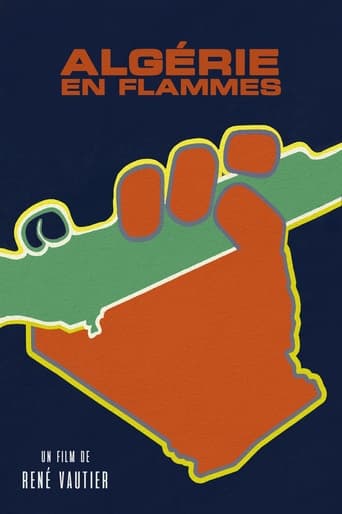
These are the first images shot in the ALN maquis, camera in hand, at the end of 1956 and in 1957. These war images taken in the Aurès-Nementchas are intended to be the basis of a dialogue between French and Algerians for peace in Algeria, by demonstrating the existence of an armed organization close to the people. Three versions of Algeria in Flames are produced: French, German and Arabic. From the end of the editing, the film circulates without any cuts throughout the world, except in France where the first screening takes place in the occupied Sorbonne in 1968. Certain images of the film have circulated and are found in films, in particular Algerian films. Because of the excitement caused by this film, he was forced to go into hiding for 25 months. After the declaration of independence, he founded the first Algerian Audiovisual Center.
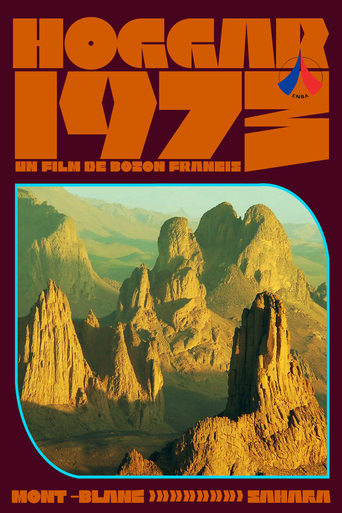
In 1973, 6 guides from the National Ski and Mountaineering School (ENSA), including Charles Daubas and Walter Cecchinel, left by truck from Chamonix to Tamanrasset in the desert in Algeria with the aim of climbing some peaks of the Atakor massif including Adaouda and Tizouyag where they do the first of "La Voie de l'ENSA".
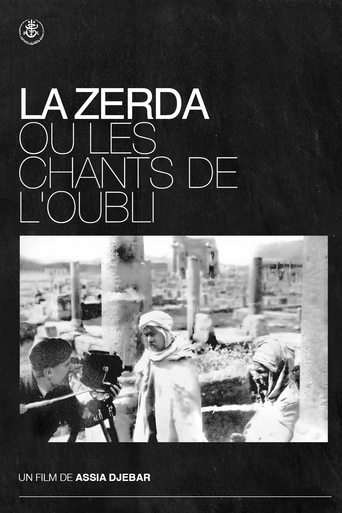
“La Zerda and the songs of oblivion” (1982) is one of only two films made by the Algerian novelist Assia Djebar, with “La Nouba des femmes du mont Chenoua” (1977). Powerful poetic essay based on archives, in which Assia Djebar – in collaboration with the poet Malek Alloula and the composer Ahmed Essyad – deconstructs the French colonial propaganda of the Pathé-Gaumont newsreels from 1912 to 1942, to reveal the signs of revolt among the subjugated North African population. Through the reassembly of these propaganda images, Djebar recovers the history of the Zerda ceremonies, suggesting that the power and mysticism of this tradition were obliterated and erased by the predatory voyeurism of the colonial gaze. This very gaze is thus subverted and a hidden tradition of resistance and struggle is revealed, against any exoticizing and orientalist temptation.
Indian freedom fighter Gandhiji was killed by Nathuram Godse. But what made Nathuram Godse to take this extreme step?
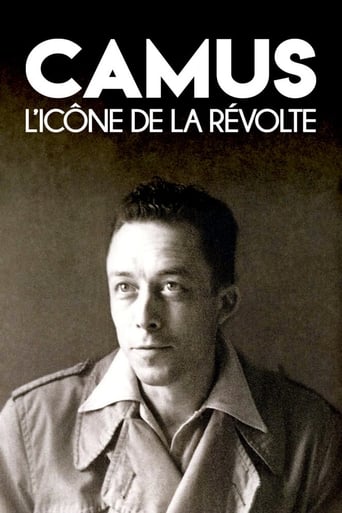
Albert Camus, who died 60 years ago, continues to inspire defenders of freedom and human rights activists around the world today. The Nobel Prize winner for literature is one of the most widely read French-language writers in the world. He continues to embody the rebellious man who opposes all forms of oppression and tyranny while refusing to compromise his human values.
In 1967, Visconti came to Algiers for the filming of The Stranger with Mastroianni and Anna Karina. Camus, during his lifetime, had always refused to allow one of his novels to be brought to the screen. His family made another decision. The filming of the film was experienced in Algiers, like a posthumous return of the writer to Algiers. During filming, a young filmmaker specializing in documentaries Gérard Patris attempts a report on the impact of the filming of The Stranger on the Algerians. Interspersed with sequences from the shooting of Visconti's film, he films Poncet, Maisonseul, Bénisti and Sénac, friends of Camus, in full discussions to situate Camus and his work in a sociological and historical context. “The idea is for us to show people, others, ourselves as if they could all be Meursault, or at least the witnesses concerned to his drama.”

Djamila, a young Algerian woman living with her brother Hadi and her uncle Mustafa in the Casbah district of Algiers under the French occupation of Algeria, sees the full extent of injustice, tyranny and cruelty on his compatriots by French soldiers. Jamila's nationalist spirit will be strengthened when French forces invade her university to arrest her classmate Amina who commits suicide by ingesting poison. Shortly after the prominent Algerian guerrilla leader Youssef takes refuge with her, she realizes that her uncle Mustafa is part of this network of anti-colonial rebel fighters. Her uncle linked her to the National Liberation Front (FLN). A series of events illustrate Jamila's participation in resistance operations against the occupier before she was finally captured and tortured. Finally, despite the efforts of her French lawyer, Jamila is sentenced to death...
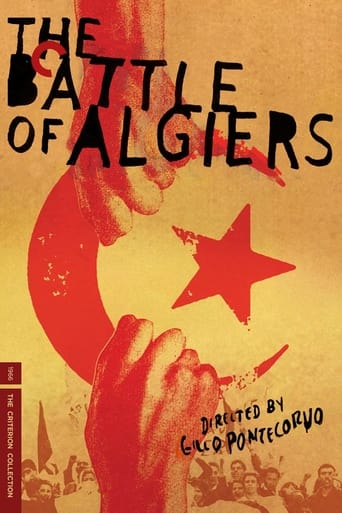
This 17-minute documentary is featured on the 3-Disc Criterion Collection DVD of The Battle of Algiers (1966), released in 2004. An in-depth look at the Battle of Algiers through the eyes of five established and accomplished filmmakers; Spike Lee, Steven Soderbergh, Oliver Stone, Julian Schnabel and Mira Nair. They discuss how the shots, cinematography, set design, sound and editing directly influenced their own work and how the film's sequences look incredibly realistic, despite the claim that everything in the film was staged .
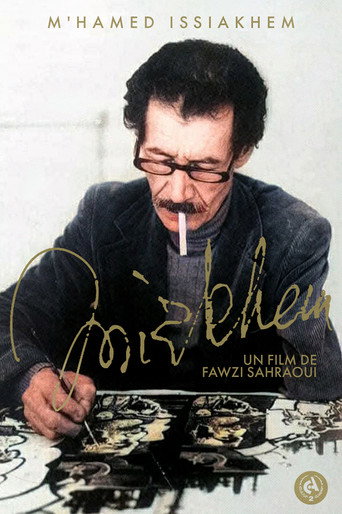
M'hamed Issiakhem (Kabyle: Mḥemmed Isyaxem; Arabic: محمد إسياخم)—born on June 17, 1928, in Taboudoucht (Aghribs), then part of the Tizi Ouzou Department in Algeria, and who died on December 1, 1985, in Algiers—was an Algerian painter and a leading figure of modern painting in Algeria. In 1943, he handled a grenade stolen from a US military camp, and it exploded; two of his sisters and a nephew were killed. Hospitalized for two years, he underwent the amputation of his left arm. From 1947 to 1951, he studied in Algiers, first at the Société des Beaux-Arts and later at the École des Beaux-Arts. "A country without artists is a dead country... I hope we are alive..." These words were spoken in a film by Fawzi Sahraoui—produced by the RTA in 1985 and shot just months before the painter M'hamed Issiakhem passed away. It is a fascinating docudrama in which Issiakhem opens up with subtlety, passion, and generosity.
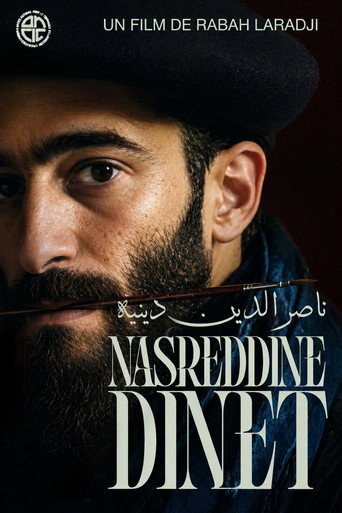
Étienne Dinet (إتيان دينيه), born March 28, 1861 in Paris, where he died on December 24, 1929, was a French painter and lithographer. He was one of the leading representatives of Orientalist painting at the turn of the 19th and 20th centuries. Obtaining a scholarship in 1884, Dinet undertook his first trip to southern Algeria in the region of Bou-Saâda, the Naili culture having a profound impact on him, as he would return there many times until he settled in his first Algerian studio in Biskra in 1900. In 1905, he bought a house in Bou-Saâda to spend three-quarters of the year there. In 1907, on his advice, the Villa Abd-el-Tif was created in Algiers, modeled on the Villa Medici in Rome. Having lived much of his life in Algeria, he called himself Nasreddine Dinet (نصر الدين ديني) after converting to Islam. On January 12, 1930, he was buried in the Bou-Saâda cemetery, where a museum that houses many of his works bears his name.
While being imprisoned on a remote island for leading a naval-yard workers' strike, a man reminisces about his former days as a naval mechanic and the life back in his hometown.
Chronicle of the judicial process for the murder of 16-year-old student Paúl Guañuna, committed by police officers in 2007. The fight of a father and thousands of young people against racism, authoritarianism and impunity.
During a televised debate on the Algerian war in the early 1980s, Professor Paulet denounced the methods of Captain Caron, killed in action in 1957. The widow of the captain, Patricia, decided to file a defamation suit.