
Abe Osheroff: One Foot in the Grave, the Other Still Dancing
2009-01-09 · 45 min · Not rated
Most people knew Abe Osheroff as an activist. For most of his 92 years - from the frontlines of the Spanish Civil War to the picket lines of the U.S. labor movement, from the struggles for civil rights in Mississippi to his work for human rights in Nicaragua - Osheroff threw himself into the fray with rare energy and enthusiasm. In this riveting and inspiring new film, Osheroff reflects on the meaning of his activism, exploring the ideas that animated his actions and sharing wisdom built up over a lifetime of commitment to the "radical humanism" that defined his politics and philosophy.
Trailers are previews, not full movies.
No authorized playback source configured. Use the legal watch options below.
Production details
- Directors
- Nadeem Uddin
- Production companies
- Media Education Foundation
- Countries
- Unavailable
- Status
- Released
Top Cast
Title information and images are supplied by TMDb. Explore our discovery guide for advice on comparing metadata and legal viewing options.
Where to watch
Availability provided by JustWatch via TMDb. Offers can change. Provider links are listed on TMDb; full playback requires a separately authorized source.
Availability not listed for this country.
Seasons & episodes
Recommendations

“The Soviet Story” is a story of an Allied power, which helped the Nazis to fight Jews and which slaughtered its own people on an industrial scale. Assisted by the West, this power triumphed on May 9th, 1945. Its crimes were made taboo, and the complete story of Europe’s most murderous regime has never been told. Until now...
A documentary about World War I with never-before-seen footage to commemorate the centennial of Armistice Day, and the end of the war.

Prelude to War was the first film of Frank Capra's Why We Fight propaganda film series, commissioned by the Pentagon and George C. Marshall. It was made to convince American troops of the necessity of combating the Axis Powers during World War II. This film examines the differences between democratic and fascist states.

When Sgt. First Class Brian Eisch is critically wounded in Afghanistan, it sets him and his sons on a journey of love, loss, redemption and legacy.

Set both in Latin America and the United States, the film explores the historic and current relationship of Washington with countries such as Venezuela, Bolivia and Chile. Pilger says that the film "...tells a universal story... analysing and revealing, through vivid testimony, the story of great power behind its venerable myths. It allows us to understand the true nature of the so-called "war on terror". According to Pilger, the film’s message is that the greed and power of empire is not invincible and that people power is always the "seed beneath the snow".

Amid the failing counteroffensive, a journalist follows a Ukrainian platoon on their mission to traverse one mile of heavily fortified forest and liberate a strategic village from Russian occupation. But the farther they advance through their destroyed homeland, the more they realize that this war may never end.

This documentary movie is about the battle of San Pietro, a small village in Italy. Over 1,100 US soldiers were killed while trying to take this location, that blocked the way for the Allied forces from the Germans. Preserved by the Academy Film Archive in 2005.

A love letter from a young mother to her daughter, the film tells the story of Waad al-Kateab’s life through five years of the uprising in Aleppo, Syria as she falls in love, gets married and gives birth to Sama, all while cataclysmic conflict rises around her. Her camera captures incredible stories of loss, laughter and survival as Waad wrestles with an impossible choice– whether or not to flee the city to protect her daughter’s life, when leaving means abandoning the struggle for freedom for which she has already sacrificed so much.
"Trinity and Beyond" is an unsettling yet visually fascinating documentary presenting the history of nuclear weapons development and testing between 1945-1963. Narrated by William Shatner and featuring an original score performed by the Moscow Symphony Orchestra, this award-winning documentary reveals previously unreleased and classified government footage from several countries.

Produced and presented as evidence at the Nuremberg war crimes trial of Hermann Göring and twenty other Nazi leaders, this film consists primarily of dead and surviving prisoners and of facilities used to kill and torture during the World War II.
Former United States Secretary of Defense Donald Rumsfeld discusses his career in Washington D.C. from his days as a congressman in the early 1960s to planning the invasion of Iraq in 2003.

Decades after her untimely death, Princess Diana continues to evoke mystery, glamour, and the quintessential modern fairy tale gone wrong. As a symbol of both the widening fissures weakening the British monarchy and the destructive machinery of the press, the Princess of Wales navigated an unparalleled rise to fame and the corrosive challenges that came alongside it. Crafted entirely from immersive archival footage and free from the distraction of retrospective voices, this hypnotic and audaciously revealing documentary takes a distinctive formal approach, allowing the story of the People’s Princess to unfold before us like never before.
Korengal picks up where Restrepo left off; the same men, the same valley, the same commanders, but a very different look at the experience of war.
With unprecedented access, this documentary follows the extraordinary journey of “Raqqa is Being Slaughtered Silently”—a group of anonymous citizen journalists who banded together after their homeland was overtaken by ISIS—as they risk their lives to stand up against one of the greatest evils in the world today.
A behind-the-scenes documentary about the Clinton for President campaign, focusing on the adventures of spin doctors James Carville and George Stephanopoulos.
Pete Postlethwaite stars as a man living alone in the devastated future world of 2055, looking at old footage from 2008 and asking: why didn’t we stop climate change when we had the chance?

He's devoted his career to uncovering stories the powerful want buried. From My Lai to Abu Ghraib, dig into the life's work of journalist Seymour Hersh.
The final entry in a trilogy of films produced for the U.S. government by John Huston. Some returning combat veterans suffer scars that are more psychological than physical. This film follows patients and staff during their treatment. It deals with what would now be called PTSD, but at the time was categorised as psychoneurosis or shell-shock. Government officials deemed this 1946 film counterproductive to postwar efforts; it was not shown publicly until 1981.
Oliver Stone charts the history of the United States from the Second World War to the present.
Michael Moore comes home to the issue he's been examining throughout his career: the disastrous impact of corporate dominance on the everyday lives of Americans (and by default, the rest of the world).
Similar titles
During the Spanish Civil War (1936-1939), five International Brigade soldiers of different nationalities are given a crucial assignment as their commander lies dying: they are to smuggle top-secret information across enemy lines.

Contracampos is the attempt to (re)build a landscape. A recreational area and a shooting range in the west of Asturies, which, between 1937 and 1943, housed a Francoist concentration camp through which thousands of Republicans passed – firstly militiamen, later guerrillas and their relatives. Sharing a leisurely observation with the viewer, the film intends to resignify that space, giving it back its political meaning. But it is not a question of showing –of filming– the invisible, but rather of showing what is missing in what exists today. What was and is no longer, not even in people's memories.
A former leader in the Black Lion Party for International Solidarity shares his story of found family, loss, and transcendence. Shot over the course of two months, this short documentary provides a glimpse into the dynamics of modern American revolutionary movements. Jeremias' film captures a very brief, but important period of transition for the Black Panther Party in the 2020s.
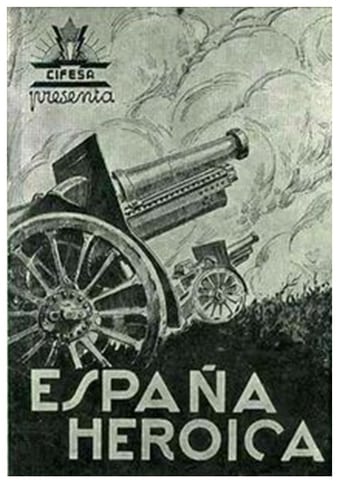
Documentary produced by Falange and edited in Berlin, in response to the international success of the Republican production "Spain 1936" (Le Chanois, 1937).
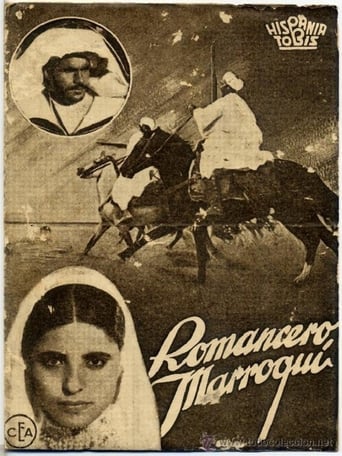
The young farmer Aalami leaves his family to find work elsewhere. He gets to know the country and its people, customs and traditions at Küste in North Africa: Market life in Tetuan, the art of craftsmanship, the life of the Moors, dances and festivities in honour of the caliph, white mosques, the call of the muezzin of the minaret and the music of the shepherd flutes. Aalami also follows Franco's call and flies from Morocco to Spain to fight at Bürgerkrieg. In the end Aalami comes back to his wife and children.

The memory of the poet Vicente Aleixandre remains silent at No. 3 Velintonia Street. Home of a Nobel Prize in Literature 1977, it also recalls the joy of Lorca and other members of Generation´27, the pain of civil war and post-war, and became a meeting point for most writers in 20th century Spanish Literature, now is abandoned and for sale. This documentary recreates its story and spirit.
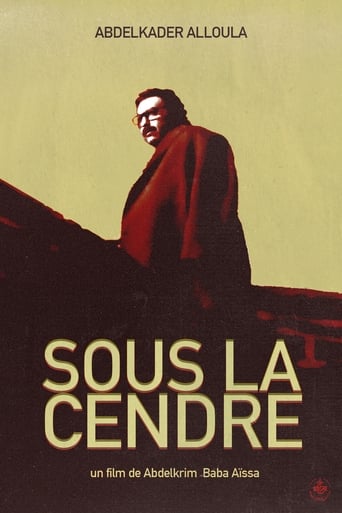
The Second World War. French authorities ban political parties and unions. In Algeria, the leaders of political and trade union organizations were arrested and interned in "surveillance" camps with more than 2,000 French and foreigners: communist activists, trade unionists, brigadists, Spanish republicans and other opponents of the Vichy regime. The Djenien Bourezg camp is one of these camps, located in southern Algeria and is one of the most formidable. An old activist for the Algerian national cause returns to the scene. He blows away the ashes that cover this part of history. And through it, we discover the hard fight of the camp inmates for respect and human dignity, under a fascist command.
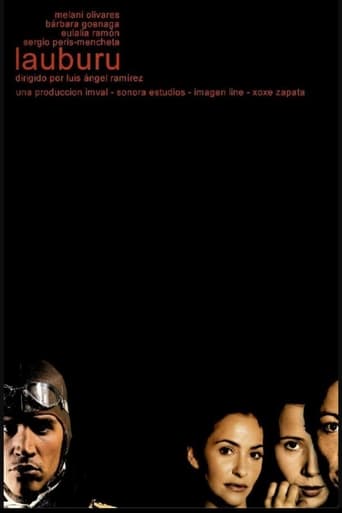
Guernika, year 1937. The city is savagely bombed from the air by a battalion of fascist troops. During the bombardment, Republican artillery shoots down an Italian plane. The pilot manages to parachute very close to a village inhabited by three women. Badly wounded on the ground, he is going to be finished off by one of them, Ikerne. This one, however, feels disturbed by the man's presence, and in a purely impulsive act she decides to take him to the house's barn. The presence of the man in the house reveals the lethargic desire of the three women. But it will also bring out the small conflicts and contradictions that the harsh survival conditions in the house have generated. The solution finds its way between desire for man and hatred for the enemy.
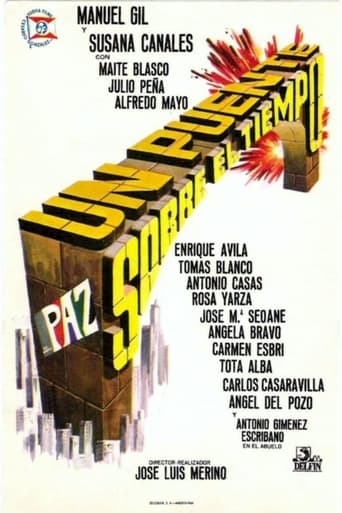
Javier López Cronwell, journalist, son of an American and a Spaniard, comes to Spain to write a series of anti-communist articles. The boy is politically neutral and emotionally and personally cold. He comes into contact with his paternal grandfather and the friends of his father, who died in our Liberation War, who propose that he take the provisional ensigns as a topic for his article. He prepares his return to North America without waiting to see the 25th anniversary Victory Parade, despite the wishes of his father's friends, old ensigns who will parade to show the world that they are still in the breach.
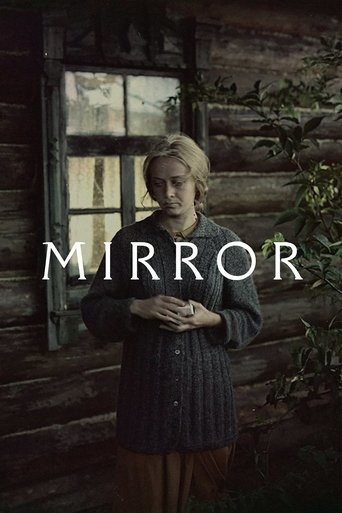
A dying man in his forties recalls his childhood, his mother, the war and personal moments that tell of and juxtapose pivotal moments in Soviet history with daily life.
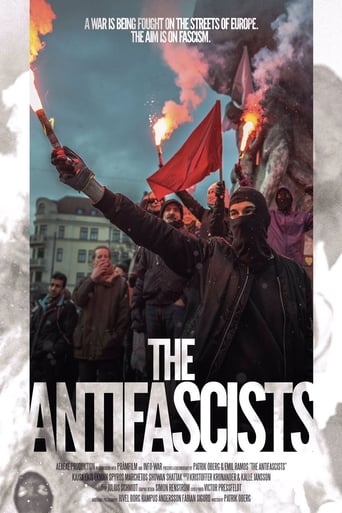
A low-intensity war is being fought on the streets of Europe and the aim is on fascism. This critically acclaimed documentary takes us behind the masks of the militants called antifascists. In 2013 a group of armed nazis attacks a peaceful demonstration in Stockholm where several people are injured. In Greece the neo-nazi party Golden Dawn becomes the third largest in the election and in Malmö the activist Showan Shattak and his friends are attacked by a group of nazis with knives and he ends up in a coma. In this portrait of the antifascists in Greece and Sweden we get to meet key figures that explain their view on their radical politics but also to question the level their own violence and militancy.
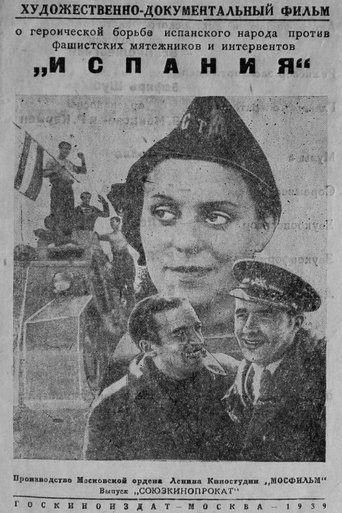
A feature-length documentary based on film reports from the Spanish civil war.

The concept for the film was developed based on sociological research conducted as part of the Youth Subcultures conference in collaboration with the Institute of Sociology of the Slovak Academy of Sciences. The film’s core value lies in its ability to provide an inside look at selected subcultures, achieving an exceptional level of engagement with their members. The filmmakers managed to break through the participants' initial reluctance to openly discuss their experiences. The documentary directly addresses key aspects of these subcultures, including drugs, faith, and personal beliefs. It focuses on six specific groups: the techno scene, graffiti artists, antifascists, religiously oriented youth, skinheads, and young people inspired by Eastern spirituality. The film includes footage from illegal rave parties, graffiti sessions, and other underground activities. Overall, the documentary serves as an insightful map of Bratislava’s contemporary alternative scene.
A short film on Republican efforts to improve education standards during the Spanish Civil War.
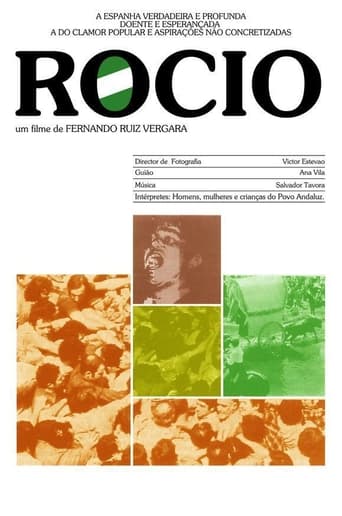
The film shows the genesis of the El Rocío pilgrimage and unveils the economic, socio-political and religious reasons and interests that nurture the phenomenon.
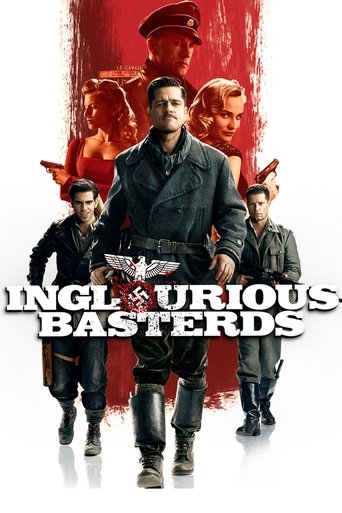
In Nazi-occupied France during World War II, a group of Jewish-American soldiers known as "The Basterds" are chosen specifically to spread fear throughout the Third Reich by scalping and brutally killing Nazis. The Basterds, lead by Lt. Aldo Raine soon cross paths with a French-Jewish teenage girl who runs a movie theater in Paris which is targeted by the soldiers.
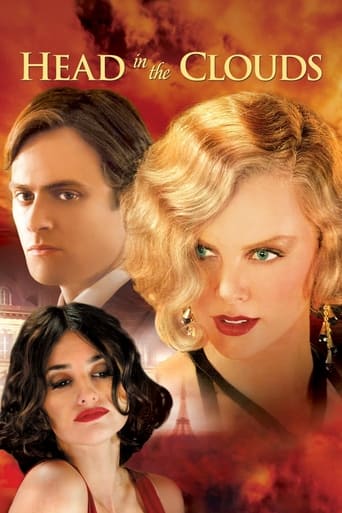
Gilda Bessé shares her Paris apartment with an Irish schoolteacher, Guy Malyon, and Mia, a refugee from Spain. As the world drifts toward war, Gilda defiantly pursues her hedonistic lifestyle and her burgeoning career as a photographer. But Guy and Mia feel impelled to join the fight against fascism, and the three friends are separated.
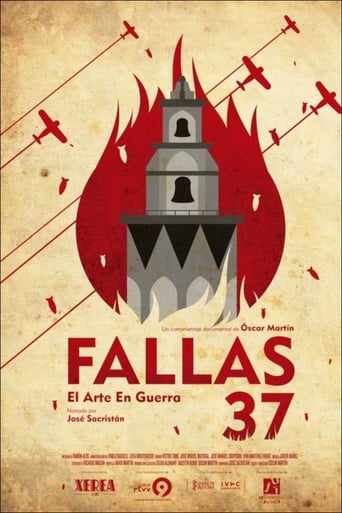
In November 1936, a few months since the beginning of the Spanish Civil War, the government of the Second Republic moves to Valencia. In this situation, several Valencian artists and intellectuals decide to build four fallas — satirical plasterboard sculptures created to be burnt — to mock fascism.