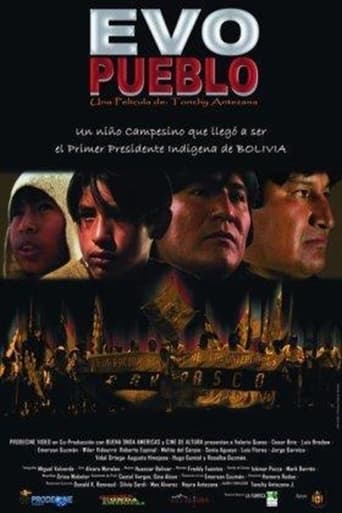
Evo Pueblo
2007-10-31 · Runtime unavailable · ★ 6.2
This is the history of a young farmer of the Bolivian plateau that becomes the first indigenous president of Bolivia. His childhood consists of shepherding ewes in the small school located in Orinoca where he befriends Reneco and Jamie, as well as his first love Wilma. All of them partake in different stages of each others lives. At the young age of 17 he is transferred to Oruro mining city in the heat of the Bolivian plateau. In order to survive he will have to work as a brick maker, baker, and trompetista in the Imperial band. The poverty and continuous droughts in the Moral field force the family Ayma to migrate towards the cochabambino tropic. In the tropical Chapare, Evo will become the biggest coca grower, soon to be delegated and win in the elections for president in 2005 with 54% votes. Evo Pueblo depicts the reality of our country, accounting for the common man that inhabits Bolivia through his fights, joys, poverty, exclusion and marginamiento.
Trailers are previews, not full movies.
No authorized playback source configured. Use the legal watch options below.
Production details
- Directors
- Tonchy Antezana
- Production companies
- Unavailable
- Countries
- Bolivia
- Status
- Released
Top Cast
Cast unavailable.
Title information and images are supplied by TMDb. Explore our discovery guide for advice on comparing metadata and legal viewing options.
Where to watch
Availability provided by JustWatch via TMDb. Offers can change. Provider links are listed on TMDb; full playback requires a separately authorized source.
Availability not listed for this country.
Seasons & episodes
Recommendations

Oliver Stone charts the history of the United States from the Second World War to the present.

Former United States Secretary of Defense Donald Rumsfeld discusses his career in Washington D.C. from his days as a congressman in the early 1960s to planning the invasion of Iraq in 2003.

The film follows adventurer Jeff Johnson as he retraces the epic 1968 journey of his heroes Yvon Chouinard and Doug Tompkins to Patagonia.

Lupita Nyong'o narrates a documentary about Peanuts and its creator, Charles M. Schulz. Famous fans—including Drew Barrymore, Kevin Smith, and Al Roker—share its influence on them, and a new animated story finds Charlie Brown on a quest.

A detailing of the rise to prominence and global sporting superstardom of six supremely talented young Manchester United football players (David Beckham, Nicky Butt, Ryan Giggs, Paul Scholes, Phil and Gary Neville). The film covers the period 1992-1999, culminating in Manchester United's European Cup triumph.

The history of cinematic sound, told by legendary sound designers and visionary filmmakers.

A documentary highlighting the Soviet Union's legendary and enigmatic hockey training culture and world-dominating team through the eyes of the team's Captain Slava Fetisov, following his shift from hockey star and celebrated national hero to political enemy.

A backstage and on-stage look at Justin Bieber during his rise to super stardom.
A behind-the-scenes documentary about the Clinton for President campaign, focusing on the adventures of spin doctors James Carville and George Stephanopoulos.
National Geographic's riveting effort recounts all 12 crewed missions using only archival footage, photos and audio.

A documentary about the development and spread of the virtual currency called Bitcoin.

A documentary exploring the legacy of Star Trek: Deep Space Nine, the reasons it went from the black sheep of Star Trek to a beloved mainstay of the franchise, and a brainstorm with the original writers on what a theoretical eighth season of the show could look like.

Experience the events of September 11, 2001 through the eyes of President Bush and his closest advisors as they personally detail the crucial hours and key decisions from that historic day.
Giving fans unprecedented access to the real life of the music sensation, Katy Perry: Part of Me exposes the hard work, dedication and phenomenal talent of a girl who remained true to herself and her vision in order to achieve her dreams. Featuring rare behind-the-scenes interviews, personal moments between Katy and her friends, and all-access footage of rehearsals, choreography, Katy’s signature style and more, Katy Perry: Part of Me reveals the singer’s unwavering belief that if you can be yourself, then you can be anything.
In a warehouse in the heart of Los Angeles, a dwindling handful of devoted craftspeople maintain more than 80,000 student musical instruments, the largest remaining workshop in America of its kind. Meet four unforgettable characters whose broken-and-repaired lives have been dedicated to bringing so much more than music to the schoolchildren of this city.

Martin Scorsese, Robert De Niro, Joe Pesci, and Al Pacino in conversation about The Irishman.

Mikhail Gorbachev, former president of the Soviet Union, sits down with filmmaker Werner Herzog to discuss his many achievements. Topics include the talks to reduce nuclear weapons, the reunification of Germany and the dissolution of his country.

This revealing documentary honors the legendary Sidney Poitier—iconic actor, filmmaker, and civil rights activist. Featuring interviews with Denzel Washington, Spike Lee, Halle Berry, and more.

Through concert performances and interviews, this film offers us a comprehensive look at the British pioneer rock group, The Who. It captures their zany craziness and outrageous antics from the initial formation of the group in 1964 to 1978. It notably features the band's last performance with long-term drummer Keith Moon, filmed at Shepperton Studios in May 1978, three months before his death.
The evolution of the depiction of the various Native American peoples in cinema, from the silent era to the present day: how their image on the screen has changed the way to understand their history and culture.
Similar titles
Bolivia has the world's largest deposits of lithium, a metal that is essential for the energy transition. Without lithium, no electricity storage facility, no data centre, no electric car, no smartphone would work. The Europeans want the raw material to save their automotive industry. The Bolivians want it to combat poverty. While the Bolivian government negotiates with corporations from around the world, civil society groups are mobilising in rural areas, organised mainly by women. The film offers a rare insight into the Europeans' strategy to secure the sought-after material and carves out the conflicting interests towards extractivism and industrialisation in Bolivia.
Are tourists destroying the planet-or saving it? How do travelers change the remote places they visit, and how are they changed? From the Bolivian jungle to the party beaches of Thailand, and from the deserts of Timbuktu, Mali to the breathtaking beauty of Bhutan, GRINGO TRAILS traces stories over 30 years to show the dramatic long-term impact of tourism on cultures, economies, and the environment.

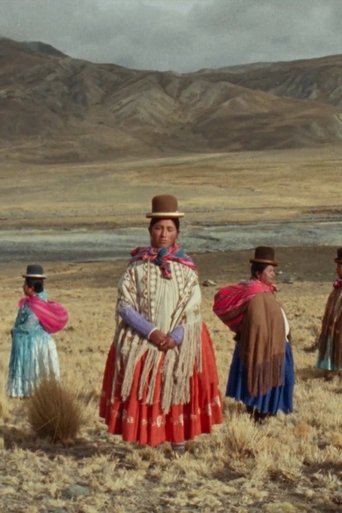
Bolivia's Climbing Cholitas - a group of indigenous women scaling the Andes Mountains, some of the highest peaks in the world. Shot in Bolivia for Vogue Latin America and Vogue Mexico's 20th anniversary cover story.
For many years, the Swiss photographer Jean-Claude Wicky captured the world of Bolivian miners in photographs. When he discovered how strongly they reacted to his pictures, he decided to make a film. Black-and-white photographs alternate with film sequences, in which the miners talk about the harsh conditions of their everyday lives, while also rendering visible their pride, dignity, culture and dynamic traditions. Every day is night is first and foremost a testimonial of profoundly sincere human encounters based on respect, generosity and gratitude.
'The Devil's Miner' tells the story of 14-year-old Basilio who worships the devil for protection while working in a Bolivian silver mine to support his family.

A documentary on American political campaign marketing tactics and their consequences.
A documentary centered on the union formed by Bolivian farmers in response to their government's (which was urged by the U.S.) effort to eradicate coca crops, and the man who would come to represent them, Evo Morales.


In the mountains of Bolivia, a collective of Indigenous women challenge gender stereotypes through skateboarding — tearing down the notoriously steep streets wearing traditional pollera skirts. For them, skateboarding is more than a sport — it’s a statement of resilience and empowerment in a machismo society. As the collective gains visibility, they are working toward their biggest goal yet: building Bolivia's first skate park and community center designed for girls.
2006: Evo Morales, first indigenous President is elected in Bolivia after the 2003 dramatic events following the fall of the President Sanchez de Lozada (exiled in the U.S. since then). The socialist revolution enters in its crucial stage. But dealing with power carries a burden of temptations and pathologies. In four years of shooting between Bolivia and the US this film focus on the difficult path of this unique historical opportunity. The film ends with the recent TIPNIS dramatic indigenous protest which creates an historical circle.

Images of Argentinian companies and factories in the first light of day, seen from the inside of a car, while the director reads out documents in voiceover that reveals the collusion of the same concerns in the military dictatorship’s terror.

In December of 2002, McDonald's had to shut down their restaurants in Bolivia. The company cited financial problems, but the real reasons were to be found elsewhere. Bolivia may be a small, poor nation on the global market, but a country's fierce local food culture can be sometimes a more powerful factor than economic clout. In his first feature-length documentary, Fernando Martinez shows what happened, a story driven by the characters behind the events and their life stories, such as renowned cooks and a review of popular sayings about the Bolivian food. The symbolism is obvious when a multinational giant is 'brought to its knees' by a country's traditions and heritage.
A documentary filmmaker travels to Bolivia to learn more about his father and his family's history.

Andean communities fight to protect their water from contamination by mining companies.

Photography trip to Bolivia filmed with a rostrum camera and edited with original sounds from the country.

Danger, toil, and superstition pervade life in a mining town high up in the Bolivian mountains. Tin is the heartbeat of the community providing jobs and livelihoods - but at considerable cost. With deaths commonplace, people make offerings to El Tio, the devil under the earth, for protection and good fortune. But when the mountain's flow of tin ebbs, further measures must be taken...
The story of a poor girl who leaves her starving family and sheep for a more prosperous village. Her grandfather finds her and tries to convince her to return to her home.