

Fortress of Peace
1964-10-25 · 20 min · ★ 6.0
Wehrhafte Schweiz is a Swiss Army propaganda film, made for the Expo 64 national exhibition in the then-prevailing spirit of geistige Landesverteidigung, "cultural national defense". It portrays the Swiss Army fighting against an unnamed, unseen enemy, using heavy weapons such as flamethrowers, artillery, tanks and bomber aircraft. After the enemy is repelled, the film closes with idyllic shots of beautiful Swiss landscapes. The 20-minute film was shot using the latest action film techniques in the Cinerama format on expensive MCS-70 Super Panorama 70mm stock. (Wikipedia)
Trailers are previews, not full movies.
No authorized playback source configured. Use the legal watch options below.
Production details
- Directors
- John Fernhout
- Production companies
- Farner-Looser Films, Cinerama Productions
- Countries
- Switzerland
- Status
- Released
Top Cast
Cast unavailable.
Title information and images are supplied by TMDb. Explore our discovery guide for advice on comparing metadata and legal viewing options.
Where to watch
Availability provided by JustWatch via TMDb. Offers can change. Provider links are listed on TMDb; full playback requires a separately authorized source.
Availability not listed for this country.
Seasons & episodes
Recommendations

A documentary about the life and films of director John Ford.

Prelude to War was the first film of Frank Capra's Why We Fight propaganda film series, commissioned by the Pentagon and George C. Marshall. It was made to convince American troops of the necessity of combating the Axis Powers during World War II. This film examines the differences between democratic and fascist states.

When Sgt. First Class Brian Eisch is critically wounded in Afghanistan, it sets him and his sons on a journey of love, loss, redemption and legacy.

This documentary movie is about the battle of San Pietro, a small village in Italy. Over 1,100 US soldiers were killed while trying to take this location, that blocked the way for the Allied forces from the Germans. Preserved by the Academy Film Archive in 2005.

A detailing of the rise to prominence and global sporting superstardom of six supremely talented young Manchester United football players (David Beckham, Nicky Butt, Ryan Giggs, Paul Scholes, Phil and Gary Neville). The film covers the period 1992-1999, culminating in Manchester United's European Cup triumph.

Join director Clint Eastwood and his creative team, along with Bradley Cooper and Sienna Miller, as they overcome enormous creative and logistic obstacles to make a film that brings the truth of Navy SEAL Chris Kyle's story to the screen.

Amber Heard and Nicole Kidman discuss their characters Mera and Atlanna.

Over the course of one year, this film follows the life of an ordinary Pyongyang family whose daughter was chosen to take part in Day of the Shining Star (Kim Jong-il's birthday) celebration. While North Korean government wanted a propaganda film, the director kept on filming between the scripted scenes. The ritualized explosions of color and joy contrast sharply with pale everyday reality, which is not particularly terrible, but rather quite surreal.
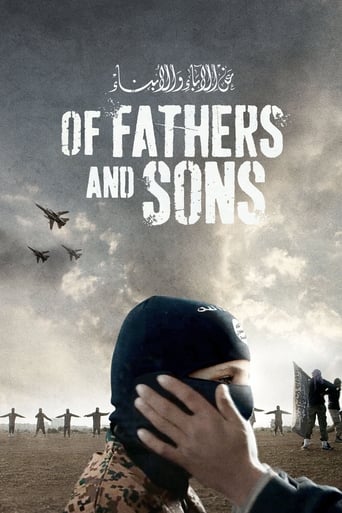
Talal Derki returns to his homeland where he gains the trust of a radical Islamist family, sharing their daily life for over two years. His camera focuses on Osama and his younger brother Ayman, providing an extremely rare insight into what it means to grow up in an Islamic Caliphate.
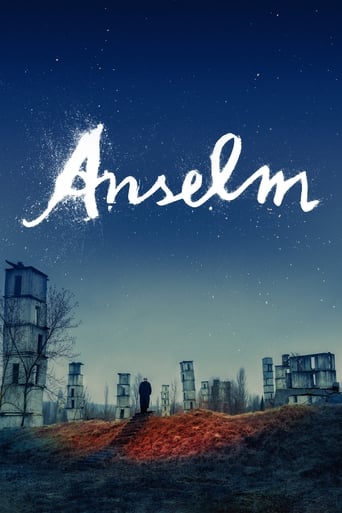
This unique cinematic experience dives deep into an artist’s work and reveals his life path, inspiration, and creative process. It explores his fascination with myth and history. Past and present are interwoven to diffuse the line between film and painting, allowing the audience to be completely immersed in the remarkable world of one of the greatest contemporary artists, Anselm Kiefer. Wim Wenders shot this unique portrait over the course of two years in stunning 3D.
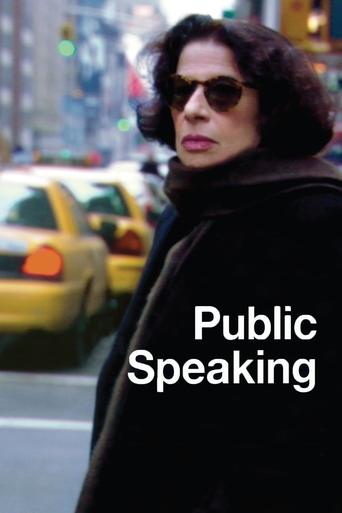
Martin Scorsese’s portrait of writer and social commentator Fran Lebowitz, celebrated for her sharp wit and observations on modern life. Filmed at New York’s Waverly Inn and intercut with archival footage and interviews, the documentary captures Lebowitz’s distinctive worldview through her spontaneous monologues and public appearances.

Pete Postlethwaite stars as a man living alone in the devastated future world of 2055, looking at old footage from 2008 and asking: why didn’t we stop climate change when we had the chance?

A string of threatening emails escalates into a revenge plot involving a newly married US marshal and his ex-girlfriend.

When Allied forces liberated the Nazi concentration camps in 1944-45, their terrible discoveries were recorded by army and newsreel cameramen, revealing for the first time the full horror of what had happened. Making use of British, Soviet and American footage, the Ministry of Information’s Sidney Bernstein (later founder of Granada Television) aimed to create a documentary that would provide lasting, undeniable evidence of the Nazis’ unspeakable crimes. He commissioned a wealth of British talent, including editor Stewart McAllister, writer and future cabinet minister Richard Crossman – and, as treatment advisor, his friend Alfred Hitchcock. Yet, despite initial support from the British and US Governments, the film was shelved, and only now, 70 years on, has it been restored and completed by Imperial War Museums under its original title "German Concentration Camps Factual Survey".

A love letter from a young mother to her daughter, the film tells the story of Waad al-Kateab’s life through five years of the uprising in Aleppo, Syria as she falls in love, gets married and gives birth to Sama, all while cataclysmic conflict rises around her. Her camera captures incredible stories of loss, laughter and survival as Waad wrestles with an impossible choice– whether or not to flee the city to protect her daughter’s life, when leaving means abandoning the struggle for freedom for which she has already sacrificed so much.

A celebration of the universe, displaying the whole of time, from its start to its final collapse. This film examines all that occurred to prepare the world that stands before us now: science and spirit, birth and death, the grand cosmos and the minute life systems of our planet.
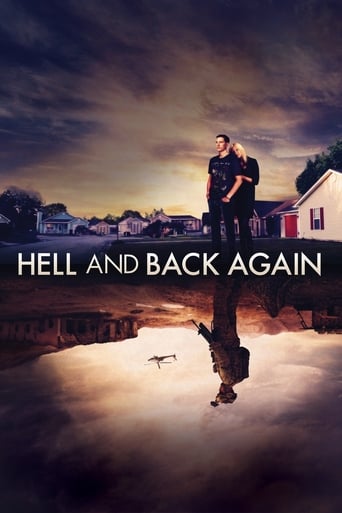
What does it mean to lead men in war? What does it mean to come home? Hell and Back Again is a cinematically revolutionary film that asks and answers these questions with a power and intimacy no previous film about the conflict in Afghanistan has been able to achieve. It is a masterpiece in the cinema of war.
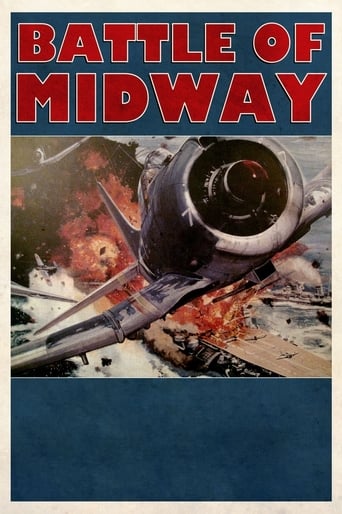
The Japanese attack on Midway in June 1942, filmed as it happened. Preserved by the Academy Film Archive, in partnership with Twentieth Century Fox Film Corporation, in 2006.

Daniel Craig candidly reflects on his 15 year adventure as James Bond. Including never-before-seen archival footage from Casino Royale to the upcoming 25th film No Time To Die, Craig shares his personal memories in conversation with 007 producers, Michael G Wilson and Barbara Broccoli.

As England reach the final of the Euros at last, 6,000 ticketless football fans storm Wembley stadium, leaving destruction in their wake.
Similar titles

Orson Welles acted in Brazilian culture and music by deeply researching Brazil's historical geology, consciously completing a legendary cultural mission. Although being turned down by Hollywood producers, he developed a triumphantly accomplished mission in the language domain - three friends of Welles' testified his love for cinema, his passion for Brazilian music and people and his obstinate endurance against formidable pressures coming from inside and outside Hollywood regarding his unfinished "It's All True".
Nazi propaganda film contrasting Germany in the days before Adolf Hitler became Chancellor with the Germany of "today" and how much better it is.
Nazi Third Reich propaganda film that used architecture as a statement about "racial accomplishment," and so called "racial superiority." Hitler claimed that between 1934 and 1940, the Nazi rule of Germany had produced architectural uniqueness, and this film was produced to shown to attempt to validate that. The opening montage gives a survey of earlier Gothic and Baroque structures in the country as an example of "architectural superiority" that the German race was said to be the sole inventor of; then moves on to deride the recent construction of the Bauhaus school (with a racially motivated score of Jazz music) and an example of German "architectural decay." Then proceeds to show off buildings constructed by the Nazi and an architectural revival, to "last 1000 years," Film also spends a great of time dwelling on massive and "busy" monuments that had been erected all over the county.
Flubs and bloopers that occurred on the set of some of the major Warner Bros. pictures of 1938.
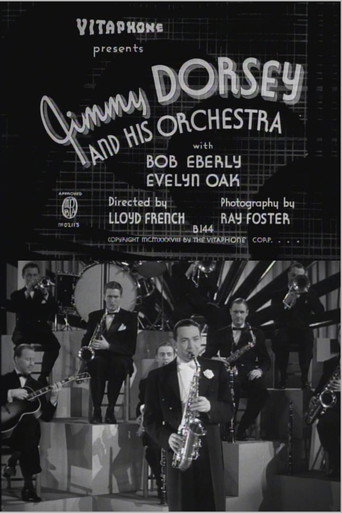
In a nightclub setting, Jimmy Dorsey and His Orchestra, with two of his vocalists, perform four of the group's best known songs. For the complete list of songs, check the soundtrack listing.
Jerry Wald has to write about radio, visiting Sid Gary gives him the tip it might be more easy for him to write this article at the radio station than at his newspaper office. At the studio they listen to the Boswell Sister's rehearsal, which is interupted by some not so friendly remarks by orchestra leader Abe Lyman, they listen at the door, where a Colonel Stoopnagel broadcast is prepared, as well as to the rehearsal of a new song for an broadcast by Kate Smith.

Paparazzi explores the relationship between Brigitte Bardot and groups of invasive photographers attempting to photograph her while she works on the set of Jean-Luc Godard's film Le Mépris (Contempt). Through video footage of Bardot, interviews with the paparazzi, and still photos of Bardot from magazine covers and elsewhere, director Rozier investigates some of the ramifications of international movie stardom, specifically the loss of privacy to the paparazzi. The film explains the shooting of the film on the island of Capri, and the photographers' valiant, even foolishly dangerous, attempts to get a photograph of Bardot.
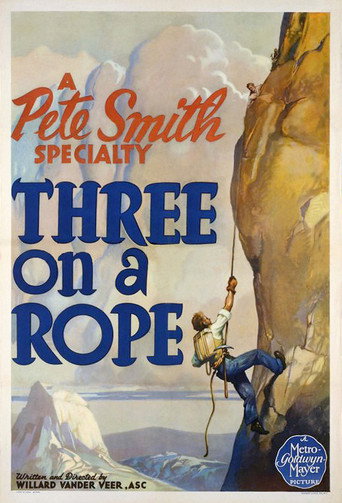
This short looks at the sport of rock climbing. A team of three men ascend a rock wall on Southern California's Tahquitz Rock (also known as Lily Rock) above Idyllwild. The various climbing techniques are explained, as well as the dangers one encounters in this sport. We also see the team rappel from the summit. A second team, used for comic relief, has nothing but problems.
A silent succession of black-and-white photographs of the city of Montreal.
"…elegant yet rustic in its simplicity of execution; tugged gently toward different sides of the set by hints of color and motion interactions, positive and negative spaces, etc., and the unyielding delivery on one of the great apotheoses of poetic cinema at fade-out time." – Tony Conrad
An obituary for Victor Jara, the Chilean folksinger who was murdered in a football stadium by the military junta during the days of the September 1973 coup.
Florence is a contemplative study of light and shadows, textures and planes, that makes beautiful use of the tonal qualities of black and white film. (mubi.com)

SONG 5: A childbirth song (the Songs are a cycle of silent color 8mm films by the American experimental filmmaker Stan Brakhage produced from 1964 to 1969).
The best known, "Weegee's New York" (1948), presents a surprisingly lyrical view of the city without a hint of crime or murder. Already this film gives evidence, here very restrained, of Weegee's interest in technical tricks: blur, speeded up or slowed-down film, a lens that makes the city's streets curve as if cars are driving over a rainbow. - The New York Times

Controversial cinéma vérité analysis of Havana’s lumpenproletariat in waterfront bars and cafés shortly after the failed Bay of Pigs invasion.
A 16 year old girl recalls the last moments of her summer vacation, spent with friends in the Laurentians north of Montreal. She reminisces about their talks on life, death, love, and God. Shot in direct cinema style, working from a script that left room for the teenagers to improvise and express their own thoughts, the film sought to capture the immediacy of the youths presence their bodies, their language, their environment.
The Veterans of Foreign Wars as a fraternal and social organization, with emphasis on their projects that benefit community life and cohesion.

Documentary made by the U.S. Army Signal Corps after the North African campaign.
An isolated village in the Lithuanian countryside. Seated in her house, an elderly woman recites an old folk story. Then she climbs up the tall ladder that takes her to the rooftop of the church.
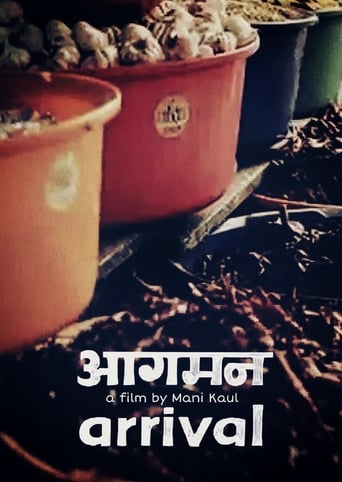
To the city come men, women, fruits, flowers, vegetables, goats and sheep – all ready for consumption. It is the process of consumption/exploitation that forms the core of the film.