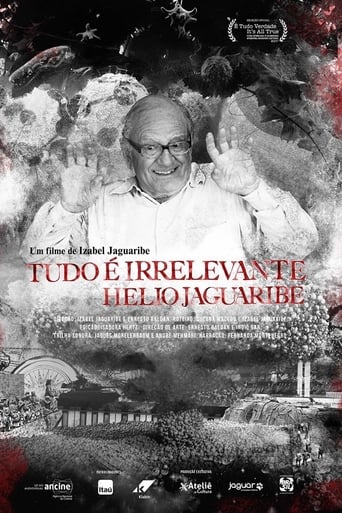
Tudo é Irrelevante. Hélio Jaguaribe
2017-04-23 · Runtime unavailable · Not rated
Trailers are previews, not full movies.
No authorized playback source configured. Use the legal watch options below.
Production details
- Directors
- Izabel Jaguaribe, Ernesto Baldan
- Production companies
- Unavailable
- Countries
- Unavailable
- Status
- Released
Top Cast
Cast unavailable.
Title information and images are supplied by TMDb. Explore our discovery guide for advice on comparing metadata and legal viewing options.
Where to watch
Availability provided by JustWatch via TMDb. Offers can change. Provider links are listed on TMDb; full playback requires a separately authorized source.
Availability not listed for this country.
Seasons & episodes
Recommendations

Al Pacino's deeply-felt rumination on Shakespeare's significance and relevance to the modern world through interviews and an in-depth analysis of "Richard III."
A presentation of a case for a needed transition out of the current socioeconomic monetary paradigm which governs the entire world society. This subject matter will transcend the issues of cultural relativism and traditional ideology and move to relate the core, empirical 'life ground' attributes of human and social survival, extrapolating those immutable natural laws into a new sustainable social paradigm called a 'Resource-Based Economy'.
A look at the origins, history and conspiracies behind the "Majestic 12", a clandestine group of military and corporate figureheads charged with reverse-engineering extraterrestrial technology.

In the Realms of the Unreal is a documentary about the reclusive Chicago-based artist Henry Darger. Henry Darger was so reclusive that when he died his neighbors were surprised to find a 15,145-page manuscript along with hundreds of paintings depicting The Story of the Vivian Girls, in What is Known as the Realms of the Unreal, of the Glodeco-Angelinnian War Storm, Cased by the Child Slave Rebellion.

A visual montage portrait of our contemporary world dominated by globalized technology and violence.

A 1993 documentary film about Bruce Lee. The film includes interviews from some of his fellow students and opponents who worked alongside him in his movies.
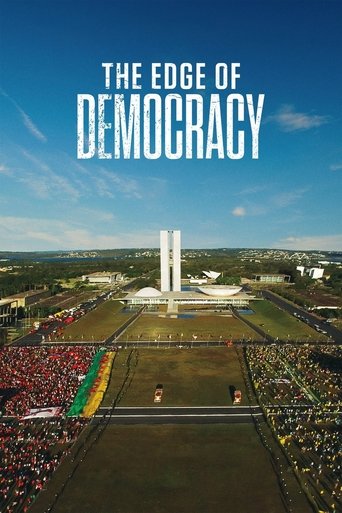
A cautionary tale for these times of democracy in crisis—the personal and political fuse to explore one of the most dramatic periods in Brazilian history. With unprecedented access to Presidents Dilma Rousseff and Lula da Silva, we witness their rise and fall and the tragically polarized nation that remains.

A string of threatening emails escalates into a revenge plot involving a newly married US marshal and his ex-girlfriend.
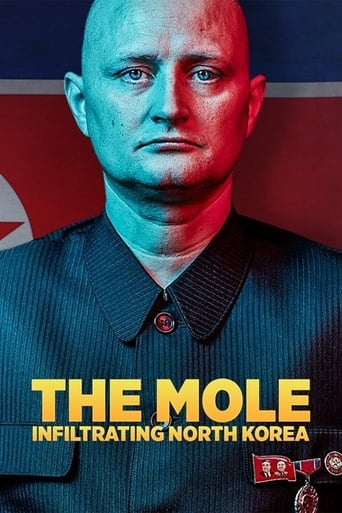
A real-life undercover thriller about two ordinary men who embark on an outrageously dangerous ten-year mission to penetrate the world's most secretive and brutal dictatorship: North Korea.
A road trip across five countries to explore the social and political movements as well as the mainstream media's misperception of South America while interviewing seven of its elected presidents.
An experimental documentary that explores Saudi Arabia's relationship with the U.S. and the role this has played in the war in Afghanistan.

Over 35 years after Bob Lazar's revelations, this documentary exposes secrets of a facility the government still denies. Featuring Lazar's testimony, recreations, and new evidence, it reopens a case that continues to spark global curiosity
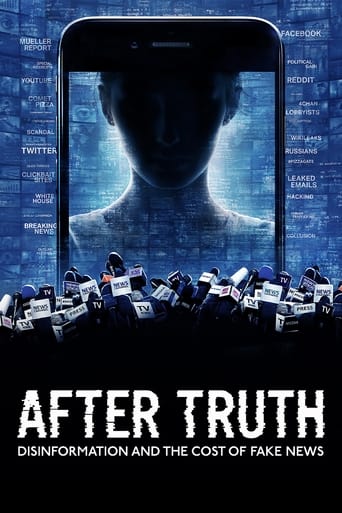
An investigation into the ongoing threat caused by the phenomenon of “fake news” in the U.S., focusing on the real-life consequences that disinformation, conspiracy theories and false news stories have on the average citizen.
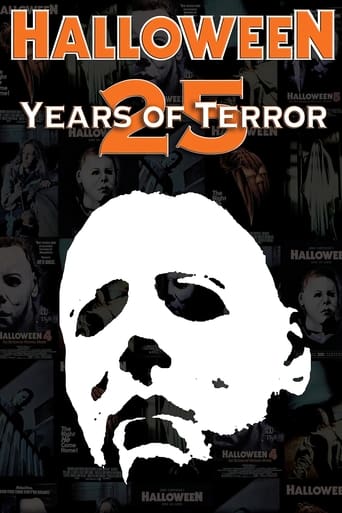
Follow the evolution of the 'Halloween' movies over the past twenty-five years. It examines why the films are so popular and revisits many of the original locations used in the films - seeing the effects on the local community. For the first time, cast, crew, critics and fans join together in the ultimate 'Halloween' retrospective.

In an intimate and joyful story of love in the face of loss, celebrated poets Andrea Gibson and Megan Falley find strength—and unexpected hilarity—in what might be their final year together.
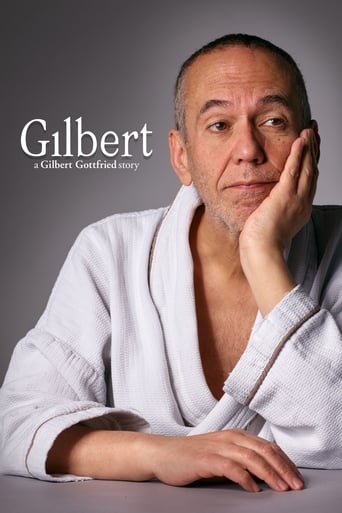
The life and career of one of comedy's most inimitable modern voices, Mr. Gilbert Gottfried.
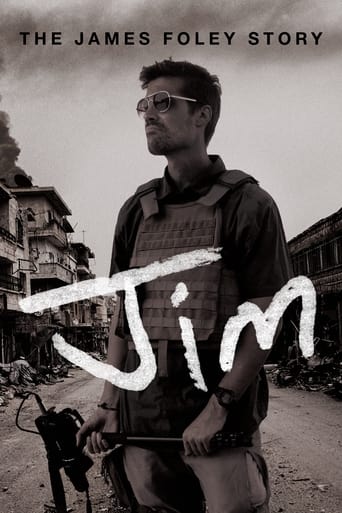
In August, 2014, a video of the public execution of American photojournalist James Foley rippled across the globe. Foley wore an orange jumpsuit as he knelt beside an ISIS militant dressed in black. That image challenged the world to deal with a new face of terror. And it tested one American family. Seen through the lens of filmmaker Brian Oakes, Foley’s close childhood friend, Jim takes us from small-town New England to the adrenaline-fueled front lines of Libya and Syria, where Foley pushed the limits of danger to report on the plight of civilians impacted by war.
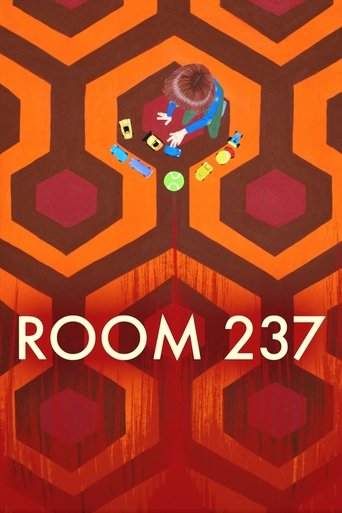
A subjective documentary that explores various theories about hidden meanings in Stanley Kubrick's classic film The Shining. Five very different points of view are illuminated through voice over, film clips, animation and dramatic reenactments.

Through deeply personal interviews with her siblings and an examination of the photographs, letters, and belongings left behind, Mariska assembles a new portrait of her mother Jayne Mansfield, an extraordinary and complex woman.

A compilation of over 30 years of private home movie footage shot by Lithuanian-American avant-garde director Jonas Mekas, assembled by Mekas "purely by chance", without concern for chronological order.
Similar titles
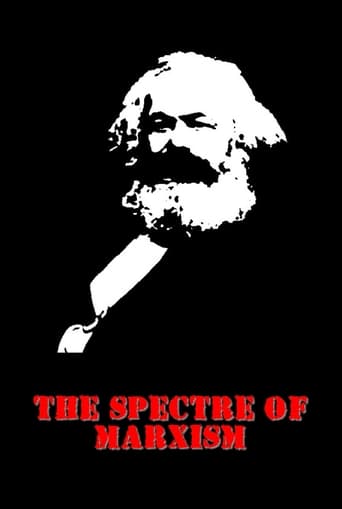
The impact of Marx on the 20th century has been all-pervasive and world-wide. This program looks at the man, at the roots of his philosophy, at the causes and explanations of his philosophical development, and at its most direct outcome: the failed Soviet Union.
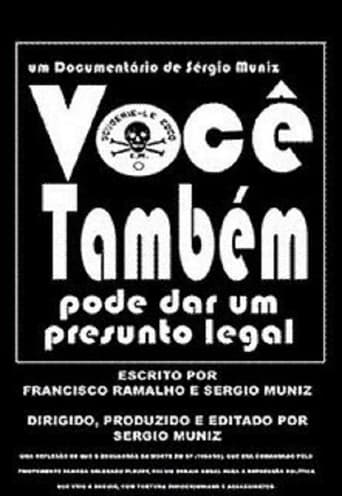
Amid the civil-military dictatorship implanted with the 1964 coup, Sergio Muniz had the idea of making a documentary about the action of the Death Squad. At the time, the press still had some freedom to disseminate the work of these death squads formed by police officers of various ranks, and that he acted on the outskirts of cities like Sao Paulo and Rio de Janeiro. The victims of police repression (as today) were men, poor and black, and this condition is supposed criminals.
Shot during an NLP (neuro-linguistic programming) seminar in Berlin, a group fluxuates between guided meditation and discussion on consciousness and self-acceptance. Neuro-linguistic programming is a set of techniques and beliefs that are used primarily towards personal development. NLP is based on the idea that mind, body, and language create an individual's perception of the world, and an individuals behaviors can be changed by "perceiving and feeling yourself". Rapport focuses on the staging of the self that takes place during this kind of group therapy.
With no choice, César faced leaving his family behind, quitting his job and joining the Army. In an unprecedented chain of events he became the first conscientious objector in Galicia (Spain) to be put in prison. Now, nearly thirty years later, Two Years, Four Months, A Day takes a look at what made him do it.
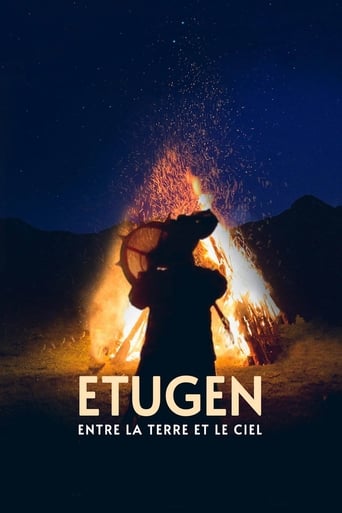
What is the purpose of our existence ? What is the soul ? Which are the power of mind, of conscience ? What is our link to nature ? Pondering these existential questions, this movie invites us to find out an universal wisdom, meeting shamans, healers, yogis, but also philosophers and doctors. From Mongolia plains to the Amazonian forest, it leads us far than we expected at first.
Sancho Panza enters a movie theatre in a provincial city. He is looking for Don Quixote and he finds him sitting off to the side and staring at the screen. The theatre is almost full; the balcony is entirely occupied by noisy children… La proiezione è cominciata (The Projection Has Begun) is an adaptation of The Six Most Beautiful Minutes in the History of Cinema by Giorgio Agamben. It is a portrait in 24 daguerreotypes per second.
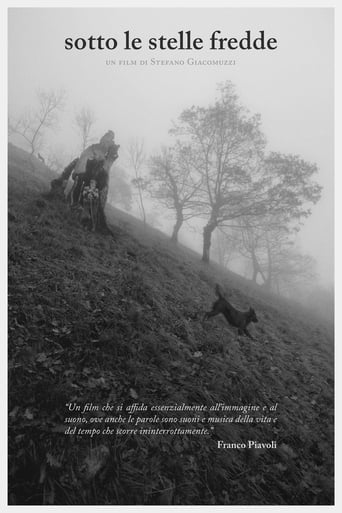
Set in the mountains of northeast Italy, this film may be considered an observational documentary about rural life. Although this is undeniably the case, at the same time Under the cold stars can hardly be considered a documentary: the microcosm on which it focuses appears to be a reflection of a broader reality and perhaps a way to deal with the themes of man’s existence and his relationship with animals, nature and, most importantly, with time. As written by Franco Piavoli "it is a film which essentially relies on images and sound, where words themselves are sound and the music of life, of the relentless flow of time."
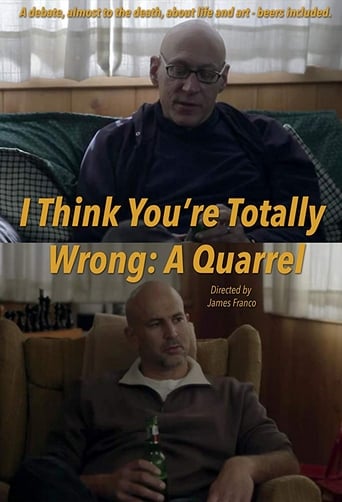
On the first day of shooting, James Franco, David Shields, and Caleb Powell throw out the script when a real-life argument breaks out between the three of them about what can and can't be used in the film. Shields and Franco browbeat Powell to sacrifice everything for the sake of the film; Powell threatens to leave; Shields feels guilty about betraying Powell; and Franco wants Shields and Powell to confess all for the sake of the film. A debate, nearly to the death, about life and art.

In 1973 Yorkshire public television made a short film of the Nobel laureate while he was there. The resulting film, Take the World from Another Point of View, was broadcast in America as part of the PBS Nova series. The documentary features a fascinating interview, but what sets it apart from other films on Feynman is the inclusion of a lively conversation he had with the eminent British astrophysicist Fred Hoyle.

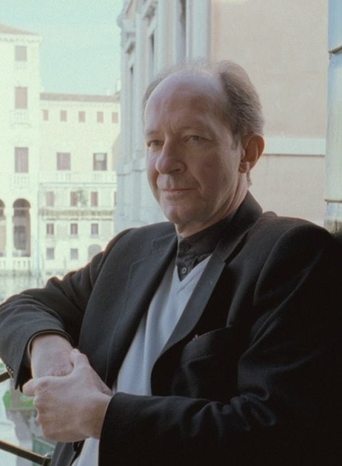
The portrait of Geoffroy de Lagasnerie, through fragments of the present, archives, readings and close voices. A film where political thought is felt in gestures, friendship and struggles, and where cinema becomes a space for the lively circulation of thought.
This refreshingly frank and impartial study of the discovery and development of the notorious hallucinogenic drug is notably free of moral judgmental, and features contributions from such legendary heroes of psychedelia as Albert Hoffman - the Swiss scientist who discovered the drug - Aldous Huxley - author of 'The Doors of Perception' - Ken Kesey - author of 'One Flew Over the Cuckoo's Nest.
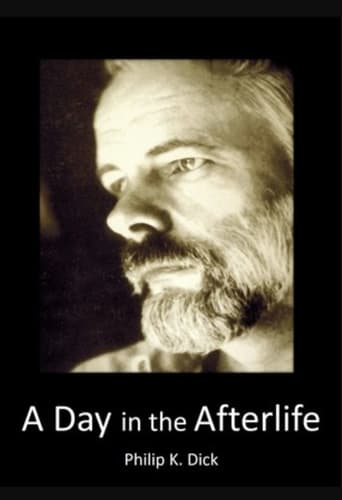
A poetic look at the life and legacy of legendary author Philip K. Dick (1928-1982), who wrote over a hundred short stories and 44 novels of mind-bending sci-fi, exploring themes of authority, drugs, theology, mental illness and much more.

A group of young politicians campaigning against an authoritarian constitution speak up, spark hope and ignite a once-in-a-generation movement in this energetic exploration of the recent elections in Thailand.
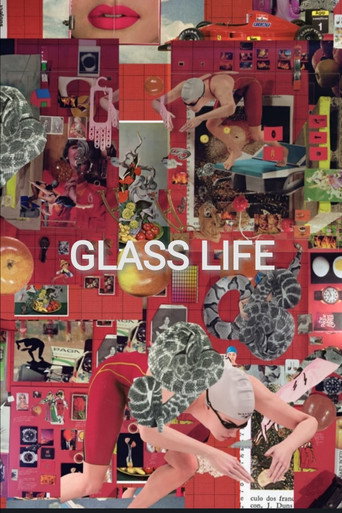
A dynamic configuration of images and videos overlaid with musings on human existence.
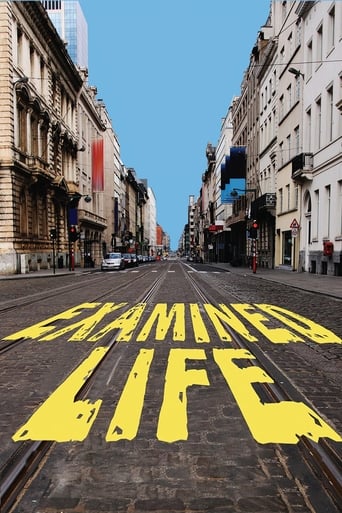
Examined Life pulls philosophy out of academic journals and classrooms, and puts it back on the streets. Offering privileged moments with great thinkers from fields ranging from moral philosophy to cultural theory, Examined Life reveals philosophy's power to transform the way we see the world around us and imagine our place in it.
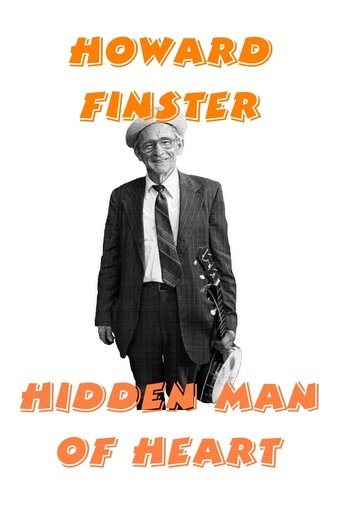
This remastered, rare, local production from the 80s is an unfiltered look into the mind and heart of the world-renowned folk artist Howard Finster. Walking and talking in his Paradise Garden, Finster gives insight into his visions, Faith, and artwork. He even sings and plays the banjo. Dr. George Pullen interviews Finster. And in this case, the word "interview" means that Dr. Pullen just lets Finster talk. And it's pure gold.

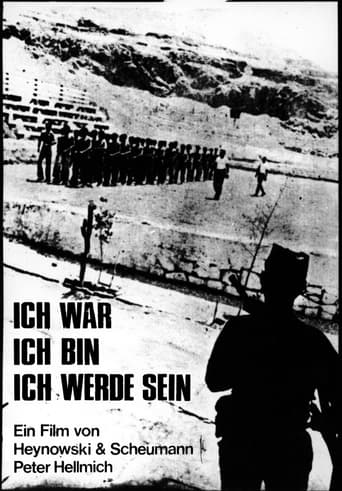
In the spring of 1974, a camera team from Studio H&S succeeded against the explicit orders of the Junta’s Chancellery, entered into two large concentration camps in the north of the country - Chacabuco and Pisagua - leaving with filmed sequences and sound recordings.
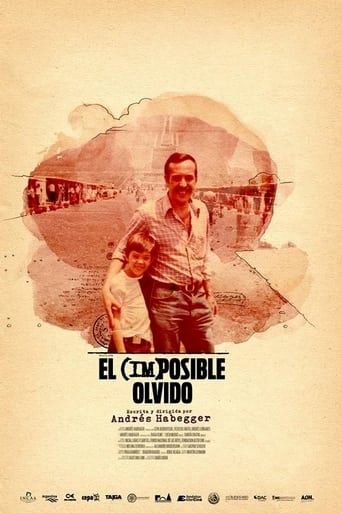
Argentine filmmaker Andrés Habegger embarks on a deeply personal journey in this documentary, seeking to recover memories and information about his father, Norberto Habegger, a journalist and Montonero activist who disappeared in Brazil in 1978 during a joint operation between the Argentine and Brazilian military. Traveling to places that were part of his life and revisiting old photos and his childhood diaries, the director fills in the gaps in a family history that was interrupted.