
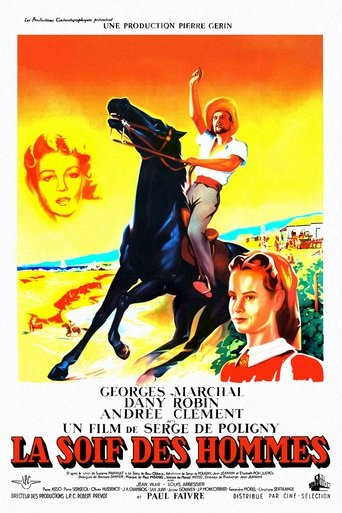
Thirst of Men
1950-03-31 · 93 min · ★ 7.0
During the colonial period in Algeria, Sergeant Bouvard helps Broussole and his two daughters, Alise and Julie, settle in Hassi Ben Okba. Demobilized, he plants vines with them. Seduced by Julie's charms, he nevertheless marries Alise because she owns the land. He protects Julie from all her lovers but cheats on Alise with Adèle, a settler's wife. Unable to bear it any longer, he runs away with Julie to Oran. The death of his father brings him back to Bou-Okba. He stays with Alise until the day when, selling his wine in Oran, he is taken over by his passion. It is Julie who will tell him to resume married life and start a family of settlers.
Trailers are previews, not full movies.
No authorized playback source configured. Use the legal watch options below.
Production details
- Directors
- Serge de Poligny
- Production companies
- Ciné Sélection
- Countries
- France
- Status
- Released
Top Cast
 Georges MarchalSergeant Léon Bouvard
 Dany RobinJulie
 Andrée ClémentAlice
 Paul FaivreBroussol
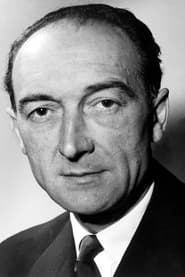 Jean VilarTypographer
 Louis ArbessierCollet
 Pierre AssoToulonnais
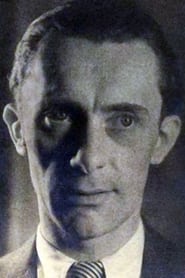 Jérôme Goulven
 Olivier Hussenot
 Pierre MoncorbierSavoyard
 Geneviève MorelSavoyard woman
 Pierre Sergeol
Title information and images are supplied by TMDb. Explore our discovery guide for advice on comparing metadata and legal viewing options.
Where to watch
Availability provided by JustWatch via TMDb. Offers can change. Provider links are listed on TMDb; full playback requires a separately authorized source.
Availability not listed for this country.
Seasons & episodes
Recommendations
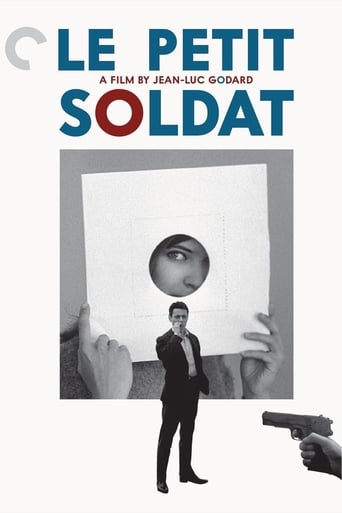
Despite his lack of political convictions, photojournalist Bruno Forestier is roped into a paramilitary group waging a shadow war in Geneva against the Algerian independence movement.

Algeria, the 1930s. Younes is nine years old when he is put in his uncle's care in Oran. Rebaptized Jonas, he grows up among the Rio Salado youths, with whom he becomes friends. Emilie is one of the gang; everyone is in love with her. A great love story develops between Jonas and Emilie, which is soon unsettled by the conflicts troubling the country.

Happily married with a daughter, Marc is a successful real estate agent in Aix-en-Provence. One day, he has an appointment with a woman to view a traditional country house. A few hours later, Marc finally puts a name to her face. It's Cathy, the girl he was in love with growing up in Oran, Algeria, in the last days of the French colonial regime. Marc hurries to her hotel. They spend the night together. Then she's gone again. And Marc's mother tells him Cathy never left Algeria. She was killed with her father in a bombing just before independence...

Algiers, 1938. Meursault, a quiet and unassuming employee in his early thirties, attends his mother's funeral without shedding a tear. The next day, he begins a casual affair with Marie, a work colleague. He quickly slips back into his usual routine.
A shady Parisian tries to take advantage of a family of French-descended Algerians forced to move to France.
Pépé le Moko, one of France's most wanted criminals, hides out in the Casbah section of Algiers. He knows police will be waiting for him if he tries to leave the city. When Pépé meets Gaby, a gorgeous woman from Paris who is lost in the Casbah, he falls for her.
On her way to visit her childhood home in a colonial outpost in Northern Cameroon, a young French woman recalls her childhood, her memories concentrating on her family's houseboy.

Set in France during the struggle for Algerian independence, Messaoud's mother is terminally ill and his father, needing to work long hours in the factory, can't look after him, so decides to put him and his older brother Abdel in foster care. Sent to the countryside, Abdel has to work on a farm, but Messaoud is taken in by a childless woman, who conceals his Arab origins from her fiercely Gaullist ex-army husband. Re-named Michel/Michou, and with his hair comically dyed blond, the young boy quickly steals the hearts of both foster-parents, and eventually is instrumental in saving their troubled marriage.

On trial for murdering his girlfriend, philandering stockbroker Larry Ballentine takes the stand to claim his innocence and describe the actual, but improbable sounding, sequence of events that led to her death.

As the Algerian War draws to a close, a teenager with a girlfriend starts feeling homosexual urges for two of his classmates: a country boy, and a French-Algerian intellectual.
In the early 20th-century, Frenchman Claude meets Englishwoman Ann in Paris. Ann invites him to her family home, intending him for her sister Muriel. Claude falls for Muriel, but families demand year-long separation before approving marriage.

A married tugboat captain falls for a woman he rescues from a sinking ship.

After a bad breakup, a college-aged Parisian moves into her father's flat only to discover that he is living with his new girlfriend - a young woman her age.

A woman has a close bond with her beloved Algerian grandfather, who protected her from a toxic home life as a child; his death triggers a deep identity crisis as tensions between her extended family members escalate, revealing new depths of resentment and bitterness.

A film in which the director captures the beautiful and accurate qualities of reality when building the energetic portrait of a 16-year-old girl immersed in the macho culture of urban suburban south-west France, just a stone’s throw away from the nearby countryside.

Colonial tea planter John Wiley, visiting England at the end of World War II, weds lovely English rose Ruth and takes her home to Elephant Walk, Ceylon, where the local elephants have a grudge against the plantation. Ruth's delight with the tropical wealth and luxury of her new home is tempered by isolation as the only white woman in the district; her husband's occasional imperious arrogance; a mutual physical attraction with plantation manager Dick Carver; and the hovering, ominous menace of the hostile elephants.

True tale of the tumultuous love affair between two French literary icons of the 19th Century, novelist George Sand and poet Alfred de Musset. But their affair falls apart during an excursion to Venice, Italy where Musset is distracted by drugs and Sand by a handsome doctor.
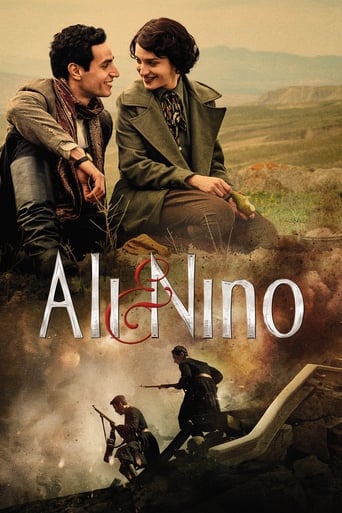
Muslim prince Ali and Georgian aristocrat Nino have grown up in the Russian province of Azerbaijan. Their tragic love story sees the outbreak of the First World War and the world’s struggle for Baku’s oil. Ultimately they must choose to fight for their country’s independence or for each other.

Henri “Papillon” Charrière, a safecracker from the Parisian underworld, is wrongfully convicted and sentenced to life imprisonment in the penal colony of French Guiana, where he forges a strong friendship with Louis Dega, a counterfeiter who needs his protection.

A married farmer falls under the spell of a slatternly woman from the city, who tries to convince him to drown his wife.
Similar titles

In late 19th-century Canton, legendary hero Wong Fei-Hung battles foreign forces' (English, French and American) plundering of China. When Aunt Yee returns from America totally westernised, Wong assumes the role of protector. This proves difficult when his martial arts school and local militia become involved in fierce battles with foreign and local governments. As violence escalates, even Aunt Yee has to question her new western ideals, but is it possible to fight guns with Kung Fu?
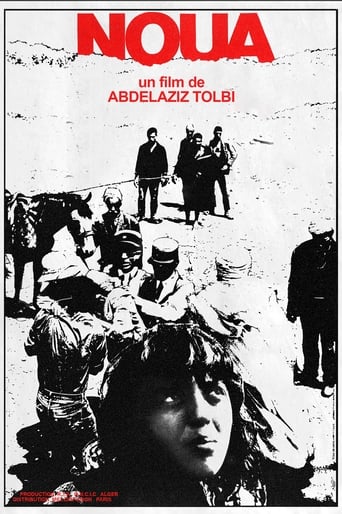
In Algeria in 1954, in a village in the Aurès region, poverty reigns over peasants enslaved by colonial administrators and Algerian landowners. Noua, in love with the son of a peasant dispossessed of his land, must be sold to a wealthy landowner.
Pépé le Moko, one of France's most wanted criminals, hides out in the Casbah section of Algiers. He knows police will be waiting for him if he tries to leave the city. When Pépé meets Gaby, a gorgeous woman from Paris who is lost in the Casbah, he falls for her.
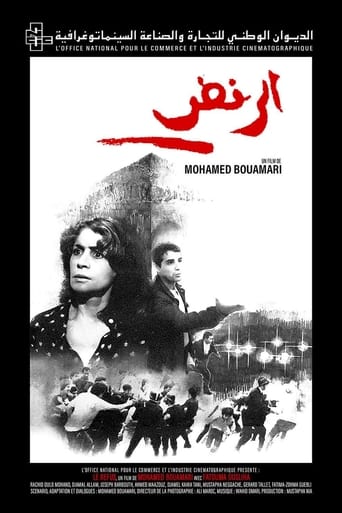
In 1971, the Algerian government nationalized hydrocarbons. The consequences of this decision on the community of Algerians in France are numerous. The Galti family is prey to these economic problems. The father, Khaled, former member of the F.L.N. in France, does not escape the sentence. Sharazade, his wife and comrade in combat, finds herself torn between her role as wife, mother and nostalgia for a country and a bygone past. As for his son Karim, a victim of socio-cultural division, all he has left is refusal.
A woman has a close bond with her beloved Algerian grandfather, who protected her from a toxic home life as a child; his death triggers a deep identity crisis as tensions between her extended family members escalate, revealing new depths of resentment and bitterness.

A man befriends a fellow criminal as the two of them begin serving their sentence on a dreadful prison island, which inspires the man to plot his escape.
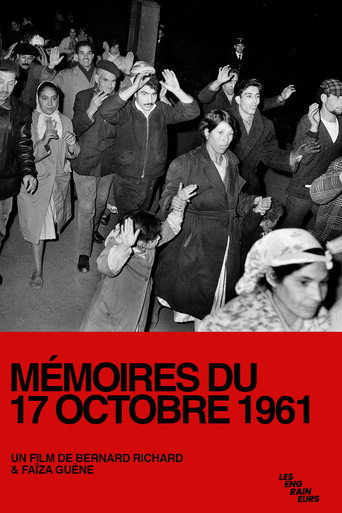
Three demonstrators from October 17, 1961, and a journalist recount the peaceful success of the demonstration and its brutal repression in the streets of Paris. Five months before the end of the Algerian War, the Gaullist government violently suppressed (40 to 300 deaths in a single evening, according to various sources) a peaceful demonstration by the entire Algerian civilian population of the Paris region, protesting the curfew imposed solely on this population (all participants held French citizenship). The government long denied this state crime; the official version: 3 deaths! In 1962, these events were granted amnesty by a simple decree (later enacted into law) issued by the same Gaullist government.
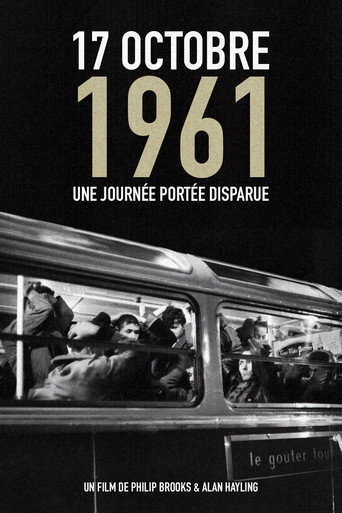
This documentary bears witness to the events that took place more than thirty years before the filming of this movie, on October 17, 1961, in Paris, during the Algerian War. It is a work not only about historical truth but also about memory. Constructed primarily from interviews conducted with those involved in the events, along with archival footage, photographs, and radio broadcasts from the time, our investigation proves that nearly 200 Algerians were killed (drowned, tortured) that night and in the days that followed by the French police. "A Missing Day" seeks to ask two key questions: how could such events have unfolded in the capital of a Western democracy barely thirty years ago? And why have they been silenced ever since?
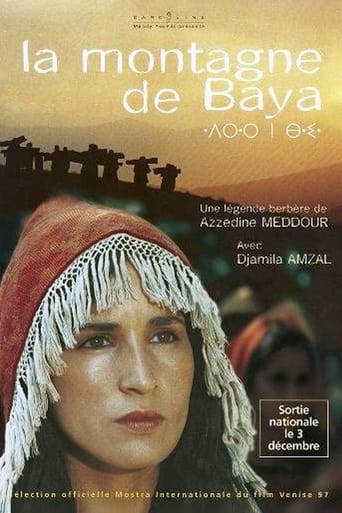
Set in the 1800s among the Berbers of North Africa, this 1997 Algerian feature concerns a noble widow who receives a customary purse of gold coins from the enemy tribe that murdered her husband; the gift puts her in conflict with her kinsmen, who want the money to buy back land taken by the enemy in cahoots with French colonials.

In Kabylie, rude mountain region in the north of Algeria. Arezki finds the young Larbi exhausted, buried under the snow. He takes him in and nurses him until he's recovered. The host seduces Arezki's daughter. She is pregnant. This is an unsupportable shame to the father of the female sinner. Arezki claims vengeance. He leaves his house and takes the oath not to come back before having killed Larbi who betrayed him under his own roof.
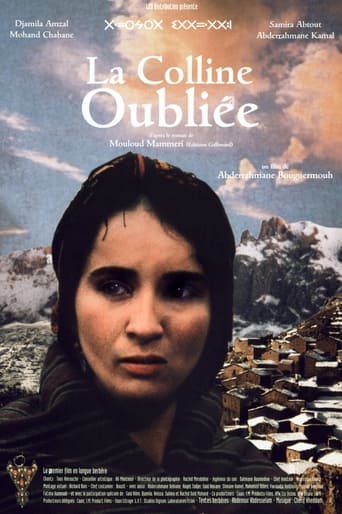
At the outbreak of the Second World War, two friends, Mokrane and Menach, abruptly interrupt their studies and return to their remote native Kabylian village of Tagsa. While waiting to be drafted into the French Army they have time to woo. Mokrane falls for beautiful Aazi and soon marries her only to find out that she can bear no child. Menach, on his part, is stongly attracted to Davda, but the latter is already married to a rich merchant...Happiness does not seem to be in store for the two former students...
The son of a French colonialist in Algeria returns to Algeria after learning that his father is ill. Memories from childhood return. He also must deal with some problems involving the Algerian fight for independence.
Dennis, owner of a rubber plantation in Cochinchina, is involved with Vantine, who left Saigon to evade the police. When his new surveyor arrives along with his refined wife Dennis is quickly infatuated by her.

Djamila, a young Algerian woman living with her brother Hadi and her uncle Mustafa in the Casbah district of Algiers under the French occupation of Algeria, sees the full extent of injustice, tyranny and cruelty on his compatriots by French soldiers. Jamila's nationalist spirit will be strengthened when French forces invade her university to arrest her classmate Amina who commits suicide by ingesting poison. Shortly after the prominent Algerian guerrilla leader Youssef takes refuge with her, she realizes that her uncle Mustafa is part of this network of anti-colonial rebel fighters. Her uncle linked her to the National Liberation Front (FLN). A series of events illustrate Jamila's participation in resistance operations against the occupier before she was finally captured and tortured. Finally, despite the efforts of her French lawyer, Jamila is sentenced to death...
The story of the post-independence nationalization of the mill of Monsieur Fabre, an old man attached to the land of Algeria where he was born. In this small town in eastern Algeria, there was nothing else to nationalize and they were actively preparing for the arrival of high dignitaries who would elevate the mill to the rank of an industrial flour mill even though it was threatened with ruin. The comedy gets worse when the football player from the local team withdraws for love, the officials' visit is canceled and Mr. Fabre returns.

A childhood episode comes back to the memory of a man with no land
When a Spanish Jesuit goes into the South American wilderness to build a mission in the hope of converting the Indians of the region, a slave hunter is converted and joins his mission. When Spain sells the colony to Portugal, they are forced to defend all they have built against the Portuguese aggressors.
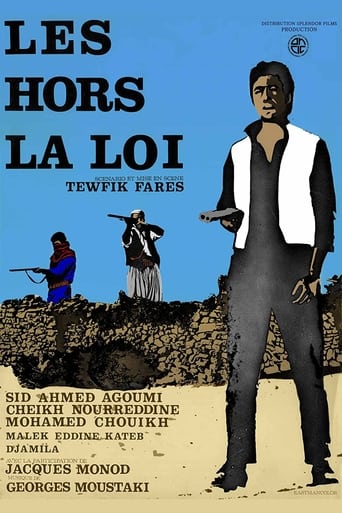
In prison in colonial Algeria, shortly after the end of the Second World War, three indigenous cellmates make out. Once free, they attack the authority represented by the triad of the boss, the gendarme and the administrator. “Living the colonial condition,” confided Tewfik Farès, “is something! It’s not sociologically or historically speaking. It’s life. And I think that’s all there in it. [...] For a hundred and thirty years, we wait. We hold back. We push back. We hope. At the same time, on different occasions, there are skirmishes, unrest.
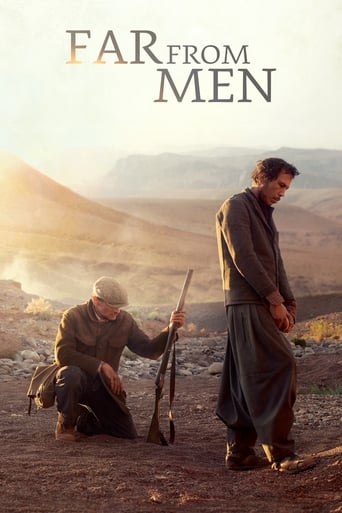
A French teacher in a small Algerian village during the Algerian War forms an unexpected bond with a dissident who is ordered to be turned in to the authorities.