
Prayer for a Home
2015-11-03 · 37 min · Not rated
Prayer for a Home shows how everyone needs shelter and a home – people in Latvia, Europe and troubled regions throughout the world. The film relates the story of the distinguished Latgalian poet Anna Rancāne and her family – her daughter Terēze, her grandson Daniel, and Daniel’s father, Dara Muhammad Ali – who are trying to stick together despite unfortunate circumstances. Even though Terēze and Anna are Catholic, while Dara is a Muslim from Kurdistan, their love transcends religious, national and cultural prejudice. However, due to circumstances beyond their control, the family is not destined to remain together, despite doing everything they can to stay close.
Trailers are previews, not full movies.
No authorized playback source configured. Use the legal watch options below.
Production details
- Directors
- Ināra Kolmane
- Production companies
- Film Studio Devini
- Countries
- Latvia
- Status
- Released
Top Cast
Cast unavailable.
Title information and images are supplied by TMDb. Explore our discovery guide for advice on comparing metadata and legal viewing options.
Where to watch
Availability provided by JustWatch via TMDb. Offers can change. Provider links are listed on TMDb; full playback requires a separately authorized source.
Availability not listed for this country.
Seasons & episodes
Recommendations

In an intimate and joyful story of love in the face of loss, celebrated poets Andrea Gibson and Megan Falley find strength—and unexpected hilarity—in what might be their final year together.

A documentary about the life and films of director John Ford.

Ranjit, a farmer in India, takes on the fight of his life when he demands justice for his 13-year-old daughter, the victim of a brutal gang rape. His decision to support his daughter is virtually unheard of, and his journey unprecedented.

A detailing of the rise to prominence and global sporting superstardom of six supremely talented young Manchester United football players (David Beckham, Nicky Butt, Ryan Giggs, Paul Scholes, Phil and Gary Neville). The film covers the period 1992-1999, culminating in Manchester United's European Cup triumph.

Alexander McQueen's rags-to-riches story is a modern-day fairy tale, laced with the gothic. Mirroring the savage beauty, boldness and vivacity of his design, this documentary is an intimate revelation of McQueen's own world, both tortured and inspired, which celebrates a radical and mesmerizing genius of profound influence.
The film follows adventurer Jeff Johnson as he retraces the epic 1968 journey of his heroes Yvon Chouinard and Doug Tompkins to Patagonia.
Just two years away from turning 30, participants in Michael Apted's documentary series are facing serious questions of identity and purpose, wondering whether they've found their place in the world.
After the high-profile killing of Damilola Taylor, Cornelius' family move out of London. But when they discover their new town is run by racists, Cornelius takes a drastic step to survive.
Film adaptation of French economist Thomas Piketty's ground-breaking global bestseller of the same name: an eye-opening journey through wealth and power.

A string of threatening emails escalates into a revenge plot involving a newly married US marshal and his ex-girlfriend.
Filmmaker Christopher Quinn observes the ordeal of three Sudanese refugees -- Jon Bul Dau, Daniel Abul Pach and Panther Bior -- as they try to come to terms with the horrors they experienced in their homeland, while adjusting to their new lives in the United States.

A documentary on the expletive's origin, why it offends some people so deeply, and what can be gained from its use.

Through deeply personal interviews with her siblings and an examination of the photographs, letters, and belongings left behind, Mariska assembles a new portrait of her mother Jayne Mansfield, an extraordinary and complex woman.

From the heights of her modeling fame to her tragic death, this documentary reveals Anna Nicole Smith through the eyes of the people closest to her.
A night of drunken chaos rocks a quiet Dutch town in this shocking documentary about a teen's birthday invite that accidentally went viral on Facebook.

A dreamlike conversation with the past and the present, reimagining Latasha Harlins' story by excavating intimate memories shared by those who loved her.

Bruce Conner’s most celebrated film for a reason: it takes historical moments that were replayed over and over on television—chilling repetition of Kennedy assassination coverage—and repurposes them into a meditation on how the media tries to exert authority and apply a sense of order to the anarchic. And though it may sound perverse to say so, the film is also—not incidentally—a thrill to watch. -- The A.V. Club

A compilation of over 30 years of private home movie footage shot by Lithuanian-American avant-garde director Jonas Mekas, assembled by Mekas "purely by chance", without concern for chronological order.

This revealing documentary honors the legendary Sidney Poitier—iconic actor, filmmaker, and civil rights activist. Featuring interviews with Denzel Washington, Spike Lee, Halle Berry, and more.
After another 7 year wait, director Michael Apted revisits the same group of British-born children from Seven Up! and 7 Plus Seven. The subjects are interviewed as to the changes that have occurred in their lives during the last seven years.
Similar titles
Vārdotājas (Wordsmiths) traces the recent rise of women's stand-up comedy in Latvia, but it is by no means just for laughs. Feelings of discomfort, shame, shock, are just some of the subjects tackled.
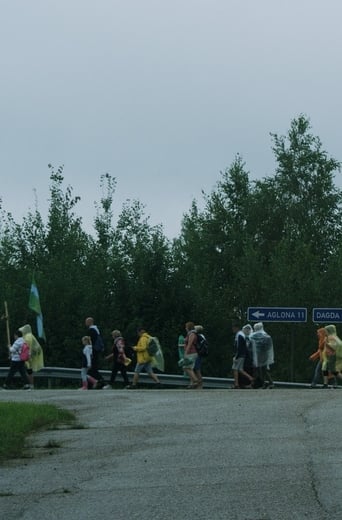
"If a person doesn't go to church anymore, then the church should go to them," says Rinalds, a calm, smiling, young man with a good sense of humor. He is a priest from a small village in Latgale, Latvia's easternmost and poorest region, and the documentary Prīsters (The Priest) follows the routines of his daily life, his thoughts of life and religion and why he chose this path for himself.
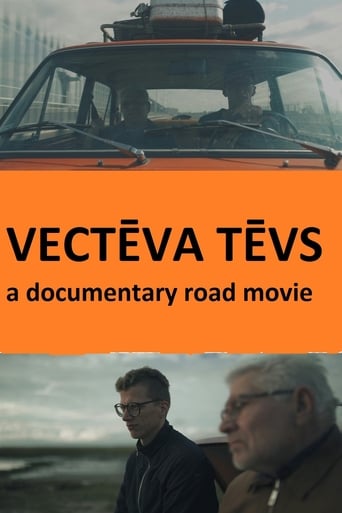
In this film a young man and his curmudgeonly grandfather are going 1,800 km to northern Russia in an old Zhiguli car, hoping to find the grave of their great-grandfather, who was deported. The grandfather Andris is sceptic over the lofty quest, initiated by his grand-son, as it’s not known what awaits them at their destination. Andris thinks they won’t find anything and will come back to Latvia without ever learning what happened to his father. However ever-optimistic Kārlis wants to use the journey not only to find answers about the past but also become closer to his grandfather who raised him. They both lost their parents as children.
Deniss is a Russian-speaking young man working at a fast food chain and spending his days in a small, gloomy apartment where all the things still remind him of his dead grandmother. Once a week he takes the stage, becoming a stand-up comedian. His jokes come from his life, which might be called dull as well as bleak, and, as he puts it, his ‘uninteresting biography’.

The three speakers represent two of the dialects, with the most common one - the middle dialect spoken in Riga and central parts of Latvia - not featured in the film. In intimate surroundings, a farmer, a schoolteacher, and a herder of ostriches talk about perceived differences between Latvian speakers, and about language policy and their lives.

Director Aija Bley's "Brīva Vieta - T17" captures the unique testimony of the modern era of Riga - the life of "antisquoters". The film tells about the daily life and dreams of the youth community and a mute fish, the so-called commune T17. The community lives in a non-landscaped building, so its occupation is a real challenge. The house is located under the paspārns of the association " Free Riga ", whose movement is based on a responsible attitude towards nature and the careful use of resources. Here, the community is motivated by the conviction that so few resources in everyday life should be consumed in the urban environment. The film follows the everyday life of the community members, who use their lifestyle to use the resources of nature, material, culture and time.
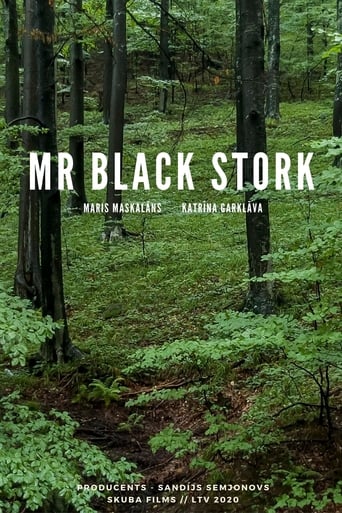
Māris Strazds (also known as "Mr Black Stork") is a man who's been studying black storks and their behaviour for forty years. His love for and relationship with these beautiful birds is longer than the relationship with his wife. Having spent more than half of his life following black storks, Māris is aware that due to deforestation the number of these birds in Latvia is rapidly approaching zero.

A story of a Latvian family making tentative plans to return to Latvia. Ģirts, a doctor working in Denmark for nine years, receives an invitation to set up a professional practice back in Latvia – a welcome opportunity, as he would like to look after his parents better. But things aren't as simple as that, and his family is divided over the issue.

A story about a train as it reflects our path of life. On it, like in life, people experience friendship and love, and sometimes feel lonely. On board, the announcement over the PA system outlines the rules, and then a reminder that the train won’t be stopping. Do we hurtle through life without making any stops? What are we thinking? We all know that the moment will come when our train pulls to a stop, but not how and when, and what happens afterwards.

An ordinary old folks’ home on the Latvian border – one of many, where our parents, grand-parents and other relatives spend their old age. Theirs is the generation whose prime years co-existed with the Soviet Union, and who were promised: work, give all you can, and we’ll take care when you’re old. The system changed and the reality is different. How to live in this reality, accept the current rules, or live in the past and have regrets. We will touch upon their world, and the dreams and hopes of Vilnis, Imants, Alberts and Elizabete.

Viktors is an entrepreneur with a unique offer – he has built a bar, bakery, spa, hotel and an auto-shop in a former “sovkhoz” cafeteria in the village of Lone. Viktors understands life, and that his words carry weight – almost 500 village inhabitants are now employed. Lone is a lively place both day and night, full of youths and many other businesses. Viktors is very proud.

A film documenting contemporary Latvian reality along the banks of the river Gauja while channelling one of the first Latvian sound documentary films, Gauja (1934). “Along with producers Sandijs Semjonovs and Gundars Rēders and editor Atis Klimovičs, we witnessed incidents and events along the banks of the river some 80 years later. We captured them along with the views of folks on this river in a documentally poetic style reflecting the reality in Latvia,” explains director Mārtiņš Grauds.

The film portrays the political situation in occupied Latvia 37 years ago, when writer Imants Ziedonis formed a group of like-minded peers into ‘’Dižkoku atbrīvotāji’’ – DAGi. Film reels and photos of the time show Imants Ziedonis and the DAGi participants – Māra Zālīte, Anna Žīgure, Roze Stiebra, Andris Buiķis, Vitolds Kucins and others. Today, with their contemporary experiences, they reflect on a time when the dream of an independent Latvia seemed impossibly far away. We’re Still Here reminds the younger generations that it’s possible to do good in the name your nation and its future not matter the circumstances.

Six theater and hip hop teachers take on a five month challenge to show the Latvian public that young men behind bars are more than just that. While seeming impatient, full of disbelief and even rude at first, it turns out to be a superficial impression given off by their masks that must be kept on at all time as an underage colony is a difficult place to be. It has its own rules and it’s not easy being creative there. Teachers help inmates reveal the talents within them that help transcending the monotony of the prison walls.

A documentary that chronicles twin brothers searching for their absent father in faraway Russia. Having very few leads, the twin brothers – different in character and interests – are also looking for the ties that have never bound them as closely as they would have liked.

Nearly everybody has been to the circus to laugh about clowns, be afraid of the lions and to eat sugar cane. However, can anyone imagine that circus artists reside right there in the circus building - above the arena in the second floor hotel rooms - where they also prepare meals, do their laundry and try out their magic tricks? For over 125 years, despite the discomfort of non-renovated premises and ubiquitous animal odor, local and foreign circus artists follow their routine to create the circus miracle. Sugarcane, Coati and Monowheel is a film about those who dwell in Riga Circus and about what happens outside the arena before and after meeting audience under the circus dome.

The heroine is a widow and a fiancé who wants to begin a new and happy life. Conflicts in her family’s past prevent it, but she does not give up – she wants to clear away the ruins and do what she can. “Enough of looking for guilt, it’s time to find a solution,” she thinks, and takes action.

There is a Man, called Mitrais by locals, who is one of the first professional nature inspectors in Latvia. For an older generation people his name is associated with an image of a real ranger, while youngsters who know him highly respect him. Mitrais is sure that among today’s youth there are more idealists than ever before. And they are ready to do something real and tangible, and not surrender to the overwhelming virtual pseudo-reality.
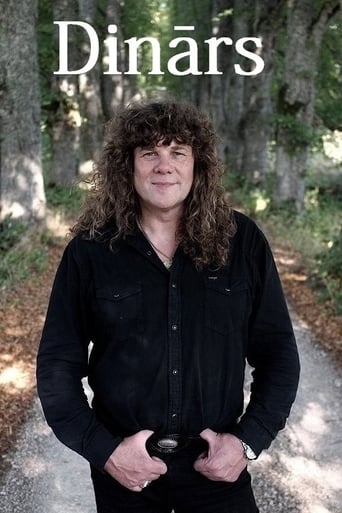
Dinārs is a Latvian schlager singer popular with the ladies and known for his big cat mane. The eponymous film follows his path over a turbulent season of work.

An attempt to understand the people chanting "Atlaist Saeimu!" (Sack the parliament!) year after year. Though rarely attracting a great deal of notice, there are always individuals collecting signatures for a referendum to dissolve the parliament for one reason or another, or simply standing outside the building and reciting their familiar mantra. Latvian governments change fairly often, but the parliament has been dissolved in line wth the Constitution only once, in 2010 (in 1934 it was dissolved unconstitutionally following a coup by Prime Minister Kārlis Ulmanis). The actual parliament building in Old Rīga was, however, attacked in January 2009 during a very rare violent protest which precipitated the fall of Ivars Godmanis' cabinet. The documentary zips back and forth in time giving portraits of various different people and political forces pushing the idea to "Atlaist Saeimu" for different reasons.