

Y mañana será otro día… mejor
2018-04-16 · Runtime unavailable · ★ 7.7
Mónica, a career-minded woman, falls in love with Camilo, her married boss. Meanwhile, his secretly terminally ill wife plans to set up Mónica and her own husband to ensure her children have a family after her death.
Trailers are previews, not full movies.
No authorized playback source configured. Use the legal watch options below.
Production details
- Creators
- José Ignacio Valenzuela
- Production companies
- Televisa
- Countries
- Mexico
- Status
- Ended
Top Cast
 Angélica ValeMónica
 Alejandra BarrosDiana
 Emmanuel PalomaresRafael
 Mauricio AbularachMauricio
 Fernanda BorchesLaura
 Miranda KayRegina
 Ana LayevskaMargarita
 Lizy MartínezBárbara
Title information and images are supplied by TMDb. Explore our discovery guide for advice on comparing metadata and legal viewing options.
Where to watch
Availability provided by JustWatch via TMDb. Offers can change. Provider links are listed on TMDb; full playback requires a separately authorized source.
Seasons & episodes
Recommendations
Paulino Córdoba, Gabino Roura, Rodolfo Huerta, and Matías Quiroga have been friends since childhood; however, as adults, their priorities shifted, and a sin now threatens to destroy their friendship. Paulino owns the El Milagro apple hacienda and is married to Rosario; they have two children, César and Lucrecia. Rosario has always favored her son while openly rejecting her daughter. Lucrecia was raised by Delfina, Rosario’s maid and Manuel’s mother.
A telenovela that dramatizes the romances and rivalries between two brothers and two sisters in Mexico between the years 1885 and 1900.
Emiliano, a wealthy Mexican businessman, is ripped off by his friends and partners. Hidden in Bogotá, he receives help from Rosario, a mariachi singer. She does not know Emiliano’s background and that he is wanted by the police of two countries and by a criminal organization. With a new name and personality, he adapts well to his new life as a mariachi band member and finds in Rosario the love of his life. But he is afraid his secret will tear them apart. He needs to clear his name and resolve his case to avoid that fate. Meanwhile, he often finds his love tested and vulnerable to several rivals, but Rosario always trusts that he has been honest with her.

¡Válgame Dios! is a Spanish-language Venezuelan telenovela written by Mónica Montañéz for Venevisión. Sabrina Seara and Eduardo Orozco star as the main protagonists while Ricardo Alamo, Carlota Sosa and Raquel Yanez star as the main antagonists.

La Mujer Del Vendaval is a 2012 Mexican telenovela produced by Mapat L. de Zatarain for Televisa. It is a remake of the Venezuelan telenovela Un Esposo para Estela. Ariadne Díaz and José Ron star as the main protagonists, while Chantal Andere, Marco Muñoz, Manuel Flaco Ibañez and Florencia del Saracho as the main antagonists.

Victoria Balvanera owns a vast expanse of land and a prestigious advertising agency. She is married to the landowner Nelson Brizz. Following an attempted kidnapping, she finds love with José Ángel—her rescuer and the estate's new foreman.

The show's premise revolves around a pair of twin sisters who were separated when they were young, and as adults the younger sister is forced to act as a "replacement" for her wealthy twin who wants to temporarily leave her husband and his family to enjoy a life of luxury with multiple lovers.

True love threatens to tear a family apart in this epic Mexican serial set in the 1800s. Rich and beautiful Matilde falls in love with Adolfo, but her mother, Augusta, disapproves of the relationship when she learns Adolfo is poor. Augusta forces her daughter to marry rich and handsome Manuel Fuentes Guerra, but Matilde plays with fire by continuing to be with Adolfo. Adela Noriega, Fernando Colunga, Helena Rojo and Chantal Andere star.

Popular telenovela produced in Mexico in 1979, starring Verónica Castro, Rogelio Guerra and Rocío Banquells. Castro also sang the theme Aprendí a Llorar, a song written by Lolita de la Colina. The telenovela was produced by Chilean Valentín Pimstein and Carlos Romero, it was directed by Rafael Banquells. The story was written by Inés Rodena and adapted by Valeria Philips.

The story of two lawyers specializing in family law, Ricardo and Alejandra, that despite coming from two disappointments and being in a world where it seems that love loses strength, before so much divorce, they still have faith in finding true love.

La Patrona is a Spanish-language telenovela produced by United States-based television network Telemundo Studios, Miami and Mexican Argos Comunicación. The telenovela is a remake of the Venezuelan telenovela La Dueña, written by José Ignacio Cabrujas. The name reflects a local term or slang in Mexico to address a person recognized as the main boss. However, the title is also a reflection of both the protagonist and the antagonist struggle to conquer power, authority and respect in a labor field traditionally deemed to be a man's job.

Raquel and Damián are happily married with two children. Destiny leads Damián to meet Carolina and feels an undeniable attraction towards her. Damián did not know that Carolina was already married to Santiago Álvarado, a construction architect with whom she has two children. When Raquel drops off her son Fede at school, she accidentally backs her car to Santiago's truck, and they realize that their sons know each other. Raquel volunteers to pay for the damages but Santiago refuses. Raquel insists and goes to the Álvarado home with Damián. The two couples become great friends. But the desire between Damián and Carolina is stronger than their marriage commitment and both decide to deceive to their spouses. Damián and Carolina have a terrible car accident. Rescuers only find a seriously injured Damián, and Carolina has mysteriously disappeared from the scene. During the investigation by the police, Raquel and Santiago learn that their spouses are lovers.

The beautiful young Montserrat is forced to marry a man she does not love in order to save her family from ruin and maintain their social standing.

Mariana Cantú and Silvana Del Valle are twin sisters who were separated at birth. After 11 years, the twins meet again and Silvana proposes to Mariana to be part of 'Cómplices al Rescate'. Together they will learn about friendship and love.

Yo no creo en los hombres (I don't trust men anymore) is a Mexican telenovela produced by Giselle González for Televisa. It is based on Yo no creo en los hombres (1991), produced in México.

Maricruz and Beatriz are school friends; Beatriz comes from a well-to-do family, whereas Maricruz belongs to a lower socioeconomic stratum. Both are on the verge of turning fifteen and are preparing to leave childhood behind. Issues within their family and social environments affect them directly; for Beatriz, her parents' marital breakdown becomes the primary obstacle to overcome, compounded by a sexual awakening fraught with taboos and misinformation. Meanwhile, Maricruz must contend with her mother's overprotectiveness and prejudices, as well as the tension caused by a neighbor who is obsessed with her.

La Impostora, is a Spanish-language telenovela presumably to be produced by United States-based television network Telemundo Studios, Miami.

Two very different families live in the village of Santa Lucía who are involved in a whirlwind of passion, pain, and revenge. The rivaling families are the Mendozas and the Alcocers. Severiano Mendoza and Candela Santana are a rich and powerful marriage who live at the ranch, "Las Ánimas", along with their young son, Cristóbal. Roberta and Raymundo Alcocer also have a daughter named Alonza; however, they do not live with the same luxuries as the Mendoza family, which causes frustration and resentment in Roberta as nothing is enough to fill the inferiority complex that follows her like a shadow.

Soccer is the central theme of this fun story, in which Lorena, Paulina, Daniela, and Fernanda learn to face life by tackling the challenges the game presents—both on the field and in love.

In the village of San Andres, the rivalry between two families the Valdes and the Ramirez is centered on "El Manantial", a beautiful fountain of water that happens to bathe the small property of the Valdes and not the neighboring ranch, the rich and prosperous hacienda "Piedras Grandes", where the best cattle are raised and is property of the Ramirez. But the spring is not the real reason for the hatred between the families. Justo Ramirez, married to Margarita Insunza, had a relationship with Francisca Rivero, wife of his enemy and neighbor Rigoberto Valdes. This relationship, founded in the betrayal, will cause the utmost bitterness and the destruction between the two families. The Valdes have a beautiful daughter named Alfonsina, who was born in the same year as Alejandro, the son and heir of the Ramirez. Although they have grown separately with their souls full of prejudices against their respective families, the two cannot avoid feeling attracted to each other. Margarita will not permit this and so she tells her husband to make sure her son will never be together with Alfonsina so he could marry Barbara, her cousin's daughter. Justo rapes Alfonsina and she leaves along with her mom and her aunt. Five years later... Alfonsina is graduating from school and has a good life until her mother commits suicide because she found out she was deathly ill and could no longer live with the guilt of her lifestyle. Before dying, her mother confesses to Alfonsina that Justo Ramirez destroyed her life and after that Alfonsina vows revenge on the man who destroyed her family. She returns to San Andres and there she once again sees Alejandro who is now engaged to Barbara. Their love is still present in their hearts. They will have to fight for their love and see if they can be happy by the shores of El Manantial... El Manantial is a Mexican telenovela that first aired in 2001, starring Adela Noriega and Mauricio Islas. The telenovela received TVyNovelas Award for Best Telenovela, in 2002.
Similar titles

Chepe Fortuna and Niña Cabrales are from different social classes. Chepe is a poor fisherman and Niña is from a wealthy family. He wants to become mayor to stop her wealthy family from building a port to industrialize the town. Niña is an ecologist and dissident from her family. She wants to help the community. Their love is brought together by dreams and the past, though they do not know it.

The story of a woman who becomes the daughter-in-law of an enemy for desperate revenge.

La sonrisa del diablo is a Mexican telenovela produced by Ernesto Alonso for Televisa and originally broadcast on Canal de las Estrellas from February 24 to July 31, 1992. It is the second adaptation of the 1970 telenovela of the same name, originally created by Luisa Xamar, and was adapted by Fernanda Villeli and Marcia Yance. The story follows Déborah San Román, a beautiful and ambitious young woman who stops at nothing to achieve wealth and power. After marrying a wealthy widower while secretly maintaining a relationship with her unscrupulous lover, she manipulates and betrays everyone around her. As her web of lies and crimes grows, love, honesty, and justice begin to threaten her ruthless ambitions.

Buscando el paraíso is a Mexican youth telenovela produced by Luis de Llano Macedo and Marco Flavio Cruz for Televisa and originally broadcast on Canal de las Estrellas from November 8, 1993, to April 1, 1994. Directed by Benjamín Cann, the telenovela stars Pedro Fernández and Yolanda Andrade, with Karla Álvarez and Alejandro Ibarra in antagonist roles. The story follows Dalia and Andrea Montero Machado, two sisters with very different personalities. While Andrea is confident and charismatic, Dalia is shy and insecure. Dalia secretly falls in love with Ángel, Andrea's former boyfriend, who begins a relationship with her only to hurt her. After being abandoned and discovering she is pregnant, Dalia finds support in Julio, a humble and hardworking young man. However, jealousy, betrayal, and unresolved feelings threaten their chance at happiness.
La última esperanza is a Mexican telenovela produced by Eugenio Cobo for Televisa and originally broadcast on Canal de las Estrellas from February 1 to May 14, 1993. It is a remake of the 1973 Mexican telenovela Muñeca, which was itself based on the 1971 Argentine telenovela Así en la villa como en el cielo, created by Abel Santa Cruz. The story follows Estelita Suárez, a kind-hearted young woman who lives in the impoverished neighborhood of La Última Esperanza while caring for her alcoholic father. Her life changes when she meets Daniel Burana, a wealthy young man who disguises himself as a poor resident to win her love. As their romance blossoms, they must confront family greed, corruption, and betrayal while fighting to protect their community from those determined to destroy it.
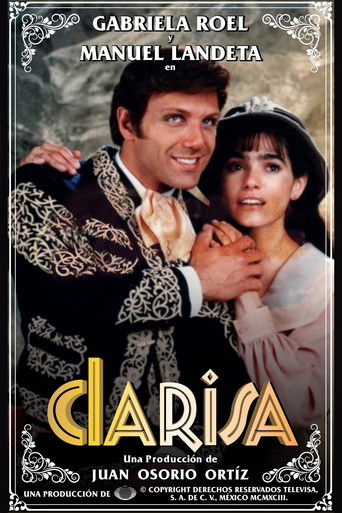
Clarisa is a Mexican telenovela produced by Juan Osorio for Televisa and originally broadcast on Canal de las Estrellas from March 15 to June 11, 1993. Created by Ramón Obón, Lupita Obón, Pilar Obón, and María Teresa García, with literary editing by Dinorah Issak, the telenovela stars Gabriela Roel and Manuel Landeta. Set in the 1930s, the story follows Clarisa González León, a kind-hearted young woman who becomes the target of her ambitious and resentful sister, Elide. After tragedy strikes her family, Clarisa loses her husband and is led to believe that her newborn daughter has died. Years later, determined to uncover the truth, she embarks on a journey marked by love, betrayal, family secrets, and the hope of reuniting with her child.
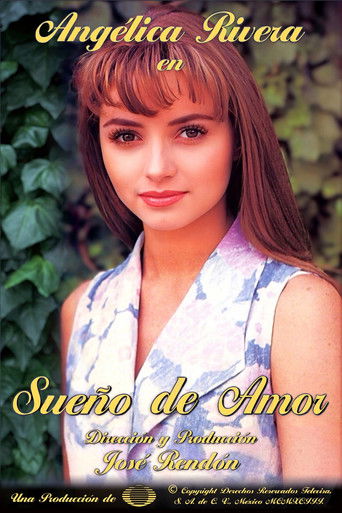

The staff in charge of catering to the desires of a department store's top clientele try to keep their not-so-luxurious personal lives afloat.
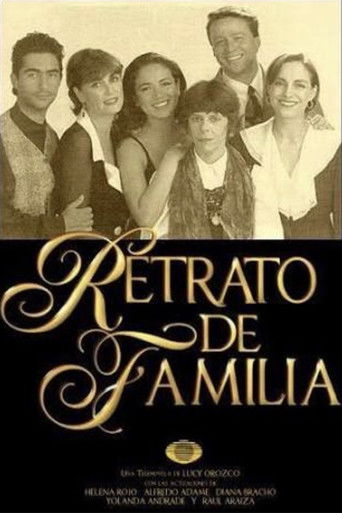
Retrato de familia is a Mexican telenovela produced by Lucy Orozco for Televisa and originally broadcast on Canal de las Estrellas from October 23, 1995, to January 19, 1996. Created by Jesús Calzada, the telenovela stars Helena Rojo, Alfredo Adame, Diana Bracho, and Yolanda Andrade. The story is set in Guadalajara and centers on the Mariscal Preciado family. The story follows Cecilia Mariscal, a devoted mother whose troubled marriage to Agustín falls apart, leaving her to rebuild her life. When she falls in love with Dr. Esteban Acuña, she faces unexpected opposition from her own daughter, Elvira, who also becomes obsessed with him. As family rivalries, forbidden love, betrayal, and long-hidden secrets emerge, the Mariscal family's relationships are pushed to the breaking point.

Prohibido Amar is a Mexican telenovela produced by Azteca in 2013. It is a remake of Colombian telenovela, La Sombra del Deseo.

An Intelligence Agent is sent to El Principe, on the border with Morocco, to investigate a possible police collaboration with a terrorist cell but finds unexpected love in the least suitable person: a drug baron's sister.

Rebeca murders her sister Adriana to end up with the man she loved, and becomes the step mother of her niece Lucía. Nora, Lucía's half sister and daughter of Rebeca, resents Lucía for the same reasons Rebeca hated Adriana, as history repeats itself.

La Viuda Negra is a 2014 Spanish-language telenovela produced by RTI Producciones and Televisa for United States-based television network Univisión and for Colombia-based television network Caracol Television. It is an adaptation of the book La patrona de Pablo Escobar de José Guarnizo based on history from Griselda Blanco.
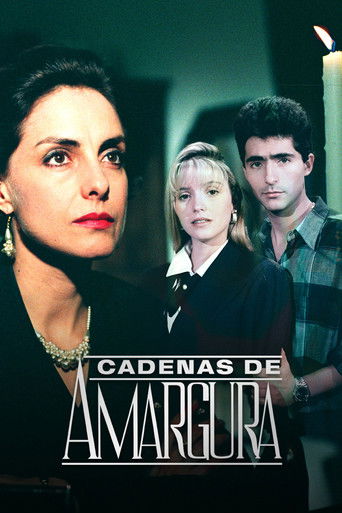
After her parents death, the little Cecilia is under the care of her aunts: Natalia and Evangelina. Evangelina is a cruel woman who doesn't love the child and she treats her bad. Unlike Evangelina, Natalia is good and will help Cecilia because she is her real mother. She was seduced and got pregnant by Padre Julio. Evangelina hates Padre Julio because in the past he preferred Natalia to her. Many years later, there is a problem, because Evangelina doesn't want to give Cecilia money to attend the University. But Cecilia wins a grant and she can study now. She is engaged and wants to marry Giovanni, but Evangelina is against. She will poison him with a drink. Then Cecilia meets and falls in love with Gerardo, who is engaged to Sofia. Sofia's parents are Marta and Armando. Armando returns home after abandoning his family for many years. Marta has a romance with Manuel, but Sofia and Armando are opposed. Ines and Renato, who are Gerardo's parents, also are opposed to his romance with Cecilia. She breaks up the romance and goes to sor Angelina's nunnery to become a nun. Sonia and Roberto try to separate Gerardo from Cecilia. Then Cecilia finds out the truth about her birth and meets padre Julio. Natalia discovers that Evangelina tries to appropriate the whole patrimony of Cecilia and Evangelina kills her.
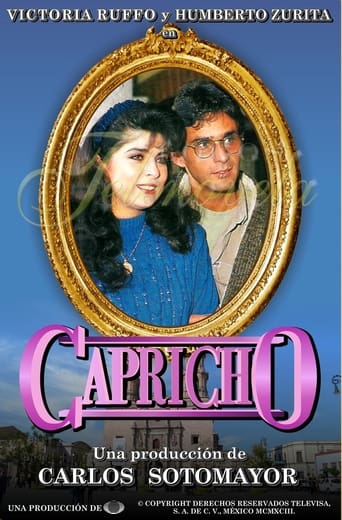
Story about a woman that is unhappily married and with two daughters. She constantly reprimands Cristina and baby Raquel. What the people around her don't know is that Raquel is not her husband's daughter as everyone believes. Raquel is Eugenia and León's daughter. She has always loved him, not her husband. That is the reason she's always angry at Cristina.
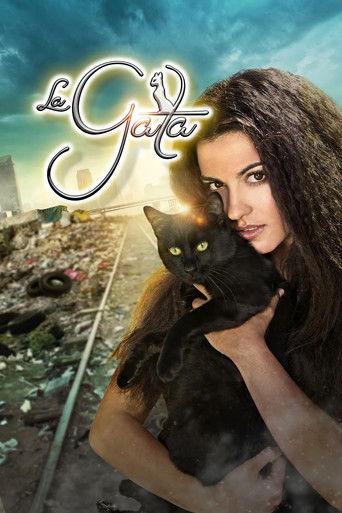
Esmeralda, whom everyone knows as "The Stray Cat," is a girl who grows up in wretched conditions, yet possesses a special sweetness and charm. Her best friend is Pablo, a wealthy boy who defends her against the other children's teasing.

The Poor, Rich Family is a story of love, romance, twists of fate, and countless amusing situations involving two families with nothing in common—yet who are now forced to live under the same roof. On one side are the millionaire Ruizpalacios family; on the other, the Mendonças, a classic working-class family.

La malquerida is a Mexican telenovela produced by José Alberto Castro for Televisa. It is an adaptation of the play "La malquerida", written by Spanish playwright Jacinto Benavente. Victoria Ruffo and Christian Meier will star as the adult protagonist, Ariadne Díaz and Mane de la Parra will star as the young protagonists, while Brandon Peniche will star as the main antagonist.

María Dolores is a beautiful woman dating Arturo. He is an unscrupulous man who takes advantage of María's kindness to deceive her; he eventually abandons her to marry another woman. Some time later, Arturo attempts to seduce María. She tries to resist, and a struggle ensues during which Arturo dies. María is found guilty of his death and imprisoned. While in jail, she vows never to trust—let alone get involved with—a man again. After her release, María meets Gustavo, a lawyer who falls in love with her. Through him, she learns to trust men once more. Ultimately, she marries Gustavo, and they live happily.