
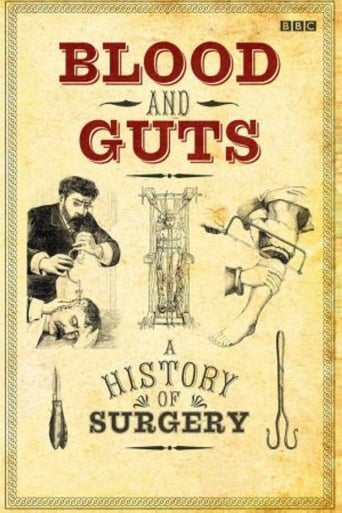
Blood and Guts: A History of Surgery
2008-08-20 · 60 min / episode · ★ 10.0
From the pioneering work of Galen on Roman gladiators to the latest advances in plastic surgery, this five-part series illustrates the evolution of surgical techniques—a story as much of mishaps and misadventures as it is of successes and amazing advances. Filmed in America and Europe and presented by the charismatic and medically trained Michael J. Mosley. Contains surgical scenes of a graphic nature. A BBC Production. 5-part series.
Trailers are previews, not full movies.
No authorized playback source configured. Use the legal watch options below.
Production details
- Creators
- Unavailable
- Production companies
- Unavailable
- Countries
- United Kingdom, United States of America
- Status
- Ended
Top Cast
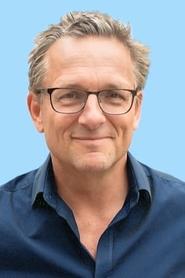 Michael MosleyPresenter
Title information and images are supplied by TMDb. Explore our discovery guide for advice on comparing metadata and legal viewing options.
Where to watch
Availability provided by JustWatch via TMDb. Offers can change. Provider links are listed on TMDb; full playback requires a separately authorized source.
Availability not listed for this country.
Seasons & episodes
Recommendations
Biography is a documentary television series. It was originally a half-hour filmed series produced for CBS by David Wolper from 1961 to 1964 and hosted by Mike Wallace. The A&E Network later re-ran it and has produced new episodes since 1987. The older version featured historical figures such as Helen Keller and Mark Twain, or long-dead entertainment figures such as Will Rogers or John Barrymore. The A&E series has placed the emphasis on such people as Marilyn Monroe, Elvis Presley, Plácido Domingo, Freddie Mercury, Jacqueline Kennedy Onassis, Eric Clapton, Pope John Paul II, Gene Tierney, Selena, Diego Rivera, Mao Zedong and Queen Elizabeth II, and fictional characters like The Phantom, Superman, Hamlet, Betty Boop, and Santa Claus. The program ended up profiling enough figures that in 1999, A&E spun it off into an entire network, The Biography Channel.

An insider's look at the engineering and scientific miracles behind the things that form the modern world.

Motoring programme featuring reviews of and reports about cars of all types.

TV's most-watched history series brings to life the compelling stories from our past that inform our understanding of the world today.
Morgan Freeman presents his quest in order to find how most religions perceive life after death, what different civilizations thought about the act of creation and other big questions that mankind has continuously asked.
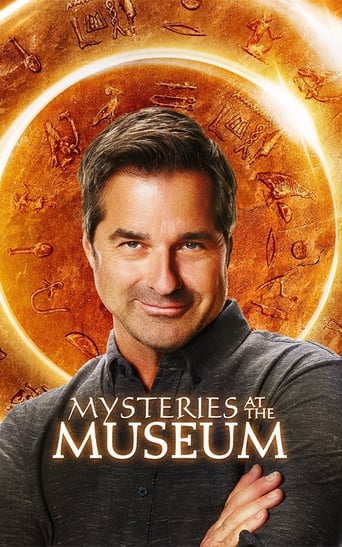
Don Wildman unearths relics from the world's greatest institutions to reveal secrets from the past. He examines each artifact to illuminate history's most incredible triumphs, sensational crimes and bizarre encounters.
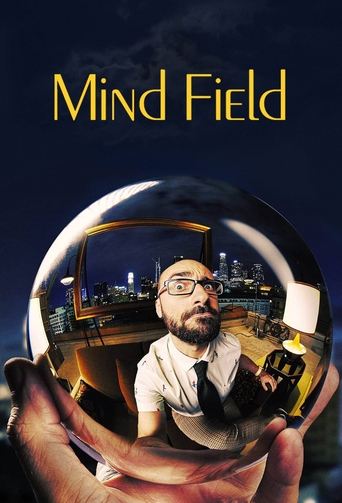
Explore the surprising things we know (and don’t know) about why people are the way they are through expert interviews, rare footage from historical experiments, and brand-new, ground-breaking demonstrations of human nature at work.
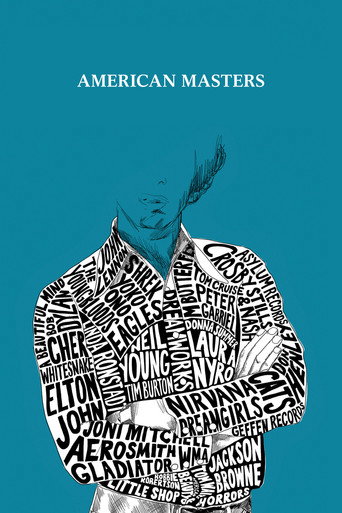
American Masters is a PBS television series which produces biographies on enduring writers, musicians, visual and performing artists, dramatists, filmmakers, and others who have left an indelible impression on the cultural landscape of the United States.
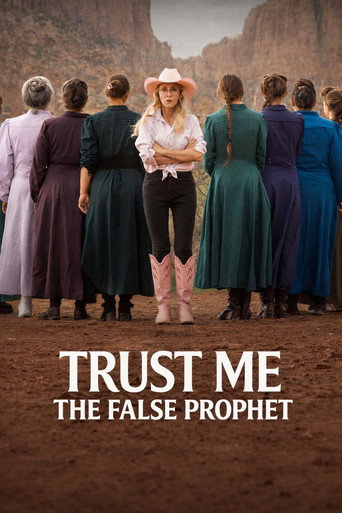
In this true-crime documentary, a cult expert and filmmaker infiltrate a polygamist sect to expose a self-proclaimed prophet and bring him to justice.
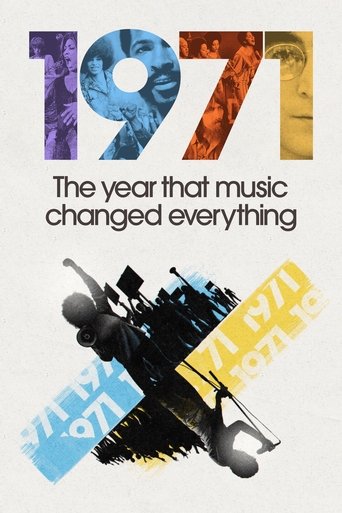
In a tumultuous era, 1971 was a year of musical innovation and rebirth fueled by the political and cultural upheaval of the time. Stars reached new heights, fresh talent exploded onto the scene, and boundaries expanded like never before.
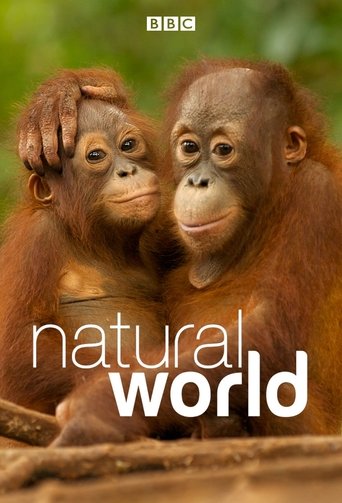
Natural World is a nature documentary television series broadcast annually on BBC Two and regarded by the BBC as its flagship natural history brand. It is currently the longest-running series in its genre on British television, with more than 400 episodes broadcast since its inception in 1983. Natural World is produced by the BBC Natural History Unit in Bristol, but individual programmes can be in-house productions, collaborative productions with other broadcasters or films made and distributed by independent production companies and purchased by the BBC. Natural World programmes are often broadcast as PBS Nature episodes in the USA. Since 2008, most Natural World programmes have been shot and broadcast in high definition.
This compelling series investigates the motives and m.o. of female murderers. While males are often driven by anger, impulse and destruction, women usually have more complex, long-term reasons to kill.

Doctor Who Confidential is a documentary to complement the revival of the long-running British science fiction television series Doctor Who. Each episode was broadcast on BBC Three on Saturdays, immediately after the broadcast of the weekly television episode on BBC One. The running time of the first two series was 30 minutes, being extended to 45 minutes in the third. BBC Three also broadcast a cut-down edition of the programme, lasting 15 minutes, shown after the repeats on Sundays and Fridays and after the weekday evening repeats of earlier seasons.
HISTORY’s longest-running series moves to H2. Modern Marvels celebrates the ingenuity, invention and imagination found in the world around us. From commonplace items like ink and coffee to architectural masterpieces and engineering disasters, the hit series goes beyond the basics to provide insight and history into things we wonder about and that impact our lives. This series tells fascinating stories of the doers, the dreamers and sometime-schemers that create everyday items, technological breakthroughs and manmade wonders. The hit series goes deep to explore the leading edge of human inspiration and ambition.
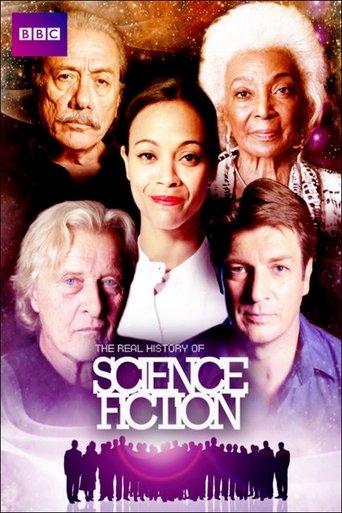
The series heads to the very frontiers of space and science to produce the definitive television history of science fiction, told through its impact on cinema, television and literature, with the help of filmmakers, writers, actors, and graphic artists. Each episode will explore one of the enduring themes of science fiction: time travel; the exploration of space; robots and artificial intelligence; and aliens.
Consistently stunning documentaries transport viewers to far-flung locations ranging from the torrid African plains to the chilly splendours of icy Antarctica. The show's primary focus is on animals and ecosystems around the world. A comic book based on the show, meant to be used an as educational tool for kids, was briefly distributed to museums and schools at no cost in the mid-2000s.
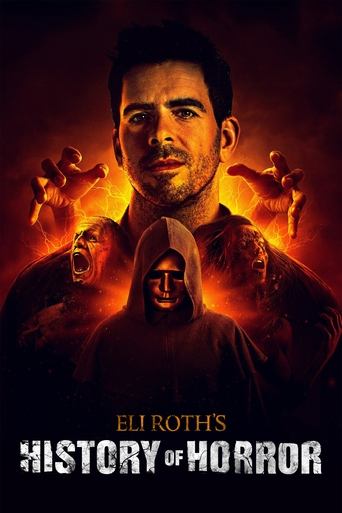
An in-depth look at the history and pop cultural significance of horror films.
A series of standalone documentaries powered by the unparalleled journalism and insight of The New York Times, bringing viewers close to the essential stories of our time.
The fascinating stories of the families behind the food that built America, those who used brains, muscle, blood, sweat and tears to get to America's heart through its stomach, those who invented new technologies and helped win wars.

The history of the sport of baseball in America, told through archival photos, film footage, and the words of those who contributed to the game in each era. Writers, historians, players, baseball personnel, and fans review key events and the significance of the game in America's history.
Similar titles
This verité documentary series profiles the personal and professional lives of Canada's best surgeons. With remarkable access to doctors and their patients, this series features riveting stories about real life and death medical procedures.
Examining the quality crisis in our health-care system and exploring innovative solutions, this four-part PBS documentary provides a comprehensive look at the state of medicine in America today. Topics include patient safety, medical and medication mistakes, hospital-acquired infections, family-centered care and effective management of chronic disease. Moving personal stories highlight the problems and the people who are working to solve them.
Unprecedented access to the renowned hospital's modern wards and private archive.
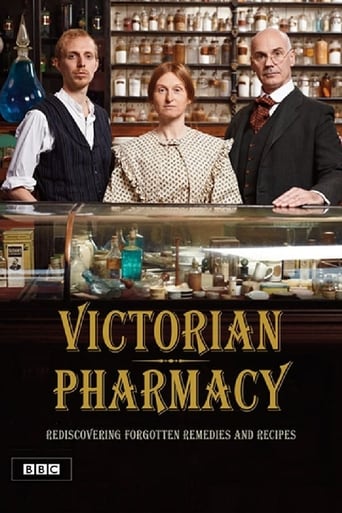
Victorian Pharmacy is a historical documentary TV series in four parts, first shown on BBC Two in July 2010. It was made for the BBC by independent production company Lion Television. It was filmed at Blists Hill Victorian Town in Shropshire. It is a historical documentary that looks at life in the 19th Century and how people attempted to cure common ailments. Since some of the ingredients of Victorian remedies are now either illegal or known to be dangerous, Nick Barber often uses his modern pharmaceutical knowledge to produce similar products without those ingredients. The other main presenters are Tom Quick, a PhD student, and Ruth Goodman, a domestic historian who also appeared in Tales from the Green Valley, Victorian Farm and Edwardian Farm.
Dr. 90210 is an American reality television series focusing on plastic surgery in the wealthy suburb of Beverly Hills in Los Angeles, Southern California. The series began its run in 2004. Dr. 90210 gets its name from the zip code of the core of Beverly Hills, familiar to most viewers because of the former popular television series Beverly Hills, 90210. The show is produced by E!, but is broadcast on several other basic cable network channels, such as the Style Network. Each episode is approximately one hour long. The show stands out from other programs of this sort in that it also examines the lives of the doctors featured in its lineup.
Michael Mosley embarks on three journeys to understand science's last great frontier - the human mind - as he traces the history of the attempts to understand and manipulate the brain.

Who really laced Tylenol with cyanide? This true-crime series examines alarming theories behind the unsolved killings — and tracks down a key suspect.

Follow the journey of patients whose worlds have been turned upside down after suffering complications from bariatric surgery and the work of the doctors who help them get their lives back.
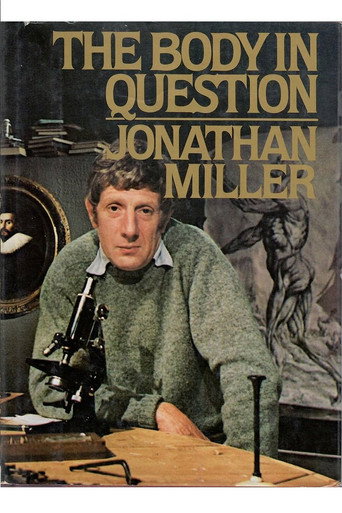
The Body in Question is a landmark British medical documentary series of 13 shows made for the BBC. It was a groundbreaking show, being the first to ever televise an autopsy (in the final show on 29 Jan 1979). Dr Jonathan Miller considers the functioning of the body as a subject of private experience. He explores our attitudes towards our bodies, our ignorance of them, and our inability to read our body's signals. The first episode starts with vox populi asking where various organs in the body are located. By the final episode we are left in no doubt. Taking as his starting point the experience of pain, Dr Miller analyses the elaborate social process of "falling ill", considers the physical foundations of "disease" and looks at the types of individuals humankind has historically attributed with the power of healing. The series was nominated for two 1979 BAFTAs: Best Factual Television Series and Most Original Programme/Series.
Hosted by Jason Silva, Origins: The Journey of Humankind rewinds all the way back to the beginning and traces the innovations that made us modern.
Some people see their lives dramatically turned upside down because they waited for too long before seeking care. The documentary series showcases individual who should have rapidly consulted with a doctor when the first signs of illness appeared, before the situation became critical.
The series investigates Paolo Macchiarini’s claims to have invented a ground-breaking method to create new organs. His method using plastic tracheas sown with stemcells has been operated on patients in the US, Russia, Sweden and the UK. So far, unfortunately, the track record of his plastic organs is not very good. Almost all patients are dead. And several of his former surgeon colleagues in Sweden claim that not only does the method not work, but that his scientific claim to fame is based on falsified and misrepresented data. Some even claim that his patients have been used as human guinea-pigs.
A fascinating insight into the evolution of modern medicine as we explore the medical treatments for certain issues from past to present, seeing just how much we have learned through trial and error. The series is also a chance to see how medical advancements are currently used to treat problems in the fields of oncology, ophthalmology, dentistry, neurology, obstetrics and orthopaedics, and to see what the future may hold.
A long journey in 8 episodes to discover the human body, with Piero Angela who closely observes our organism, focusing each time on a theme: the eye, the ear, taste and smell, the stomach and the intestine, liver, bones, lungs and heart. How does our "wonder machine" work? To make each explanation direct and clear, the program uses films, animations and photographs developed with the scanning electron microscope.

At the Royal Blackburn Hospital, the critical list team juggle urgent life or death cases. Who will go into the operating room next? Who gets bumped? It's up to the staff to decide.

Life-saving operations, difficult dilemmas. Lifting the lid on the heart-rending, hard-headed decisions surgeons must make before tackling the day job of changing people’s lives.

From lunchtime lifts to tailored tweakments, we follow the world-renowned doctors delivering bespoke procedures at eye-watering price tags.
100 trillion cells. 280 days. One human life. A BBC Science series, produced in partnership with The Open University, exploring the making of you.

From critical emergencies to the operating room, this documentary series follows London's trauma centres as they treat the most severely injured.