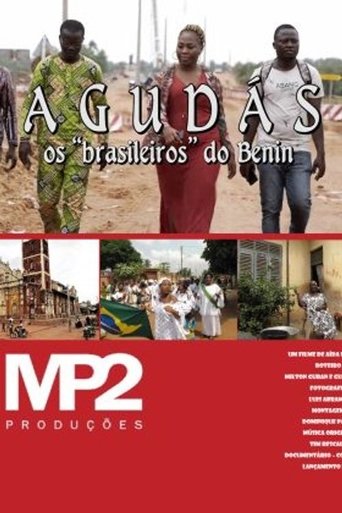
Agudás – Os Brasileiros Do Benin
2024-06-22 · 97 min · Not rated
The film portrays the trajectory and life of the “Agudá” people today. This is a group of descendants of Africans enslaved in Brazil, who returned to their homeland with the end of slavery, and also descendants, Brazilian and Portuguese, of slave traffickers, who settled in that region of Africa in the 18th and XIX. Present in Benin and Togo, the “agudás” assimilated the surname and part of the culture of their masters.
Trailers are previews, not full movies.
No authorized playback source configured. Use the legal watch options below.
Production details
- Directors
- Aida Marques
- Production companies
- MP2 Produções
- Countries
- Brazil
- Status
- Released
Top Cast
Cast unavailable.
Title information and images are supplied by TMDb. Explore our discovery guide for advice on comparing metadata and legal viewing options.
Where to watch
Availability provided by JustWatch via TMDb. Offers can change. Provider links are listed on TMDb; full playback requires a separately authorized source.
Availability not listed for this country.
Seasons & episodes
Recommendations
Follow the evolution of the 'Halloween' movies over the past twenty-five years. It examines why the films are so popular and revisits many of the original locations used in the films - seeing the effects on the local community. For the first time, cast, crew, critics and fans join together in the ultimate 'Halloween' retrospective.

Through deeply personal interviews with her siblings and an examination of the photographs, letters, and belongings left behind, Mariska assembles a new portrait of her mother Jayne Mansfield, an extraordinary and complex woman.
Film adaptation of French economist Thomas Piketty's ground-breaking global bestseller of the same name: an eye-opening journey through wealth and power.

A documentary about how a dominant cultural and demographic institution both sustains their traditional activities and adapts to the digital revolution.

This documentary focuses on the actors and their journey over two summers to create the remake to the original IT, by Stephen King. The documentary originally released as bonus material, bundled with IT: Chapter Two.
Unprecedented access to Muhammad Ali's personal archive of "audio journals" as well as interviews and testimonials from his inner circle of family and friends are used to tell the legend's life story.

A visual montage portrait of our contemporary world dominated by globalized technology and violence.

Retrospective documentary about the making of the horror cult classic "The Return of the Living Dead."

Using the book 'Fragments', which collects Marilyn Monroe's poems, notes and letters, and with participation from the Arthur Miller and Truman Capote estates who have contributed more material, each of the actresses will embody the legend at various stages in her life.

Documentary filmmaker Amy Berg investigates the life of 30-year pedophile Father Oliver O'Grady and exposes the corruption inside the Catholic Church that allowed him to abuse countless children. Victims' stories and a disturbing interview with O'Grady offer a view into the troubled mind of the spiritual leader who moved from parish to parish gaining trust ... all the while betraying so many.

Daniel Craig candidly reflects on his 15 year adventure as James Bond. Including never-before-seen archival footage from Casino Royale to the upcoming 25th film No Time To Die, Craig shares his personal memories in conversation with 007 producers, Michael G Wilson and Barbara Broccoli.
Go behind the scenes with stars, puppeteers and creators as they bring Jim Henson's magical world of Thra back to life in a sweeping fantasy series.

A documentary on the life of John Lennon, with a focus on the time in his life when he transformed from a musician into an antiwar activist.

Al Pacino's deeply-felt rumination on Shakespeare's significance and relevance to the modern world through interviews and an in-depth analysis of "Richard III."
With mesmerizing footage and time lapses of animators at work, this behind-the-scenes special captures the artistry of a unique tale years in the making.
A look at the origins, history and conspiracies behind the "Majestic 12", a clandestine group of military and corporate figureheads charged with reverse-engineering extraterrestrial technology.
A paralysingly beautiful documentary with a global vision—an odyssey through landscape and time—that attempts to capture the essence of life.

Musician and performance artist Laurie Anderson reflects on the deaths of her husband Lou Reed, her mother and her beloved dog.
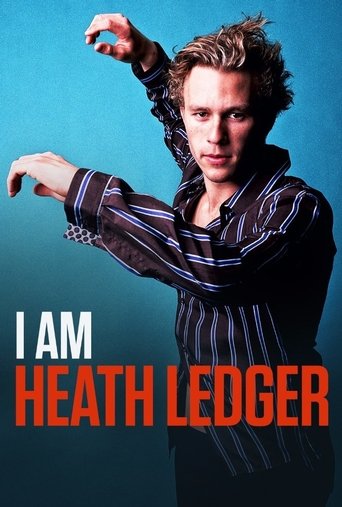
The life and career of an actor, artist, and icon. His own journey through his own camera.
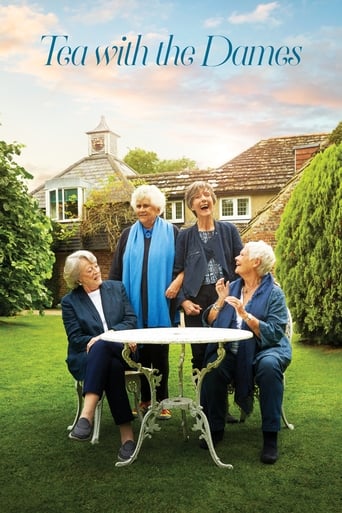
BBC Arena's documentary on the Dames of British Theatre and film featuring Maggie Smith, Eileen Atkins, Judi Dench and Joan Plowright on screen together for the first time as they reminisce over a long summer weekend in a house Joan once shared with Sir Laurence Olivier.
Similar titles
A documentary covering the Second Chimurenga, the Zimbabwean War of Liberation.
A history of racialism in Rwanda, from the European colonization to the 1994 genocide.
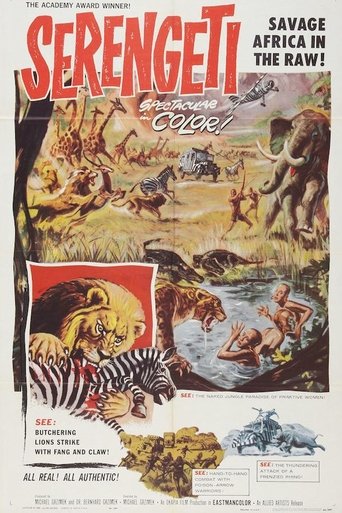
The film tells of the beginnings of the Serengeti National Park in Tanzania. At the end of the 1950s, the Tanzanian National Park Administration wanted to fence in the protected area around the Ngorongoro Crater. Bernhard and Michael Grzimek were invited by the national park administration in 1957 to get a precise picture of the animal migrations and to provide the national park administration with the values they needed for their project. Using a new counting method with two airplanes, the Grzimeks found out that the migration of the herds was different than assumed.

The ruthless dictator Teodoro Obiang has ruled Equatorial Guinea with an iron hand since 1979. Juan Tomás Ávila Laurel is the most translated Equatoguinean writer, but he had to flee the country in 2011, after starting a hunger strike denouncing the crimes of the dictatorship. Since then, he has lived in Spain, feeling that, despite the risks, he must return and fight the monster with words.
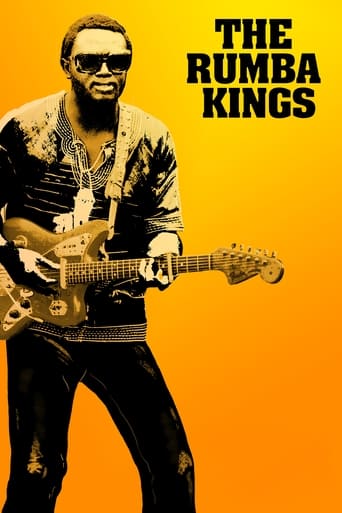
In the fifties, when the future Democratic Republic of Congo was still a Belgian colony, an entire generation of musicians fused traditional African tunes with Afro-Cuban music to create the electrifying Congolese rumba, a style that conquered the entire continent thanks to an infectious rhythm, captivating guitar sounds and smooth vocals.
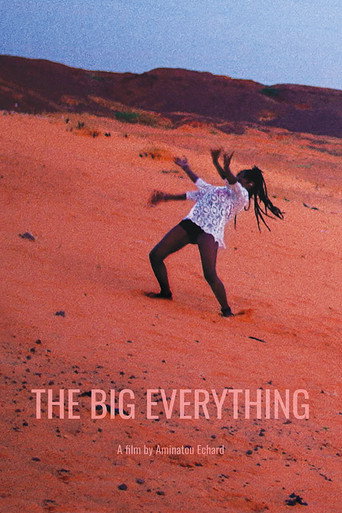
How’s the Big Everything? Garba asks Nicole. For them, the “Big Everything” encompasses family, politics, History, daily life, the stars, small things, and time passing like the wind. By delving into their memories, at the time of Niger’s independence, we come face to face with the complexity of the present.
On March 29, 1947, peasants armed with sticks and knives attacked the French garrisons in Madagascar. The revolt would end twenty months later with the death of the last insurgents, shot down by the expeditionary force. France, accustomed to memory lapses, knew nothing of this insurrection and its trail of torture and abuses. In Madagascar, well after independence, the events of 1947 were never discussed. For more than a generation, parents refused to speak of them to their children. It wasn't until the 1980s that the silence was broken.
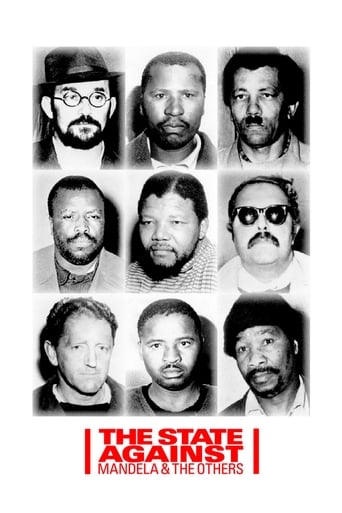
South Africa, July 11th, 1963. Several members of the African National Congress, an organization declared illegal, are arrested in Rivonia, a country house near Johannesburg. The detainees, along with Nelson Mandela, imprisoned since 1962, are charged with serious crimes for their radical activism against the apartheid regime.
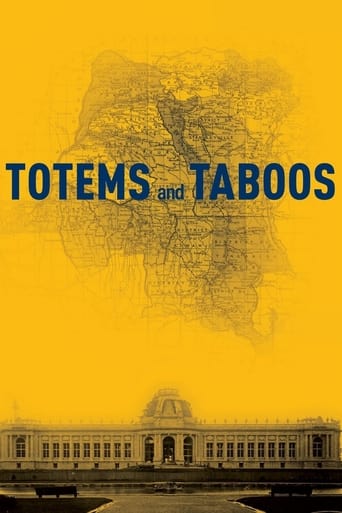
In Brussels, Belgium, the Royal Museum of Central Africa is undertaking a radical renovation, both physical and ethical, to show with sincerity, crudeness and open-mindedness the reality of the atrocities perpetrated against the inhabitants of the Belgian colonies in Africa, still haunted and traumatized by the ghost of King Leopold II of Belgium, a racist and genocidal tyrant.

Jomo Kenyatta's death in 1978 brought to an end a political career that encompassed more than 50 years of African history. Kenyatta entered politics in the mid-1920s and then spent 17 years in exile in Europe. He returned to Kenya in 1946, and was elected president of the nationalist movement, the Kenya African Union. Arrested and imprisoned in 1952 for allegedly leading 'Mau Mau', he was released in 1961 and two years later became Kenya's first Prime Minister. In power, the man whom European settlers had once reviled as "the leader to darkness and death" was eulogized by them as a pillar of stability, while former allies challenged him by creating a left-leaning political opposition. Kenyatta weaves archival and contemporary images with interviews with friends and relatives, comrades and opponents, to create a biographical portrait of a key figure in 20th century politics, and a case study of what Frantz Fanon called the pitfalls of nationalism as a political force in Africa.
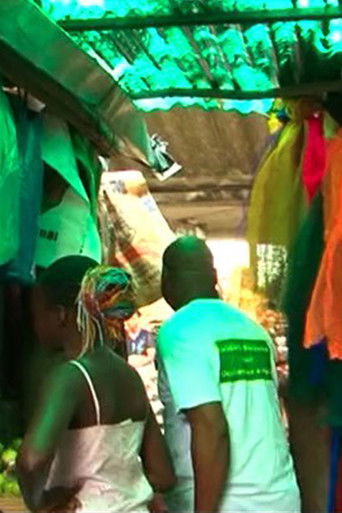
Hazoumè's "NGO (Beninese Solidarity with Endangered Westerners)" reflects on issues of immigration, economic disparity, and perceptions of wealth. Taking a critical eye toward the vast numbers of local and international nongovernmental organizations (NGOs) operating in his country of Benin, the artist created his own NGO to aid poor Westerners, thereby reversing conventional assumptions concerning poverty and the distribution of capital from so-called developed nations. In an attempt to expose the often hidden realities of the income inequality that exists in global Northern countries, he asked Beninese celebrities to solicit donations from Africans, who commonly associate Westerners with affluence. For Hazoumè, the driving concept of the project is to uncover such illusions: "To all appearances, it’s a matter of reversing the help, from south to north. But in reality—it is about making the Africans cogitate differently."
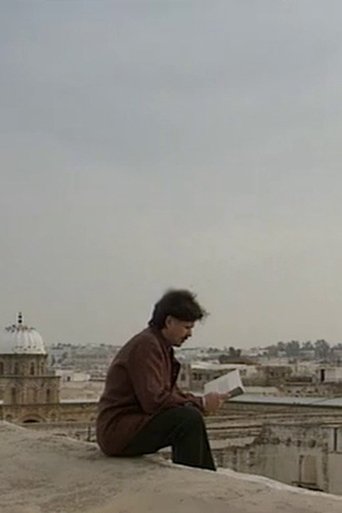
Tunisia itself is the subject; we wanted to render the genius of the site. Tunisia is almost the central character of this little film: we see the relation of the city to the sea, the traces that bear witness to its foundation, the remains of Carthage, the symbolism of the recently discovered Medina coin … The splendours of the house interiors and courtyards are associated with a scene of origin, what psychoanalysis calls a primal scene. Entering these houses opens up a world peopled by women: the child’s ‘homecoming’ in the hands of women is staged as an abduction, playing doubly on fascination and terror. These places were mine, from my childhood, they can be found almost intact – it’s the return of the exile visiting the kingdom. I let Ruiz discover all this, and immediately that led him to echoes and resonances ranging from Spain to Chile.
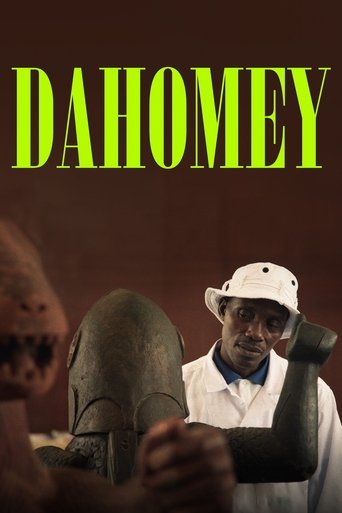
Thousands of royal artifacts of Dahomey, a West African kingdom, were taken by French colonists in the 19th century for collection and display in Paris. Centuries later, a fraction returned to their home in modern-day Benin. This dramatized documentary follows the journey of 26 of the treasures as told by cultural art historians, embattled university students, and one of the repatriated statues himself.
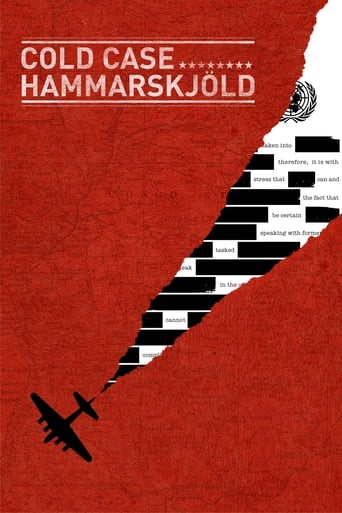
Ndola, Northern Rhodesia (currently Zambia), September 18, 1961. Swedish economist and diplomat Dag Hammarskjöld, Secretary General of the UN, dies mysteriously in a plane crash. Decades later, Danish journalist and filmmaker Mads Brügger and Swedish researcher Göran Björkdahl investigate the case in search of definitive closure.
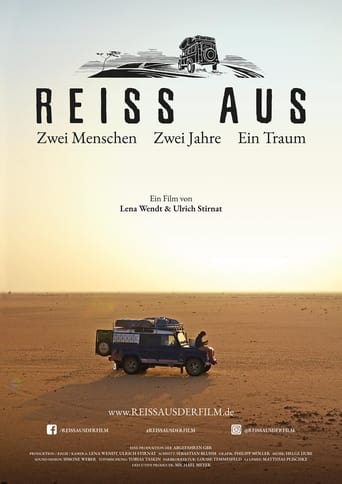
When Lena and Ulli start the engine of their old Land Rover, Lady Terés, they have a plan: to drive from Hamburg to South Africa in six months. What they don't know yet is that they won't ever get there. Two totally different characters, jammed together in two square meters of space for almost two years, they experience what it really means to travel: leaving your comfort zone for good.

For decades, the countries of the African Sahel region have been targets of colonialism and exploitation by France and other Western powers. This documentary addresses the popular resistance and new paths of development forged by Burkina Faso, Niger, and Mali after experiencing civil and military uprisings in recent years. The film explores the popular resistance that sustains the revolution in the three Sahel countries and was made after extensive coverage of the ongoing social dynamics and geopolitical disputes.
An examination of how Africa's mythological stories have served as the basis for the world religions that came after, especially in Western civilization.
Burundi, 21st October 1993: The Democratically elected President Ndadaye is assassinated by a group of Tutsi officers. Another round of reprisals and counterattacks begins under pressure from the militia and extremist parties who encourage the racial hostilities and fan the flames of terror. There is one pogram after another, with tens of thousands of people becoming refugees in their own country.
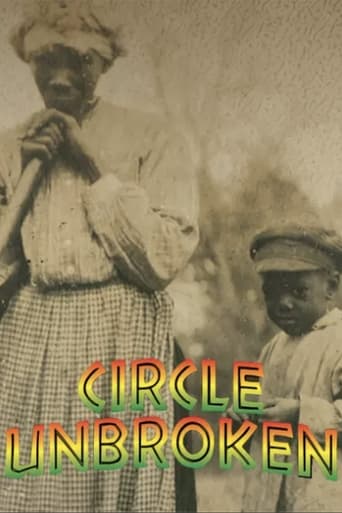
75% of all enslaved Africans coming to America came in through Beaufort and the sea islands of South Carolina. This beautiful and picturesque tourist destination, by its unique history is the epicenter of the Gullah culture and the foundation of African American history; the result of the mingling of West African slaves with the plantation culture awaiting them in America.