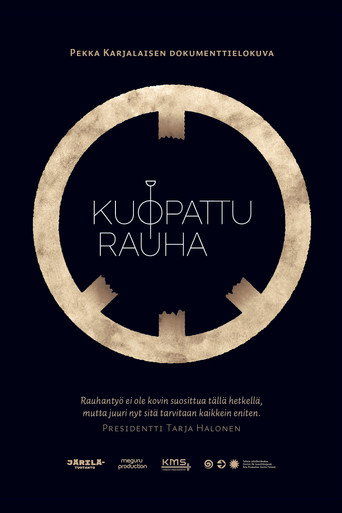
Kuopattu rauha
2026-10-18 · 72 min · Not rated
Documentary on Finnish peace organisations and pacifism.
Trailers are previews, not full movies.
No authorized playback source configured. Use the legal watch options below.
Production details
- Directors
- Pekka Karjalainen
- Production companies
- Meguru Production, Järilä-tuotanto Oy
- Countries
- Unavailable
- Status
- Released
Top Cast
Cast unavailable.
Title information and images are supplied by TMDb. Explore our discovery guide for advice on comparing metadata and legal viewing options.
Where to watch
Availability provided by JustWatch via TMDb. Offers can change. Provider links are listed on TMDb; full playback requires a separately authorized source.
Availability not listed for this country.
Seasons & episodes
Recommendations

A documentary on the expletive's origin, why it offends some people so deeply, and what can be gained from its use.

A documentary on the life of John Lennon, with a focus on the time in his life when he transformed from a musician into an antiwar activist.

A documentary about how a dominant cultural and demographic institution both sustains their traditional activities and adapts to the digital revolution.

When Allied forces liberated the Nazi concentration camps in 1944-45, their terrible discoveries were recorded by army and newsreel cameramen, revealing for the first time the full horror of what had happened. Making use of British, Soviet and American footage, the Ministry of Information’s Sidney Bernstein (later founder of Granada Television) aimed to create a documentary that would provide lasting, undeniable evidence of the Nazis’ unspeakable crimes. He commissioned a wealth of British talent, including editor Stewart McAllister, writer and future cabinet minister Richard Crossman – and, as treatment advisor, his friend Alfred Hitchcock. Yet, despite initial support from the British and US Governments, the film was shelved, and only now, 70 years on, has it been restored and completed by Imperial War Museums under its original title "German Concentration Camps Factual Survey".

An inside look at one of the most anticipated movie sequels ever with James Cameron and cast.
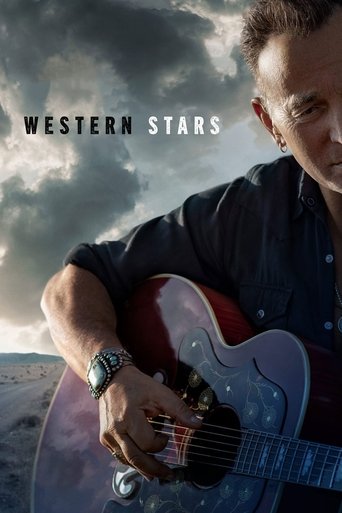
The incomparable Bruce Springsteen performs his critically acclaimed latest album and muses on life, rock, and the American dream, in this intimate and personal concert film co-directed by Thom Zimny and Springsteen himself.

A documentary about the life and films of director John Ford.

In an intimate and joyful story of love in the face of loss, celebrated poets Andrea Gibson and Megan Falley find strength—and unexpected hilarity—in what might be their final year together.

A 1993 documentary film about Bruce Lee. The film includes interviews from some of his fellow students and opponents who worked alongside him in his movies.

A documentary about the making of season five of the acclaimed AMC series Breaking Bad.
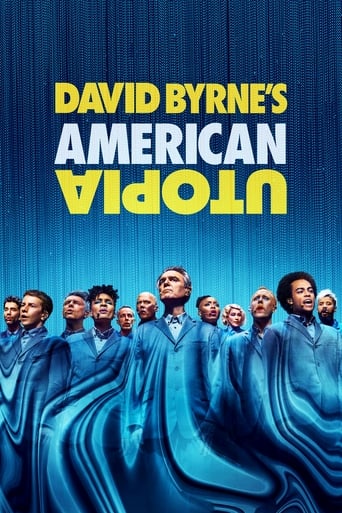
A filmed version of David Byrne's Broadway show, a unifying musical celebration that inspires audiences to connect to each other and to the global community.

Director Michael Apted revisits the same group of British-born adults after a 7 year wait. The subjects are interviewed as to the changes that have occurred in their lives during the last seven years.
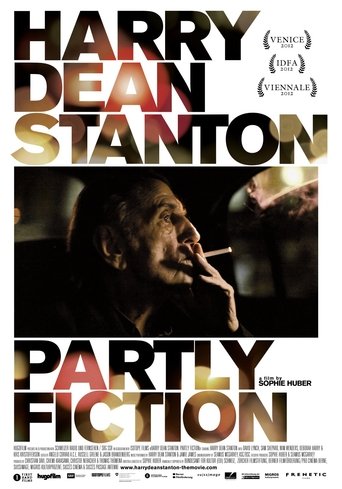
An impressionistic portrait of the iconic actor Harry Dean Stanton comprised of intimate moments, film clips from some of his 250 films and his renditions of American folk songs.

Ranjit, a farmer in India, takes on the fight of his life when he demands justice for his 13-year-old daughter, the victim of a brutal gang rape. His decision to support his daughter is virtually unheard of, and his journey unprecedented.

A purely observational non-fiction film that takes viewers into the ethically murky world of end-of-life decision making in a public hospital.

A documentary chronicling Queen and Lambert's incredible journey since they first shared the stage together on "American Idol" in 2009.
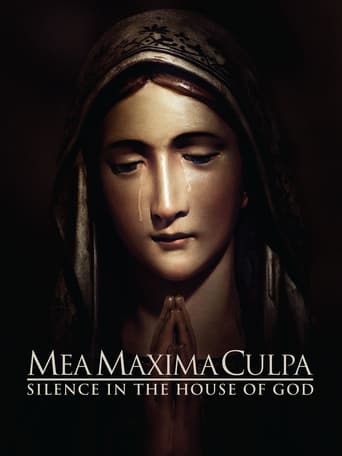
Alex Gibney explores the charged issue of pedophilia in the Catholic Church, following a trail from the first known protest against clerical sexual abuse in the United States and all way to the Vatican.
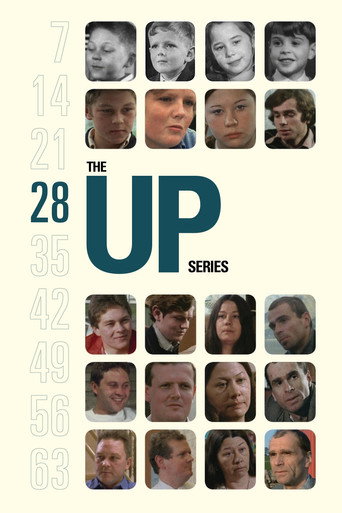
Just two years away from turning 30, participants in Michael Apted's documentary series are facing serious questions of identity and purpose, wondering whether they've found their place in the world.

Grammy® winner singer-songwriter Olivia Rodrigo takes a familiar road trip from Salt Lake City, where she began writing her debut album “SOUR,” to Los Angeles. Along the way, Rodrigo recounts the memories of writing and creating her record-breaking debut album and shares her feelings as a young woman navigating a specific time in her life. Through new live arrangements of her songs, intimate interviews and never-before-seen footage from the making of the album, audiences will follow Olivia along on a cinematic journey exploring the story of “SOUR.”

Through deeply personal interviews with her siblings and an examination of the photographs, letters, and belongings left behind, Mariska assembles a new portrait of her mother Jayne Mansfield, an extraordinary and complex woman.
Similar titles
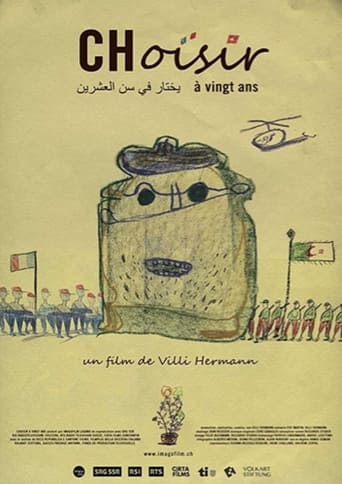
Between 1954-1962, one hundred to three hundred young French people refused to participate in the Algerian war. These rebels, soldiers or conscripts were non-violent or anti-colonialists. Some took refuge in Switzerland where Swiss citizens came to their aid, while in France they were condemned as traitors to the country. In 1962, a few months after Independence, Villi Hermann went to a region devastated by war near the Algerian-Moroccan border, to help rebuild a school. In 2016 he returned to Algeria and reunited with his former students. He also met French refractories, now living in France or Switzerland.
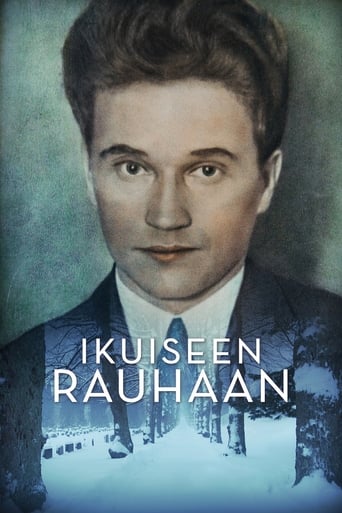
Documentary film about Arndt Pekurinen and the peace movement in the early 20th century. Pekurinen spoke out for pacifism, conscientious objection and peace, and received support for his actions around the world. However, his worldview collided with the nationalist and militaristic atmosphere of the era in Finland. He was considered a troublemaker, a traitor, and a caricature of masculinity. The film is a universal and timeless account of a man persecuted for his opinions. At the same time, it is a description of the weak tolerance of young independent Finland towards dissidents. Pekurinen was executed during the Continuation War by his compatriots on November 5, 1941.

The award-winning filmmaker Peter Lilienthal is dedicated to this extremely poignant documentary of U.S. military policy and the living conditions of former resistance fighters in Latin America.
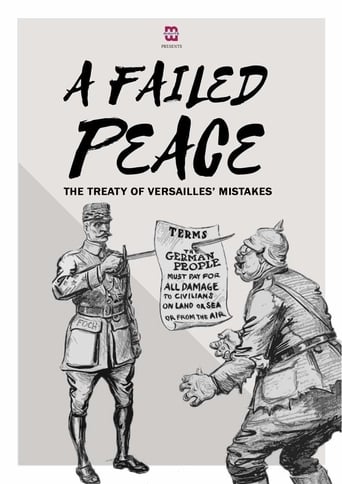
At the end of WWI, the treaty of Versailles established the conditions for peace in Europe. The aim for the victorious powers was to make Germany pay reparations, and to guarantee a future without war. Yet a decade later, the denunciation of 'Versailles' became a powerful lever for the nazis to obtain power as these reparations would mark the beginning of the humiliation of the German people, and nurture a feeling of having been bestowed a hopeless future. In the 20 years that follow the end of WWI, the issue of reparations and responsibility will effectively poison international relationship. The treaty negative impact goes well beyond WWII as the new European borders it implemented led to many conflicts during the twentieth century. This documentary shines a light on the causality between the decisions taken with the treaty of Versailles, and the ensuing events of the century.
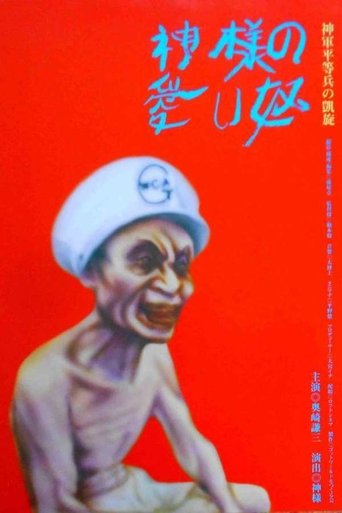
After the end of his 12-year sentence for attempted murder, anarchist activist and war veteran Kenzo Okazaki lays out his vision of an ideal world.
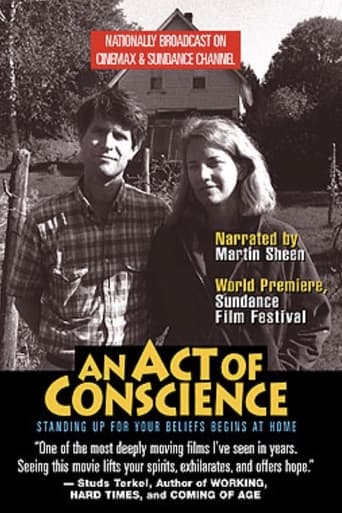
When a young couple buys a contested home at auction from the U.S. government for $5,400, they become involved in a political and moral battle much larger than what they originally bargained for.
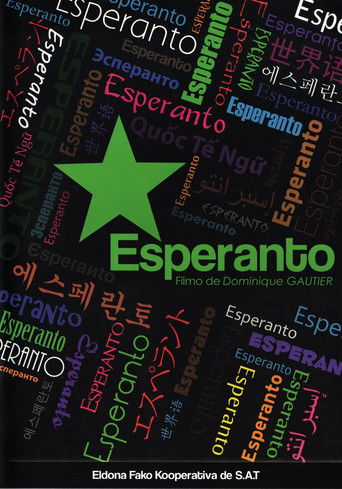
This film, directed by Dominique GAUTIER, takes the viewer on a worldwide excursion into the history and structure of the Esperanto language, introducing its present-day speakers. The words of these users of the language are reflective of a variety of activities and viewpoints, and in the film they are interwoven so as to reveal bit by bit how the utopia of its initiator, Ludwig ZAMENHOF, is concretised every day.

The exceptional portrait of a pacifist general, the only senior officer to have spoken out against torture. This precious testimony still remains censored in France, since no national channel has to date decided to program this documentary. Son and brother of a soldier, General Pâris de Bollardière was destined for a career in arms. He was, for many years, one of the most brilliant representatives of this adventurer career in France, from Narvik to the Algerian War. After fighting in the French maquis, he reached Indochina, where he suddenly found himself in the aggressor's camps. His beliefs are strongly shaken. But it is in Algeria, where the French army practices torture and summary executions, that he takes the big turn. He expresses his contempt to Massu, and is relieved of his command. Until his death in 1986, Jacques de Bollardière fought for world peace, from the Larzac plateaus to the Mururoa atolls.
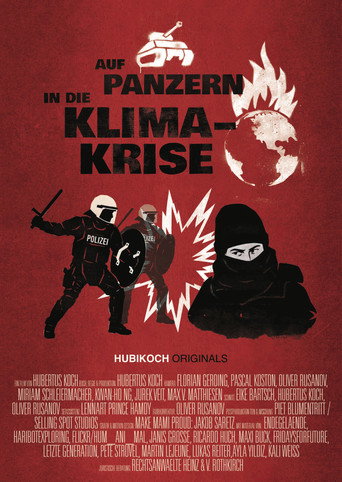
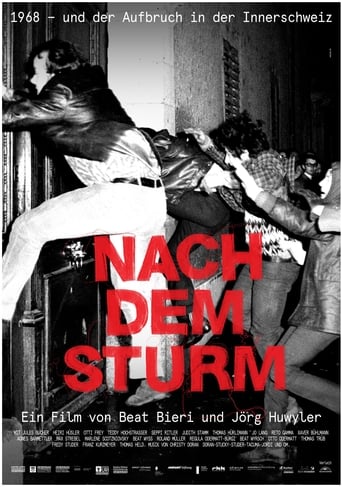
The protests of 1968 had a significant impact on the great cities of the world. But people like to forget that the periphery went through the same social upheavals – Central Switzerland, for example. This is hardly surprising: in the founding cantons of the Old Swiss Confederacy, society followed a strict order; tradition, shaped by centuries of Catholic rule, seemed untouchable. But in the 1960s, the local youth could not take these stifling conditions anymore: starting in 1969, resistance broke out across Central Switzerland.
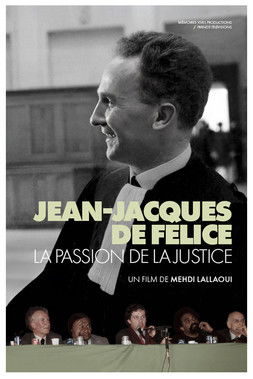
From the rights of minors before the juvenile court, young offenders from the neighborhoods of eastern Paris, or children of Algerian origin from the shantytowns of Nanterre, to the defense of colonized Kanaks and Polynesians; from the fight for conscientious objector status to the denunciation of torture and the death penalty, lawyer Jean-Jacques de Félice has been involved in every struggle. His pacifism knows no bounds: with organizations like Cimade, LDH, and the Louis-Lecoin Committee, he assists draft dodgers in numerous countries. These include Portuguese conscientious objectors refusing to fight in the wars in Angola and Mozambique, American deserters opposed to the Vietnam War, and Israeli objectors refusing to serve in the Occupied Territories. It is no surprise that, as early as 1971, he was one of the very first lawyers representing the farmers of the Larzac plateau.
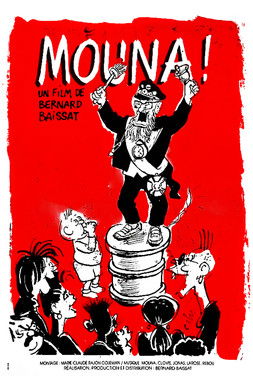
Everyone knows Aguigui Mouna, the jester who harangues the crowds on the Beaubourg esplanade in Paris and rides his bicycle through demonstrations. But many don't know the story of André Dupont, a Savoyard raised in tough conditions, forced into violence in the navy to rise to power and into resourcefulness in civilian life to survive. Antibes, 1952, the transformation: Aguigui Mouna is born. Laughter, solidarity, non-violence, humanism—Mouna has found the meaning of his existence. He will try to share them with all the robots of this "poop-pee-capitalist" society. A comic book character who, through his adventures, reveals the absurdities of his century.
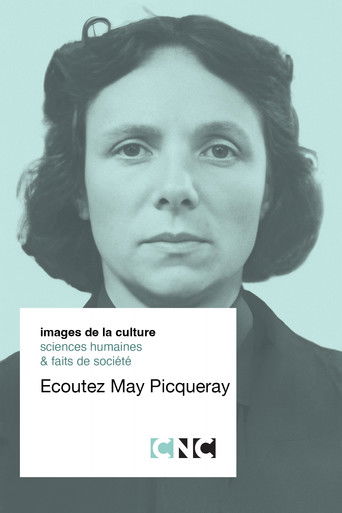
"Well, I believe in anarchy! And I believe it will come true one day." That's what "May the Rebel," a union activist, anti-militarist, and anarchist, always ready to denounce oppression and defend victims, affirms at 85. Born in Brittany, she earned her living at age 10 delivering butter. In Paris, at 20, she became involved with the Anarchist Union. Sébastien Faure became her mentor. She used a grenade to trigger the Sacco-Vanzetti affair. A union delegate in Moscow in 1922, she sang "Hymn to Anarchy" before Trotsky. Children during the Spanish Civil War, Jews during the Second World War, conscientious objectors alongside Louis Lecoin during the Algerian War, and later, through her newspaper Le Réfractaire, the Larzac, Plogoff, and Creys-Malville protests—all these were battlegrounds for May Picqueray. To the very end, she remained true to her commitment to defending peace and individual liberties.
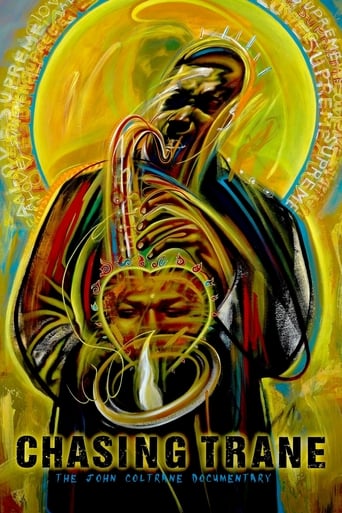
An account of the life of the brilliant jazz musician John Coltrane (1926-67), a gifted saxophonist, an extraordinarily talented thinker whose original, avant-garde work has impacted and influenced people all over the world. A story about music's ability to entertain, inspire and transform.
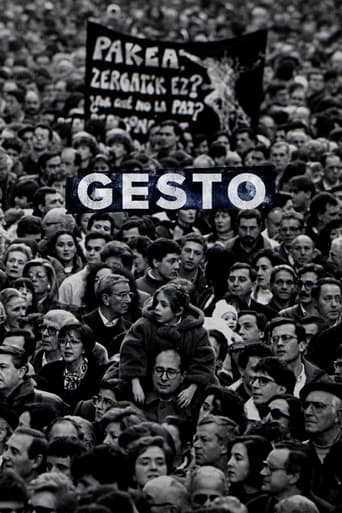
The history of the citizens' movement that for thirty years worked hard to overcome fear, fight hatred and eradicate the violence exercised by the savage terrorist gang ETA, both in the Basque Country and in the rest of Spain.
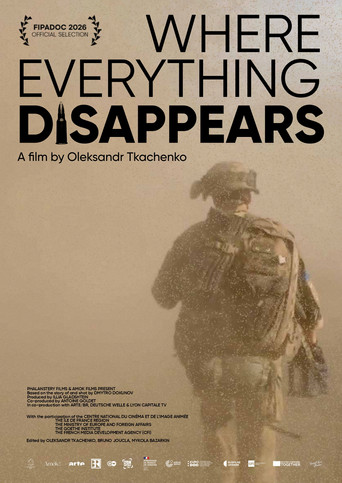
Dmytro Dokunov, a Ukrainian cinematographer, is deployed in a combat unit to face the Russian invasion with his mobile camera always recording.
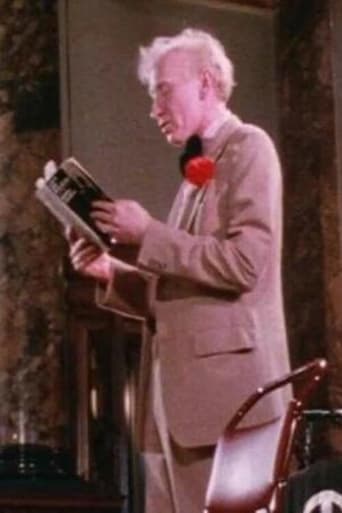
An event organised by CND pits the bomb against poetry. Hear artists who hoped that words and rhymes could put an end to destructive times.
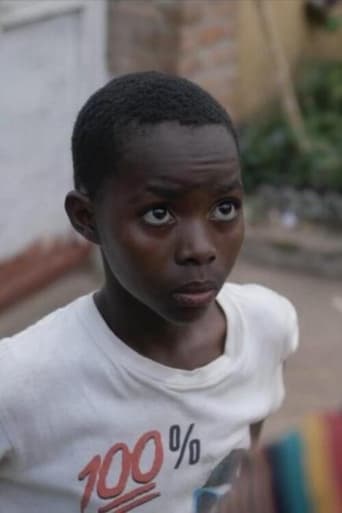
Amani is 31. When he was an infant, he survived the genocide against Rwanda’s Tutsi population. Three decades later, Amani has set up an organisation in Nyamirambo, one of the more economically impoverished districts of the country’s capital, Kigali. It employs creativity, artistic practice and performance to grapple with poverty and generational trauma – acknowledging that deep-seated ideologies can easily foment prejudice and create an environment that proved so catastrophic in the past.