
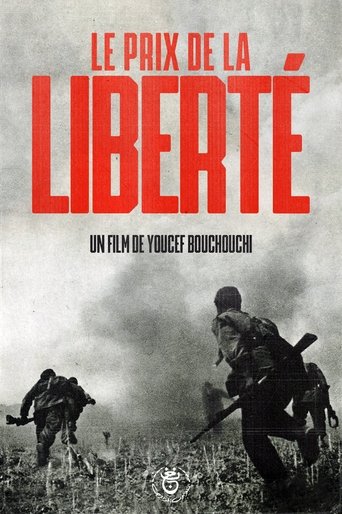
The Price of Freedom
2007-07-07 · 90 min · ★ 10.0
In the midst of the Algerian liberation war, two characters, a meddah (traditional storyteller) and a guerrab (water distributor), having become aware of their subhuman condition in their own country, join the National Liberation Army (ALN) to fight against inhumane colonialism. They will climb the ranks to become political commissioners before falling on the field of honor, the first in a skirmish and the other in Barberousse prison (Serkadji) where he will be guillotined.
Trailers are previews, not full movies.
No authorized playback source configured. Use the legal watch options below.
Production details
- Directors
- Youcef Bouchouchi
- Production companies
- Établissement National de Télévision (ENTV)
- Countries
- Algeria
- Status
- Released
Top Cast
 Souad Sebki
Title information and images are supplied by TMDb. Explore our discovery guide for advice on comparing metadata and legal viewing options.
Where to watch
Availability provided by JustWatch via TMDb. Offers can change. Provider links are listed on TMDb; full playback requires a separately authorized source.
Availability not listed for this country.
Seasons & episodes
Recommendations
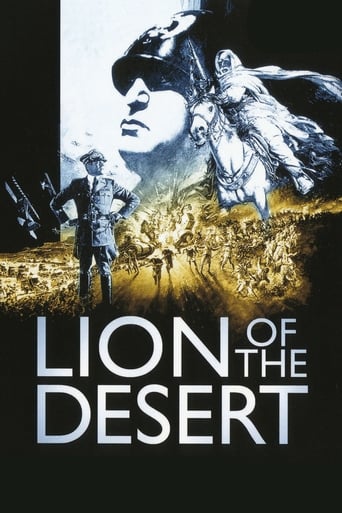
Resistance leader Omar Mukhtar opposes Italian colonization before World War II. The brutal guerrilla war against Italian General Rodolfo Graziani and the Fascist forces of Benito Mussolini highlights the struggle for Libyan independence and the harsh tactics utilised by the colonisers.

A WWII veteran escapes his care home in Northern Ireland and embarks on an arduous but inspirational journey to France to attend the 75th anniversary of the D-Day landings, finding the courage to face the ghosts of his past.
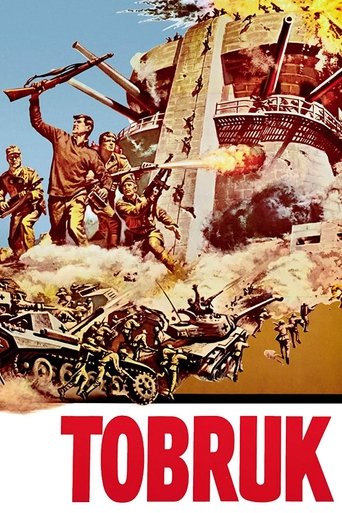
In September 1942, the German Afrika Korps under Rommel have successfully pushed the Allies back into Egypt. A counter-attack is planned, for which the fuel dumps at Tobruk are a critical impediment. In order to aid the attack, a group of British commandos and German Jews make their way undercover through 800 miles of desert, to destroy the fuel dumps starving the Germans of fuel.
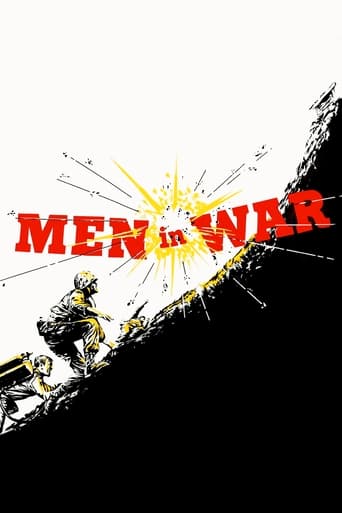
In Korea, on 6 September 1950, Lieutenant Benson's platoon finds itself isolated in enemy-held territory after a retreat. Soon they are joined by Sergeant Montana, whose overriding concern is caring for his catatonic colonel. Benson and Montana can't stand each other, but together they must get the survivors to Hill 465, where they hope the division is waiting. It's a long, harrowing march, fraught with all the dangers the elusive enemy can summon.
When a high-ranking war planner is captured and held in a German prisoner of war camp, a team of specialists take on the dangerous mission of trying to break him out. Trouble is, he doesn't want to be rescued.

Regent Horthy is the leader of Hungary and a German ally, but his favorable standing with Hitler changes as the war comes to an end. Forced to cede Hungary’s power or else witness the execution of his son, Regent Horthy gives up control of his country to the Nazis, who quickly move Hungarians to ghettos and death camps, with no hope in sight. But the despair changes when a young man named Elek emerges. Separated from his family during the relocations and aided by the woman he loves , Elek defies the enemy by becoming one of them. In a race against time, disguised as a Nazi Officer he embarks on a mission to save his family and thousands of his countrymen.

After being freed from a Vietnamese war prison, French Lt. Col. Pierre Raspeguy is sent to help quell resistance forces in Algeria. With the help of the Capt. Esclavier, who has grown weary of war, and Capt. Boisfeuras, who lives for it, Raspeguy attempts to convert a rugged band of soldiers into a formidable fighting unit, with the promise of marrying a beautiful countess if he's made a general.
A group of teenage cadets sheltered from war at the Virginia Military Institute must confront the horrors of an adult world when they are called upon to defend the Shenandoah Valley.

A chronicle of the Cristeros War (1926-1929), which was touched off by a rebellion against the Mexican government's attempt to secularize the country.
Alain Lefevre is a boxer paid by a Marseille mobster to take a dive. When he wins the fight he attempts to flee to America with the mobster's girlfriend Katrina. This plan fails and he seeks escape by joining the foreign legion. As part of the legion he tangles with abusive lieutenant Steinkampf and bonds with legionnaires Luther, Mackintosh and Rosetti.
Members of the U.S. Army's 101st Airborne Division are fighting for their country amidst the rugged terrain of Bastogne, Belgium, in December 1944. Holley and his American compatriots have already seen one of their own, Roderigues, perish under enemy fire. The men try to rebuff another series of Nazi attacks, but what they really need is a change in the weather. Without clear skies, they'll never get the air support they need.
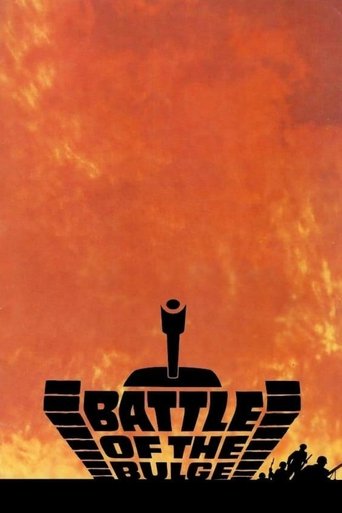
In the winter of 1944, the Allied Armies stand ready to invade Germany at the coming of a New Year. To prevent it, Hitler orders an all-out offensive to re-take French territory and capture the major port city of Antwerp.
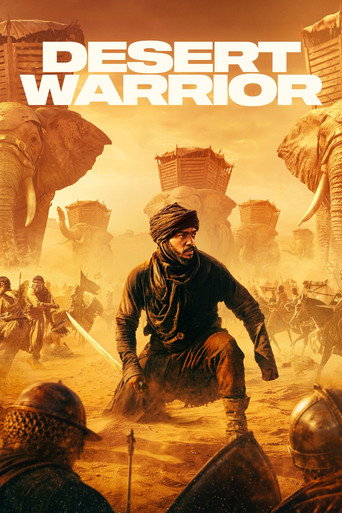
In 7th-century Arabia, Princess Hind becomes a warrior to defy the ruthless Emperor Kisra. Forged into a warrior and aided by legendary bandit Hanzala, Hind unites warring tribes for a last stand—the historic Battle of Dhi Qar—that will change history.
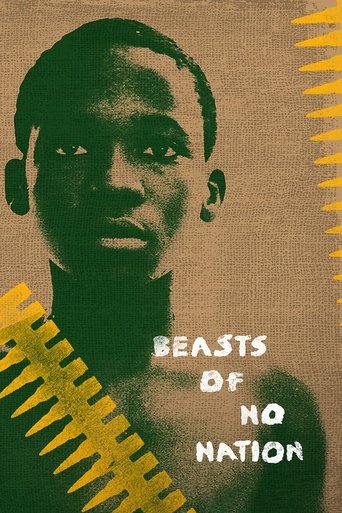
Based on the experiences of Agu, a child fighting in the civil war of a West African country. Follows Agu's journey as he's forced to join a group of soldiers. While he fears his commander and many of the men around him, his fledgling childhood has been brutally shattered by the war raging through his country, and he is at first torn between conflicting revulsion and fascination.

A small unit of U.S. soldiers, alone at the remote Combat Outpost Keating, located deep in the valley of three mountains in Afghanistan, battles to defend against an overwhelming force of Taliban fighters in a coordinated attack. The Battle of Kamdesh, as it was known, was the bloodiest American engagement of the Afghan War in 2009 and Bravo Troop 3-61 CAV became one of the most decorated units of the 19-year conflict.

It is the winter of 2018, the men and women of the UAE military are deployed to provide aid. At the Mocha Base, spirits are high as three Emirati soldiers anticipate an imminent return home. While on their final routine patrol, the three soldiers, Ali, Bilal and Hindasi are ambushed by heavily armed militants on their route, through a narrow canyon. Trapped, wounded, and out of communication range, the three soldiers realize the gravity of their situation. They are running out of options, munitions - and time. Back at the base, their commander receives word and realizes that the assault on the UAE army patrol was premeditated. A rescue mission is quickly put into action, but will air and land support reach the men in time, and will they survive?

Fr. Hugh O'Flaherty is a Vatican official in 1943-45 who has been hiding downed pilots, escaped prisoners of war, and Italian resistance families. His activities become so large that the Nazis decide to assassinate him the next time he leaves the Vatican.
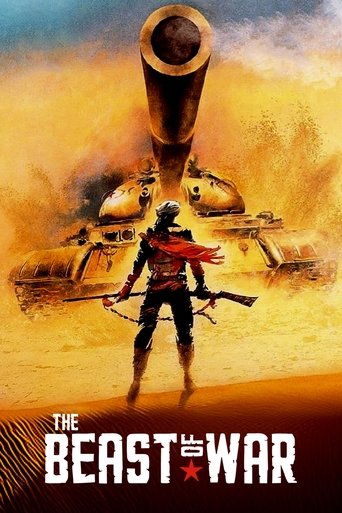
During the war in Afghanistan a Soviet tank crew commanded by a tyrannical officer find themselves lost and in a struggle against a band of Mujahadeen guerrillas in the mountains.
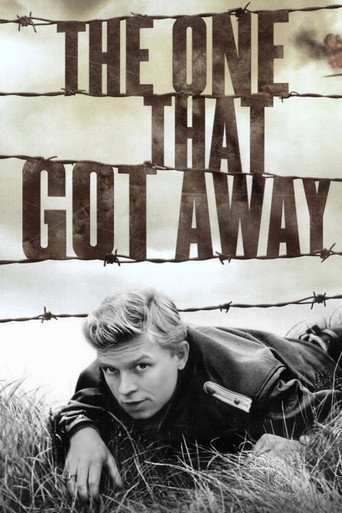
Based on the true story of Oberleutnant Franz von Werra, the only German prisoner of war captured in Britain to escape back to Germany during the Second World War.
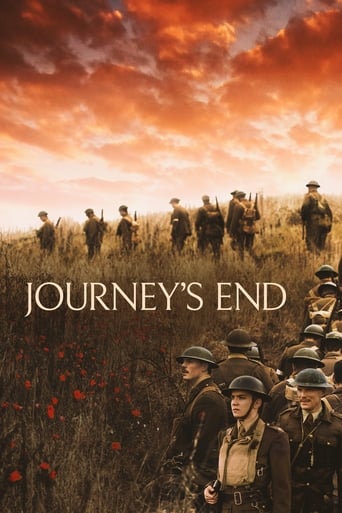
Set in a dugout in Aisne in 1918, a group of British officers, led by the mentally disintegrating young officer Stanhope, variously await their fate.
Similar titles

Two tigers are separated as cubs and taken into captivity, only to be reunited years later as enemies by an explorer (Pearce) who inadvertently forces them to fight each other.
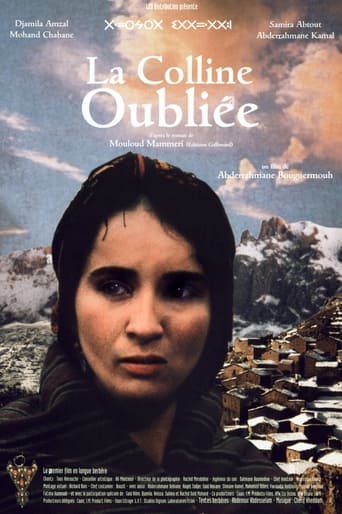
At the outbreak of the Second World War, two friends, Mokrane and Menach, abruptly interrupt their studies and return to their remote native Kabylian village of Tagsa. While waiting to be drafted into the French Army they have time to woo. Mokrane falls for beautiful Aazi and soon marries her only to find out that she can bear no child. Menach, on his part, is stongly attracted to Davda, but the latter is already married to a rich merchant...Happiness does not seem to be in store for the two former students...

In Kabylie, rude mountain region in the north of Algeria. Arezki finds the young Larbi exhausted, buried under the snow. He takes him in and nurses him until he's recovered. The host seduces Arezki's daughter. She is pregnant. This is an unsupportable shame to the father of the female sinner. Arezki claims vengeance. He leaves his house and takes the oath not to come back before having killed Larbi who betrayed him under his own roof.
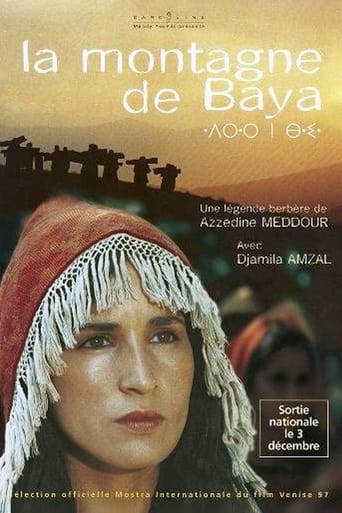
Set in the 1800s among the Berbers of North Africa, this 1997 Algerian feature concerns a noble widow who receives a customary purse of gold coins from the enemy tribe that murdered her husband; the gift puts her in conflict with her kinsmen, who want the money to buy back land taken by the enemy in cahoots with French colonials.
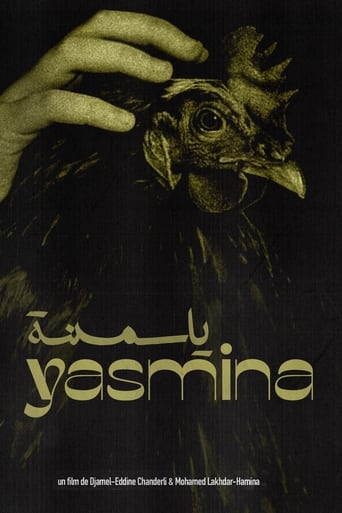
"Yasmina" filmed in 1961 in the middle of the Algerian war tells the story of a little Algerian girl with her hen and her family whose father was killed in a bombing by the French colonial army of occupation. The family, after a long journey, heads towards the refugee camps on the Tunisian border. Produced by the Cinema Service of the Provisional Government of the Algerian Republic (GPRA) in the midst of the war of independence, these films were intended to re-inform the population and international public opinion on the abuses committed by the French colonial army: torture, arrests and arbitrary executions, napalm bombings, fires in douars, entire villages wiped off the map, etc. which the French media described as a "pacification" campaign. The latter censoring or reorienting any images that could harm the colonial narrative.
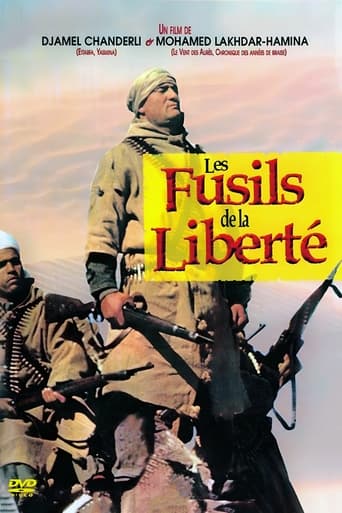
This docu-fiction recounts the difficulties overcome by an ALN detachment whose perilous mission is to transport weapons and ammunition from Tunisia across the Algerian Sahara during the Algerian liberation war (1954-1962) against the French army of occupation.
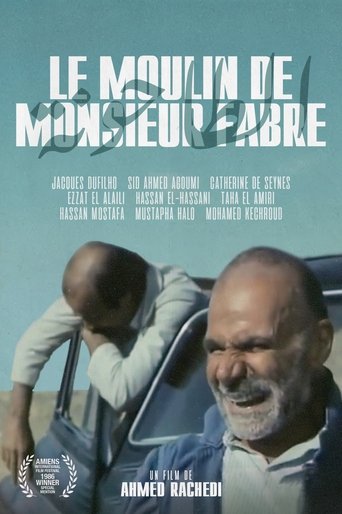
The story of the post-independence nationalization of the mill of Monsieur Fabre, an old man attached to the land of Algeria where he was born. In this small town in eastern Algeria, there was nothing else to nationalize and they were actively preparing for the arrival of high dignitaries who would elevate the mill to the rank of an industrial flour mill even though it was threatened with ruin. The comedy gets worse when the football player from the local team withdraws for love, the officials' visit is canceled and Mr. Fabre returns.
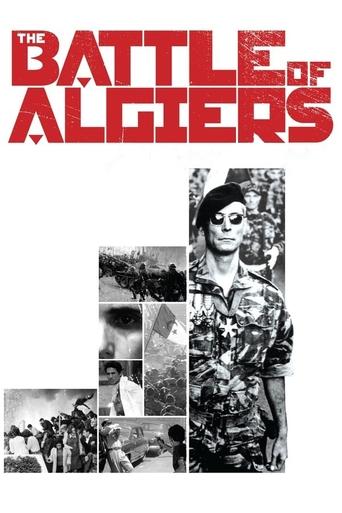
Former petty criminal Ali la Pointe becomes a commander of the Algerian Front de Liberation Nationale, directing a guerilla insurgency against the colonial French occupation. Paratrooper commander Colonel Phillippe Mathieu, a veteran of World War II and the First Indochina War, is sent to Algeria to reinforce efforts to squelch the uprisings.
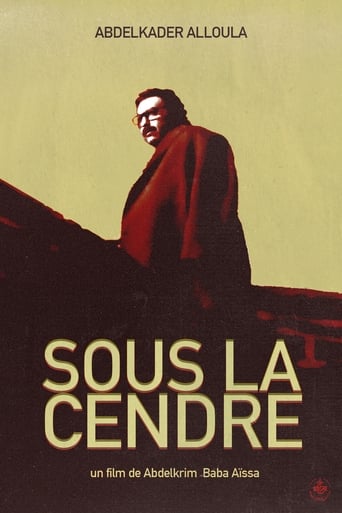
The Second World War. French authorities ban political parties and unions. In Algeria, the leaders of political and trade union organizations were arrested and interned in "surveillance" camps with more than 2,000 French and foreigners: communist activists, trade unionists, brigadists, Spanish republicans and other opponents of the Vichy regime. The Djenien Bourezg camp is one of these camps, located in southern Algeria and is one of the most formidable. An old activist for the Algerian national cause returns to the scene. He blows away the ashes that cover this part of history. And through it, we discover the hard fight of the camp inmates for respect and human dignity, under a fascist command.

27 years after 1962, Antoine returns to Algiers...
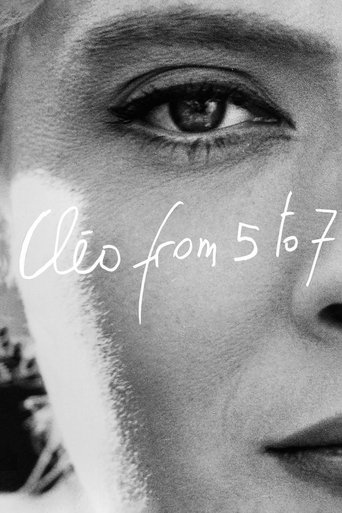
Agnès Varda eloquently captures Paris in the sixties with this real-time portrait of a singer set adrift in the city as she awaits test results of a biopsy. A chronicle of the minutes of one woman’s life, Cléo from 5 to 7 is a spirited mix of vivid vérité and melodrama, featuring a score by Michel Legrand and cameos by Jean-Luc Godard and Anna Karina.
Directed by Kamal Dehane
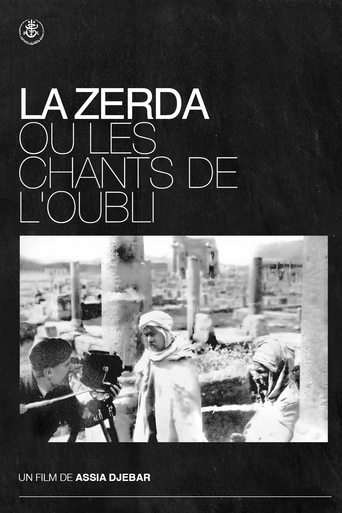
“La Zerda and the songs of oblivion” (1982) is one of only two films made by the Algerian novelist Assia Djebar, with “La Nouba des femmes du mont Chenoua” (1977). Powerful poetic essay based on archives, in which Assia Djebar – in collaboration with the poet Malek Alloula and the composer Ahmed Essyad – deconstructs the French colonial propaganda of the Pathé-Gaumont newsreels from 1912 to 1942, to reveal the signs of revolt among the subjugated North African population. Through the reassembly of these propaganda images, Djebar recovers the history of the Zerda ceremonies, suggesting that the power and mysticism of this tradition were obliterated and erased by the predatory voyeurism of the colonial gaze. This very gaze is thus subverted and a hidden tradition of resistance and struggle is revealed, against any exoticizing and orientalist temptation.

Selim Mechoubine, a young man of 28, is the eldest of a large family. In the cramped accommodation he shares with his parents, brothers and sisters... he occupies the kitchen, the refuge of his dreams and his many fantasies. Selim, the court clerk where divorcing couples parade..., wants to get married. His mother finds him “the rare pearl”. But now, the bride's family demands that the couple have their own home... Selim's misadventure begins; he finds himself confronted with the problems of the housing crisis which forces him to begin a long quest, procedures, requests to find the sine qua non condition for his marriage.

Djamila, a young Algerian woman living with her brother Hadi and her uncle Mustafa in the Casbah district of Algiers under the French occupation of Algeria, sees the full extent of injustice, tyranny and cruelty on his compatriots by French soldiers. Jamila's nationalist spirit will be strengthened when French forces invade her university to arrest her classmate Amina who commits suicide by ingesting poison. Shortly after the prominent Algerian guerrilla leader Youssef takes refuge with her, she realizes that her uncle Mustafa is part of this network of anti-colonial rebel fighters. Her uncle linked her to the National Liberation Front (FLN). A series of events illustrate Jamila's participation in resistance operations against the occupier before she was finally captured and tortured. Finally, despite the efforts of her French lawyer, Jamila is sentenced to death...

A woman has a close bond with her beloved Algerian grandfather, who protected her from a toxic home life as a child; his death triggers a deep identity crisis as tensions between her extended family members escalate, revealing new depths of resentment and bitterness.
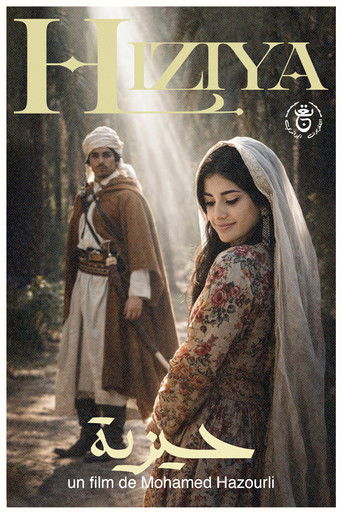
It was from the popular song-poem by Mohamed Ben Guittoun that director Mohamed Hazourli (of the Constantine regional station of RTA) wrote the screenplay. Hiziya Bent Ahmeb Bey, 23 years old, lived in southeastern Algeria, in a village called Sidi Khaled. The daughter of a powerful notable of the Dhouaouda tribe, who regularly migrated through the desert, Hiziya was exceptionally beautiful, to the point that other girls were jealous and envious of her, and men succumbed to her charm. But the young woman's heart belonged to Saïd, an orphan taken in as a child by his uncle. They met in secret and married despite family hostility. A month after their wedding, Hiziya died during the transhumance in the desert. The death of his beloved plunged Saïd into deep grief, to the point that he abandoned his possessions and family to wander the desert.
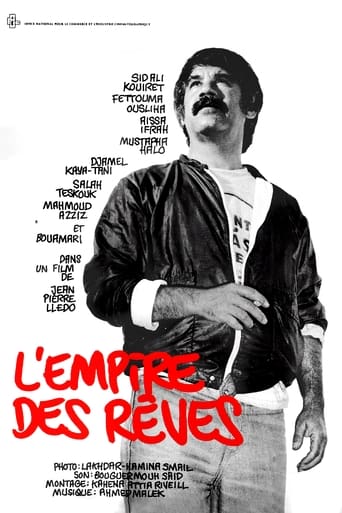
A stubborn director who wants to rediscover the Algiers of his childhood comes up against the “Hollywood” fantasies of his characters, non-professionals all hoping to be able to become “someone else”, at least for the duration of a film… Mise en abyme for a journey into megalomania…
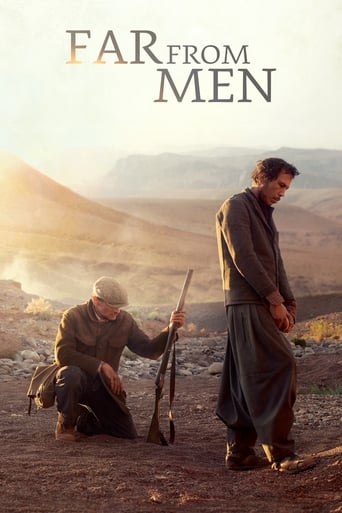
A French teacher in a small Algerian village during the Algerian War forms an unexpected bond with a dissident who is ordered to be turned in to the authorities.
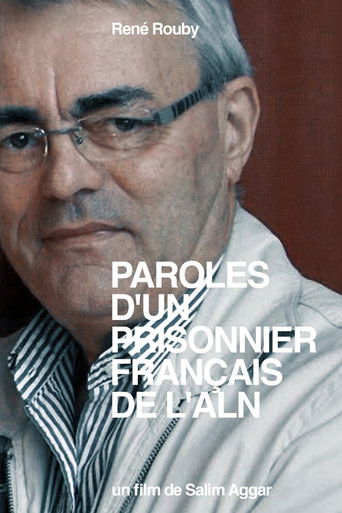
The image of French prisoners was very often evoked in Algerian cinema and literature, but until today, no Algerian or even European report or documentary had given voice to one of these French prisoners of the war of Algeria. In the interest of truth and writing history, we set out in search of one of these French witnesses. This witness is René Rouby, prisoner of Amirouche's group for more than 114 days in 1958 in the Akfadou region in Kabylia. This is the first testimony from a French prisoner of the ALN (the National Liberation Army).