
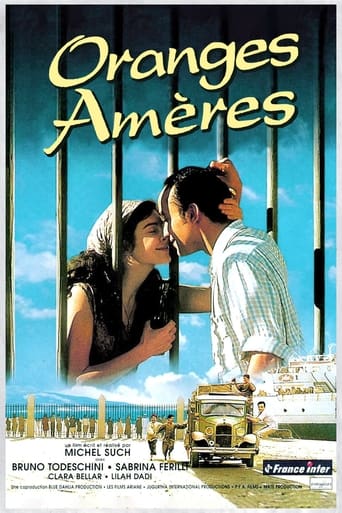
Oranges Amères
1997-04-16 · 90 min · ★ 8.0
Recognizing no boundaries to her love, Angele manages to foment riots, rages and tragedy in colonial Algeria. Angele, an Algerian colonist with impeccably French origins, has fallen in love with Said, the assistant in her brother-in-law's bakery shop. Said is conscious of his Arab origins and traditions, and Angele has her work cut out for her if she wants to persuade him to marry her. Once she does, all hell breaks loose, as neither her European-origin peers nor Said's conservative Arab family approve of the union. When word of the proposed marriage gets out, strikes, violence and murder quickly follow, ruining not only Angele's life, but the lives of those around her. Her brother-in-law Paco, meanwhile, has been doggedly trying to get along and raise his family in an increasingly chaotic and difficult situation.
Trailers are previews, not full movies.
No authorized playback source configured. Use the legal watch options below.
Production details
- Directors
- Michel Such
- Production companies
- PFA Films, Mediaset, Mate Producciones S.A., Les Films Ariane, Jugurtha International Productions, Canal+, Blue Dahlia Productions
- Countries
- France, Italy
- Status
- Released
Top Cast
 Lilah DadiSaïd
 Clara BellarAngèle
 Bruno TodeschiniPaco
 Sabrina FerilliAlice
 Raoul BillereyGrandfather Tomani
 Annick BlancheteauFilomène
 Stéphane JobertSauveur
 André PenvernGosset
 Vittoria ScognamiglioConchita
 Erick DeshorsBastos
 Hélène CatzarasHélène
Title information and images are supplied by TMDb. Explore our discovery guide for advice on comparing metadata and legal viewing options.
Where to watch
Availability provided by JustWatch via TMDb. Offers can change. Provider links are listed on TMDb; full playback requires a separately authorized source.
Availability not listed for this country.
Seasons & episodes
Recommendations
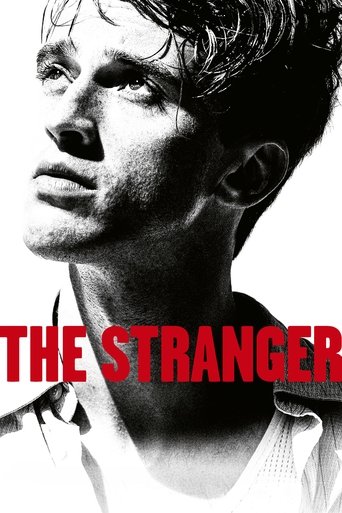
Algiers, 1938. Meursault, a quiet and unassuming employee in his early thirties, attends his mother's funeral without shedding a tear. The next day, he begins a casual affair with Marie, a work colleague. He quickly slips back into his usual routine.

The story of a woman who is suddenly visited by her estranged ex-husband. The ex-hubby wants to buy her country house, which she received in the divorce settlement. Instead he finds himself locked in a cage in the cellar.

A woman has a close bond with her beloved Algerian grandfather, who protected her from a toxic home life as a child; his death triggers a deep identity crisis as tensions between her extended family members escalate, revealing new depths of resentment and bitterness.

Set in France during the struggle for Algerian independence, Messaoud's mother is terminally ill and his father, needing to work long hours in the factory, can't look after him, so decides to put him and his older brother Abdel in foster care. Sent to the countryside, Abdel has to work on a farm, but Messaoud is taken in by a childless woman, who conceals his Arab origins from her fiercely Gaullist ex-army husband. Re-named Michel/Michou, and with his hair comically dyed blond, the young boy quickly steals the hearts of both foster-parents, and eventually is instrumental in saving their troubled marriage.
On election night in 1981, celebrations spill out onto the street and there is an air of hope and change throughout Paris. But for Elisabeth, her marriage is coming to an end and she will now have to support herself and her two teenage children. She finds work at a late-night radio show and encounters a troubled teenager named Talulah whom she invites into her home.

A troubled young woman is thrown out of a convent and forms a relationship with a radical Muslim.
Adapted from the novel L'Argent by Émile Zola, the film portrays the world of banking and the stock market in Paris in the 1920s.

A street smart runner develops an intense rivalry with an equally ambitious wealthy young athlete.

Nelie escaped a miserable existence by becoming a frontline nurse in 1914. One day, she takes the identity of Rose, a young woman from a good family, who dies in front of her. She presents herself in her place at Madame de Lengwil's house, to become the reader of this wealthy woman.

Garance is a young actress, but not a star. She manages everything as best she can, valiant, cheerful, a soldier, and she finds in alcohol an unconditional fuel, a source of comfort. Garance changes her life and begins an eight-year journey of moves, work, encounters, parties and anxieties, joys and hardships… An intimate, friendly, and sexual revolution. But she consumes, more and more. Until the very possibility of death…

After the death of their father, two half-brothers find themselves on opposite sides of an escalating conflict with tragic consequences.
A shady Parisian tries to take advantage of a family of French-descended Algerians forced to move to France.

Julien Bouin, a former typographist, and his wife Clemence, who used to perform in a circus, hardly talk to each other in their small house, soon to be demolished. His cat Greffier being the only one he still gives affection to, he becomes the object of Clemence's anger.

Two kids, Dylan and Kylie, run away from home on Christmas Day and spend a night of magic and terror on the streets of inner-city Dublin.

A bourgeois couple, modern yet conventional. One night by accident, a young prostitute barges into their lives. Hounded down, beaten up, threatened, she will continue to struggle, with the help of a well off lady, first for her survival-her resurrection-then for her dignity and freedom. Stormy encounters for everyone involved.
When Jeanne, a meticulous insurance assessor, is suddenly left to care for her estranged sister’s two children after their mother vanishes, her carefully ordered life begins to unravel. Confronted with unexpected responsibilities, she must balance the fragile task of earning the children’s trust while also tending to her own relationship with her girlfriend, who struggles to adjust to Jeanne’s new role. As grief, uncertainty, and shifting loyalties mount, Jeanne finds herself redefining what family and love truly mean.
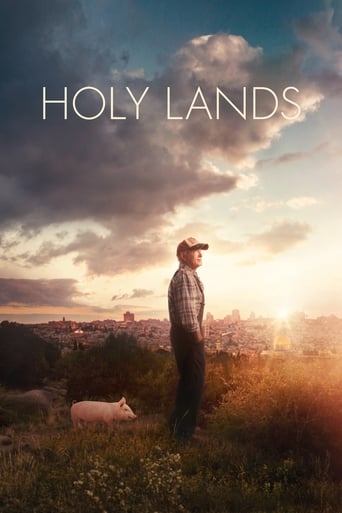
When lapsed Jew and former cardiologist Harry suddenly decides to spend his retirement as a pig farmer in Nazareth, Israel, the move deeply shocks his family and his new neighbours. Back in New York, Harry’s ex-wife Monica is trying to manage the lives of their adult children, Annabelle and David, as well as her own.
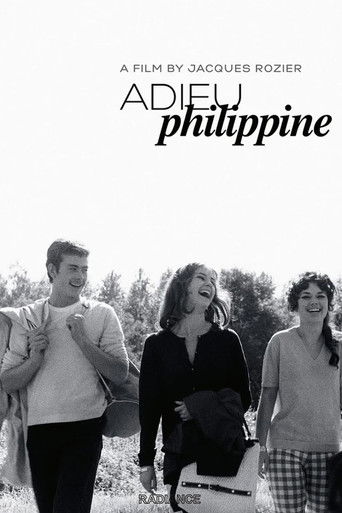
Michel is a young technician in the fledgling TV industry and is due for military service in two months at the time of the Algerian War. Juliette and Liliane are inseparable best friends, and aspiring actresses, who hang around outside the TV studio. Michel invites them in to watch, flirts with them both, and dates them separately and together. When Michel goes on a holiday to Corsica, just before he is drafted, the girls follow.
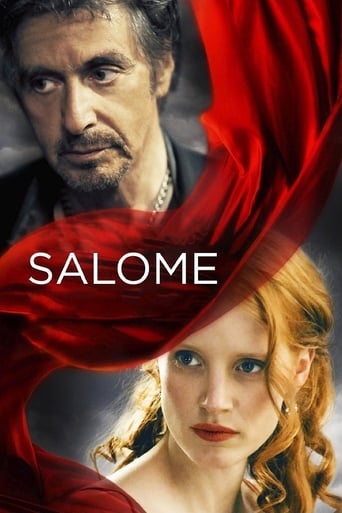
After the lewd and frenetic Dance of the Seven Veils, and with the solemn pledge from the very lips of Herod himself that she could have whatever her heart desires up to half his kingdom, wanton and proud young Salomé comes before her king with an unreasonable demand. Beguiled by John the Baptist, and then scorned for the sake of his god, lascivious Salomé—encouraged by her mother, the vindictive, Herodias—commands that John be executed and his head delivered on a silver platter.
Six months before his retirement from the criminal police, inspector Joss finds his colleague Gouvion dead, in a poorly faked suicide attempt. Joss loses his temper, and investigates on his own, which leads him through the bas-fond of Paris...
Similar titles
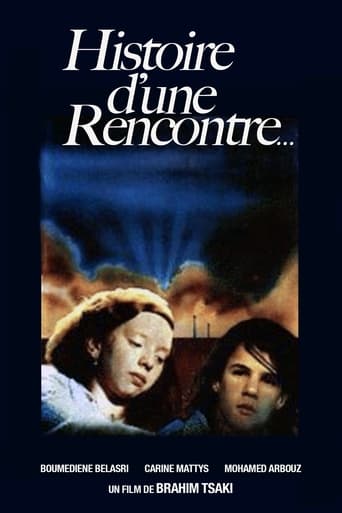
Two deaf and dumb children. She is the daughter of an American Oil engineer. He is the son of an Algerian farmer. They meet and manage to communicate, transcending all the cultural barriers that separate them.
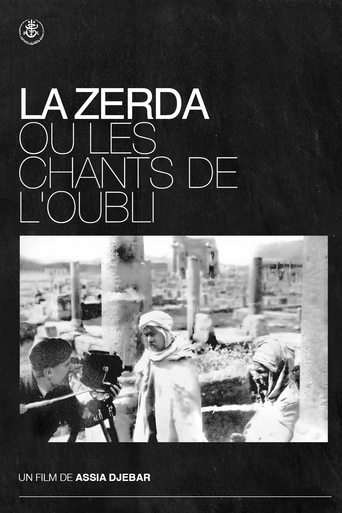
“La Zerda and the songs of oblivion” (1982) is one of only two films made by the Algerian novelist Assia Djebar, with “La Nouba des femmes du mont Chenoua” (1977). Powerful poetic essay based on archives, in which Assia Djebar – in collaboration with the poet Malek Alloula and the composer Ahmed Essyad – deconstructs the French colonial propaganda of the Pathé-Gaumont newsreels from 1912 to 1942, to reveal the signs of revolt among the subjugated North African population. Through the reassembly of these propaganda images, Djebar recovers the history of the Zerda ceremonies, suggesting that the power and mysticism of this tradition were obliterated and erased by the predatory voyeurism of the colonial gaze. This very gaze is thus subverted and a hidden tradition of resistance and struggle is revealed, against any exoticizing and orientalist temptation.
Rabie is a kid from Sétif in 1980, trying to collect money to buy a wheelchair for his paralyzid sister Sassia, so she can get out of the house.
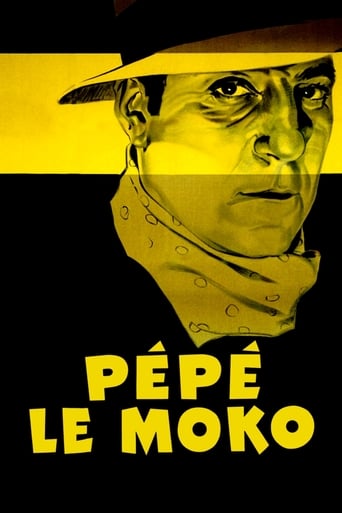
Pépé le Moko, one of France's most wanted criminals, hides out in the Casbah section of Algiers. He knows police will be waiting for him if he tries to leave the city. When Pépé meets Gaby, a gorgeous woman from Paris who is lost in the Casbah, he falls for her.
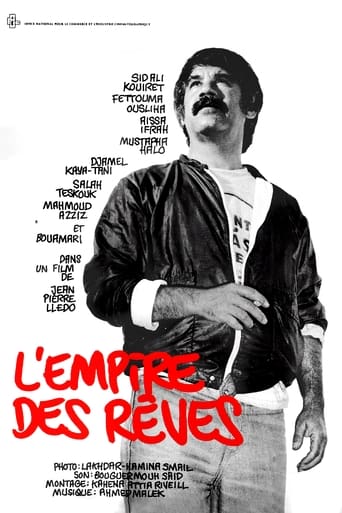
A stubborn director who wants to rediscover the Algiers of his childhood comes up against the “Hollywood” fantasies of his characters, non-professionals all hoping to be able to become “someone else”, at least for the duration of a film… Mise en abyme for a journey into megalomania…
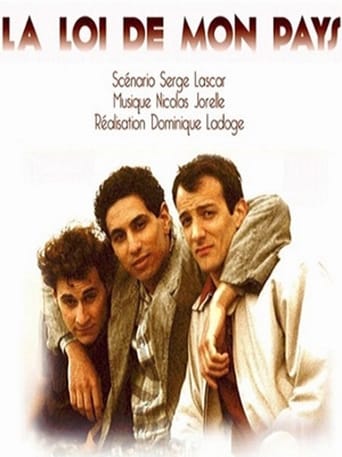
Algeria. Benjamin, Kateb and Antoine are three teenagers from three religious backgrounds who never should have met. But they share the same passion for football and the same disregard for the disapproving looks which their unusual friendship draws.
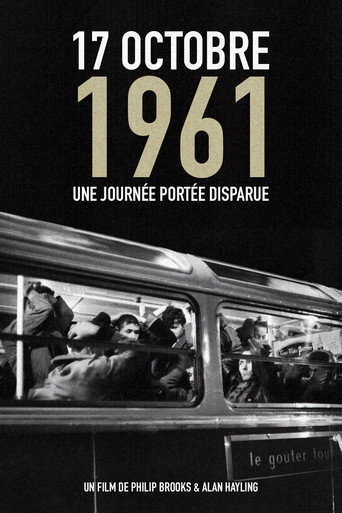
This documentary bears witness to the events that took place more than thirty years before the filming of this movie, on October 17, 1961, in Paris, during the Algerian War. It is a work not only about historical truth but also about memory. Constructed primarily from interviews conducted with those involved in the events, along with archival footage, photographs, and radio broadcasts from the time, our investigation proves that nearly 200 Algerians were killed (drowned, tortured) that night and in the days that followed by the French police. "A Missing Day" seeks to ask two key questions: how could such events have unfolded in the capital of a Western democracy barely thirty years ago? And why have they been silenced ever since?
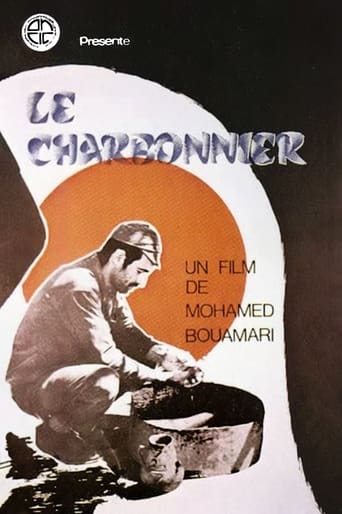
Film describes the miserable existence of a charcoal-burner who is barely able to feed his family. His search for work in town ends in failure and he is forced to return to his village.
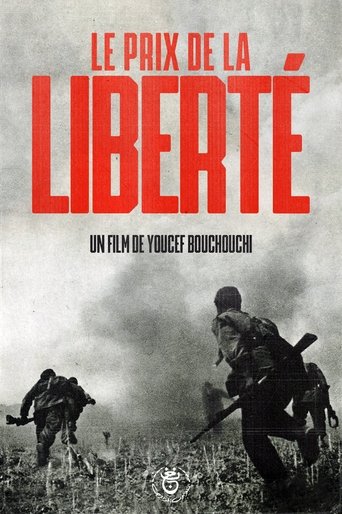
In the midst of the Algerian liberation war, two characters, a meddah (traditional storyteller) and a guerrab (water distributor), having become aware of their subhuman condition in their own country, join the National Liberation Army (ALN) to fight against inhumane colonialism. They will climb the ranks to become political commissioners before falling on the field of honor, the first in a skirmish and the other in Barberousse prison (Serkadji) where he will be guillotined.
Algiers, 1938. Meursault, a quiet and unassuming employee in his early thirties, attends his mother's funeral without shedding a tear. The next day, he begins a casual affair with Marie, a work colleague. He quickly slips back into his usual routine.
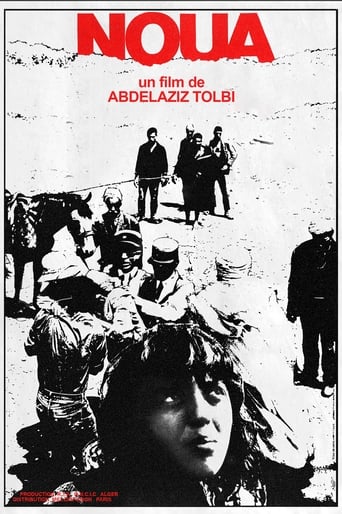
In Algeria in 1954, in a village in the Aurès region, poverty reigns over peasants enslaved by colonial administrators and Algerian landowners. Noua, in love with the son of a peasant dispossessed of his land, must be sold to a wealthy landowner.

27 years after 1962, Antoine returns to Algiers...
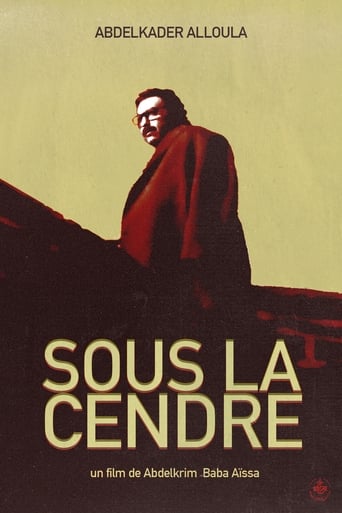
The Second World War. French authorities ban political parties and unions. In Algeria, the leaders of political and trade union organizations were arrested and interned in "surveillance" camps with more than 2,000 French and foreigners: communist activists, trade unionists, brigadists, Spanish republicans and other opponents of the Vichy regime. The Djenien Bourezg camp is one of these camps, located in southern Algeria and is one of the most formidable. An old activist for the Algerian national cause returns to the scene. He blows away the ashes that cover this part of history. And through it, we discover the hard fight of the camp inmates for respect and human dignity, under a fascist command.
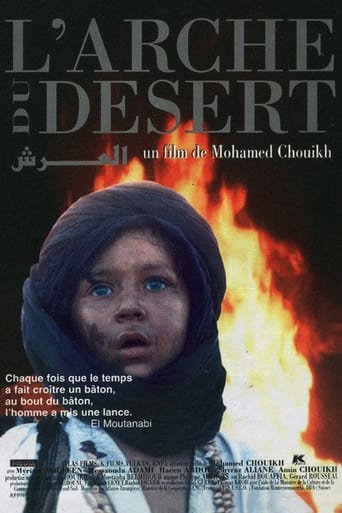
The Desert Ark (L'Arche du Desert), a variation on Romeo and Juliet set in the Algerian desert. A young couple must face inevitable conflict when their rival families discover their secret love. Taking refuge in a cave, they listen to the sounds of a senseless campaign of violence and murder, which is the culmination of the extremism that has long divided their two communities. Nominated for the Golden Leopard at the 1997 Locarno Film Festival.
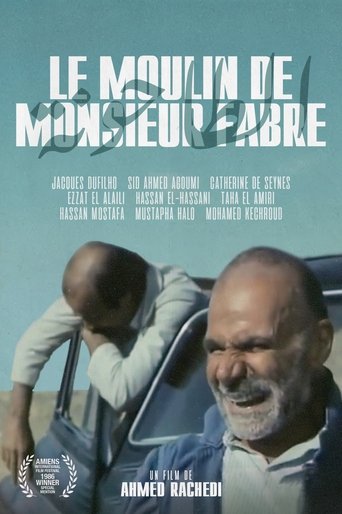
The story of the post-independence nationalization of the mill of Monsieur Fabre, an old man attached to the land of Algeria where he was born. In this small town in eastern Algeria, there was nothing else to nationalize and they were actively preparing for the arrival of high dignitaries who would elevate the mill to the rank of an industrial flour mill even though it was threatened with ruin. The comedy gets worse when the football player from the local team withdraws for love, the officials' visit is canceled and Mr. Fabre returns.

Djamila, a young Algerian woman living with her brother Hadi and her uncle Mustafa in the Casbah district of Algiers under the French occupation of Algeria, sees the full extent of injustice, tyranny and cruelty on his compatriots by French soldiers. Jamila's nationalist spirit will be strengthened when French forces invade her university to arrest her classmate Amina who commits suicide by ingesting poison. Shortly after the prominent Algerian guerrilla leader Youssef takes refuge with her, she realizes that her uncle Mustafa is part of this network of anti-colonial rebel fighters. Her uncle linked her to the National Liberation Front (FLN). A series of events illustrate Jamila's participation in resistance operations against the occupier before she was finally captured and tortured. Finally, despite the efforts of her French lawyer, Jamila is sentenced to death...
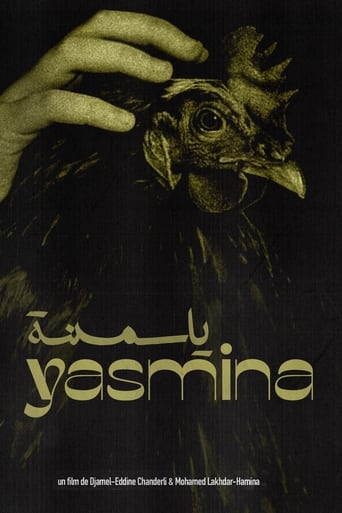
"Yasmina" filmed in 1961 in the middle of the Algerian war tells the story of a little Algerian girl with her hen and her family whose father was killed in a bombing by the French colonial army of occupation. The family, after a long journey, heads towards the refugee camps on the Tunisian border. Produced by the Cinema Service of the Provisional Government of the Algerian Republic (GPRA) in the midst of the war of independence, these films were intended to re-inform the population and international public opinion on the abuses committed by the French colonial army: torture, arrests and arbitrary executions, napalm bombings, fires in douars, entire villages wiped off the map, etc. which the French media described as a "pacification" campaign. The latter censoring or reorienting any images that could harm the colonial narrative.

In Kabylie, rude mountain region in the north of Algeria. Arezki finds the young Larbi exhausted, buried under the snow. He takes him in and nurses him until he's recovered. The host seduces Arezki's daughter. She is pregnant. This is an unsupportable shame to the father of the female sinner. Arezki claims vengeance. He leaves his house and takes the oath not to come back before having killed Larbi who betrayed him under his own roof.
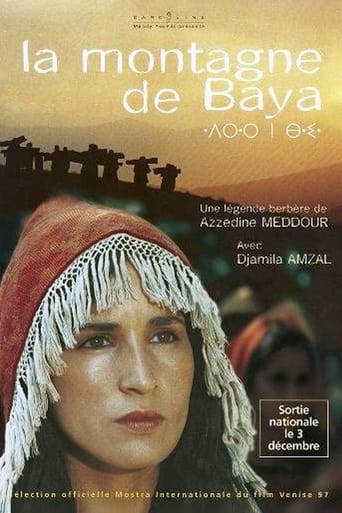
Set in the 1800s among the Berbers of North Africa, this 1997 Algerian feature concerns a noble widow who receives a customary purse of gold coins from the enemy tribe that murdered her husband; the gift puts her in conflict with her kinsmen, who want the money to buy back land taken by the enemy in cahoots with French colonials.
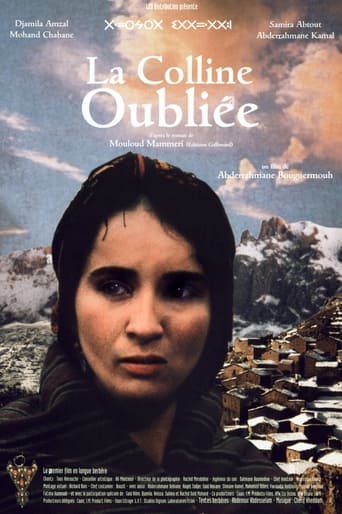
At the outbreak of the Second World War, two friends, Mokrane and Menach, abruptly interrupt their studies and return to their remote native Kabylian village of Tagsa. While waiting to be drafted into the French Army they have time to woo. Mokrane falls for beautiful Aazi and soon marries her only to find out that she can bear no child. Menach, on his part, is stongly attracted to Davda, but the latter is already married to a rich merchant...Happiness does not seem to be in store for the two former students...